
Three-Digit Subtraction Math Centers
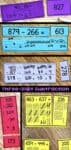
These Three-Digit Subtraction Math Centers help students practice a variety of subtraction strategies for three-digit math problems. They are perfect for second-grade students who are being introduced to three-digit subtraction or for older students who need extra practice using place value and base-10 strategies.

The math centers are available at four different levels and practice five different subtraction models and strategies to provide scaffolding and differentiation for all types of learners. Three digit subtraction can be complicated for students who do not have good number sense. This resource also builds in number sense practice, as well.
These subtraction math centers align with the Three-Digit Subtraction Math Worksheets. Both resources use the same strategies and models and move through the same levels of complexity.
What is included in the three-digit subtraction math centers
The problems in the subtraction math centers move from simple to complex. They start with subtracting 100s and move to regrouping across all place values while practicing these main subtraction strategies: Use a Number Line, Use Base-10 Blocks, Break Apart (also called Ungroup, Incremental Adding, adding by Place Value), Subtract with Vs, and Vertical Subtracting.
All of the subtraction strategies focus on place value and base-10 strategies and align with the second-grade common core standard for three-digit subtraction:
CCSS.MATH.CONTENT.2.NBT.B.7
Add and subtract within 1000, using concrete models or drawings and strategies based on place value, properties of operations, and/or the relationship between addition and subtraction; relate the strategy to a written method. Understand that in adding or subtracting three-digit numbers, one adds or subtracts hundreds and hundreds, tens and tens, ones and ones; and sometimes it is necessary to compose or decompose tens or hundreds.
Four Levels of Three-Digit Subtraction Problems
There are four levels of subtraction problems to help students transition from subtracting two-digit numbers to subtracting three-digit numbers.
The four levels include:
- Subtract Hundreds (500 – 300)
- Subtract Hundreds and Tens, No Regrouping (740 – 320)
- No Regrouping (872 – 351)
- Regrouping
A. Regrouping 1s only
B. Regrouping 10s only
C.Regrouping 10s OR 1s(This level is in the worksheets, but not in the math centers.)
D. Regrouping ALL Places, Except 100s
Each level can be used separately or since these are math centers, not worksheets, the task cards can be easily mixed up to create an additional math center with a greater range of problems.
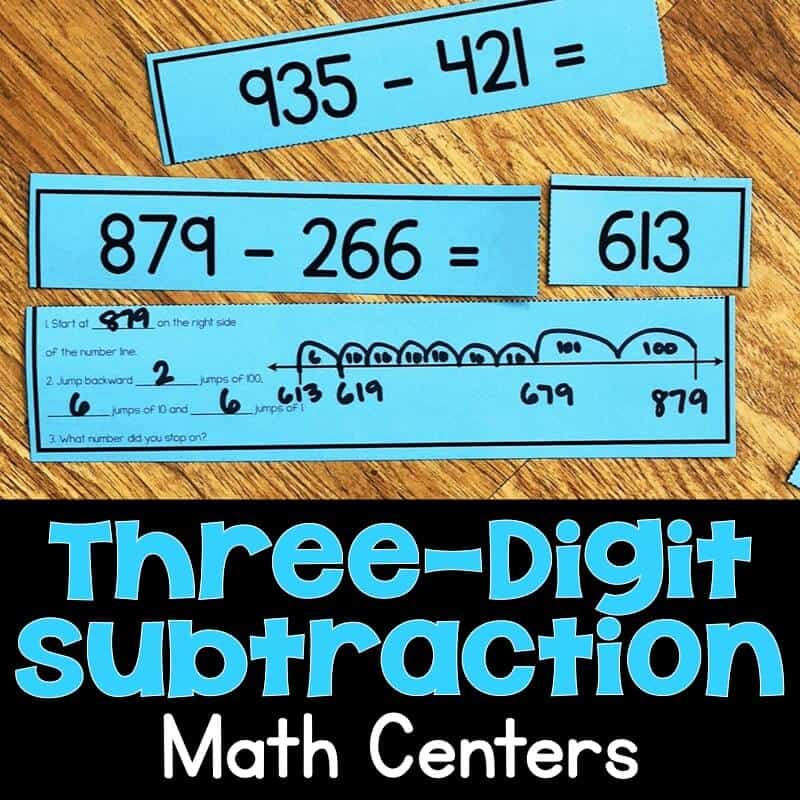
Three-Digit Subtraction Math Centers | Three-Digit Subtraction Task Cards
Three-Digit Subtraction Task Cards for Math Centers include practice activities to help your students solidify their understanding of how to add three-digit numbers using a variety of models and strategies.
The Five Different Subtraction Strategies
This resource focuses on five different place value and base-10 strategies with some variations as the problems increase in complexity.
Below are examples of each subtraction strategy used in the three-digit subtraction math centers.
Use a Number Line for Three-Digit Subtraction
When students use a number line when subtracting, they can either count up, count down, or use a friendly number. The number lines come with directions on how to make the jumps for all the strategies. Students follow those directions and then match the expression and answer cards.
There are three sets of directions. All directions break apart the smaller number into expanded form and use place value strategies.
Count Up
In this set, students start with the smaller number. Students make jumps of 100, 10 and 1 on the number line until they reach the larger number. Student count the number of jumps for each place value and find the value of the total number of jumps.
For example, 978 – 435 would be these directions:
- Start at 435.
- Make jumps of 100. Stop at 935.
Make jumps of 10. Stop at 975.
Make jumps of 1. Stop at 978. - How many jumps of 100, 10, and 1 did you make? What is the value of that number?
Students are provided with an open number line and follow the directions to make the jumps.
Count Up Using Friendly Numbers
Once students start the regrouping problems, we add in the use friendly numbers strategy.
This strategy asks students to count up and find friendly numbers.
For example, the directions for 536 – 354 are:
- Start at 354.
- Jump to 360. Jump to 400.
Jump to 500. Jump to 530. Jump to 536. - Find the value of each jump and the total value of all of the jumps.

Count Down
Another set of directions are provided to allow for some differentiation. These directions ask students to make larger jumps by place value.
For example, the directions for 939 – 427 are:
- Start at 939 on the right side of the number line.
- Jump backward four jumps of 100, two jumps of 10 and seven jumps of 1.
- What number did you jump to?

For all of the strategies, blank spaces are provided so that students can create their own number lines and fill in the spaces with their own directions.
As a challenge, provide the lower half of the task card with blank spaces and have students make up their own directions. They can exchange the number line task card with someone else and solve the problem using those directions.
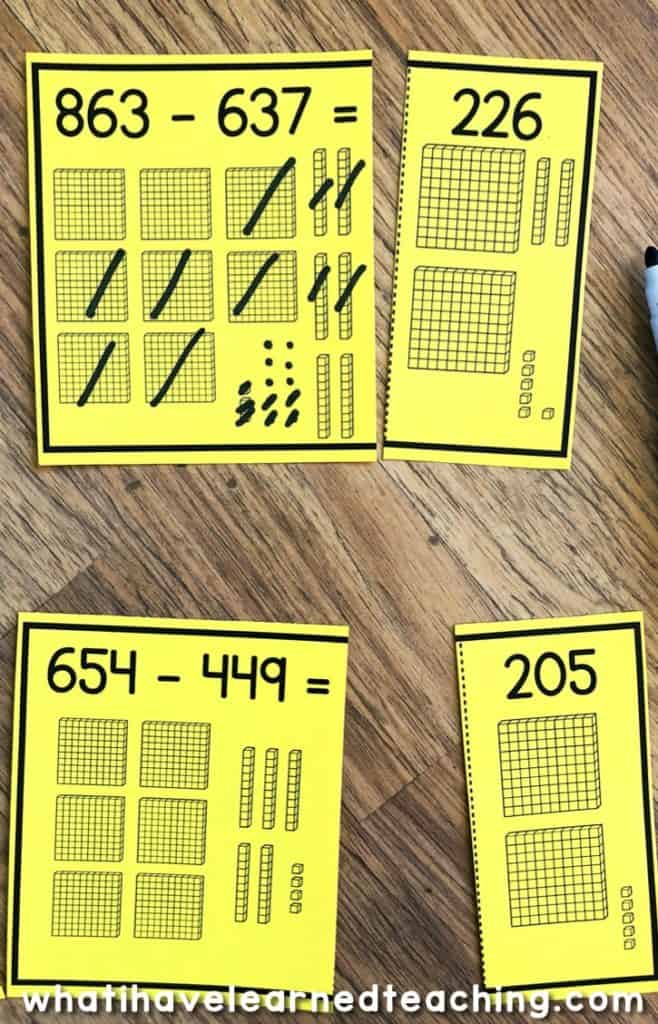
Use Base-10 Blocks
This strategy asks students to subtract using base-10 blocks to add three-digit numbers. It’s pretty self-explanatory.
Break Apart or Ungroup the Numbers
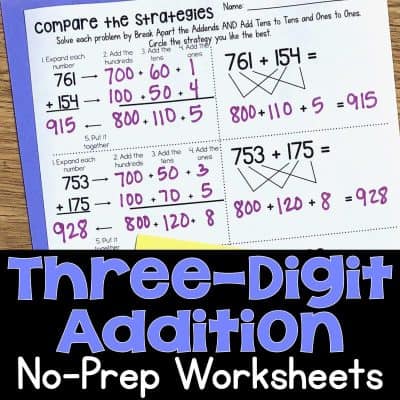
In this section, students expand each number into hundreds, tens and ones. After expanding, students subtract hundreds from hundreds, tens from tens and ones from ones, then group the hundreds, tens and ones back together into the final difference. Students regroup across place values as needed.

Three-Digit Subtraction Math Centers | Three-Digit Subtraction Task Cards
Three-Digit Subtraction Task Cards for Math Centers include practice activities to help your students solidify their understanding of how to add three-digit numbers using a variety of models and strategies.
Subtract with Vs
Subtracting with Vs is another place value strategy where students subtract hundreds from hundreds, tens from tens and ones from ones. Students can use numbers or even draw base-10 blocks.

These cards come in two formats. The second format you see below asks students to select whether they are adding or subtracting the tens or ones place from the previous number. This allows students to have more flexibility and use mental math strategies.

Vertical Subtracting
Vertical subtracting is another way to use place value to subtract, similar to subtracting with Vs, but vertically. On these math task cards, students subtract the hundreds from hundreds and write the difference next to the word hundreds. Students continue subtracting each place value then combine the place value difference for the complete difference.

This is another opportunity for students to subtract across a place value instead of using traditional regrouping methods. Here is a close up of one of the problems. In this problem, students subtract 500-300 to get 200, 20-50 to get -30 (yes it’s a negative number, but students can be taught to look at it a different way and see that they have to subtract 30), and 5 from 2 to get 3. Students then combine 200 – 30 + 3 to get the final answer.

How to Assemble the Math Centers
To assemble the math centers, I print them on Astrobright Paper. All the task cards are in black and white for easy printing. I laminate the full sheet and then cut them apart. If you use regular paper, not cardstock, the laminate doesn’t peel when cut.
Three-Digit Subtraction Math Centers | Three-Digit Subtraction Task Cards
Three-Digit Subtraction Task Cards for Math Centers include practice activities to help your students solidify their understanding of how to add three-digit numbers using a variety of models and strategies.
How to Purchase the Three-Digit Subtraction Math Centers
The Three-Digit Subtraction Math Centers can be purchased on on my website or on Teachers Pay Teachers.
-
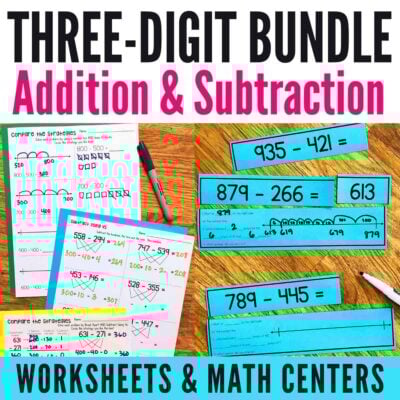
 Product on saleThree-Digit Addition and Subtraction Worksheets and Math Stations BUNDLEOriginal price was: $42.14.$33.71Current price is: $33.71.
 -
-
-
-



Iam a maths teacher , I teach primary school teachers . I would like to know more about the way you teach and the resources you produce : I have a lot of resources in spanish about this way of teaching and learning .It is the first time I find a place with english resources .
I also work in a bilingual school in Argentina and I find very very interesting this site.