
Processes that Shape the Earth – Earth’s Systems Unit
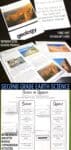
An Earth Science Unit that includes a variety of activities to scaffold the content for your second-grade learners. Each standard focuses on one comprehension skill. There is a pre-reading activity to build background knowledge and experience with the comprehension skill, three leveled passages about the earth’s systems per section or standard, a post-reading activity that mimics the pre-reading activity as well as whole group instruction materials such as vocabulary cards and pocket chart cards.

This unit has been a long time in the making. I had the awesome opportunity to collaborate on it with a dear friend. We’ve been working together on different projects for a number of years and I knew that creating this resource would be the perfect way to merge our talents together.
Processes that Shape the Earth is a unit that addresses the Next Generation Science Standards (NGSS) for Second Grade Earth’s Systems. It’s available as a whole unit and in the individual sections below. This unit is a huge resource! We address four of the NGSS standards:
ESS1.C: How the Earth Changes (Compare & Contrast)
ESS2.A: Wind and Water Change the Land (Cause & Effect)
ESS2.B: Physical Maps (Sequence of Events)
ESS2.C: Where is Water? (Main Idea & Details)
Each section (standard) has Before Reading, During Reading, and After Reading activities as well as a Written Summative Assessment, all focused on the section’s comprehension skill.
Here’s a peek at what’s inside:
Before Reading Earth’s System Activities
The Before Reading section has two main components:
Three-Part Vocabulary Cards
These cards can be used in a variety of ways.
- Students can match all three pieces.
- They can do a partner activity where they show the picture to a partner and the partner has to identify the picture.
- Students can read the definitions to each other.
- . . . and many other ways . . .


Comprehension Skill for Each Earth’s Systems Standard
Besides the vocabulary cards, there is also a pre-reading activity that helps students understand the comprehension skill with familiar vocabulary. The pre-reading activity is set up exactly like the after reading activity, in terms of structure. It just has a different topic and vocabulary words. The before reading activity has familiar words.
Here’s an example from ESS2.A (Cause & Effect).


In each of the comprehension activities, students cut and sort the content phrases.
Then, students attach the linking words as well as a linking flap to each linking word. The finished product looks something like this one from ESS1.C (Compare and Contrast). The below photo is the after reading version, but the before reading is exactly the same format, with different, familiar content.
Students can lift up the flaps to “read” the sentence using the linking words. Each linking word is used once in a sentence. There are many different sentence variations for students to use when talking with their partners or to the class. The idea is that students will have plenty of oral practice with partners and written practice in their journals so that they can use academic language with ease.

For both the Before Reading and After Reading activities, pocket chart cards are included so that you can go over the words and concepts whole group. Here’s an example of the Before Reading cards for ESS1.C (Compare and Contrast)
During Reading Leveled Passages

There are three different levels of text for each Earth’s systems standard. Each section has between two-four pages of text at three levels. The text is also offered with the vocabulary words underlined and without them underlined. A great pre-reading activity after introducing the vocabulary is for students to “hunt” the text for all the iterations of the vocabulary words.
The texts are perfect for second graders. They are formatted in two columns, so they seem like harder, more advanced text, but the sentence structure, word choice, and vocabulary are geared toward second grade readers.
The three levels are great to use with guided reading groups, or whole group. One way to use them is to read the on-level passage with your whole class and pull small groups for students who need a little bit of extra practice. Use the lower level passage with that group to reinforce the concepts described during the whole group lesson.

Here’s some info on the three levels of the passages. Click the image to enlarge it.
We’ve also provided some text dependent questions to ask your students during reading. This could be done orally with a think-pair-share routine.
After Reading Comprehension Activity

After Reading has a similar structure to the comprehension skill as Before Reading, except students are now using the new content knowledge acquired through reading the passages. Students build the comprehension pages with the linking words and the flap, again using the language of the comprehension skill to talk about the passage.
Also included is a written prompt / response where students answer a question about the text in writing using the language of the comprehension skill. We’ve also included a rubric, although you could develop your own, too. The writing paper is available with both primary lines and single lines.
Our purpose of developing this unit was to support our English learners and lower readers to be able to express their understanding of text passages using academic language. We looked long and hard for good science passages that addressed the standards. Not finding any, we wrote our own! These passages are controlled text, as much as they can be for such complicated concepts!
We wanted students to able to develop their language skills throughout the unit and have provided them with plenty of opportunities to talk about their learning with structured language. The language structures are built into the before and after reading activities.
Other examples of this product in action
This Earth’s Science unit heavily focuses on scaffolding learning for English learners and building academic language for all learners. You can see examples of the product in use within these blog posts.
- Teach and Practice Cause and Effect with Soil Erosion
- Developing Academic Language with Familiar Content
How to Purchase the Earth’s Systems Unit
The Earth’s Science Unit is available on my website and on Teachers Pay Teachers.
Teaching this standard? The 2nd–5th Grade Earth Science Guide organizes every NGSS earth science standard by grade level so you can see what comes before and after.
Jessica BOschen
Jessica is a teacher, homeschool parent, and entrepreneur. She shares her passion for teaching and education on What I Have Learned. Jessica has 16 years of experience teaching elementary school and currently homeschools her two middle and high school boys. She enjoys scaffolding learning for students, focusing on helping our most challenging learners achieve success in all academic areas.