
Pre-Teaching Vocabulary Activities That Boost Comprehension
You hand out a new science article, students start reading, and within a paragraph, three hands go up: “What does habitat mean? What’s adapt?” By the time you have answered, half the class has lost the thread of the text. Pre-teaching vocabulary activities head this off by front-loading the words students need before they ever hit the page. When students already know the key terms, they can focus on understanding the ideas instead of decoding words they have never seen.
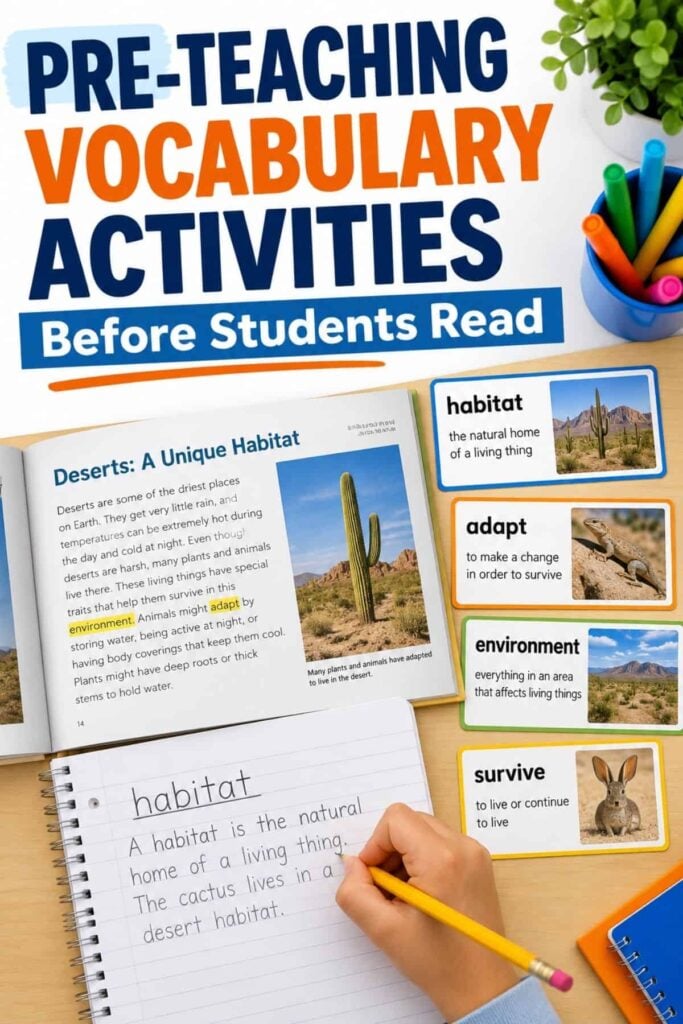
This post explains what pre-teaching vocabulary means, how to choose which words are worth the time, and the activities that teach them well in K-5.
What Is Pre-Teaching Vocabulary?
Pre-teaching vocabulary means introducing important words in a text before students read it, rather than letting them stumble over them in the moment. It is one of the most direct ways to support reading comprehension. Research suggests students need to know around 98 percent of the words in a text to understand it well, so even a handful of unknown key terms can sink comprehension. Reading Rockets has a helpful overview of previewing vocabulary before reading and why it works.
The goal is not to define every hard word. The goal is to remove the specific roadblocks that keep students from understanding the main ideas, so they walk into the text already knowing the words they need most.
How to Choose Which Words to Pre-Teach
Trying to pre-teach every unfamiliar word wastes time and overwhelms students. Be selective. The words worth pre-teaching are usually the ones that are both important and unfamiliar:
- Essential to the main idea. If a student cannot understand the central concept without the word, it belongs on the list. In a text about food chains, producer and consumer make the cut.
- Unfamiliar and not easily figured out. Skip words students can work out from context or word parts. Focus on the ones they truly cannot access on their own.
- Academic and content-area terms. Specialized words in science and social studies, and general academic words that show up across subjects, are worth the time because students meet them again and again.
A good rule of thumb is to keep the list short, often five words or fewer for a single text, so each one gets real attention.
Pre-Teaching Vocabulary Activities That Work
Effective pre-teaching shares a few traits: students hear and say the word, get a clear kid-friendly meaning, connect it to something they know, and see it more than once. These activities all build in that repeated, meaningful exposure.
Teach a Kid-Friendly Definition First
Rather than having students guess, name the word, say it together, and give a short definition in words they already understand. Then use it in a sentence and have students use it too. Naming the word first, instead of turning it into a guessing game, is one feature that makes explicit vocabulary teaching effective.
Word and Picture Matching
Give students the new words and a set of images, and have them match each word to its picture in pairs or small groups. The visual gives the meaning an anchor, and the low-pressure, playful format makes this a natural fit for morning work or a soft start. It works especially well for younger students and for multilingual learners.
Category Sorting
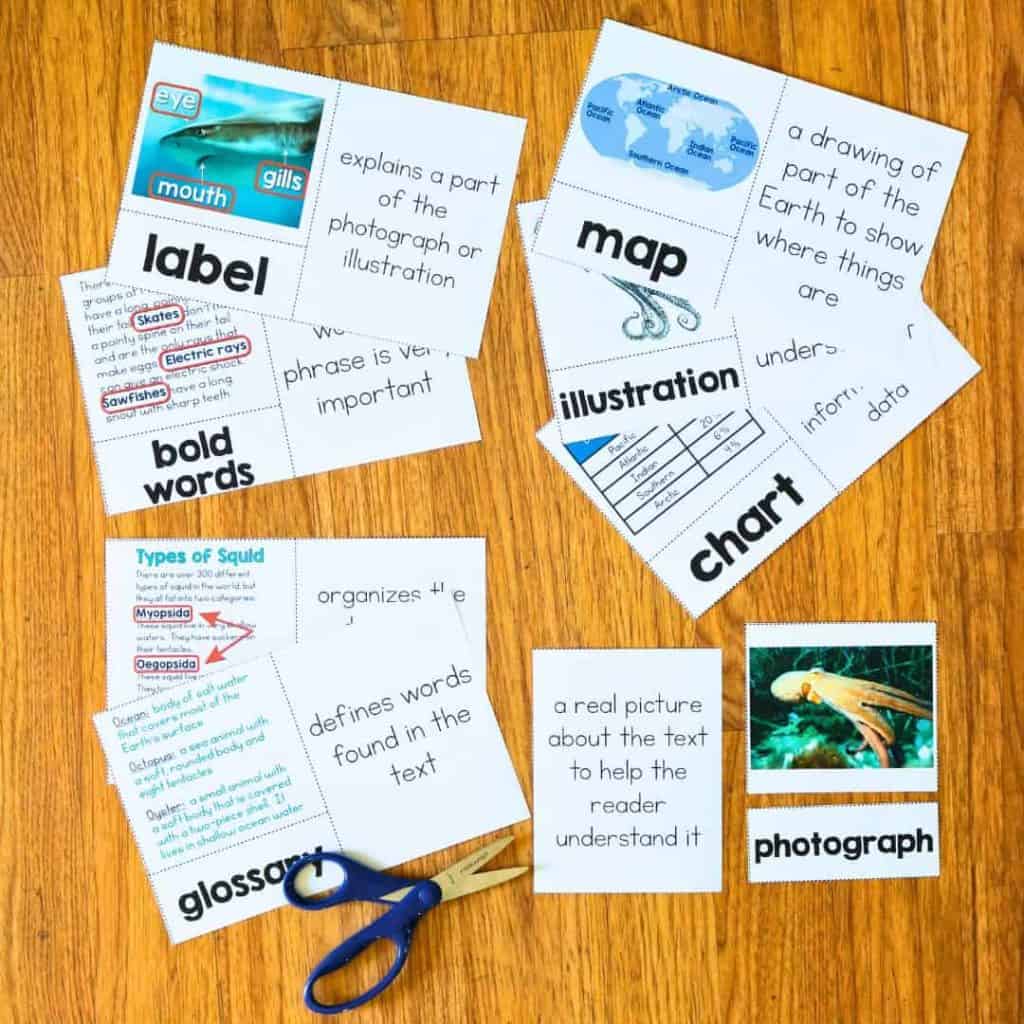
Have students sort the new words into categories by meaning, or sort new words alongside familiar ones within a theme. Sorting pushes students to think about how words relate, building both the depth and breadth of their vocabulary.
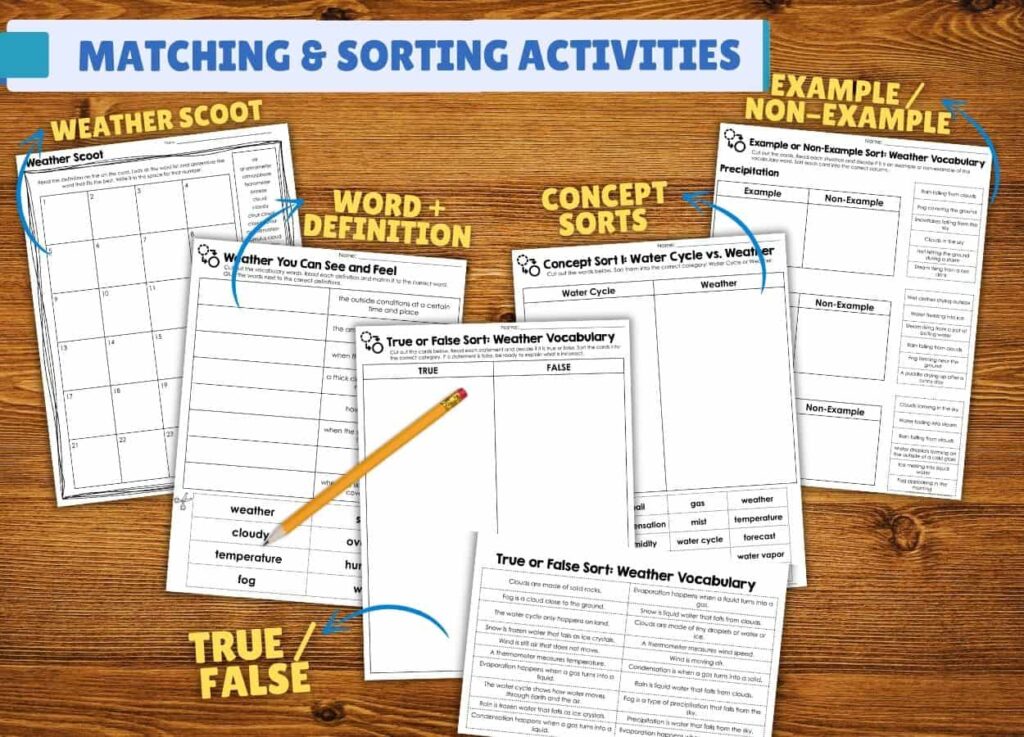
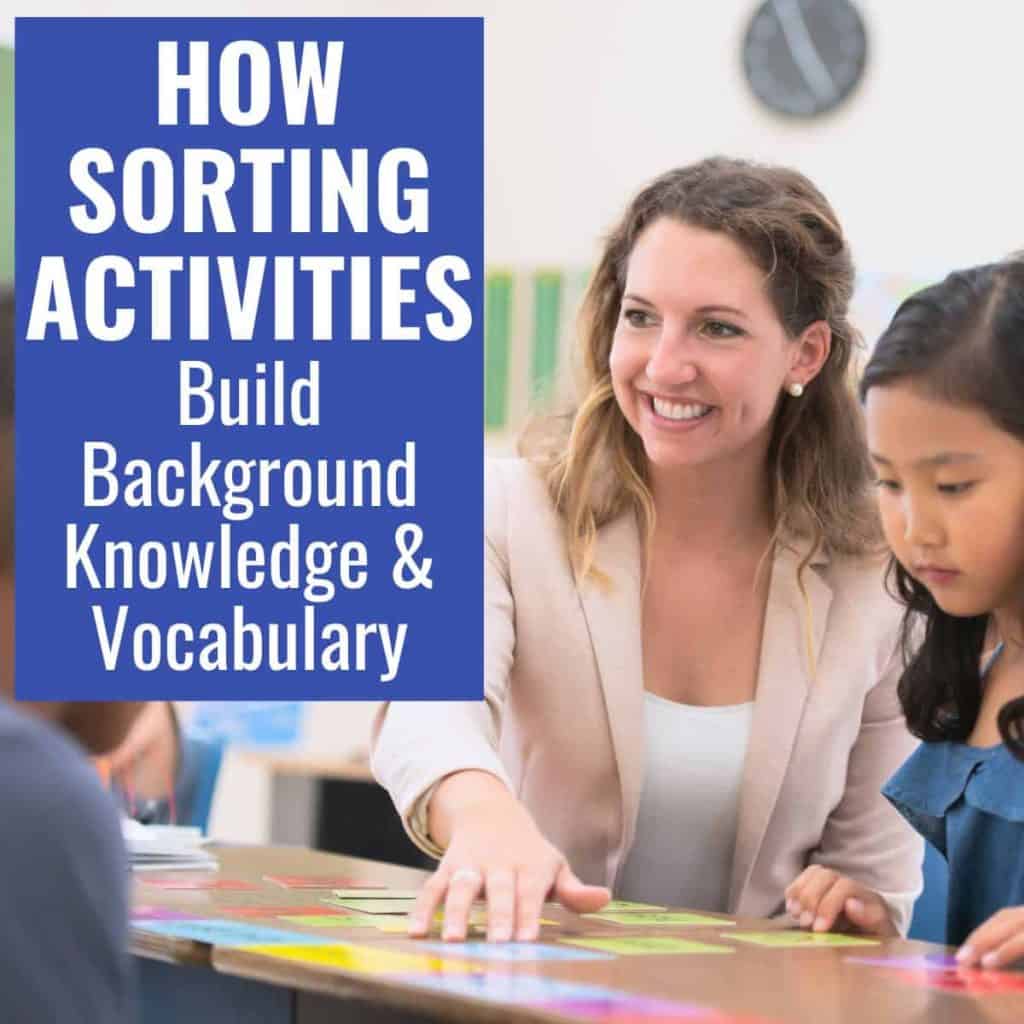
My post on sorting activities to build background knowledge has more ways to use this before reading.
Build a Frayer Model
When one word is central to a whole text or unit, a Frayer model is worth the time. Students put the word in the middle and fill four boxes around it: a definition, characteristics, examples, and non-examples. The non-examples box is where the real thinking happens, because deciding what does not fit a word forces students to compare, analyze, and pin down its boundaries. That makes the Frayer model a strong pre-teaching choice for the anchor term of a unit, the one word students need to hold onto the whole way through.
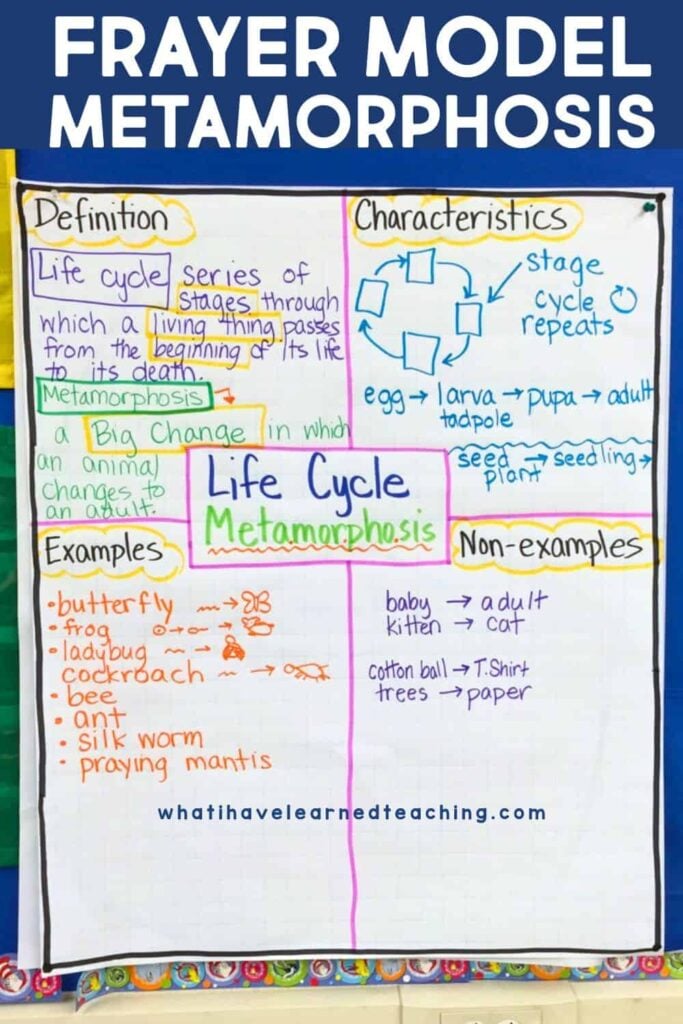
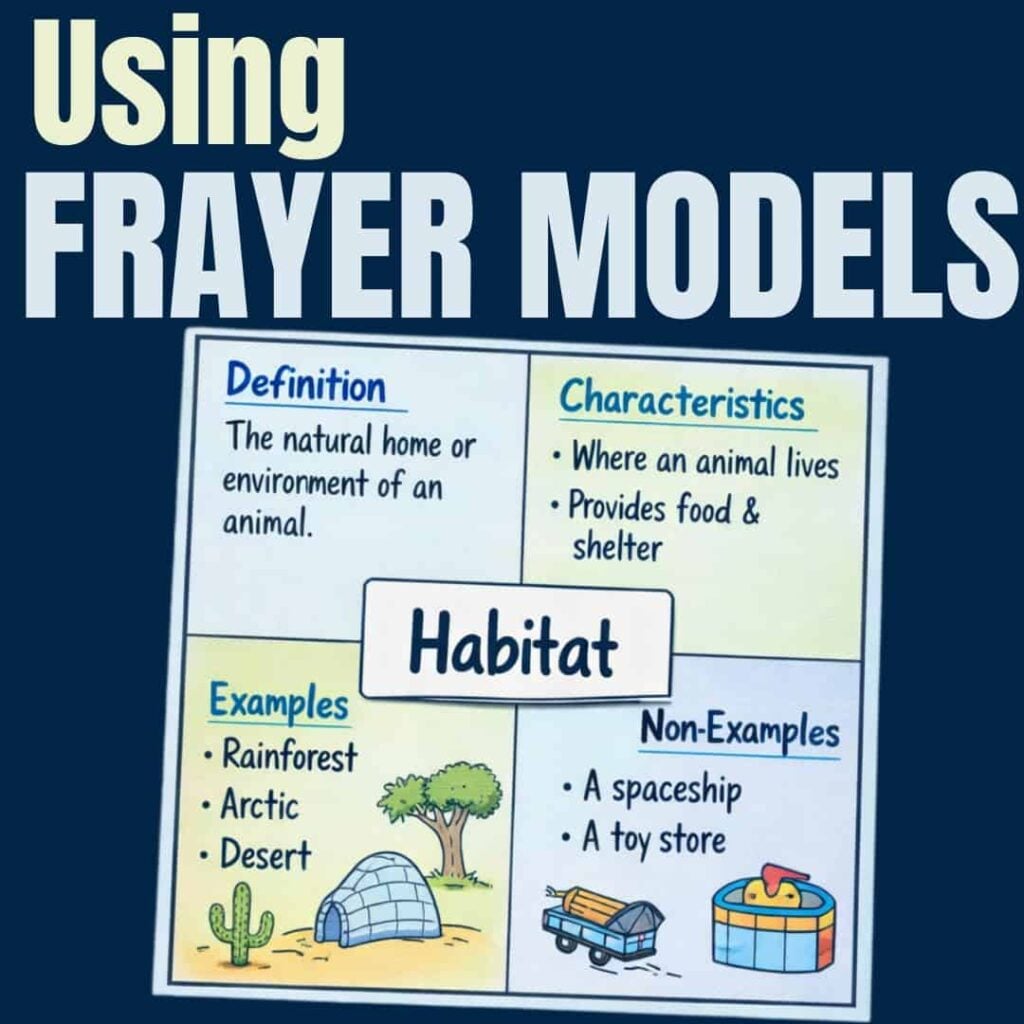
My post on how to use a Frayer model walks through modeling it, scaffolding it for younger students, and using it with nonfiction.
Add the Words to a Word Wall
Post the pre-taught words where students can see them, and review them daily as you move through the unit. A word wall keeps the terms visible so the pre-teaching does not fade after day one. If you teach word parts, a morphology word wall does double duty, giving students the meaning of roots and affixes that unlock even more words.
A science word wall is one of the best places to do this. Content-area units come with a stack of specialized terms students meet all week, so posting them with a picture and a student-friendly definition keeps the meaning in front of students as they read and investigate. Group the cards by unit or big idea, add each word as you pre-teach it rather than all at once, and point back to the wall every time a term comes up in a lesson.
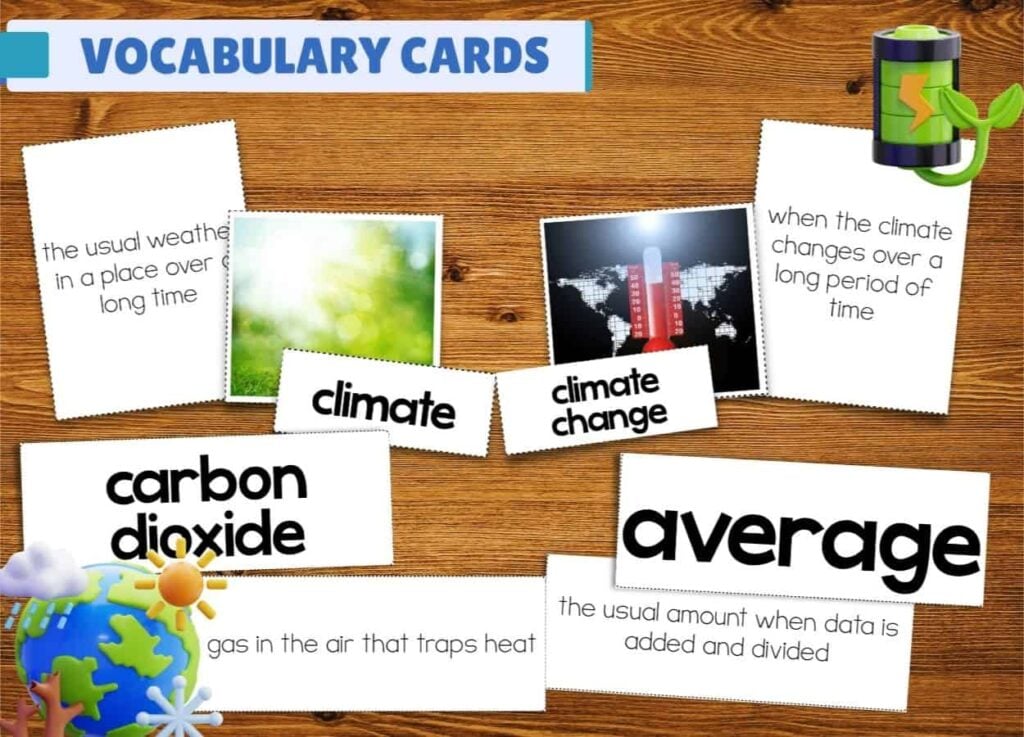
Picture cards work especially well here, which is why my science vocabulary cards pair a photo with a kid-friendly meaning for every term.
Use Visuals and Real Objects
Images, short video clips, and real objects give abstract words something concrete to hook onto. A quick picture of a glacier does more than a dictionary definition ever could. Pairing the word with a visual is one of the simplest ways to make a new term stick before students read.
Pre-Teaching Vocabulary in Science and Social Studies
Content-area reading is where pre-teaching pays off the most, because science and social studies texts are dense with specialized words students rarely meet elsewhere. Before a unit, pull the handful of terms students must know, introduce them with a definition and a visual, and keep them posted for the whole unit. Vocabulary cards with a picture and a student-friendly meaning make this quick to set up, and students can use them to match, sort, and review.
Reading a word in context also reinforces what you pre-taught, so a short passage that uses the terms is a strong follow-up.
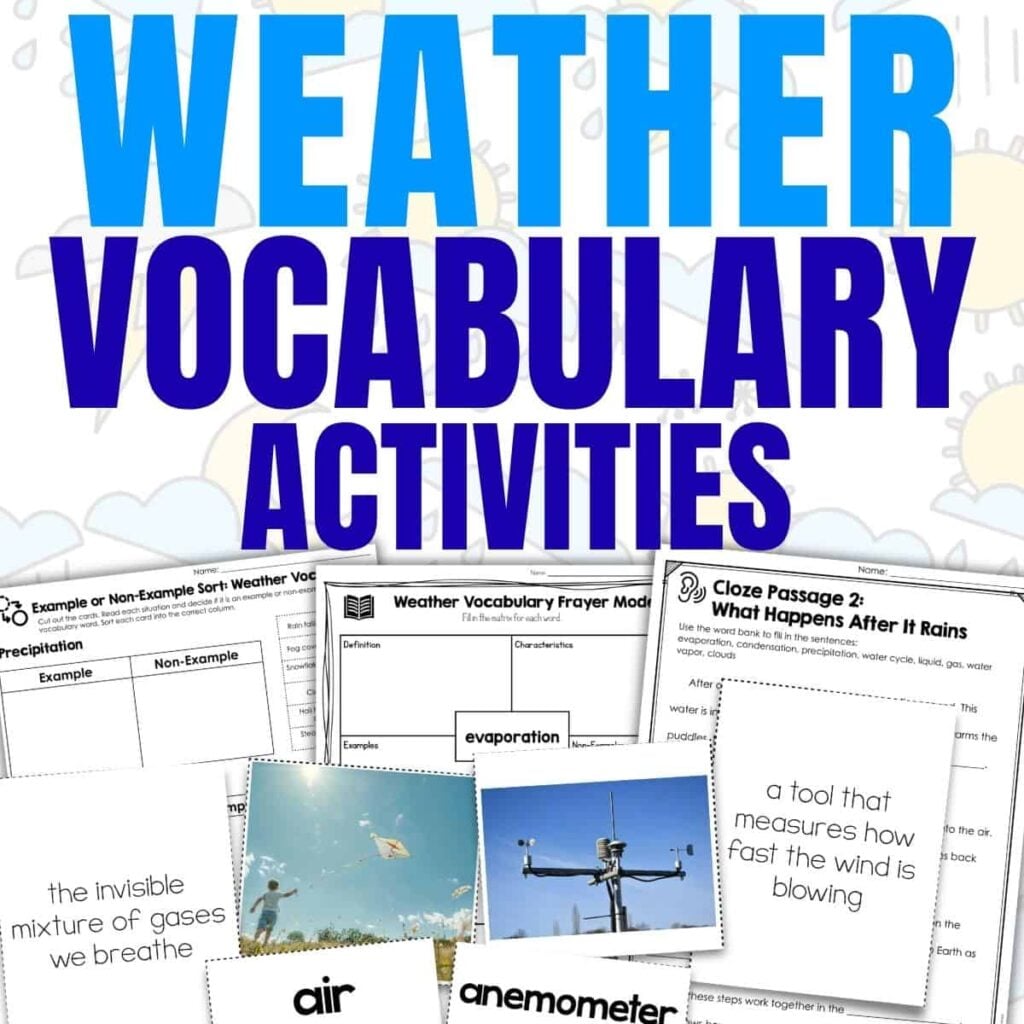
My weather vocabulary activities show how this looks for a specific unit, from introducing the words to using them in reading.
Frequently Asked Questions
Bringing It All Together
Pre-teaching vocabulary is a small step before reading that changes how much students take away from a text. Choose a few essential words, teach them with clear definitions and visuals, and give students a chance to match, sort, and review them. When students walk into a text already holding the words they need, comprehension follows.
Want resources that make it easy? My science vocabulary cards for 2nd, 3rd, 4th, and 5th grade give you picture cards and big-idea posters ready to pre-teach and post, and my morphology word wall helps students unlock even more words by breaking them into parts.
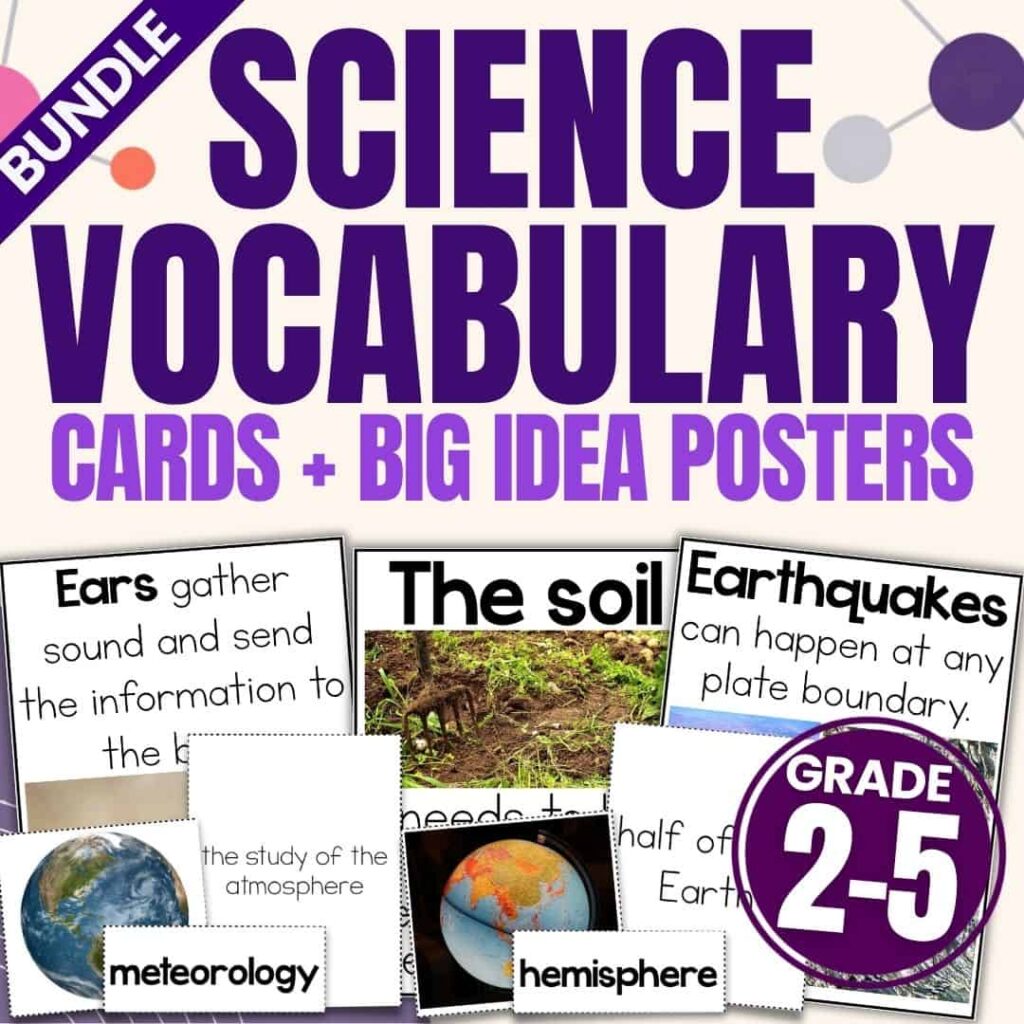
Science Vocabulary Cards & Big Idea Posters – 2nd, 3rd, 4th, and 5th Grades BUNDLE
This is a BUNDLE of Second, Third, Fourth, and Fifth Grade Next Generation Science Vocabulary Cards and Big Idea Posters. These Vocabulary Cards and Posters are a great tool for teaching all second, third, and fourth-grade science topics and make a great science word wall and visual display.
Jessica BOschen
Jessica is a teacher, homeschool parent, and entrepreneur. She shares her passion for teaching and education on What I Have Learned. Jessica has 16 years of experience teaching elementary school and currently homeschools her two middle and high school boys. She enjoys scaffolding learning for students, focusing on helping our most challenging learners achieve success in all academic areas.