
Parts of a Biography for Kids (With Simple Examples)
When students hear the word biography, they often think, “I have to write a whole report?” The good news is that biographies are built from clear, predictable parts. Once students understand the structure, the writing becomes much less intimidating.
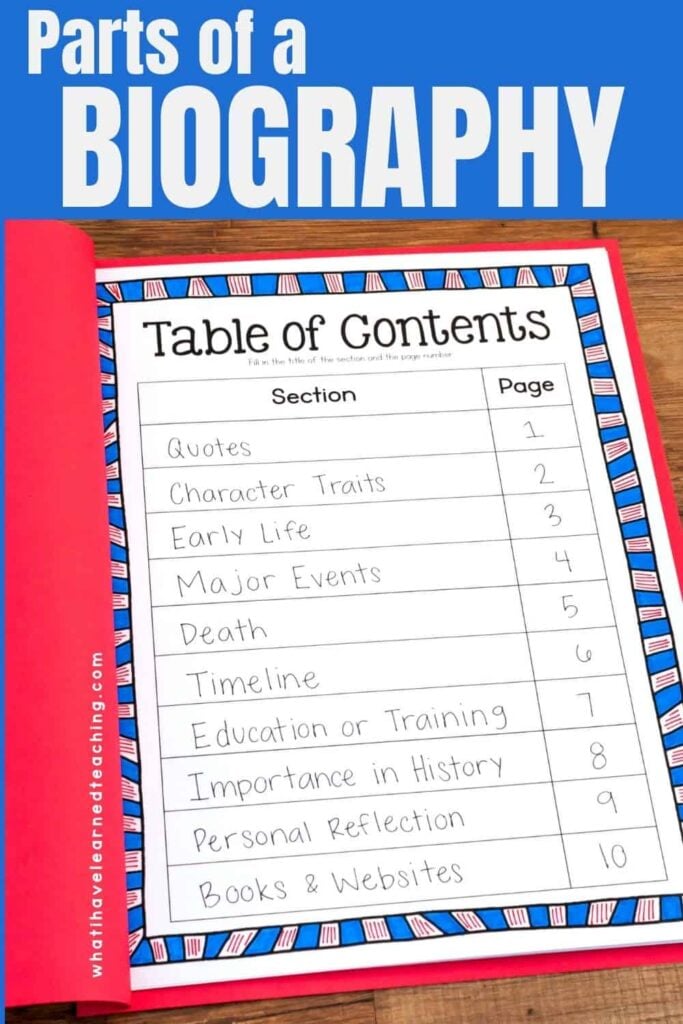
Teaching the parts of a biography helps students know exactly what belongs in their report, and just as importantly, what does not. Instead of listing random facts, students learn to organize information into meaningful sections that tell a person’s life story in a logical way.
Understanding biography structure is an important part of biography projects for elementary students, where students research a historical figure and write a report about their life.
This guide breaks down the main parts of a biography for kids and shows simple examples you can use in your classroom.
What Are the Main Parts of a Biography for Kids?
A strong elementary biography usually includes:
- Introduction
- Early Life
- Major Accomplishments
- Challenges or Obstacles
- Impact or Legacy
- Timeline of Important Events
- Text Features (Headings, Dates, Photos, Captions)
Let’s look at each part more closely.
1. Introduction
The introduction gives readers a quick overview of who the person is and why they are important.
It answers questions like:
- Who is this person?
- What are they known for?
- Why should we care about them?
Simple Example
“Harriet Tubman was a brave leader who helped enslaved people escape to freedom through the Underground Railroad.”
Notice that this introduction:
- Names the person
- States why they are important
- Gives readers a reason to keep reading
The introduction is not the place for every detail. It is just the big picture.
This biography sort is a great way to teach students how to introduce a historical person. Each card has the person’s name and why they are famous.

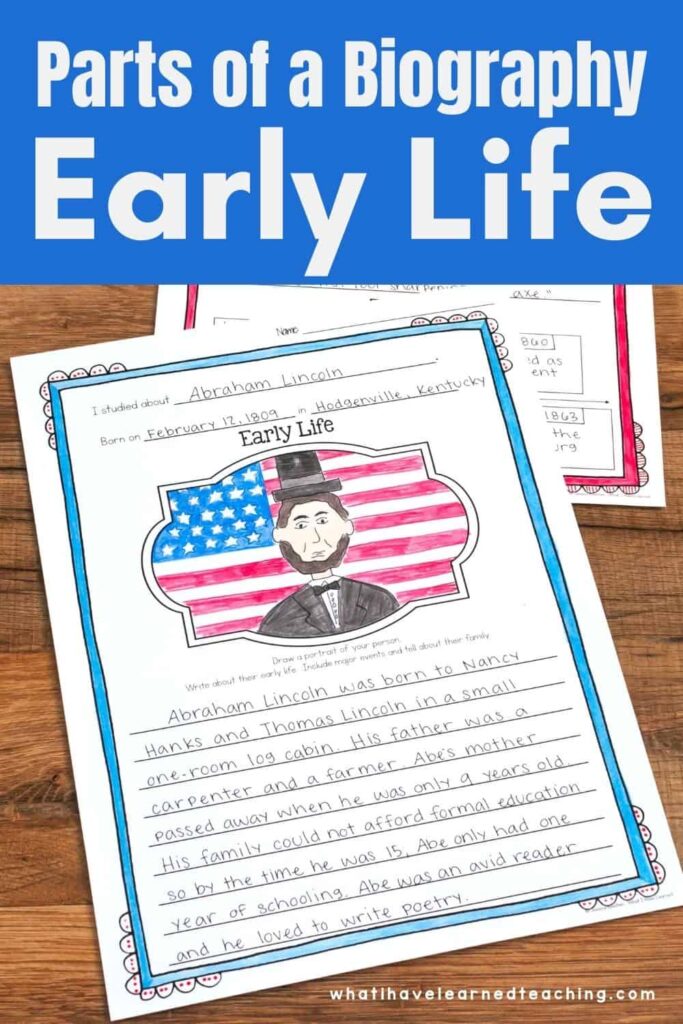
2. Early Life
This section explains what the person’s childhood was like. Students can include:
- Birth date and place
- Family background
- Education
- Early interests
- Important childhood events
Simple Example
“Harriet Tubman was born into slavery in Maryland around 1822. As a child, she worked in harsh conditions and did not receive a formal education.”
The early life section helps readers understand what shaped the person before they became famous.
3. Major Accomplishments
This is often the longest part of a biography. It explains what the person is best known for.
Students can include:
- Important discoveries
- Leadership roles
- Awards
- Inventions
- Books written
- Records broken
Simple Example
“Tubman escaped slavery and later returned many times to help others escape. She guided approximately 70 enslaved people to freedom.”
This section focuses on what the person achieved, not just general facts.
4. Challenges or Obstacles
Biographies are more powerful when they include struggles. Students should describe:
- Problems the person faced
- Failures or setbacks
- Risks they took
- How they overcame difficulties
Simple Example
“Tubman risked her life each time she returned to the South. If she had been captured, she could have been severely punished or killed.”
This section teaches students that success often includes perseverance.
5. Impact or Legacy
The legacy explains why the person still matters today.
Students might answer:
- How did this person change the world?
- Why do people still remember them?
- What lessons can we learn from their life?
Simple Example
“Today, Harriet Tubman is remembered as a symbol of courage and freedom. Her life continues to inspire people around the world.”
The legacy connects the past to the present.
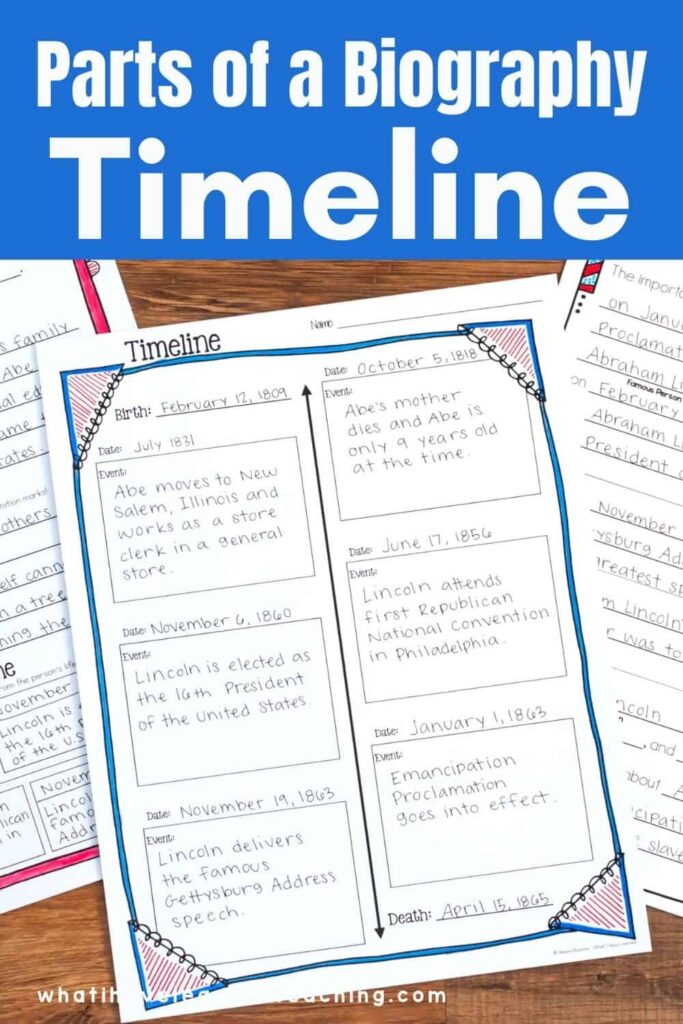
6. Timeline as a Structural Element
A timeline is a structural tool that helps students present events in chronological order.
A simple biography timeline might include:
- 1822 – Born in Maryland
- 1849 – Escaped slavery
- 1850s – Led missions on the Underground Railroad
- 1913 – Died in New York
Teaching students to use a timeline helps prevent jumping back and forth between events. It strengthens the overall organization of the biography.
7. Text Features in a Biography
Biographies often include nonfiction text features. Teaching students to recognize and use them improves both reading and writing skills.
Common text features include:
- Headings (Early Life, Achievements, Legacy)
- Dates
- Photographs
- Captions
- Bold words
- Sidebars
When students add headings and dates, their writing feels more organized and professional.
Labeled Sample Paragraph (Putting It Together)
Here is a short example showing how parts fit together:
Introduction:
“Martin Luther King Jr. was a civil rights leader who worked to end segregation in the United States.”
Early Life:
“He was born in Atlanta, Georgia, in 1929 and grew up in a time when racial discrimination was common.”
Accomplishment:
“He led peaceful protests and delivered his famous ‘I Have a Dream’ speech in 1963.”
Challenge:
“He faced threats and was arrested multiple times for his activism.”
Legacy:
“Today, he is remembered for promoting equality and nonviolence.”
Each section has a clear purpose. When students understand that purpose, their writing becomes more focused.
Why Teaching the Parts of a Biography Matters
When students clearly understand the parts of a biography, their writing becomes more focused and organized. Instead of copying random facts from a book or website, they begin selecting information that actually fits each section. Their ideas flow more logically because they are following a clear structure, and their paragraphs feel connected rather than scattered.
Breaking biography writing into defined sections helps students see that it isn’t just one large, overwhelming assignment. It becomes a series of manageable steps. As they practice organizing information into introduction, early life, accomplishments, challenges, and legacy, they naturally strengthen their informational writing skills and gain confidence in their ability to write about real people in a meaningful way.
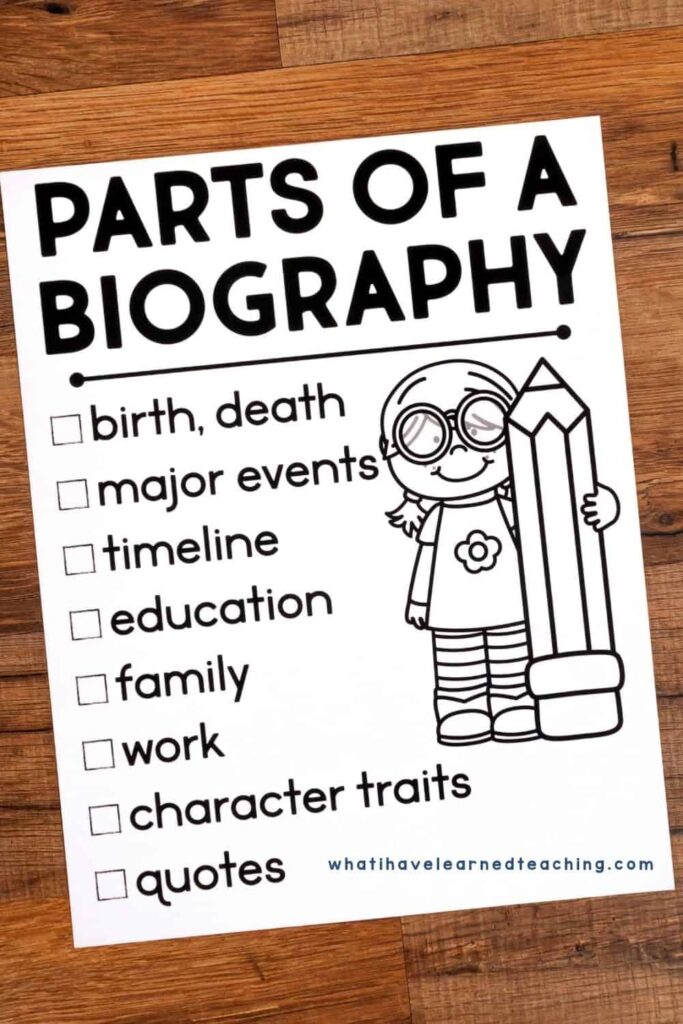
Anchor Chart Idea for Your Classroom
You might create a biography anchor chart titled:
“Parts of a Biography”
Underneath, list:
- Introduction – Who is this person and why are they important?
- Early Life – Childhood and background
- Accomplishments – What did they achieve?
- Challenges – What obstacles did they face?
- Legacy – Why do they matter today?
- Timeline – Events in order
Keeping this posted during your biography unit gives students a constant visual reminder of structure.
Make Biography Writing Easier with Ready-to-Use Templates
If you’ve noticed that some of the graphic organizers and example pages in this post look classroom-ready… they are.
The photos throughout this article come directly from my Biography Report for Any Person resource. I created it after watching my own students struggle to organize their research, structure their paragraphs, and turn notes into a complete report.
Instead of reinventing the wheel every time you teach biography writing, this resource gives students a clear path from research to final draft.
What’s Included
- Research graphic organizers aligned to the parts of a biography
- A timeline page to organize events in chronological order
- Structured report writing pages with headings
- Drafting pages and final copy options
- Simple, student-friendly layout
- Rubric and teacher guidance
Everything is designed specifically for elementary students, so they’re not overwhelmed with too much space or unclear expectations. It works whether students are researching historical figures, famous scientists, civil rights leaders, athletes, or modern changemakers.
If you want a ready-to-use system that supports every part of the biography structure we discussed above, you can take a closer look at the Biography Report for Any Person resource here.

Biography Report & Biography Project – Research and Writing Activities (Grades 2–5)
Make biography projects meaningful and engaging with this Biography Report & Research Project for grades 2–5! This flexible resource includes graphic organizers, genre posters, multiple report formats, lapbook templates, trifold reports, and construction paper people so students can research and present any historical figure.
Want Step-by-Step Teaching Support?
If you’re looking for detailed instructions on guiding students through research, drafting, revising, and presenting a biography report, read this complete guide on how to write a biography.

This post walks through the entire teaching process, from choosing a person to final presentation.
Understanding the parts of a biography for kids gives students clarity and confidence. Once they see that a biography is simply a life story organized into clear sections, the task feels much more manageable. And when the structure is strong, the writing naturally improves.
Jessica BOschen
Jessica is a teacher, homeschool parent, and entrepreneur. She shares her passion for teaching and education on What I Have Learned. Jessica has 16 years of experience teaching elementary school and currently homeschools her two middle and high school boys. She enjoys scaffolding learning for students, focusing on helping our most challenging learners achieve success in all academic areas.