
Earth’s Spheres Pacing Guide for 5th Grade (Using Science Stations)
You’re ready to teach Earth’s systems. You’ve got the standards, the objectives, and maybe even a few Pinterest boards full of ideas. But now comes the tricky part, actually fitting it into your already-packed schedule without losing your mind (or skipping lunch… again).
If you’re tired of pulling bits and pieces from different places, hoping it all somehow clicks, this Earth’s spheres pacing guide has you covered. It uses a complete set of science stations to help you teach the geosphere, hydrosphere, atmosphere, and biosphere in a meaningful way, without starting from scratch.
Whether you have 15 minutes a day or a dedicated science block, here’s how you can make it work.
What Is an Earth’s Spheres Pacing Guide?
An Earth’s spheres pacing guide is a simple plan that breaks your unit into manageable chunks over several weeks. Instead of teaching everything at once, students build understanding step by step, from learning the four spheres to explaining how they interact.
This pacing guide uses science stations to help students move from basic knowledge to deeper thinking, all while staying aligned with NGSS 5-ESS2-1.
How to Use This Earth’s Spheres Pacing Guide in 3 Weeks
This pacing guide shows you how to teach Earth’s systems using science stations over three weeks. Each week builds on the previous one, helping students move from basic understanding to applying and explaining how Earth’s spheres interact.
Week 1: Build Background + Vocabulary
This part of the Earth’s spheres pacing guide focuses on building foundational knowledge. You’re helping students learn the names, meanings, and characteristics of each of Earth’s four spheres.
This is a great time to introduce key terms, build a word wall, and have students start thinking about examples they see in their everyday lives. You’re not rushing, just giving them a solid footing before moving on.
Focus:
- What are Earth’s spheres?
- Vocabulary and big ideas
- NGSS 5-ESS2-1 foundational knowledge
Activities:
- ✅ READ Station: Introduce the four spheres using a reading passage with vocabulary support
- ✅ VOCAB Station: Use vocabulary cards and posters to build science language
- ✅ WATCH Station: Students view short video clips with guiding questions
- Optional: Interactive notebook foldables or anchor charts
💡 By the end of the week, students should be able to name the four spheres and give a basic example of each.


Week 2: Interactions Between Earth’s Spheres
Now that your students know what each sphere is, it’s time to explore how they work together. In this stage of the Earth’s spheres pacing guide, students begin connecting the systems. This is the “cause and effect” week—students start to connect natural events like rain, erosion, or animal migration to more than one sphere.
These science stations guide them through those interactions visually and physically, and include critical-thinking questions that reinforce deeper understanding.
Focus:
- How do Earth’s systems interact?
- Cause and effect relationships across the spheres
Activities:
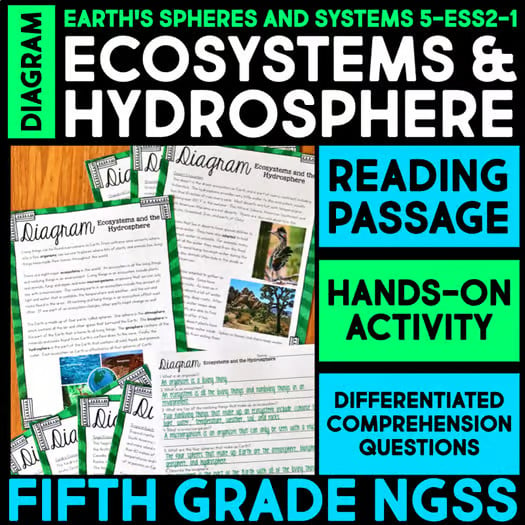
- ✅ DIAGRAM Station: Students map out how water or weather affects ecosystems
- ✅ MODEL Station: Hands-on modeling of landforms and biosphere interaction
- ✅ SORT Station: Card sort identifying which events affect which spheres
- ✅ EXPLORE Station: Investigate a real-world example, like ocean erosion or mountain rainfall
🧠 Now students are not just identifying each sphere—they’re seeing how they work together.


Week 3: Apply, Extend, and Review
With background knowledge and sphere interactions under their belt, students are ready to show what they know. Week 3 is flexible—you can use it for review, enrichment, assessment, or extension depending on how your class is progressing.
These stations offer multiple ways for students to revisit and apply their learning, giving you a great opportunity to assess who’s ready and who might need a quick reteach.
Focus:
- Reinforce learning through review games and deeper thinking
- Assessment and application
Activities:
- ✅ PLAY Station: Use board games, crosswords, or review puzzles
- ✅ INVESTIGATE Station: Dive into a new scenario or environmental issue
- ✅ Exit Tickets and/or a quick quiz
- Wrap up with discussion, writing, or student-created diagrams
🎯 You can also assign extension activities or use the digital Google Slides™ + Forms™ for review.


You Don’t Need to Plan Another Thing
Each station is already built for you—with differentiated tasks, flexible formats, and alignment to NGSS 5-ESS2-1. You don’t have to scour the internet or spend your weekend piecing it all together.
You just print, set up, and let your students rotate through science experiences that actually stick.
Grab the Earth’s Spheres Science Stations for 5th Grade
✅ 8 Engaging Stations
✅ Differentiated Response Options
✅ Printable & Digital Formats
✅ Vocabulary Cards + Posters
✅ Teacher Planning Tools Included
If you want a done-for-you set of stations, these Earth’s spheres science stations include everything you need.
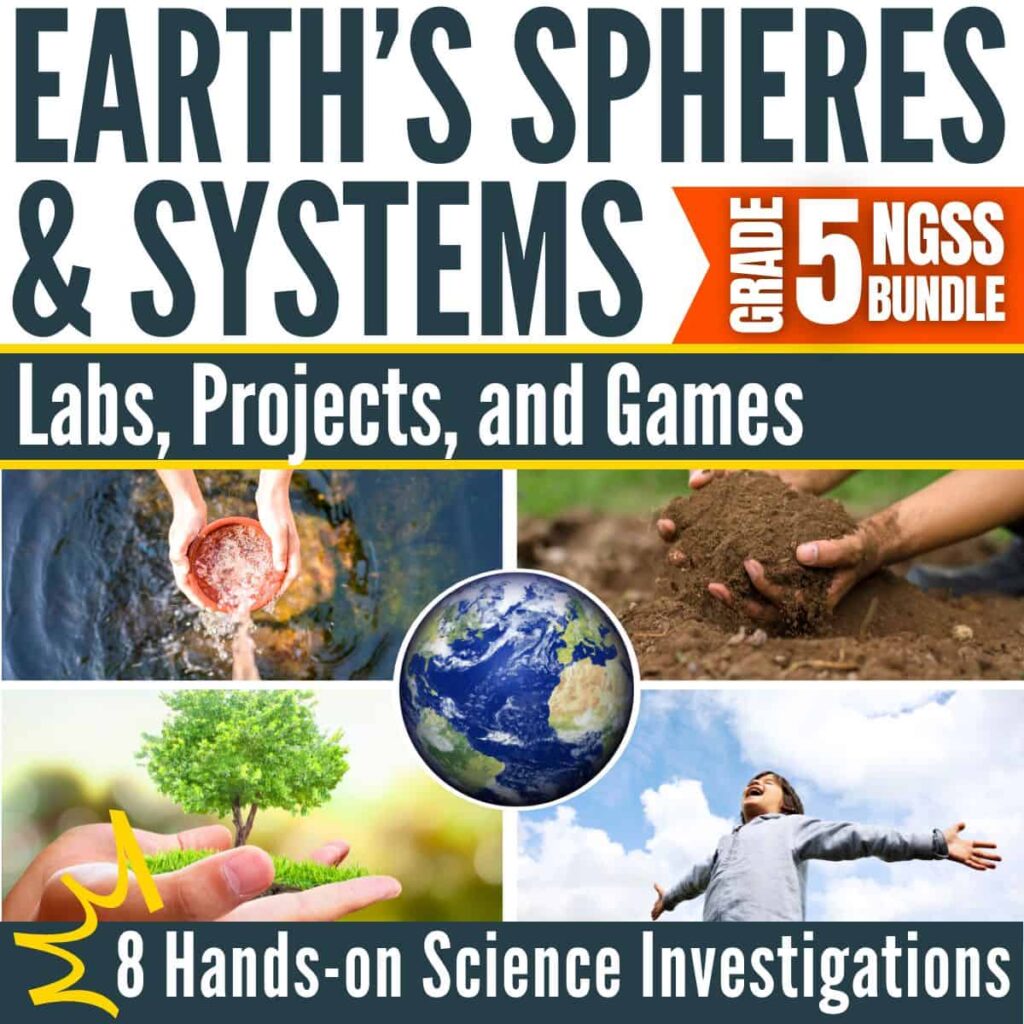
Earth’s Spheres and Systems Science Station UNIT BUNDLE
These Earth’s Spheres and Systems Next Generation Science Stations include eight different science stations where students deepen their understanding of the Earth’s Spheres, the five layers of the atmosphere, the kingdoms in the biosphere, and the systems in the geosphere. The focus is on 5-ESS2-1.
Jessica BOschen
Jessica is a teacher, homeschool parent, and entrepreneur. She shares her passion for teaching and education on What I Have Learned. Jessica has 16 years of experience teaching elementary school and currently homeschools her two middle and high school boys. She enjoys scaffolding learning for students, focusing on helping our most challenging learners achieve success in all academic areas.