
Teach about Snow Storms & Natural Hazards Through Real-World Winter Weather
Natural hazards feel abstract to students until they can connect them to real experiences. Snow days, icy roads, power outages, and storm warnings are things many kids have either lived through or seen on the news. That connection makes winter weather a powerful entry point for teaching how Earth’s processes can create hazards—and how people respond to them.
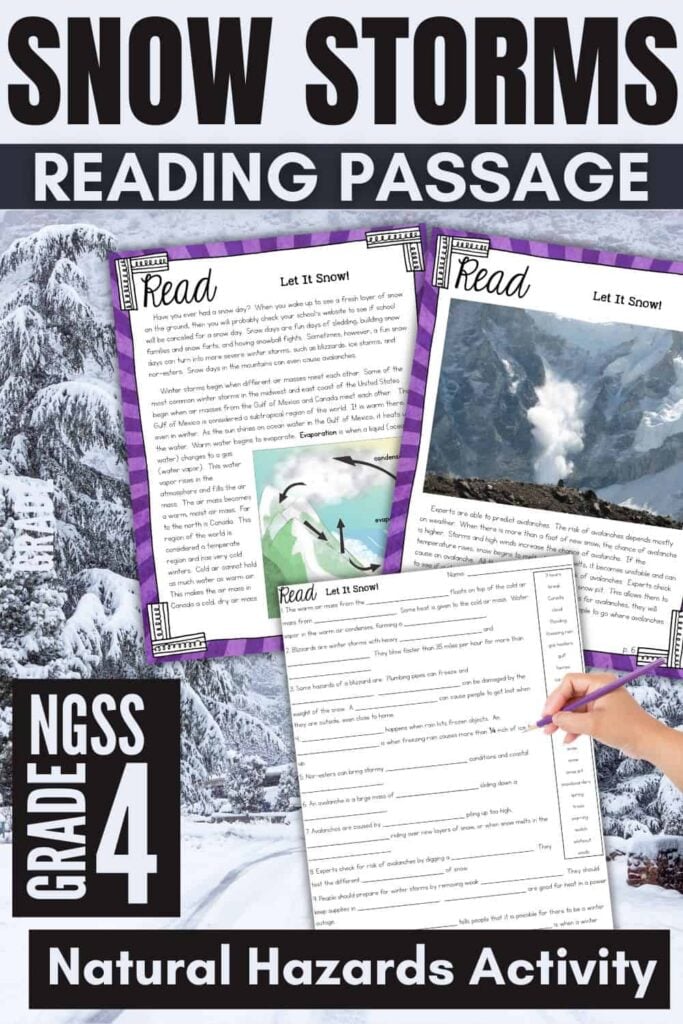
The Let It Snow! reading passage gives students more than just weather facts. It walks them through how winter storms form, what makes them dangerous, and how communities and individuals reduce risk. Students learn that natural hazards are not random events; they are the result of predictable processes, and humans play an active role in preparing for and responding to them.
What’s Included in the Let It Snow! Reading Passage
This resource is part of a larger Natural Hazards science station set and is designed to stand alone or work within a station rotation. The reading passage explains winter storms in clear, student-friendly language while keeping the science accurate and grade-appropriate.
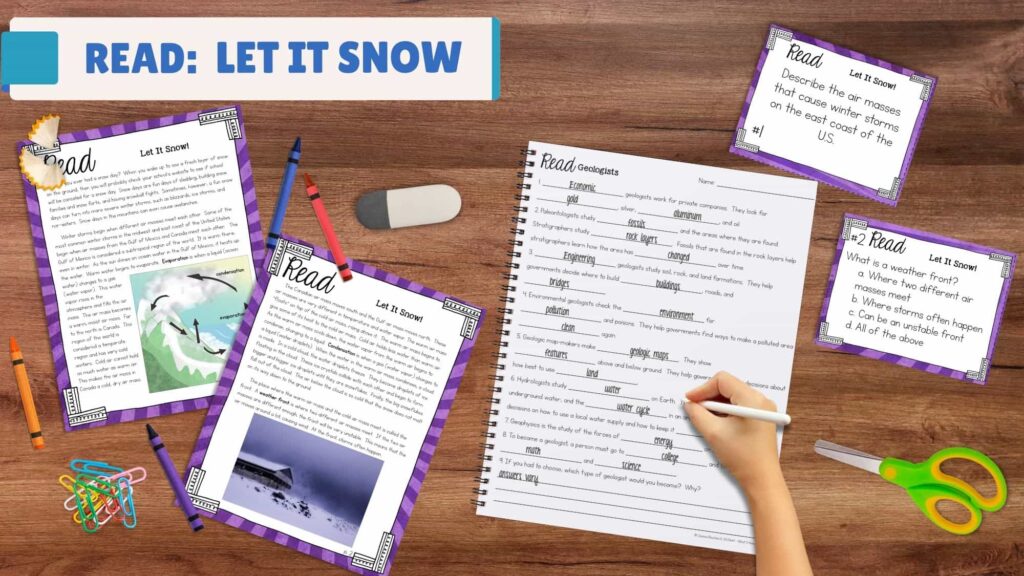
Students read about:
- How warm, moist air masses and cold, dry air masses interact to form winter storms
- The role of weather fronts in storm development
- Different types of winter hazards, including blizzards, ice storms, nor’easters, and avalanches
- The specific dangers caused by each hazard, such as whiteouts, power outages, coastal flooding, and roof collapse
- Ways people prepare for and stay safe during severe winter weather
The resource includes multiple response formats—short answer, fill-in-the-blank, and multiple choice—plus task cards and a digital Google Form option. That flexibility makes it easy to adjust for time, student needs, or learning environment.
Designed for upper elementary learners, this resource explores how blizzards, ice storms, nor’easters, and avalanches form—and how communities can prepare for these natural events.
How This Resource Helps Students Understand Natural Hazards
One of the strengths of this passage is its clear connection to the real-world impact of Earth science. Students see that natural hazards come from natural processes like air mass movement, condensation, freezing rain, and snow accumulation. They also see how those processes can lead to serious problems for people and communities.
Rather than focusing on dramatic events alone, the reading highlights cause-and-effect relationships:
- Air mass interactions lead to storms
- Storms create hazards
- Hazards affect infrastructure, safety, and daily life
This structure supports the NGSS expectation that students explain how natural Earth processes can create hazards and why those hazards vary in severity.
How Students Learn About Human Solutions
The final sections of the passage shift the focus to human response, which is key for fourth-grade standards. Students learn that people cannot stop winter storms, yet they can reduce risk through preparation and planning.
The reading explains practical solutions, such as:
- Strengthening roofs and removing weak tree limbs
- Monitoring weather watches and warnings
- Keeping emergency supplies in homes and cars
- Closing avalanche-prone areas when conditions become unsafe
These examples help students understand that science, engineering, and decision-making work together. It also sets the stage for discussions about why different communities need different solutions depending on location and climate.
Ways to Use This Reading in Your Classroom
This passage works well in a variety of instructional settings. You can use it as:
- A science station during a natural hazards unit
- A whole-class close reading tied to weather and climate
- A small-group lesson focused on cause and effect
- A writing prompt starter about problem-solving during natural disasters
Pairing the reading with a class discussion or a design challenge—such as planning a winter safety checklist or evaluating storm preparedness—helps students apply what they read.
Why This Reading Works for Upper Elementary
Upper elementary students are ready to think beyond “what happened” and begin asking “why” and “what can be done.” This resource supports that shift by blending clear explanations, real examples, and human solutions. It builds science understanding while reinforcing reading comprehension and critical thinking skills.
By the end of the passage, students recognize winter storms as more than just snow days. They understand them as natural hazards shaped by Earth’s systems—and they see how people use knowledge, planning, and problem-solving to stay safe.
Designed for upper elementary learners, this resource explores how blizzards, ice storms, nor’easters, and avalanches form—and how communities can prepare for these natural events.
Jessica BOschen
Jessica is a teacher, homeschool parent, and entrepreneur. She shares her passion for teaching and education on What I Have Learned. Jessica has 16 years of experience teaching elementary school and currently homeschools her two middle and high school boys. She enjoys scaffolding learning for students, focusing on helping our most challenging learners achieve success in all academic areas.