
Seed dispersal is one of those plant science topics where students make a surprising number of prior-knowledge connections. They’ve seen dandelion fluff, found burrs on their socks, and watched squirrels bury acorns. The challenge is getting them from casual observation to scientific explanation.
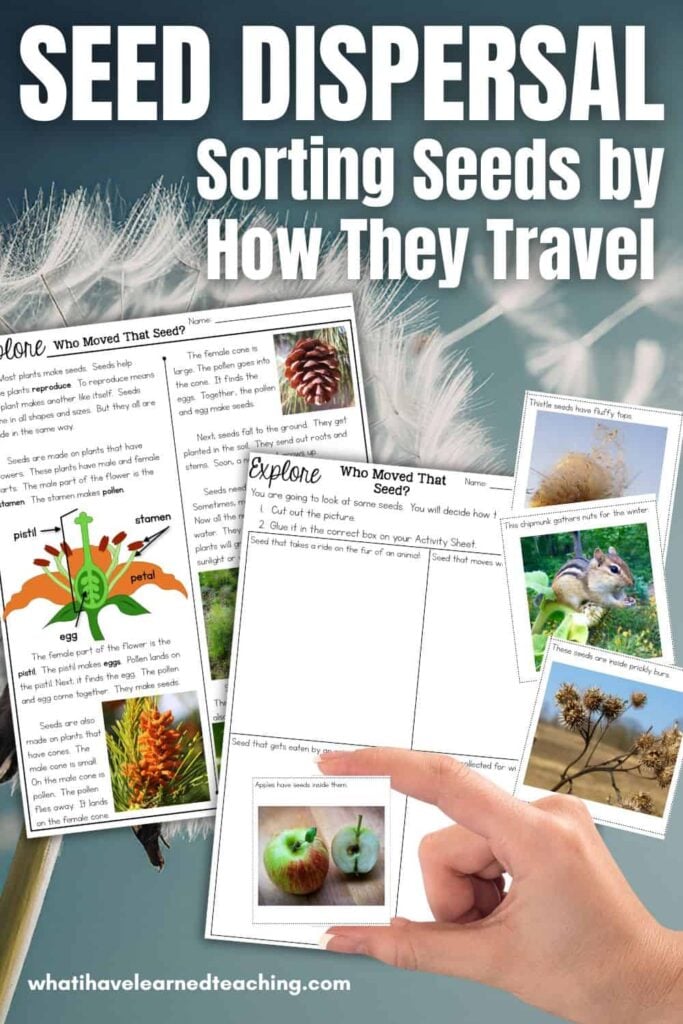
These seed dispersal activities are designed for 2nd and 3rd grade and can be used as a full lesson sequence, science centers, or stand-alone practice sheets, depending on where you are in your unit. They combine sorting, modeling, and reading comprehension so students work with the concept in multiple ways, not just once.
What Is Seed Dispersal?
Seed dispersal is how seeds move away from the parent plant so new plants can grow.
Plants need this to happen. If all seeds fall in one spot, they compete for sunlight, water, and space, so fewer plants survive.
How Are Seeds Dispersed?
Here are the main methods of seed dispersal that 2nd- and 3rd-grade students should know:
- Wind – seeds with fluff or wings (like dandelions or maple seeds)
- Animals (eaten) – seeds inside fruit get carried and dropped later
- Animals (carried) – seeds stick to fur (burrs)
- Animals (stored) – squirrels hide seeds and forget them
- Water – seeds float and travel to new places
The seed dispersal activities and worksheets below help students understand how seeds are dispersed by wind, animals, and water through hands-on learning.
Seed Dispersal Activities and Labs for Kids
The following seed dispersal activities give students multiple ways to show their understanding of how seeds travel and the different methods of seed dispersal.
Options include sorting, short answer, and multiple-choice formats, making them ideal for differentiation across 2nd and 3rd grades. Use each seed-dispersal activity sheet for practice, assessment, or review while reinforcing key vocabulary and concepts.
Seed Dispersal Activity #1: Sorting Seeds by How They Travel
This seed dispersal sorting activity helps students identify and categorize methods of seed dispersal by cutting, sorting, and gluing seed images into groups such as wind, animals, and stored seeds.
As students complete this seed dispersal activity sheet, they practice explaining how seeds are dispersed with visual evidence, building a strong foundation for understanding how seeds travel.
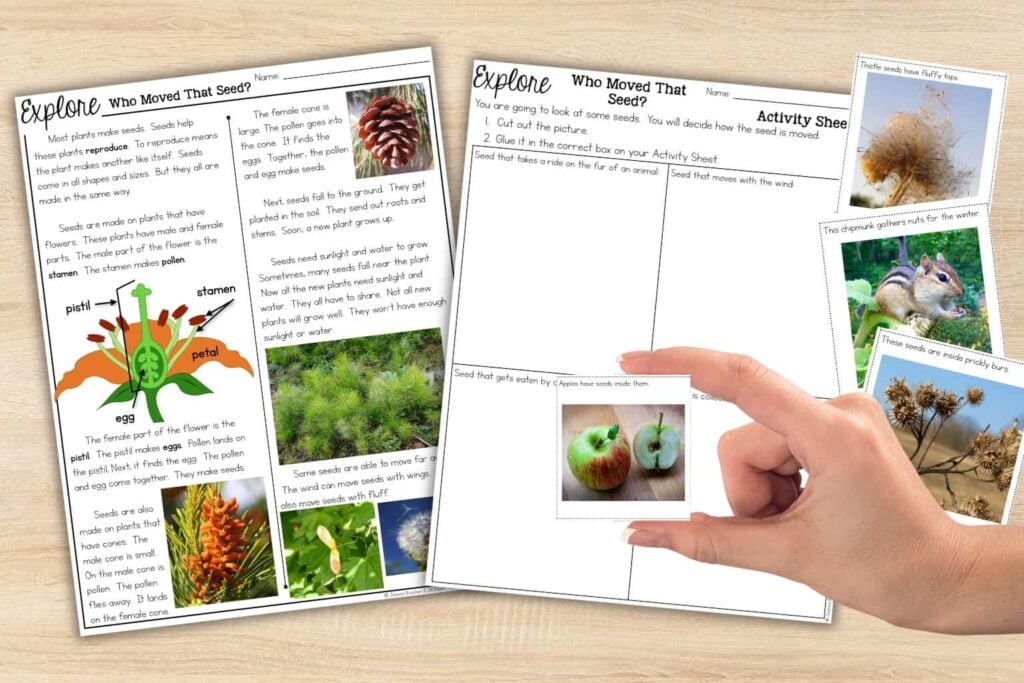
This activity aligns with NGSS 2-LS2-2 by helping students understand how animals and environmental factors move seeds to new locations, making it a great fit for 2nd-grade centers, small groups, or whole-class instruction.
One misconception to watch for: students often lump “carried by animals” and “eaten by animals” into the same category. The sorting activity is a good moment to slow down and talk through the difference — a burr hitches a ride on fur without the animal knowing, while a fruit seed gets eaten and later deposited somewhere new. That distinction is worth a class discussion before students glue anything down.
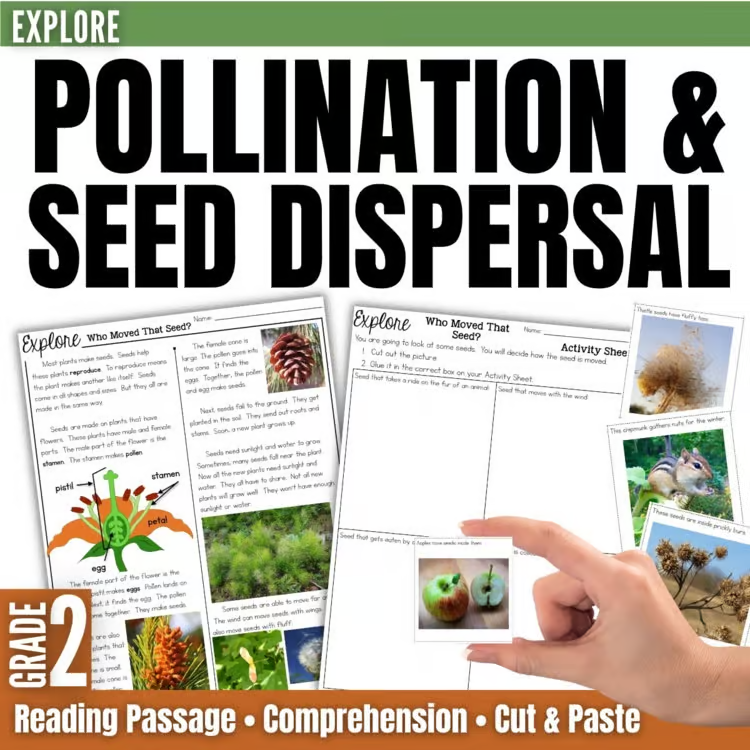
In the Explore seed dispersal sort, students read short informational passages about each method and match seed examples to how they travel.
For 3rd grade, extend this same seed dispersal activity by having students explain why different seed traits (such as wings, hooks, or fruit) help seeds move and survive, adding deeper reasoning and written responses.
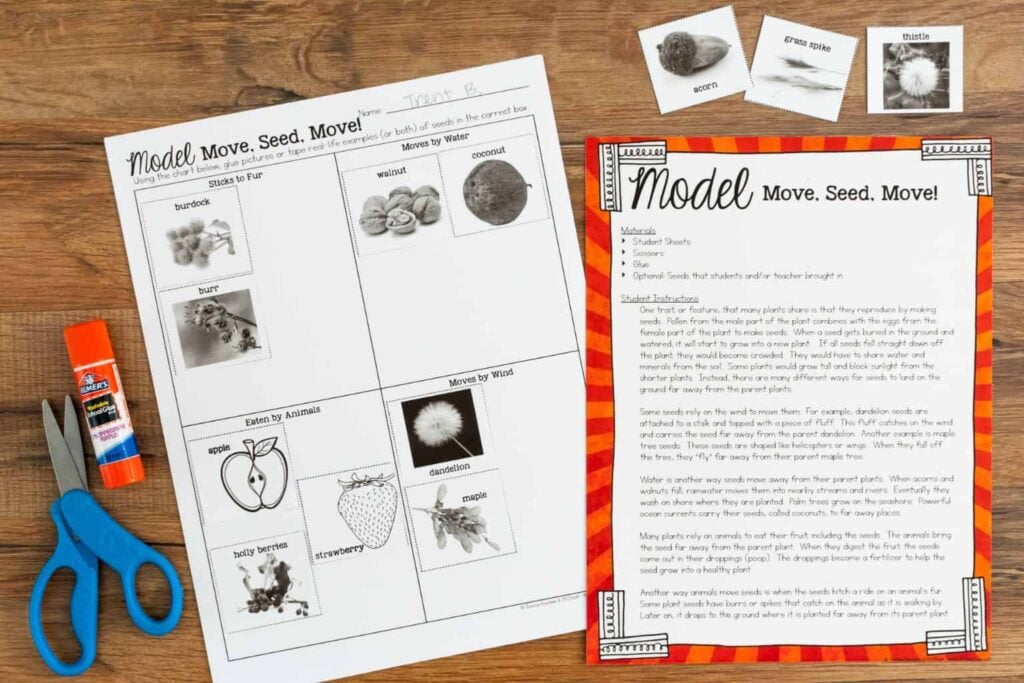
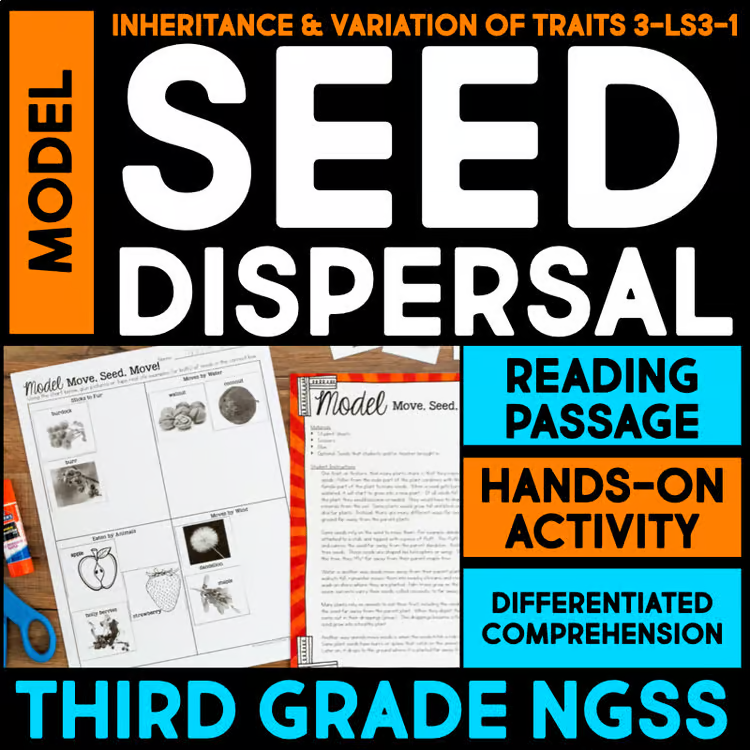
In this science activity, students sort the movement of seeds by wind, water, and animals.
After students have identified how seeds travel, this next activity allows them to model one of those methods in a hands-on way.
Seed Dispersal Activity #2: Hands-On Seed Dispersal Lab Activity
This engaging lab activity allows students to model how seeds attach to animals using simple materials such as Velcro and a rolling object to represent movement.
Students simulate how seeds stick to fur and travel using Velcro dots, reinforcing how seeds are dispersed through animal interactions.
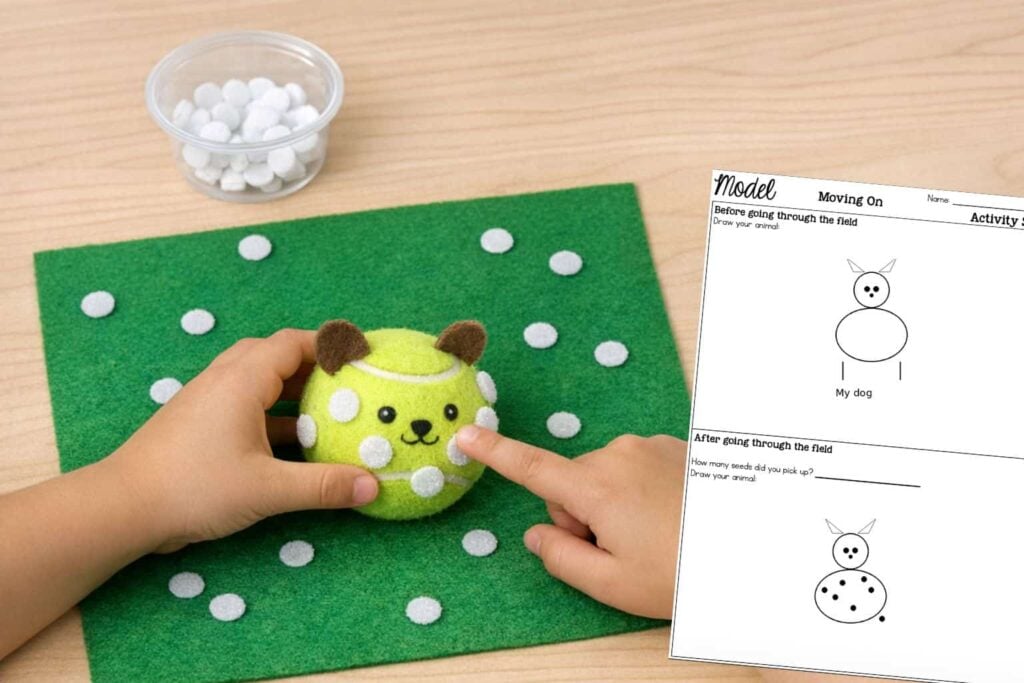
This seed-dispersal activity for kids supports NGSS 2-LS2-2 by helping students develop and use models to represent how plants depend on animals to move their seeds. It’s an excellent hands-on extension for students who need to see how seeds travel in a concrete, memorable way.
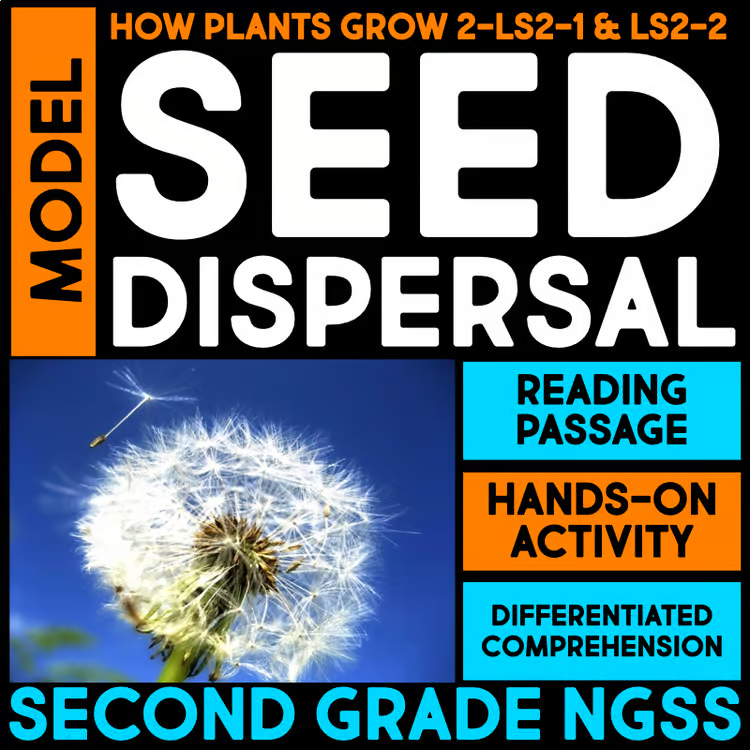
In this integrated science lesson, students investigate the movement of seeds by wind, water, and animals.
When I’ve run this activity, the velcro rolling object tends to move faster than students expect, which leads to a natural conversation about how far a seed might actually travel on a passing animal. Having students predict first: how many seeds will stick? how far will they go? — gives the lab a cleaner science structure and connects it to the NGSS modeling standard.
Seed Dispersal Activity #3: Reading Passage + Comprehension
All three seed dispersal science stations combine informational reading with comprehension questions to build background knowledge about seed dispersal. Across the three passages, students learn about plant reproduction, why seeds need to move away from the parent plant, and the different methods of seed dispersal, including wind, animals, and water.
The passages increase in complexity. The 2nd-grade version uses shorter sentences, strong visual support, and focuses on identifying how seeds travel.
The 3rd-grade version includes more detailed explanations and asks students to explain why seeds disperse in different ways and how seed traits help plants survive.
Each second- or third-grade science station provides flexible question formats (short answer, multiple choice, and fill-in-the-blank), making it easy to differentiate instruction.
The vocabulary in these passages does real work. Words like “disperse,” “germinate,” and “adaptation” appear in context, helping students use them in their written explanations rather than just recognize them on a word wall.

These seed dispersal worksheets support literacy integration while addressing NGSS standards by helping students explain how plants depend on animals and the environment. They work well for independent practice, assessment, or vocabulary reinforcement in a seed-dispersal activity set. All science stations are available for download as a PDF.
By the end of these three science activities, students should be able to answer:
- Why is seed dispersal important?
- How do seeds travel?
- How can seeds be dispersed?
Why These Seed Dispersal Activities Work
These seed-dispersal activities combine hands-on modeling, visual sorting, and reading comprehension to help students develop a clear understanding of how seeds are dispersed. Instead of relying on a single task, students engage with the concept in multiple ways—seeing it, sorting it, modeling it, and explaining it.
This variety makes it easier to differentiate instruction. The sorting activity supports early learners, the model activity provides a concrete experience, and the reading passages allow students to explain their thinking using science vocabulary.
Using Seed Dispersal Worksheets Throughout Your Unit
You can use these seed-dispersal worksheets and activity sheets at different points in your unit, depending on your goals. Use them before a lesson to build background knowledge, during centers for guided practice, or after hands-on activities to check for understanding.
They are especially helpful for reinforcing key ideas, such as how seeds travel and why dispersal is important. Pairing worksheets with real-life examples or pictures of seed dispersal helps students connect what they are learning to the world around them.
When students can sort, model, and explain how seeds move, the concept becomes much more meaningful. Combining these seed-dispersal activities gives students a deeper understanding of how plants survive and reproduce.
Jessica BOschen
Jessica is a teacher, homeschool parent, and entrepreneur. She shares her passion for teaching and education on What I Have Learned. Jessica has 16 years of experience teaching elementary school and currently homeschools her two middle and high school boys. She enjoys scaffolding learning for students, focusing on helping our most challenging learners achieve success in all academic areas.