Books about Animal Traits for Elementary Students
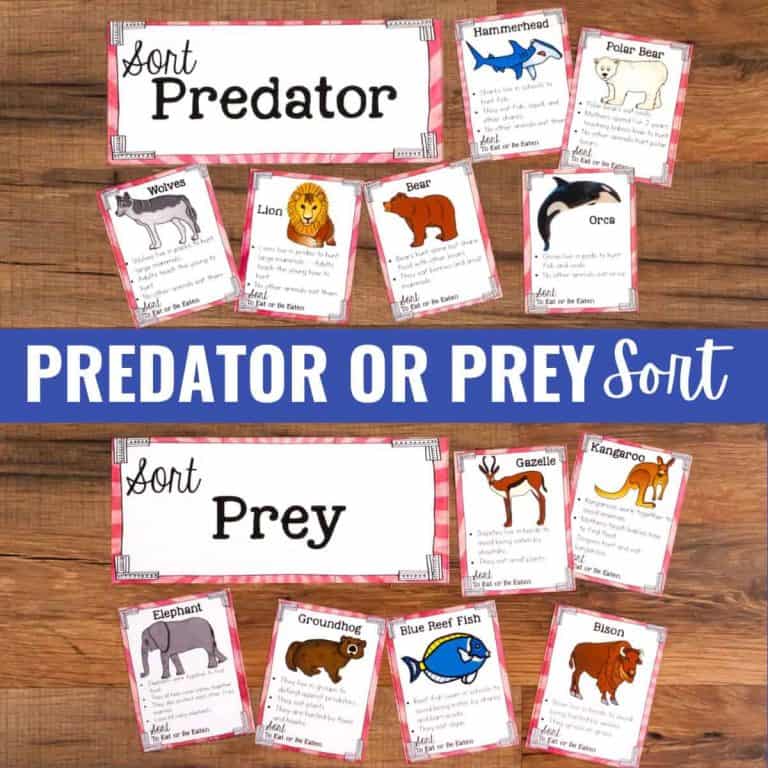
How do you teach students about animal traits? The Next Generation Life Science Standards for Third Grade ask students to provide evidence that animals have traits inherited from their parents….
Strong science instruction encourages curiosity, critical thinking, and hands-on exploration. In elementary classrooms, effective science teaching combines inquiry-based learning, structured instructional models, and meaningful connections across content areas. Whether you’re teaching Earth systems, life science concepts, or physical science topics, these resources are designed to support both conceptual understanding and classroom implementation.
How do you teach students about animal traits? The Next Generation Life Science Standards for Third Grade ask students to provide evidence that animals have traits inherited from their parents….
How do we get children to love the STEM (Science, Technology, Engineering, and Math) subjects? Have you ever worried that your kids are not excited enough about the “difficult” classes?…
December and January are the ideal months to study about winter animals (well if you live in the northern hemisphere). It is the time of the year when we study…
12 books to teach elementary students about Weather Hazards, such as hurricanes, floods, and tornadoes. Use these books to introduce a weather unit or have students research different weather hazards. These books match third-grade NGSS science standards.
Weather is always a fascinating topic for students. They see it happening all around them and want to understand how it works and what causes our weather. These 13 books…
Teaching static electricity is one of those science topics that instantly grabs attention. Rub a balloon on your head, and suddenly your classroom looks like a science lab and a…
These Scientific Method Posters and Science Experiment Recording Sheets are a great way for elementary students to become familiar with the scientific process. Display them in your classroom. Use them for small or larger experiments.
Do you teach science in Texas and wonder how to successfully teach science lessons that are aligned with the next generation science standards? We created an NGSS and TEKS alignment tool for second, third and fourth grade teachers in Texas who want to use our science stations and 5E units.
17 fun ideas and resources for teaching force and motion. Includes demonstrations, experiments, science stations, and lessons that will engage students in learning about balanced and unbalanced forces and patterns in motion. These teaching ideas will help you teach the NGSS standards.
Learn how to read the Next Generation Science Standards and figure out what to teach during your elementary science lessons. The NGSS are three-dimensional standards and complicated to understand and implement in your classroom. We’re here to help!
Are you looking for creative and engaging ways to enhance your unit on the butterfly life cycle or butterfly migration? Butterflies are fascinating creatures, and students are drawn to learning…
The invisible forces of magnetism are at work all around us, even as you read this sentence. To understand this concept, and how magnets work, can be difficult for students….
End of content
End of content