Force and Motion Third Grade Science Stations
$13.78The focus is on NGSS 3-PS2.A and includes concepts such as force (push and pull), surface types and speed.

Showing 1–15 of 20 resultsSorted by popularity
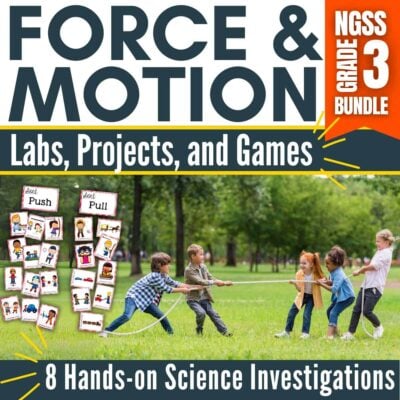
The focus is on NGSS 3-PS2.A and includes concepts such as force (push and pull), surface types and speed.
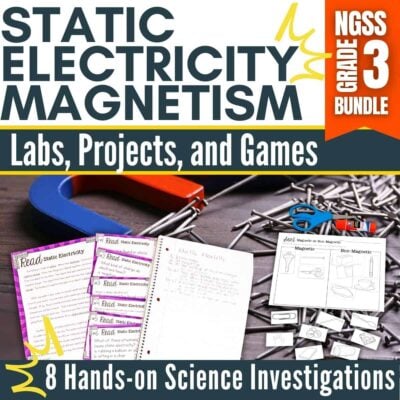
The focus is on NGSS 3-PS2.B and includes concepts such as static electricity, magnets, and positive and negative charges.
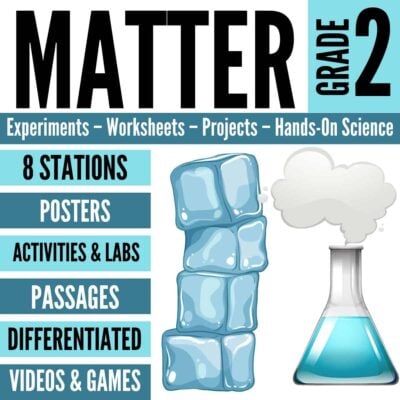
Teach second grade students about the structure and properties of matter with 8 engaging NGSS-aligned science stations. Students explore solids, liquids, gases, observable properties, changes in states of matter, classifying materials, modeling with small pieces, and choosing materials for a purpose.

Energy Science Stations for Fourth Grade Next Generation Science Standards include 10 different science stations where students can deepen their understanding of energy, transfer of energy and forces.
This Force and Motion for Balanced and Unbalanced Forces 5E Model Unit Plan is an inquiry-based unit using the 5E Model lesson plans.

This Force and Motion for Patterns in Motion 5E Model Unit Plan is an inquiry-based unit using the 5E Model lesson plans.
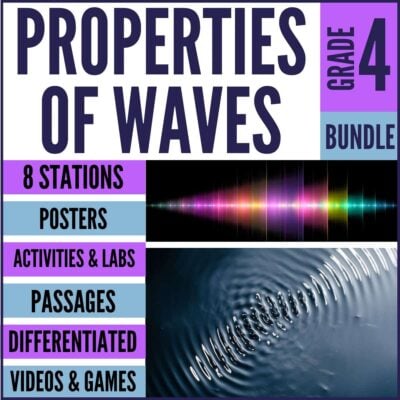
Making Waves Science Stations for Fourth Grade Next Generation Science Standards include 8 different science stations where students can deepen their understanding of wave properties.

Talk to Me Science Stations for Fourth Grade Next Generation Science Standards include 7 different science stations where students deepen their understanding of communication through codes & technology.
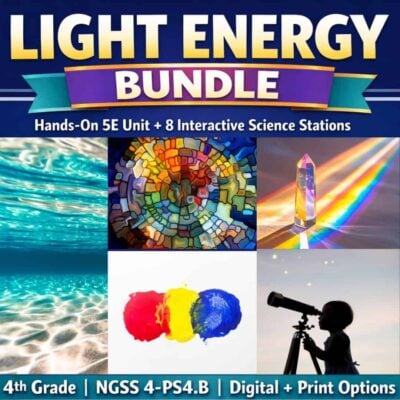
Light It Up! Science Stations for Fourth Grade Next Generation Science Standards include 8 different science stations where students deepen their understanding of properties of visible light.
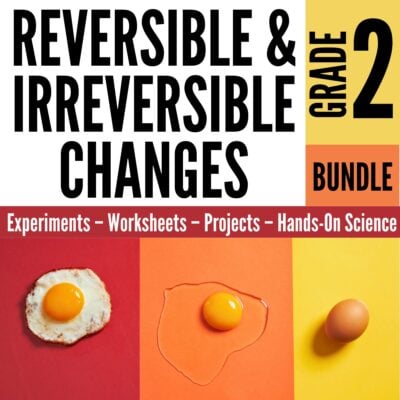
The “It’s a Matter of Change – Reversible and Irreversible Changes” Science Stations for Second Grade include 8 different science stations where students deepen their understanding of the changes of various forms of matter. All stations in this set meet the DCI 2-PS1.B, helping students gain an understanding of how some changes caused by heating and cooling can be reversed and some cannot. See below for details on how these stations meet the standards and specific DCIs.

These Third Grade Science Assessments are aligned to the Next Generation Science Standards for third grade and compliment our 5E Instructional Units. There are two assessments or tests per NGSS standard. There is also a third assessment that combines those two tests.
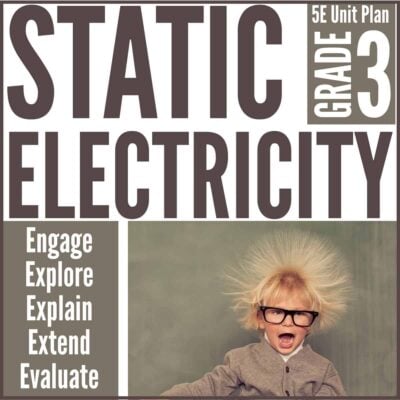
This Static Electricity 5E Model Unit Plan is an inquiry-based unit using the 5E Model lesson plans. It focuses on investigating static electricity, learning about what affects static electricity, and diagramming the flow of electrons in static electricity.
This Waves 5E Science Unit Plan is an inquiry-based unit where students learn about how wave patterns in terms of amplitude and wavelength and that waves can cause objects to move. Students learn how regular patterns of motion can be made by water and how waves differ in amplitude and wavelength. The unit includes three parts for each of the 5E’s (Engage, Explore, Explain, Extend, and Evaluate) and more.
This Magnetic Forces 5E Model Unit Plan is an inquiry-based unit using the 5E Model lesson plans.
This Energy of Collisions 5E Science Unit Plan is an inquiry-based unit where students learn about the changes in energy that occur when objects collide. Students learn that energy can be moved from place to place by moving object, that when objects collide energy can be transferred and an object’s motion changes, and more. The unit includes three parts for each of the 5E’s (Engage, Explore, Explain, Extend, and Evaluate) and more.
End of content
End of content