
Plant Growth Science Activities for 5th Grade
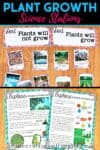
Are you looking for an engaging, interactive way to teach your fifth-grade students about plant growth? Designed to help students understand plant development, these NGSS Plant Growth Science Stations offer a differentiated and hands-on learning experience for fifth-grade elementary students.
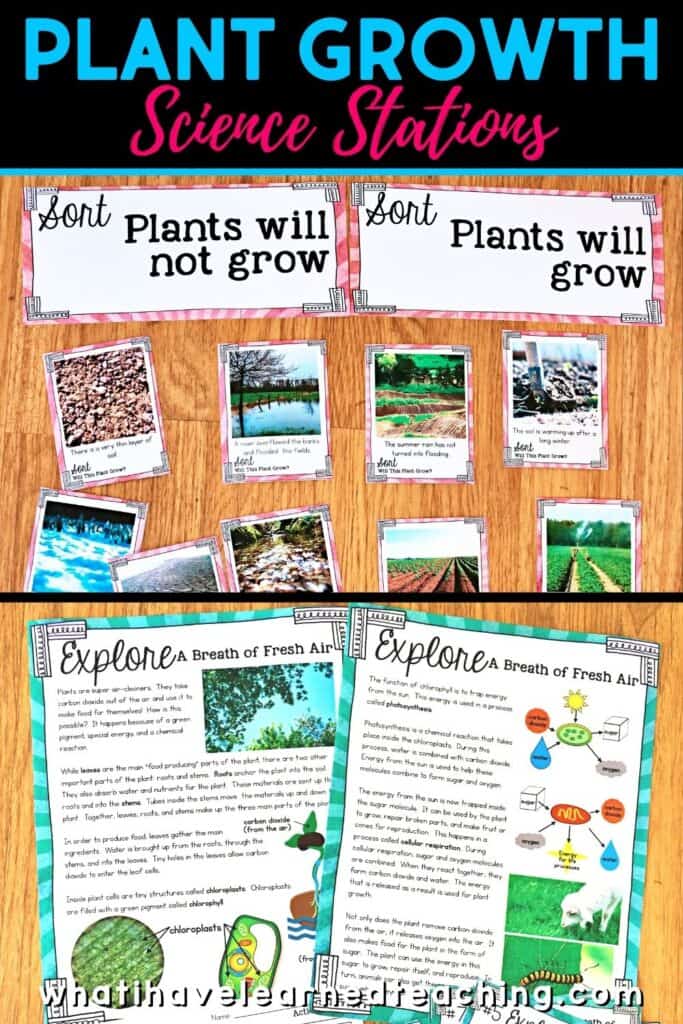
Each station is crafted to engage your students and encourage scientific inquiry, such as exploring photosynthesis’s intricacies and understanding air and water’s vital role in plant growth,
We’ve included everything required by the NGSS standards for your fifth-graders. Eight fun, engaging stations incorporate labs, experiments, videos, text, and games.
If you want a broader look at how plant growth fits into the full life cycle — and how NGSS builds that understanding across grade levels — my guide to plant life cycle stages covers each stage and what to emphasize at 2nd, 3rd, and 5th grade.
What’s Included in the Plant Growth Science Stations
The Plant Growth Science Stations were created with NGSS Standard 5-LS1-1 in mind. They help students understand how plants grow, including the parts of a plant, photosynthesis, the flow of energy in plants, plant tissue, and the need for air and water.
Students make observations, construct explanations, use evidence to support a claim, and design solutions to problems throughout the unit to explore these science concepts. These science stations contain challenging material for fifth graders, with new words and concepts in easy-to-implement, interactive stations.
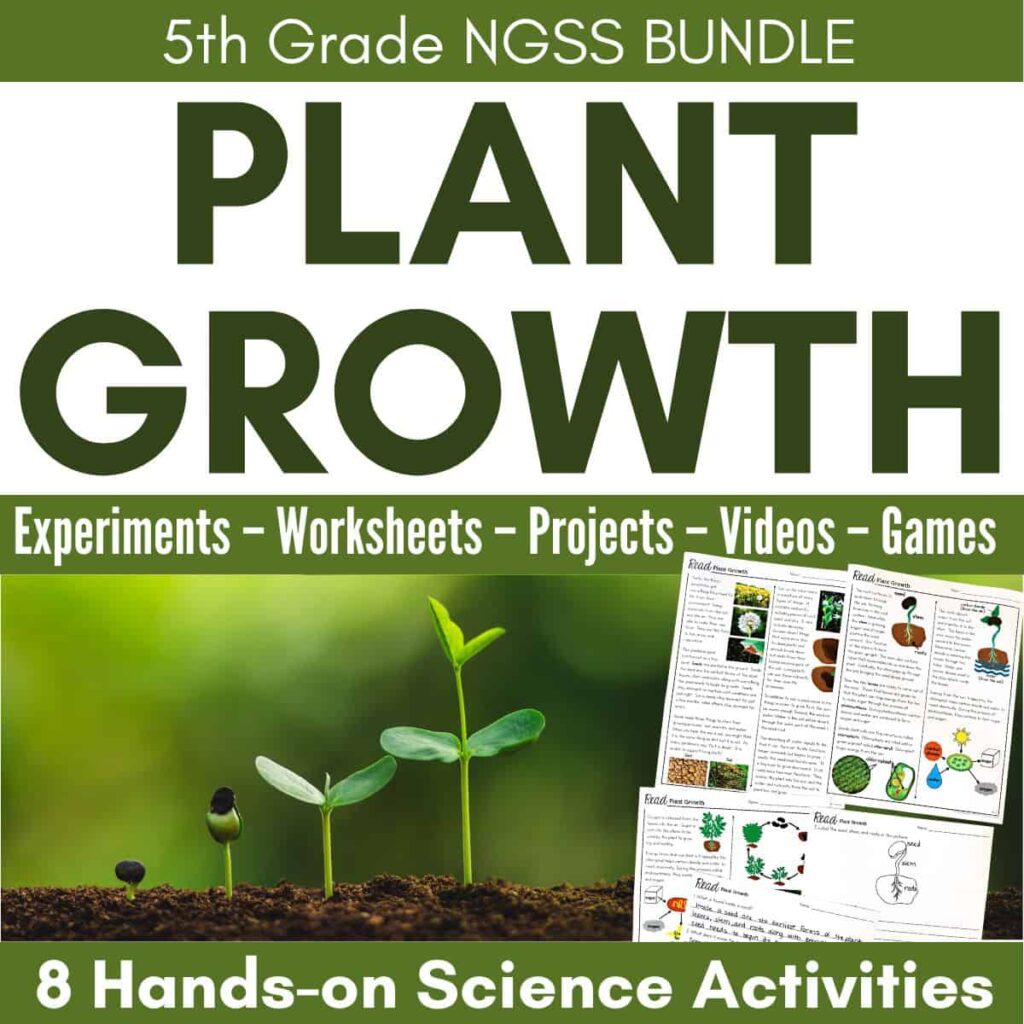
Plant Growth Science Stations Unit BUNDLE
These Plant Growth Next Generation Science Stations include eight different science stations where students deepen their understanding of how plants grow, including understanding plant parts, photosynthesis, the flow of energy, plant tissues, and the need for air and water. The focus is on 5-LS1-1.
Focus on NGSS Standards for 5-LS1-1
The Plant Growth Science Stations Unit focuses on these standards:
- Performance Expectation 5-LS1-1. “Support an argument that plants get the materials they need for growth chiefly from air and water.”
This Performance Expectation, 5-LS1-1, is concerned with what plants need to grow and the necessary materials for plant growth. Students will be learning about the biological processes of photosynthesis as part of the scope of this PE, including the flow of energy in the form of sugar through the plant, plant tissue growth and maintenance, etc.
- Disciplinary Core Idea: 5-LS1.C – “Plants acquire their material for growth chiefly from air and water.”
- Science and Engineering Practice: Engaging in Argument from Evidence
- Crosscutting Concept: Energy & Matter
Big Idea Posters for Plant Growth
Our Plant Growth Science Stations Unit has Big Idea posters perfect for students to understand the science concepts at the heart of this study.
This unit contains eight Big Idea Posters. Only the Plant Growth Unit Bundle includes the Big Idea Posters. The Posters are not included for each individual station and are only available when purchased as a bundle or set of science stations.
Vocabulary Cards
Can you imagine a classroom without vocabulary resources? Fortunately, that’s a scenario your students will never have to face. The unit includes two varieties of vocabulary cards.
The first variety showcases the vocabulary term accompanied by an illustration and its definition. We’ve designed each card with dotted lines to enable you—or your students—to easily separate the word, its picture, and its definition into three parts. Scramble the segments; voila, you’ve created an engaging and educational activity your students will love.
Tip: Consider laminating these cards for durable, year-after-year use, or have students paste their assembled vocabulary cards into their science journals.
And guess what? These vocabulary cards fit perfectly in pocket charts as well!
The second variety of vocabulary flashcards presents the term and its definition in a larger typeface, ideal for a visual science word wall. Both varieties include identical terms, allowing you to choose the best fit for your educational setting without the stress of missing any key vocabulary.
The Plant Growth vocabulary cards are an exclusive feature of the Unit Bundle and are not sold separately for each science station.
Differentiated Responses for Each Science Station
Not every classroom looks the same. Not every child learns the same way. We understand. That’s why all of our science stations include a variety of ways for students to interact with each station. There are five different ways to respond to each station:
- short answer questions
- fill-in-the-blank questions without a word bank
- fill-in-the-blank with a word bank
- task cards with short answers
- task cards with multiple-choice answers
All the variations are similar but require a different level of independence. The fill-in-the-blank is the easiest and is perfect for your students who struggle with reading. The short-answer questions are the most difficult as they require students to construct their own responses without much support.
Choose the format that best fits your classroom and students. Students are also encouraged to use their science journal task cards. Answer keys are included.
Some activities also include an activity sheet or worksheet and differentiated responses. This activity sheet is the “work” of the station, while the differentiated responses require students to think broadly about the topic and concept.
You can find examples of the questions in some of the images below.
Reading Passages
All stations except the Watch and Play stations include reading passages. Most of the reading passages are optional, but they do build students’ background knowledge and solidify key concepts. Use them if your students do not have prior knowledge of the station’s topic.
The reading passages come in two formats. You’ll see versions of both of these formats in the below photographs. Both versions have the exact same text but different layouts.
- Full-page with color border
- Two-column with a black border
See examples of the two formats in the images below.
Google Classroom Components
Our fifth-grade science stations come with components easily integrated with Google Classroom. Google Forms and Google Slides are included for most stations.
- A Google Form™️ with Reading Passage & Differentiated Questions is available for the Watch, Investigate, Diagram, Read, Model, Explore, and Sort stations.
- Google Slides™️ with Activity Directions & Worksheets are available for Investigate, Diagram, Model, Explore, Sort.
Most hands-on activities still require physical components, but we have provided the directions and recording sheets in Google Slides.
Watch a Video about Plant Growth
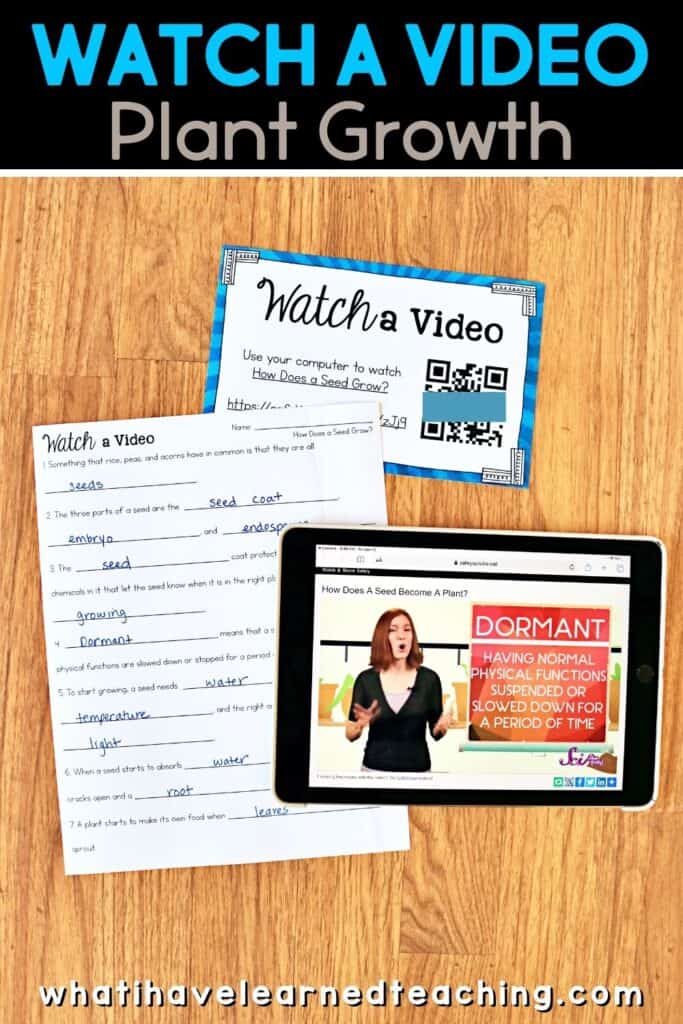
This station features videos that illustrate plants’ life cycles and highlight the conditions under which they flourish. By visually experiencing the transformation from seed to sprout, students grasp the basic principles of plant growth, such as the importance of water, light, and soil.
Students love this station! They can view it individually, or you can show it to the entire class. There are two videos to choose from: one about how a seed grows and the other about how dirt is used for plant growth.
While we recommend picking one video to watch, feel free to do both if you have the time!
After watching the video, students answer questions about it. This station contains several worksheets with open-ended, short-answer questions, fill-in-the-blank sentences, and more. Task cards are also included.
This foundational knowledge in these two videos leads to richer explorations of plant growth, preparing students for more complex concepts and hands-on activities that await them in the following stations.
Play a Game About Plant Growth
This station includes board games, crossword puzzles, and word searches that focus on vocabulary related to plant growth. This dual approach of play and learning facilitates cognitive connections between terms and their meanings, enhancing students’ scientific literacy.
The playful nature of this station fosters a love for science, making learning about plant growth an enjoyable and rewarding experience.
The interactive features reinforce learning memorably, ensuring that key concepts stick with the students long after the game ends.
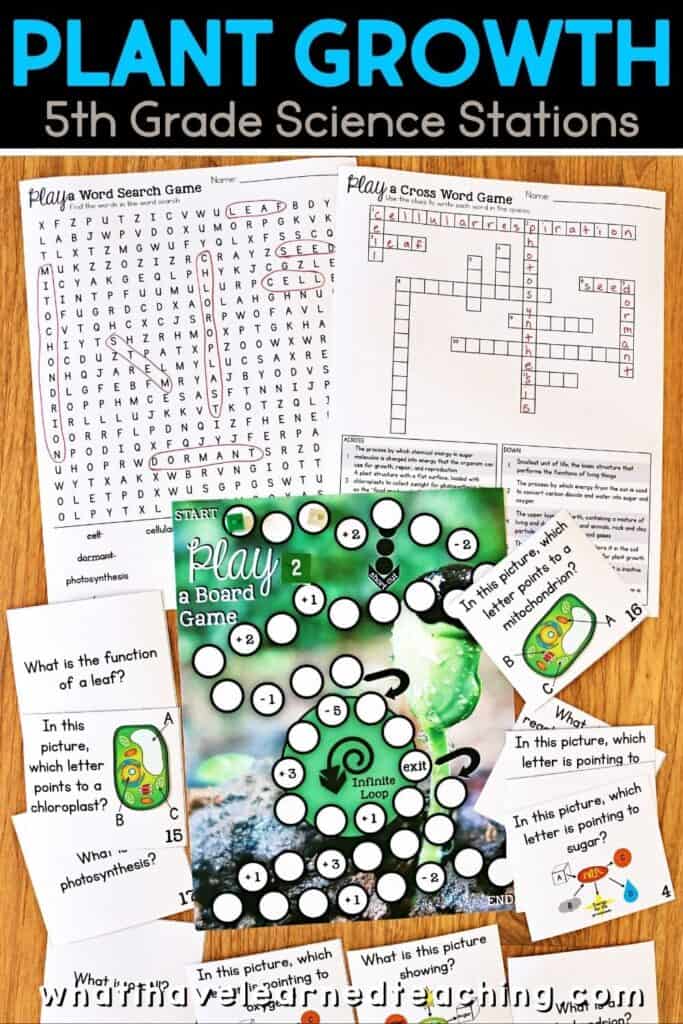
The printable crossword puzzle has two versions: one with a word list and one without. The crossword puzzle and word search also come in digital formats. The digital form changes each time the page is loaded so that each student can work on their versions of the puzzles.
Investigate Light’s Role in Germination
The investigate station offers students a hands-on experience with the scientific method, focusing on the critical role of light in seed germination. Through controlled experiments, students test the effect of light on seeds and observe how different conditions influence the germination process.
This direct engagement with the scientific process cultivates critical thinking and analytical skills as students form hypotheses, conduct experiments, and draw conclusions based on their observations.
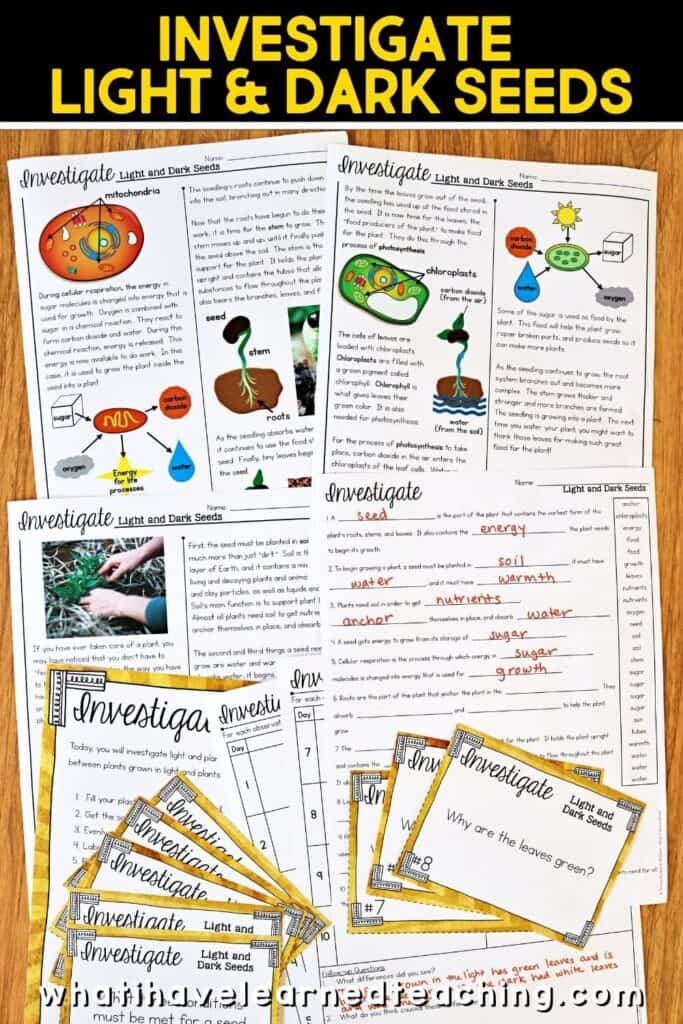
Students leave this station with a greater appreciation for the complexities of plant growth and the conditions necessary for life to thrive.
Diagram: Mapping Plant Food Production
The diagram station is where students connect the dots between sunlight, water, and carbon dioxide in photosynthesis.
By creating diagrams, students visualize how plants convert light into chemical energy, clearly and concisely representing this complex process. This activity reinforces the concept that plants are dynamic systems transforming energy to sustain life.

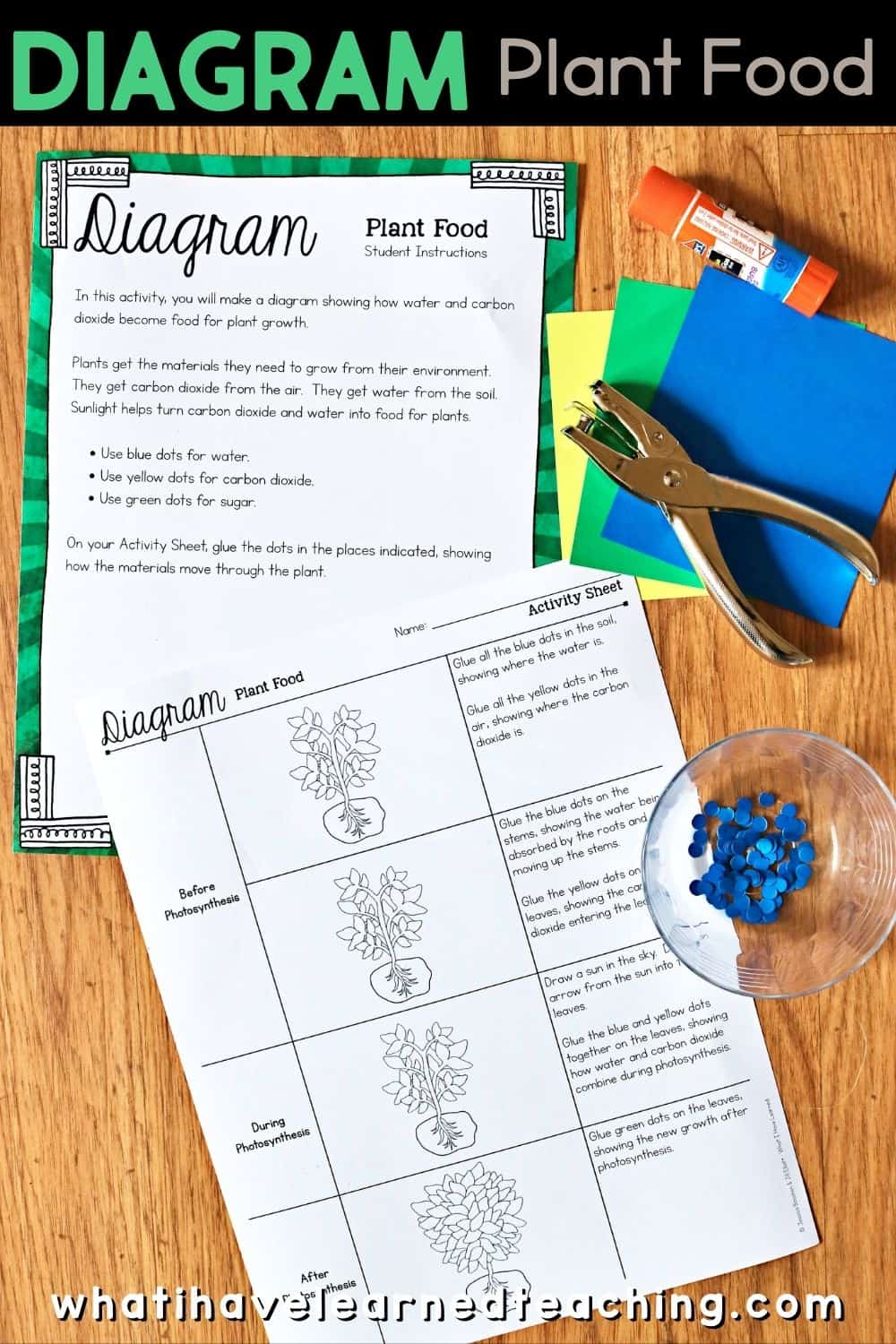
This methodical breakdown of the process into its essential components helps illustrate how plants make their food and grow.
As students unravel the process of photosynthesis, they gain insights into the intricate web of life, and the essential role plants play in sustaining it.
Read About Plant Growth
The READ station immerses students in the detailed study of plant growth through engaging reading materials. This reading expands their knowledge and improves literacy skills, bridging the gap between science education and language arts.
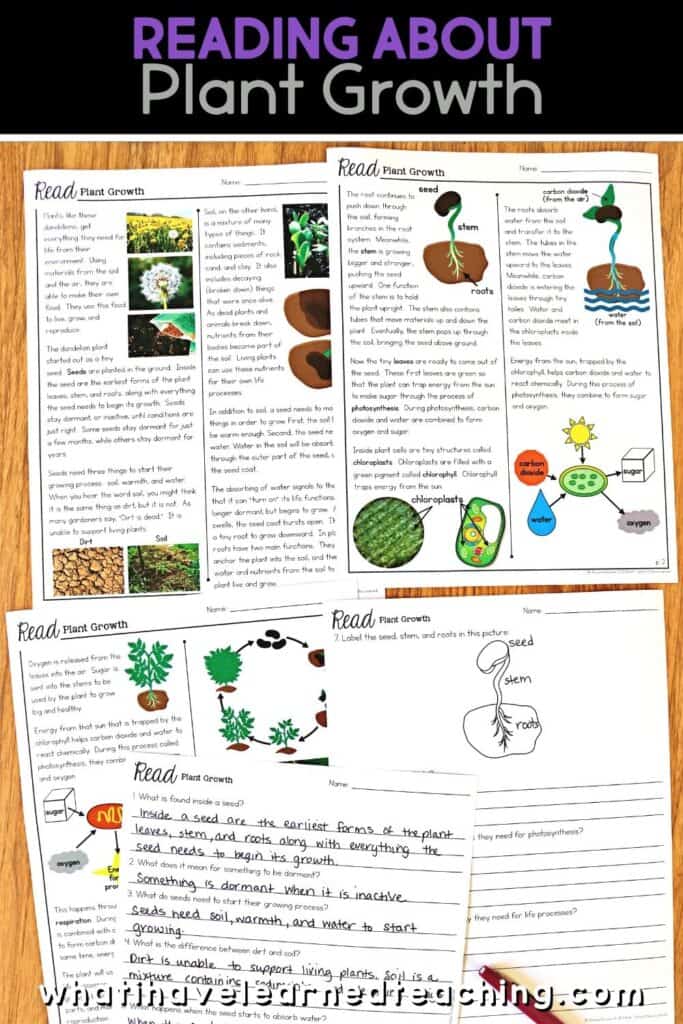
This station serves as a quiet counterpoint to the hands-on activities found in other stations, allowing students to reflect on and absorb the information at their own pace.
Through reading, they encounter real-life examples and scientific explanations of plant biology. This station emphasizes the importance of self-directed learning and the role of reading in acquiring new knowledge.
Model The Soil Plants Need
At the model station, students explore the crucial role of soil in plant growth by creating models that represent different soil types.
This hands-on activity allows students to examine how variations in soil composition affect plant health and growth. By mixing sand, clay, and organic matter, students learn about soil texture, drainage, and nutrient content, gaining practical insights into the environment plants need to thrive.

Students will understand that not all soils are created equal and that a suitable soil composition is essential for healthy plant growth.
Through this modeling activity, they appreciate the complexity of natural ecosystems and the importance of soil conservation in sustaining plant life.
Explore: Plants Need Air, Too
Exploring the importance of air for plant growth, this station engages students in activities highlighting how plants use carbon dioxide for photosynthesis. Through experiments that alter the air available to plants, students witness the effects of varying carbon dioxide levels on plant health.
This exploration into the gaseous needs of plants reveals the interconnectedness of life and the atmosphere.
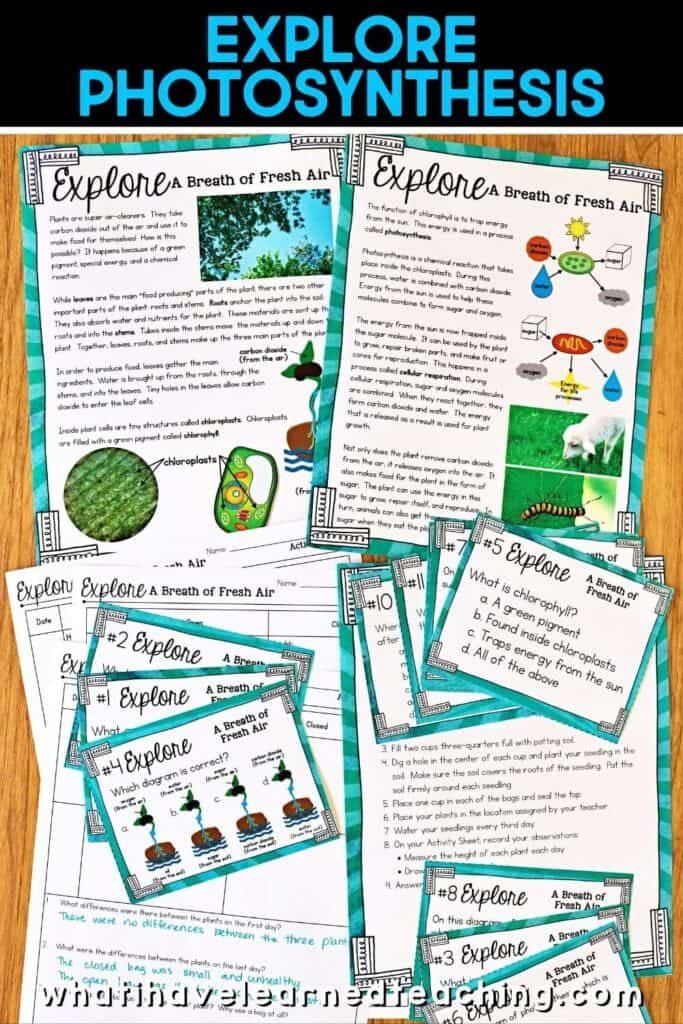
This station emphasizes the symbiotic relationship between plants and animals, showcasing how the oxygen produced by plants during photosynthesis is essential for animal life, including humans. By exploring the role of air in plant growth, students gain a holistic view of the biosphere and understand the delicate balance that sustains life on Earth.
Sort: What Will Help This Plant Grow?
Finally, the sort station challenges students to apply their knowledge by categorizing factors that affect plant growth. This critical thinking exercise involves sorting various elements into categories based on their impact on plant health.

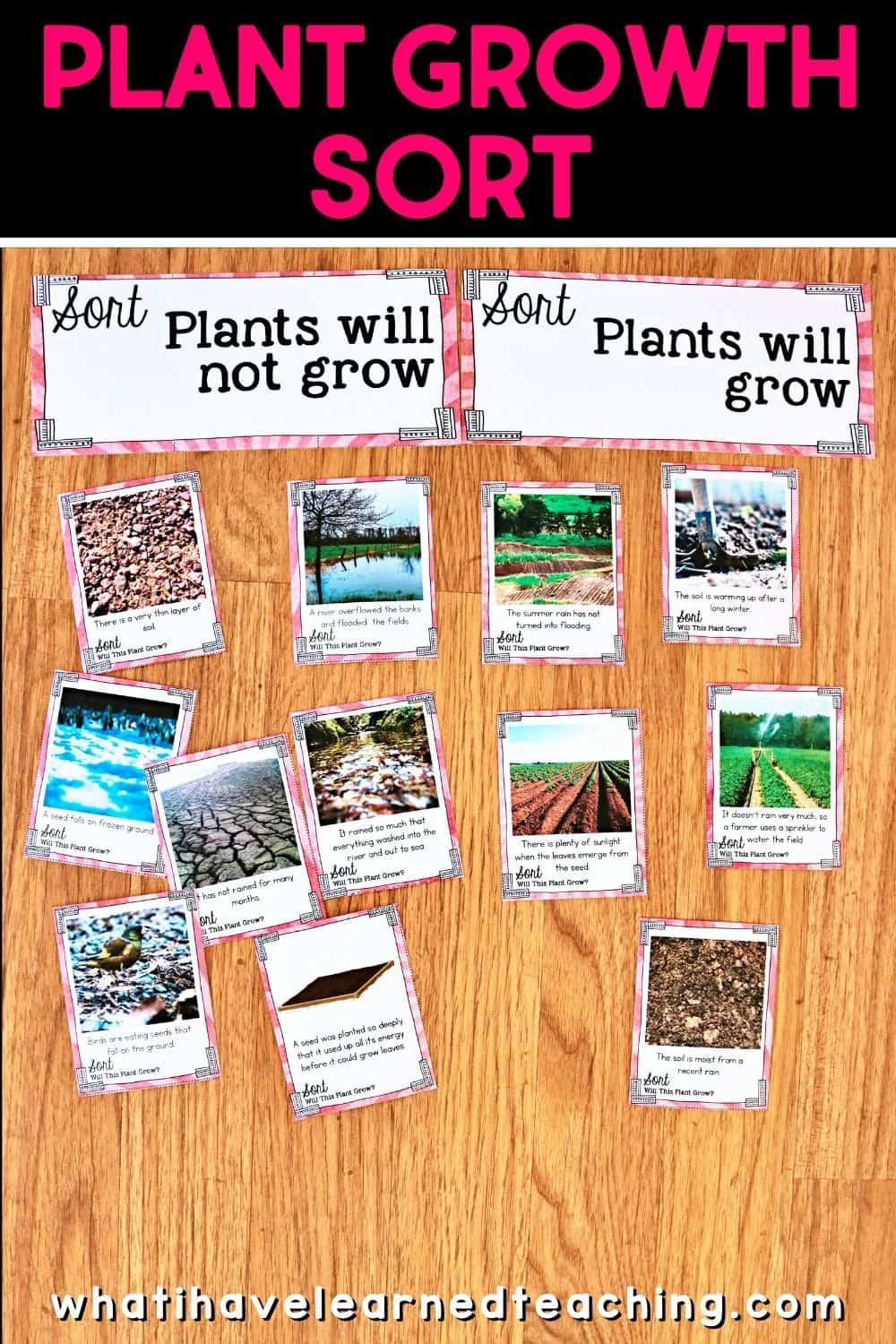
This station reinforces the students’ understanding of plant growth factors and encourages them to think about how they interact in real-world scenarios. As they sort and categorize, students develop a comprehensive understanding of the conditions necessary for plants to flourish, rounding out their journey through the science of plant growth.
Each station in our Plant Growth set offers a unique lens through which to view the intricate world of plant growth. Students can comprehensively understand the various elements that plants need to thrive through watching, playing, investigating, diagramming, reading, modeling, exploring, and sorting.
This hands-on approach educates and inspires curiosity and respect for the natural world, fostering a generation of learners who are as knowledgeable about the environment as they are eager to protect it.
Plant Growth Science Stations Unit BUNDLE
These Plant Growth Next Generation Science Stations include eight different science stations where students deepen their understanding of how plants grow, including understanding plant parts, photosynthesis, the flow of energy, plant tissues, and the need for air and water. The focus is on 5-LS1-1.
How to Purchase the Fifth Grade Plant Growth Stations
The Plant Growth Science Station Unit can be purchased on my website or Teachers Pay Teachers.
Other Fifth Grade Science Stations
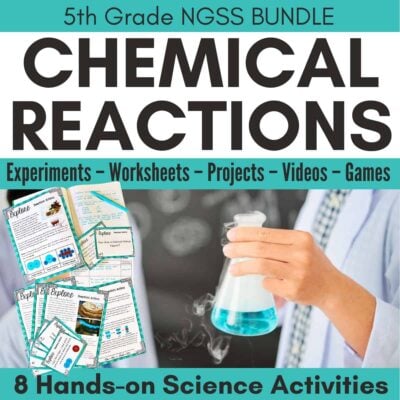
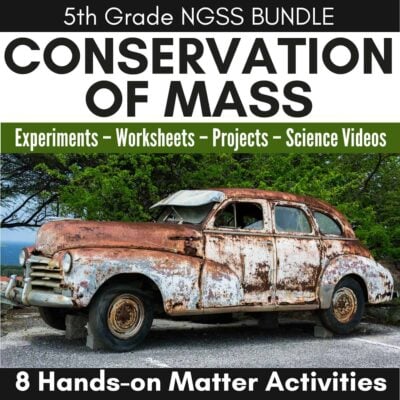
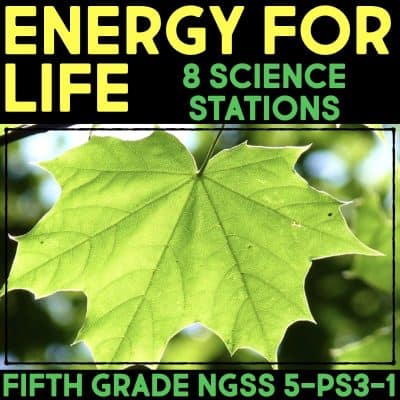
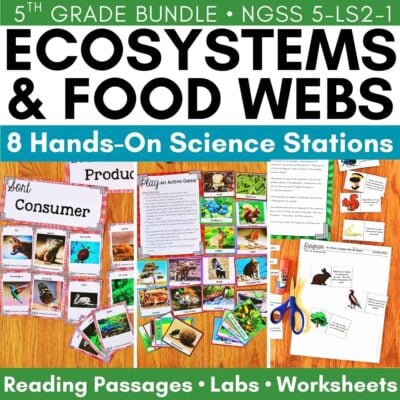
We have fifth-grade science stations for all of the NGSS Standards. Click below for information about each one!
-
 Product on sale5th Grade NGSS Science Station Yearlong BUNDLEOriginal price was: $316.00.$177.87Current price is: $177.87.
 -
-
-
-
-
-
-

Jessica BOschen
Jessica is a teacher, homeschool parent, and entrepreneur. She shares her passion for teaching and education on What I Have Learned. Jessica has 16 years of experience teaching elementary school and currently homeschools her two middle and high school boys. She enjoys scaffolding learning for students, focusing on helping our most challenging learners achieve success in all academic areas.