
Multiplication Dice Games to Practice Math Facts
Multiplication facts can be challenging for many students. Memorizing facts often requires repeated practice, but worksheets alone can quickly feel repetitive. Multiplication dice games give students a hands-on way to practice math facts while staying actively engaged in the learning process.
Dice games are simple to set up, easy to explain, and work well in math centers, small groups, or partner practice. Students roll dice, calculate products, and apply multiplication skills in a game format that encourages quick thinking and repeated practice.

Below are several multiplication dice games you can use to help students practice basic multiplication facts. Each game focuses on single-digit multiplication and can be adjusted to work with larger numbers as students become more confident.
What Kind of Dice Can You Use for Multiplication Dice Games?
Most multiplication dice games use two standard six-sided dice, which generate factors from 1–6. This range works well when students are first learning multiplication facts.
If students are ready for more challenge, you can modify the dice in several ways:
- Use 10-sided or 12-sided dice to increase the range of factors.
- Label dice with numbers 6–12 to focus on more difficult multiplication facts.
- Use three dice so students multiply three numbers together.
- Write numbers on blank dice to practice specific multiplication facts students are working on.
Changing the dice is a simple way to adjust the difficulty of multiplication dice games while keeping the same game structure.
Multiplication Dice Games Students Love
Below are six dice games students can play to practice their multiplication facts.
| Game | Skills Practiced | Group Size |
|---|---|---|
| Rolling for Multiples | Basic fact practice | Partners |
| Multiplication Bingo | Fact recognition | Whole class |
| Game of Six | Strategy + multiplication | Partners |
| Multiplication War | Product comparison | Pairs |
| Roll to 1000 | Multiplication + addition | Pairs |
| Shooting Stars | Multiplication fluency | Small groups |
Rolling for Multiples
Rolling for Multiples is one of the simplest multiplication dice games and works well for partner practice or small groups. This game not only enhances the multiplication skills of your students but also encourages teamwork and mutual support.
How to Play Rolling for Multiples
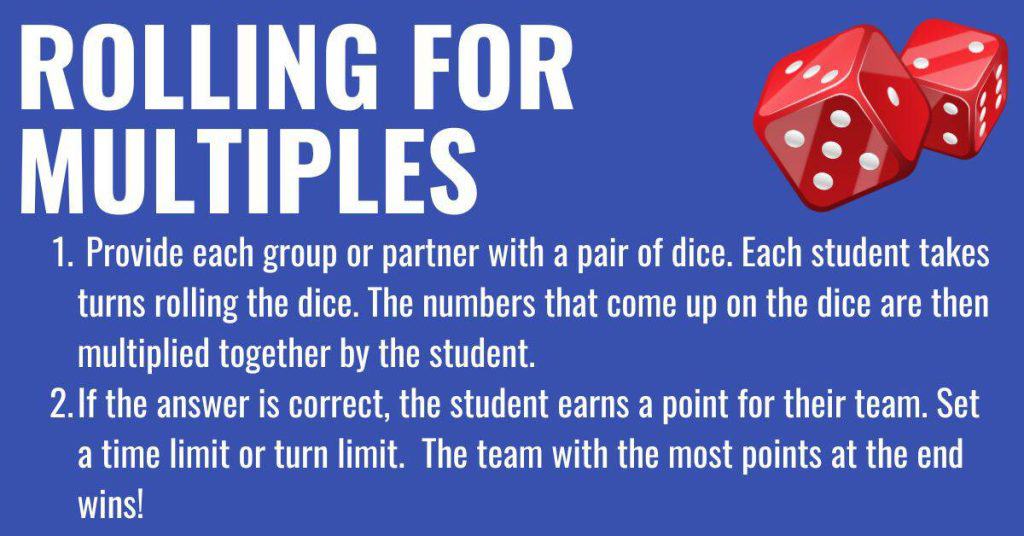
Divide the students into small groups or pairs, providing each group with a pair of dice. Each student takes turns rolling the dice. The numbers that come up on the dice are then multiplied together by the student.
If the answer is correct, the student earns a point for their team.
Set a time limit or a turn limit. When that limit is reached, the team with the most points in the end is declared the winner!
Variations of Rolling for Multiples
You can adjust this multiplication dice game in several ways:
- Set a timer and see how many products students can solve correctly in one minute.
- Play team rounds, where groups combine their points.
- Challenge students to record all multiplication sentences they create during the game.
Circles and Stars
Circles and Stars is the game that I use to introduce multiplication to my second graders. It focuses on equal groups. Students will need a dice and paper. I have them make a small booklet, with each page representing a different round.
How to Play Circles and Stars
Players roll a die and draw that many circles. Then they roll again and draw that many stars in each circle. At the bottom of the page, students write the multiplication problem. Once their booklet is full, students can figure out the winner by who has the most stars.
Variations of Circles and Stars
Consider using two different colored dice, one for the circles and one for the stars. Explore how changing the order of the numbers gives you the same product, but differnet illustrations.
Multiplication Bingo Dice Game
Multiplication Bingo turns traditional bingo into a multiplication practice game using dice.
Before the game begins, students create their own bingo cards by filling in a grid with multiplication products. Have them randomly write the products of numbers 1-6 in a grid of boxes. Provide students with a 5×5, 6×6 grid or higher. Students can use a multiplication chart to choose the numbers.
How to Play Multiplication Bingo
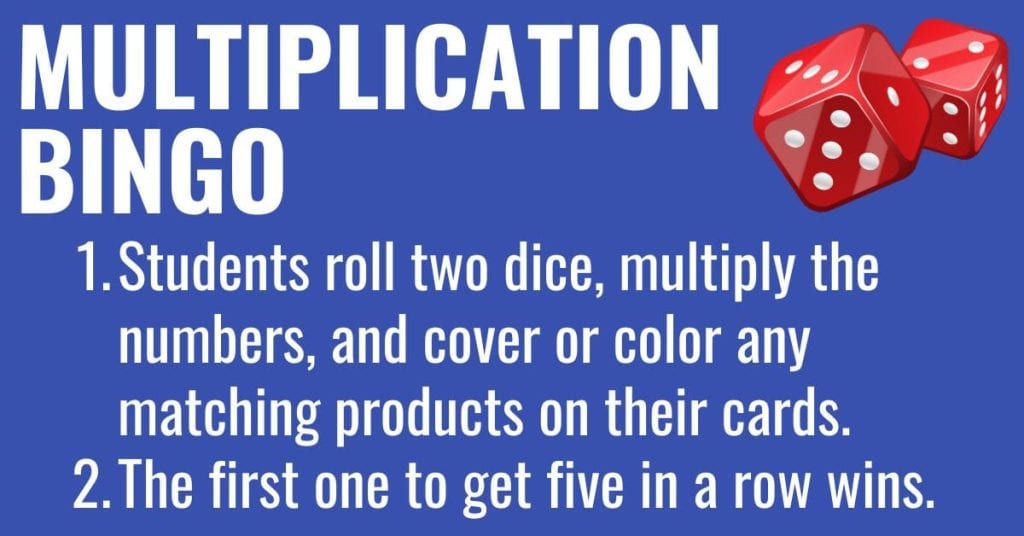
Students roll two dice and multiply the numbers together.
If the product appears on their bingo card, they cover the number using a counter or marker.
The first student to get five in a row wins the game.
Variations For Multiplication Bingo
Play for a blackout, where students cover every square.
Limit cards to products of specific factors, such as 4s, 6s, or 7s.
Laminate bingo cards so students can reuse them throughout the year.
Game of Six: A Strategy-Based Multiplication Dice Game
Game of Six adds a strategy element to multiplication dice games by allowing students to choose where to place their products.
How to Play Game of Six
Students will need to create a scorecard. Using a piece of paper, have students write the numbers 1-6 down the left side and create a column for each student who is playing.
Alternatively, have each student create their own score sheet and create a two-column grid with the numbers 1-6.
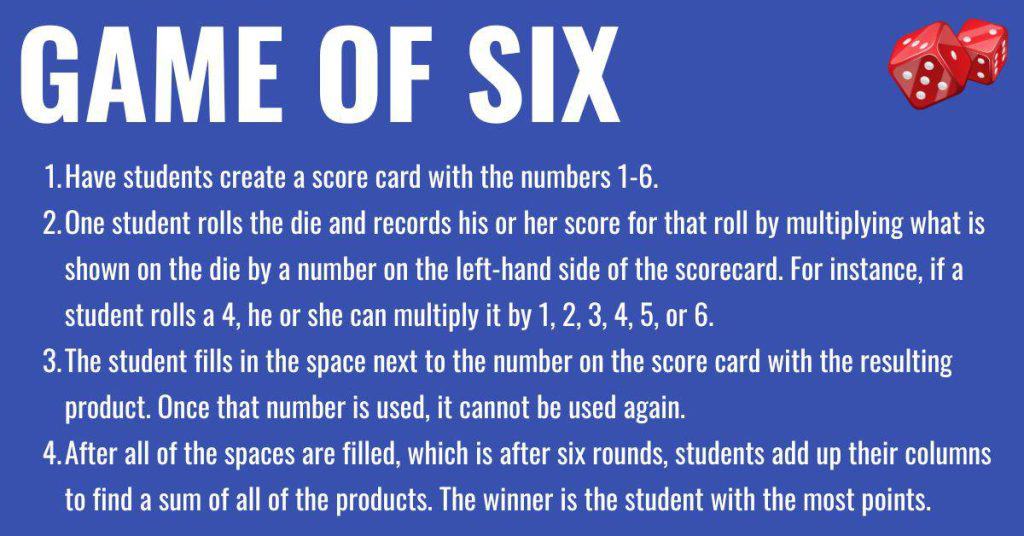
On each turn, a student rolls one die.
The number rolled must be multiplied by one of the numbers on the score sheet. Once a number is used, it cannot be used again.
For example, if a student rolls a 4, they may choose to multiply:
4 × 1
4 × 2
4 × 3
4 × 4
4 × 5
4 × 6
Students choose strategically which space to fill to earn the highest total score.
After six rounds, students add their products. The player with the highest total wins.
Variations to Game of Six
To extend the game, use a grid and have students draw a diagonal in each box so that each box on the grid has two spaces. This makes adding the products more challenging at the end of the game, as well!
Have students write the numbers 1-10, 1-12, 4-10, 6-12, or any variation. Change the name of the game to match the number of rows or rounds of gameplay.
Declare the winner as the student with the least amount of points. This variation still requires students to multiply the numbers, but changes the strategy.
Multiplication Dice Game War
Multiplication War is a fast-paced game that encourages students to compare multiplication products.
It is like the card game ‘War,’ but with dice and multiplication. Students will need a set of counters or a piece of paper to make tally marks.
How to Play Multiplication Dice Game War
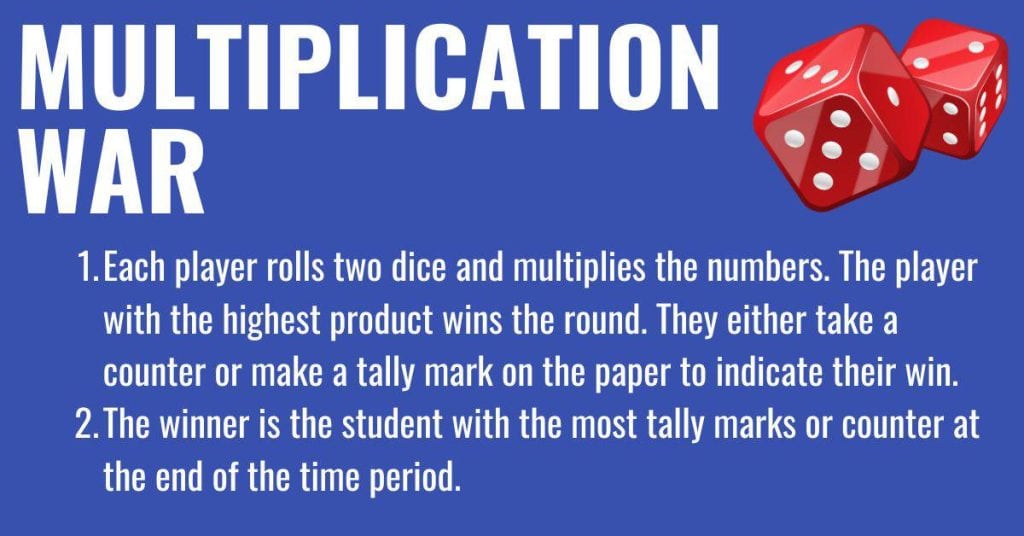
Each player rolls two dice and multiplies the numbers together.
The player with the highest product wins the round and records a point or takes a counter.
After a set number of rounds, the player with the most points wins the game.
Variations to Multiplication War
- Roll three dice and multiply the three numbers together.
- Use dice labeled with larger numbers for more advanced practice.
- Challenge students to explain their multiplication strategy after each round.
Roll to 1000
This multiplication dice game combines a bit of multiplication and addition. Students will need a piece of paper and two dice each.

How to Play Multiplication Roll to 1000
A student rolls the two dice and multiplies the numbers. The student records the product on their paper. On the next turn, the student rolls the dice, records the product, and adds the two products together.
Play continues. In each round, the product is added to all of the previous products. The first student to reach 1000 wins.
Shooting Stars
This multiplication dice game adds a creative twist to fact practice. Students will need a piece of black construction paper and a white colored pencil or crayon.
How to Play Multiplication Shooting Stars
Players throw two dice, multiply the numbers, then draw that many stars on their ‘galaxy’. After ten rounds, the player with the most ‘shooting stars’ wins!
The multiplication dice games not only make multiplication fun, but they also provide an engaging way to develop strategic thinking skills, foster teamwork, and ignite a healthy spirit of competition. So let’s roll the dice, multiply the fun, and elevate the excitement in your math lessons to a whole new level!
Why Multiplication Dice Games Work in the Classroom
Multiplication dice games work well because they combine repeated practice with a game format. When students roll dice and calculate products, they solve many multiplication problems quickly without feeling like they are doing a worksheet.
Dice games also help students:
- practice multiplication facts repeatedly
- develop mental math strategies
- work with partners to discuss math thinking
- stay engaged during math centers
Many teachers use multiplication dice games during math rotations, early finisher activities, or small group instruction. Students often solve many multiplication problems during a short game without feeling like they are completing traditional practice work.
Other Math Activities to Practice Multiplication Facts
If you’re looking for more ways to practice multiplication facts, you can combine multiplication dice games with other math center activities, such as:
- multiplication card games
- math fact board games
- timed multiplication challenges
- math station rotations
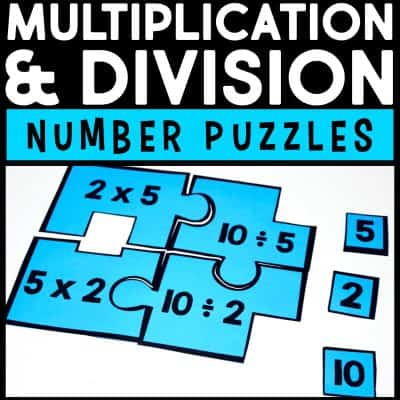
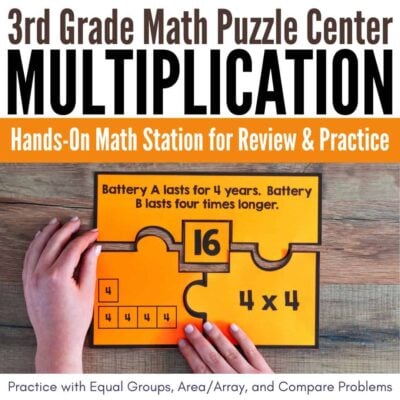
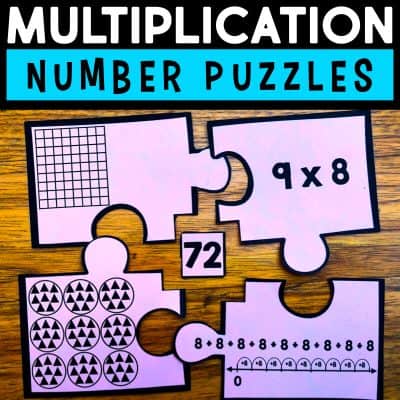
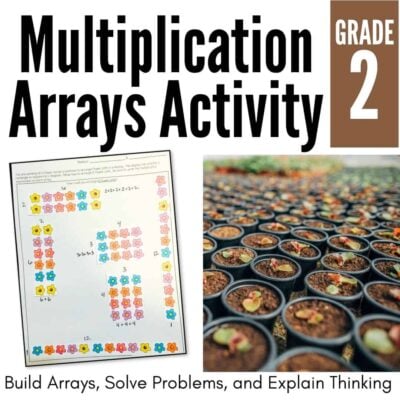
Using a variety of activities helps students build multiplication fluency while keeping math practice interesting. Here are a few:
Jessica BOschen
Jessica is a teacher, homeschool parent, and entrepreneur. She shares her passion for teaching and education on What I Have Learned. Jessica has 16 years of experience teaching elementary school and currently homeschools her two middle and high school boys. She enjoys scaffolding learning for students, focusing on helping our most challenging learners achieve success in all academic areas.