
Free Frog Informational Writing Resource for 2nd and 3rd Grade
If you’re looking for a free informational writing resource for 2nd or 3rd grade, this frog informational article includes structured nonfiction text, note-taking, and paragraph writing support in one ready-to-use download.
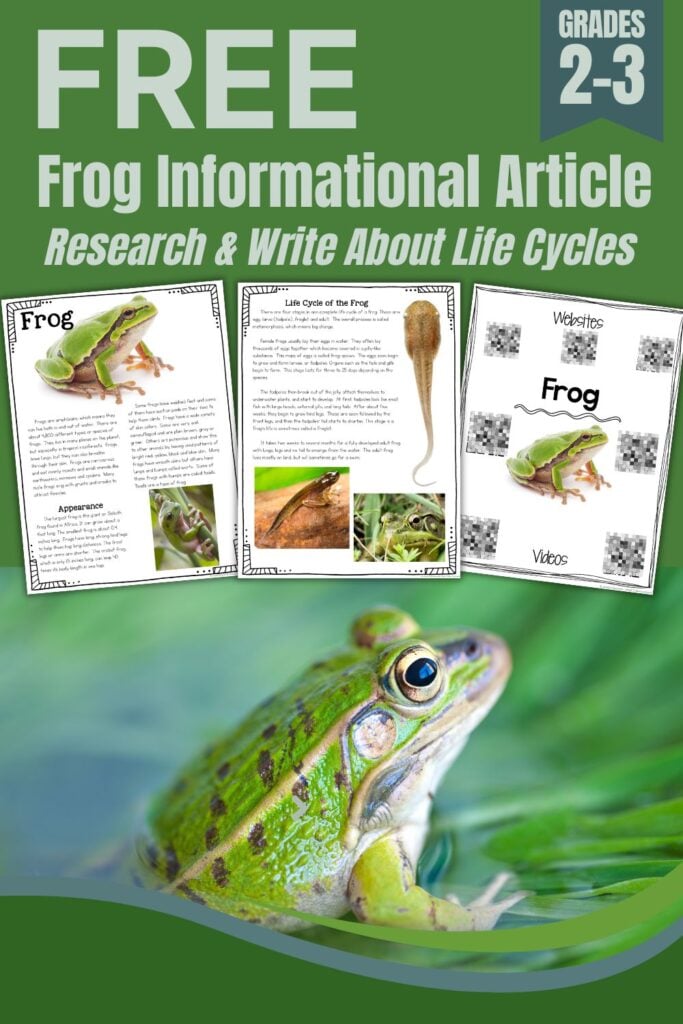
Strong informational writing instruction requires more than just a passage. Students need guided note-taking and clear support for turning information into organized paragraphs. This free frog informational text walks students through that entire process.
Whether you’re preparing for a writing assessment, teaching a frog life cycle unit, or introducing animal research, this resource gives students a clear structure for reading, organizing, and writing.
What’s Included in This FREE Frog Informational Article
This free frog informational writing resource includes everything you need to move from reading to paragraph writing:
- A two-page nonfiction frog article with full-color photos
- A one-page text-only version for easier printing
- Guided note-taking pages
- QR codes linking to additional videos and websites
The article covers frog characteristics, habitat, diet, and the full life cycle — including metamorphosis from egg to tadpole to froglet to adult.
Everything is classroom-ready. Print and teach.

How to Use This Informational Text in Your Writing Unit
This informational text helps students move from reading nonfiction to writing clear expository paragraphs.
In my classroom, I use articles like this to help students:
- Gather facts from the text and video
- Find and sort related information
- Organize ideas into categories
- Write focused informational paragraphs
Here’s a simple 3–5 day structure you can use:
Day 1: Gather Facts
Read the frog article together. Watch one of the QR-linked videos. Record facts on a circle map or chart.
Day 2: Sort and Organize
Categorize information (appearance, life cycle, habitat, etc.) that students have gathered on day one.
Day 3–4: Write Informational Paragraphs
Students choose related facts and write a focused paragraph with:
- An introduction
- Supporting facts
- A closing sentence
Day 5: Revise with a Checklist
Use a simple informational writing checklist to strengthen clarity and organization.
If you’d like the full six-week breakdown of how I teach informational writing, you can read the complete informational writing series here.
Perfect for Reading, Writing, and Science Integration
You can use this frog informational text for:
- Close reading lessons
- Science life cycle units
- Informational paragraph writing
- Small group intervention
- Independent animal research projects
Because the vocabulary and sentence structure are controlled for upper-elementary readers, students can focus on comprehension and writing rather than decoding complex syntax.
Want More Animal Informational Articles?
If this frog article works well in your classroom, you don’t have to stop there.
I’ve created over 126 animal informational articles designed specifically for elementary informational writing instruction.
Each article includes:
- Two formats (photo version + text-only version)
- Vocabulary activities
- Fact sorts
- Note-taking pages
- Writing pages
- Answer keys
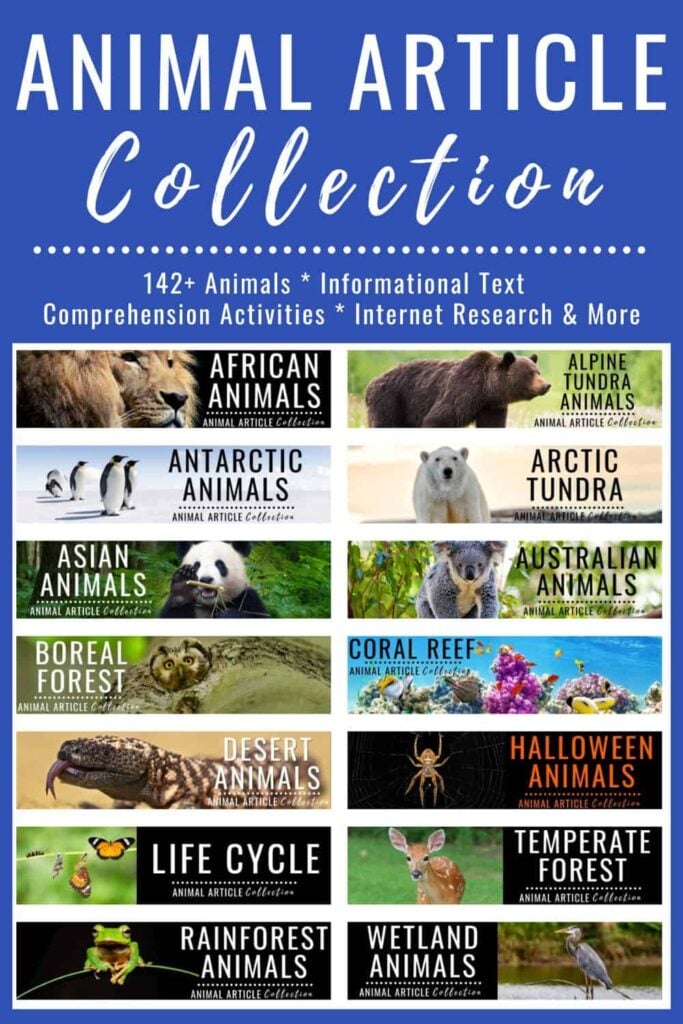
These Animal Articles are available individually or as part of the Animal Article Collection, which many teachers use for research projects and informational writing units.
If you want to give students consistent practice with informational text all year long, the Animal Article Collection makes it simple.
Animal Article Collection
In this collection are over 126 Animal Articles with reading comprehension and informational writing activities. There are over 14 ecosystems with a variety of mammals, birds, reptiles, fish, and more!
Give your students the power to choose which animal they study and help them write an engaging animal report, learn to read informational text, or do structured writing. Check out the Animal Article Collection.
Do you need engaging informational texts that your elementary students will actually want to read?
The Animal Article Bundle includes 142+ animal articles spanning 14 ecosystems, complete with reading comprehension and structured writing activities. Students can choose their animal while building skills in informational text, research, and report writing.
Grab Your Free Frog Informational Writing Resource
Ready to try this with your students?
Download the free Frog Informational Article and Comprehension Activities and start guiding students through structured informational writing right away.
This frog informational writing resource works well for 2nd grade informational writing, 3rd grade expository writing, animal research projects, and science life cycle units.
It helps you:
- Strengthen informational paragraph writing
- Support science standards
- Provide structured nonfiction practice
- Build student confidence
Download it now and use it in your classroom this week.
Jessica BOschen
Jessica is a teacher, homeschool parent, and entrepreneur. She shares her passion for teaching and education on What I Have Learned. Jessica has 16 years of experience teaching elementary school and currently homeschools her two middle and high school boys. She enjoys scaffolding learning for students, focusing on helping our most challenging learners achieve success in all academic areas.