
Teaching fossil fuels can feel a little abstract for students. After all, we’re talking about things that formed millions of years ago. That’s where this diagram-based fossil fuels activity makes a huge difference. Instead of just reading about fossil fuels, students actually build their understanding step by step.
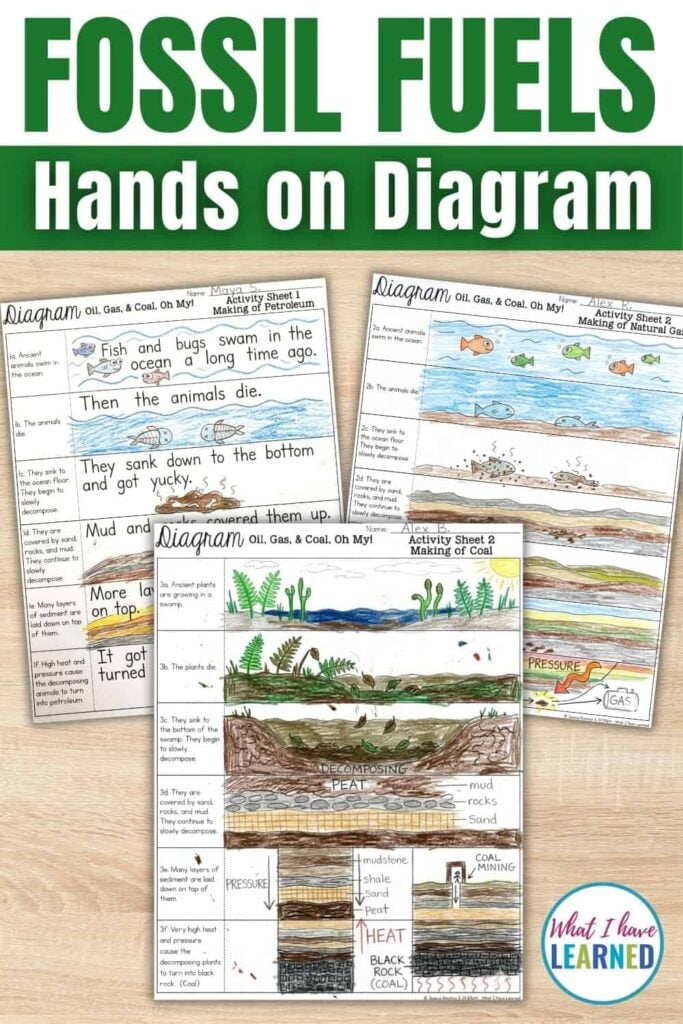
This fossil fuels diagram activity helps students visualize how coal, oil, and natural gas are formed over time. It connects reading, science, and sequencing into one engaging lesson that keeps students thinking (and coloring… always a win).
What Students Learn About Fossil Fuels
Before diving into the fossil fuels activity, students read about how fossil fuels are formed. They learn that fossil fuels come from ancient plants and animals that were buried under layers of sediment, exposed to heat and pressure, and slowly transformed over time.
Key concepts students explore:
- Fossil fuels come from ancient living things
- They are buried under layers of sediment
- Heat and pressure change them over time
- Fossil fuels are nonrenewable resources

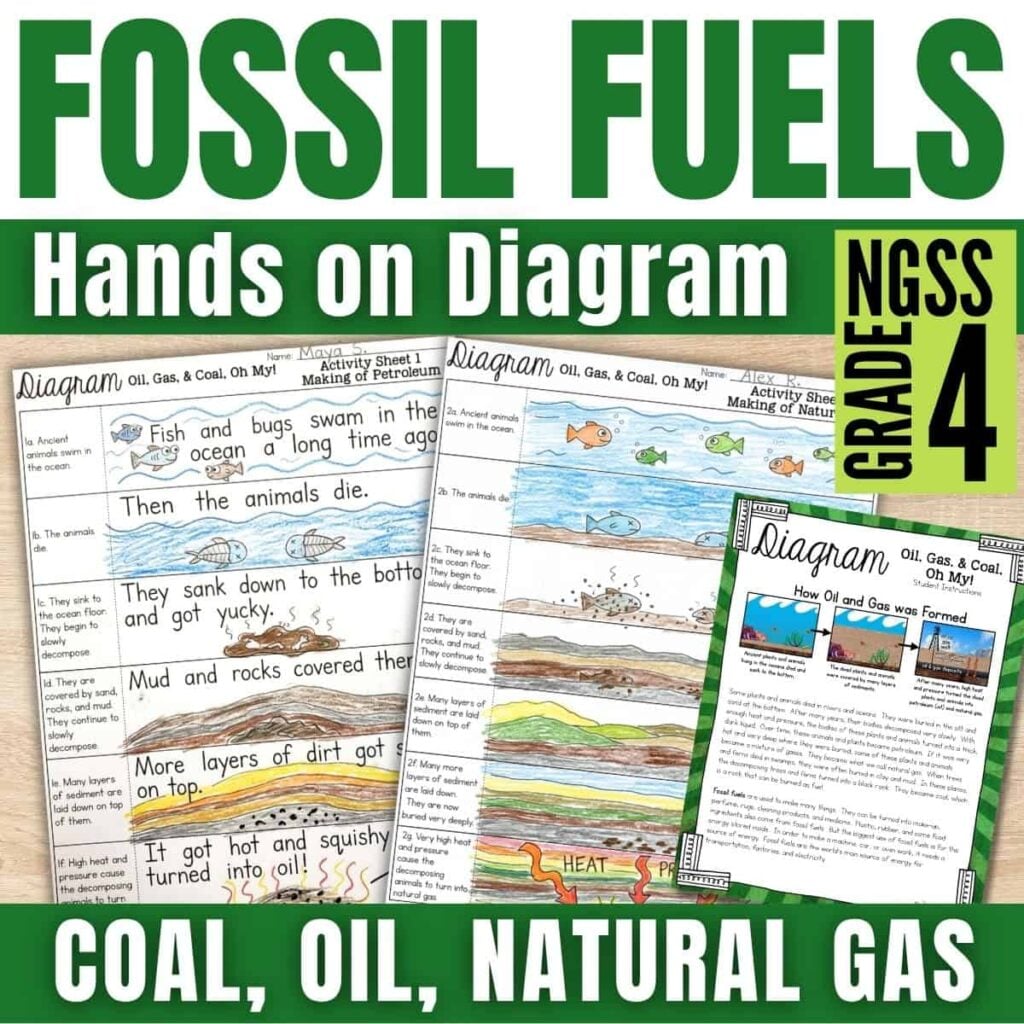
This 4th-grade science activity helps students visualize the formation of petroleum, natural gas, and coal through a clear, step-by-step diagramming activity.
Fossil Fuels Activity Overview: Drawing the Formation of Fossil Fuels
This fossil fuels activity focuses on students creating diagrams that show how fossil fuels form. Instead of memorizing steps, they actively construct the process.
Students:
- Read about fossil fuel formation
- Draw each step in sequence
- Cut and reorder the steps (optional)
- Explain their thinking
This taps into both science understanding and sequencing skills.

Petroleum (Oil) Formation Diagram
Students start with ocean animals and follow the process all the way to oil formation:
Steps include:
- Animals live in the ocean
- They die
- They sink and decompose
- Layers of sediment cover them
- Pressure builds
- Heat and pressure turn them into oil
In the diagram, students visually show each stage of this process using simple drawings and labels. You’ll see ocean animals at the top, then layers of sediment building over time, followed by deeper underground layers where heat and pressure increase. Arrows and color changes help students represent movement and transformation, making it easier to connect the steps rather than seeing them as isolated facts.

Natural Gas Formation Diagram
Natural gas follows a similar process, but with even more depth and pressure.
Key differences students notice:
- More layers of sediment
- Deeper underground
- Higher heat and pressure
This is a great opportunity to ask:
“What happens when something is buried even deeper?”

Coal Formation Diagram
Coal formation is different because it starts with plants in swamps.
Steps include:
- Plants grow in a swamp
- Plants die
- They sink and form peat
- Layers of sediment build up
- Heat and pressure turn peat into coal
The coal diagram stands out from the other two because it begins with plants growing in a swamp rather than with animals in the ocean. Students can clearly see the transition from living plants to decomposing plant material, labeled as peat, before it is buried under layers of sediment.
Unlike the oil and natural gas diagrams, which focus on ocean environments, this one emphasizes land-based ecosystems and shows how thick layers of mud, sand, and rocks build up over time. The visual of peat slowly being compressed into a solid black rock helps students understand why coal is different from liquid petroleum or gaseous natural gas.
What This Looks Like in the Classroom
This activity works really well as:
- A science station
- A whole group lesson with guided modeling
- An independent practice or assessment
You’ll notice:
- Students naturally compare the three processes
- They begin using vocabulary like sediment, pressure, and decomposition
- They actually understand what’s happening underground
Why This Activity Works So Well
This lesson hits multiple learning targets at once:
1. Visual Learning
Students see how fossil fuels form instead of just reading about it. The diagrams give them a concrete picture of something that happens over millions of years, which can be hard to imagine. As they draw each step, they begin to notice patterns, such as layers building up or materials changing over time, which helps deepen their understanding.
2. Sequencing Skills
Students organize the steps in order, which strengthens comprehension. They aren’t just copying information; they’re thinking through what happens first, next, and last. This is especially helpful for students who struggle with informational text, since it turns a complex process into a clear sequence they can follow.
3. Cross-Curricular Connections
This activity naturally blends multiple subjects together:
- Science concepts: fossil fuel formation, heat, pressure, and decomposition
- Reading comprehension: understanding informational text and key details
- Writing explanations: describing processes using content vocabulary
It’s one of those lessons where you’re covering multiple standards without needing three separate activities.
4. NGSS Alignment
This activity supports 4-ESS3-1, helping students understand how energy and fuels come from natural resources and how their use impacts the environment
Easy Differentiation Ideas
You can adjust this activity quickly depending on your students:
For support:
- Provide sentence frames
- Pre-label steps
- Use a word bank
For extension:
- Have students compare coal vs. oil vs. gas
- Add a writing prompt: Which fossil fuel forms the fastest? Why?
- Connect to renewable vs. nonrenewable energy
This 4th-grade science activity helps students visualize the formation of petroleum, natural gas, and coal through a clear, step-by-step diagramming activity.
Bringing It All Together
By the end of this activity, students aren’t just repeating facts about fossil fuels. They’re explaining a process. They understand that fossil fuels didn’t just “appear,” but they formed slowly through heat, pressure, and time.
And bonus: they created something visual they can refer back to later (or proudly show you, with extra coloring on the sun).
If you’re teaching energy or natural resources in 4th grade, this is one of those activities that makes everything click.
This diagram activity is part of a larger set of science activities about Natural Resources, which includes 8 stations covering renewable and nonrenewable energy, and more.
Natural Resources – Fuel for the Future BUNDLE
These Natural Resources Fourth Grade Next Generation Science Standards include 8 different science stations where students deepen their understanding of renewable and nonrenewable energy.
Jessica BOschen
Jessica is a teacher, homeschool parent, and entrepreneur. She shares her passion for teaching and education on What I Have Learned. Jessica has 16 years of experience teaching elementary school and currently homeschools her two middle and high school boys. She enjoys scaffolding learning for students, focusing on helping our most challenging learners achieve success in all academic areas.