
Animal Classification Activity for 3rd Grade Science
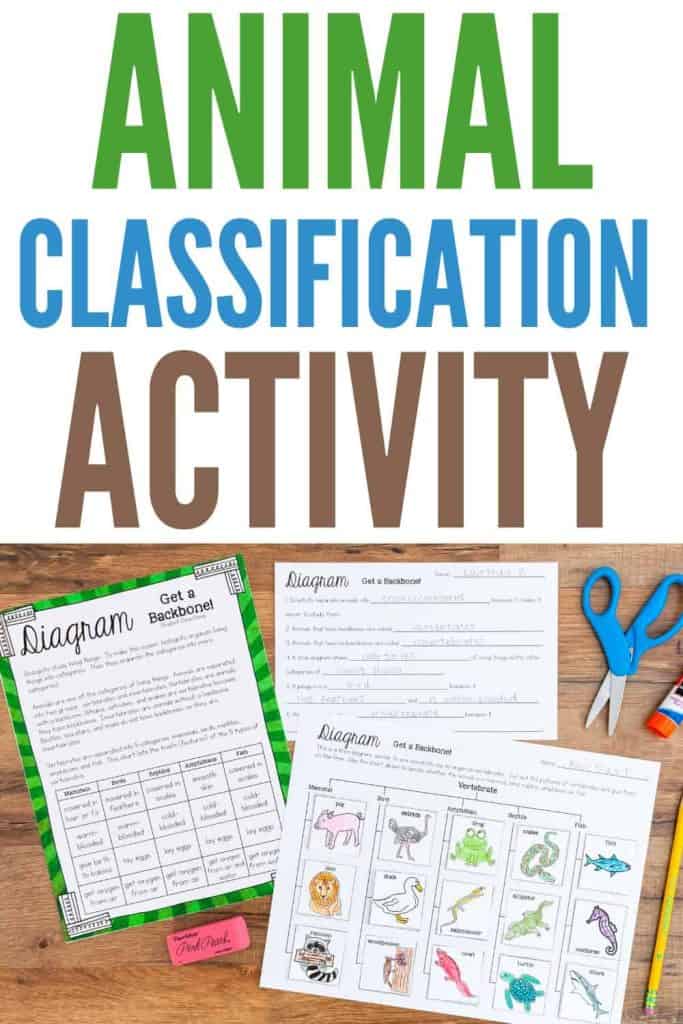
Animal classification is one of those standards that makes more sense once students do something with it. Reading about vertebrates is fine, but having students physically sort animals by whether they have fur, feathers, or scales, and decide where each one goes in a tree diagram, is what makes the categories stick. This post walks through the animal classification activity that goes with that hands-on sorting process.
What Is Animal Classification?
Scientists classify animals to help organize and study the many species on Earth. Scientists group animals based on shared characteristics, including whether they have a backbone, their body coverings, how they breathe, and how they reproduce. The main categories include:
- Vertebrates: Animals with backbones (e.g., mammals, birds, reptiles, amphibians, and fish).
- Invertebrates: Animals without backbones (e.g., insects, jellyfish, and mollusks).
This specific resource focuses on vertebrates.

This animal classification activity for 3rd grade walks students through vertebrate classification using a reading passage, a cut-and-paste tree diagram, and differentiated comprehension questions. It connects directly to the inherited traits standard — students have to identify physical characteristics (fur, feathers, scales, and so on) to place each animal correctly.
A Fun Animal Classification Project
This animal classification activity for kids lets students explore taxonomy in a simple, engaging way. Students will sort and classify different vertebrates using a tree diagram by examining their characteristics.
What is included in this Animal Classification Activity
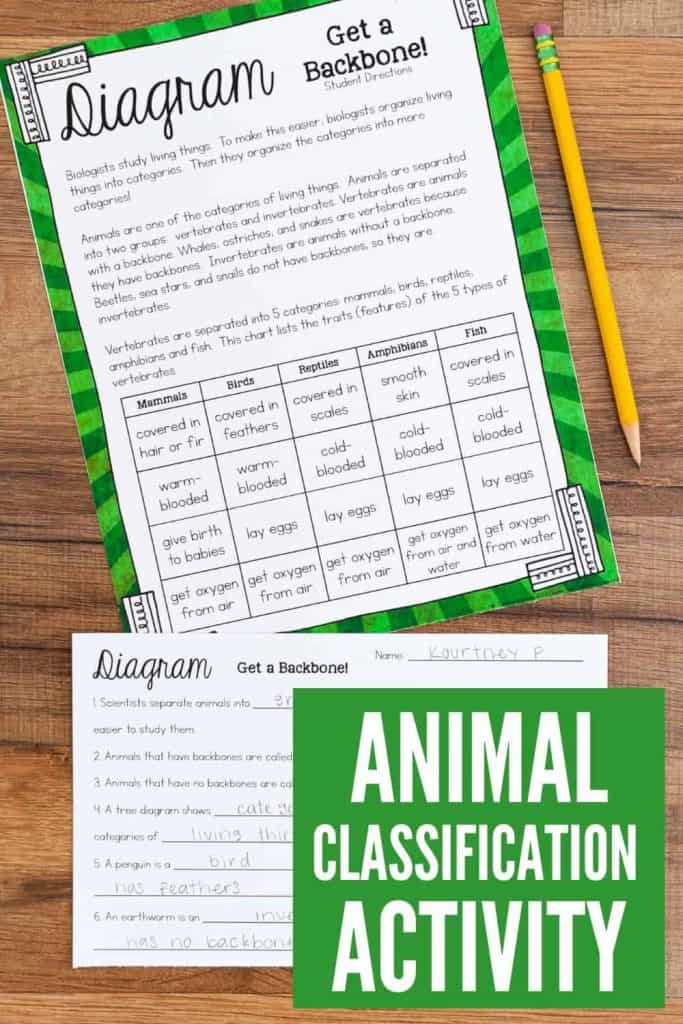
This science activity includes a short reading passage, a cut-and-paste activity, and differentiated comprehension questions.
How This Animal Classification Activity Works
After reading a passage about animal classification, students cut out pictures of various animals.
Students analyze each animal’s traits, such as whether it has fur, feathers, or scales. This close examination of each creature’s physical characteristics helps students understand the unique features that define each animal type.
They place each animal into the correct vertebrate category: mammals, birds, reptiles, amphibians, or fish. By sorting the animals into these broader classification groups, students learn to recognize the common attributes that unite the species within each category.
The final product is a visual representation of animal classification that helps reinforce learning. Having a finished diagram on their desk gives students a reference point for the rest of the classification unit.
The activity also includes differentiated reading comprehension questions.
This activity effectively reinforces scientific concepts while keeping students engaged. It supports critical thinking, observation skills, and hands-on learning.

How to Purchase the Printable Animal Classification Worksheet
To make this lesson even more effective, a printable animal classification worksheet guides students through the classification process step by step. This resource reinforces key vocabulary and lets students reflect on what they have learned.
The Animal Classification Activity is available on Teachers Pay Teachers.
Do you want your students to be experts on animal classification? Well, the DIAGRAM Vertebrates Animal Classification 3rd Grade Science Activity is just what you need to teach students about inherited traits.
Extend the Learning
If your students enjoy this animal classification project, try adding activities such as:
- Sorting warm-blooded and cold-blooded animals
- Investigating the role of camouflage in survival
- Creating a class book of different animal groups
This activity works well as a science station, a whole-class lesson, or an early finisher task. The differentiated question pages mean you can assign different versions to different students without anyone noticing they have something different from their neighbor — useful if your class has a range of reading levels.
If your students are ready to go further, the warm-blooded and cold-blooded sorting activity extends the same classification thinking into another inherited trait, and the animal group survival activity connects classification to how animals behave within their groups.
Jessica BOschen
Jessica is a teacher, homeschool parent, and entrepreneur. She shares her passion for teaching and education on What I Have Learned. Jessica has 16 years of experience teaching elementary school and currently homeschools her two middle and high school boys. She enjoys scaffolding learning for students, focusing on helping our most challenging learners achieve success in all academic areas.