
 Decompose a Ten
 Math Fluency Activities for Elementary Students: Games, Routines, and Practice Ideas
Building math fluency in elementary school takes more than timed tests and drill sheets. Students need daily exposure to numbers, low-stakes practice that builds confidence, and activities that make the math feel approachable rather than high-pressure.
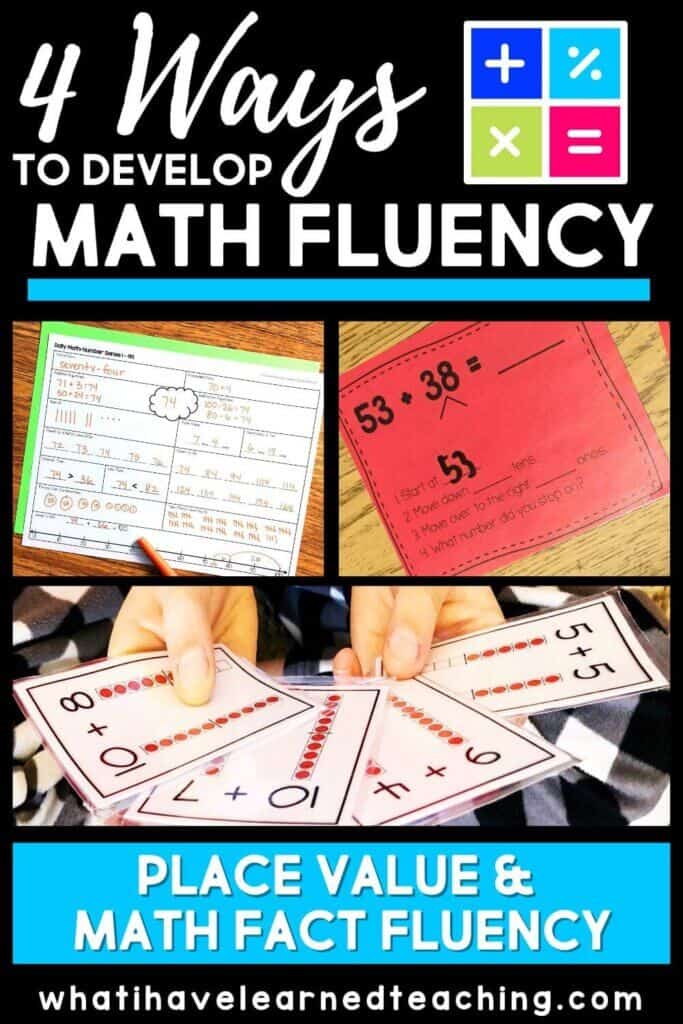
The ideas below are what I return to year after year: a daily number routine that takes ten minutes, card games students can take home, and movement-based activities that break up the math block while still building skills.
Daily Math Routine
Starting the day with an opener like a “Number of the Day” is a great way to create consistency with number practice for K-2 students. In this daily practice, students take the number of the day and practice using it in different ways to build place value fluency.
Students are asked to write the number out in word form, draw a picture, show the number using dice, show the number using tally marks, show more or less practice, determine even or odd, and practice using the number in both an addition and subtraction sentence. There are many ways to show a number, depending on grade level and the number chosen.
I have a great Daily Math and Number of the Day resource for second grade. It includes several versions of pages for two-digit numbers, three-digit numbers, time, and money. We put the page in a page protector sleeve, and students use a whiteboard marker each day. Find out how I use it in the classroom in this blog post.

Once students become familiar with the “Number of the Day” practice, you can also use it for a center work activity or for fast or early finishers. Over time, they will get used to the format and feel more confident taking on more challenging numbers to build fluency.
Tracking Math Fact Progress by Strategy
One of the most important shifts in how I approach fact fluency is assessing by strategy rather than in numerical order. When students practice facts in order (0+0, 0+1, 0+2…) they often memorize a sequence rather than developing the flexible thinking that makes facts stick. Organizing practice and assessment around strategies — doubles, near-doubles, make-10, adding 9 — means students build on reasoning they already have instead of memorizing isolated facts.
These Automaticity Assessments for Addition and Subtraction are set up exactly that way. Each page has 20 facts tied to one strategy, so students work through one strategy at a time and move on when they demonstrate automaticity. I have students keep their sheets in page protectors and use a whiteboard marker, so they can reuse the same sheet again and again without reprinting.
The set includes a data tracking sheet to record the date each student passes each assessment, take-home number bond and flashcard practice, and a parent letter in English and Spanish. The tracking sheet is especially useful for differentiation: students still working on doubles aren’t held back by classmates who are ready for make-10, and you have a clear record of where each student is at any point in the year.

Automaticity Assessments for Addition and Subtraction Facts by Strategy
Automaticity Assessments for Addition and Subtraction are designed to help students memorize their math facts, focusing on one strategy at a time.
Card Games to Practice Math Fluency with Facts
Games are a great way to build student interest right away! Games like Subtraction Battle or Multiplication Number Battle were really fun for my students. Both math fact card games are played like the classic card game War, where either the greatest difference or greatest sum wins, depending on the game. Here are a few variations of the traditional war game that can be used for math fluency.
1. Addition War: Players draw two cards and add them together; the player with the highest sum wins all of the cards played that round.
2. Subtraction War: Players draw two cards and subtract one from the other, the player with the highest difference wins all of the cards played that round.
3. Multiplication Number Battle: Players draw two numbers and multiply them together, then compare their answers to see who has won that round. Students can draw two cards and see who comes up with the answer the quickest or draw four cards, two each, and compare who has the greatest product.
4. Divide & Conquer Game: Players divide a card by another card or number they hold in their hand until they no longer can make an exact division sentence. The last person to go out is declared the winner for that round of play!
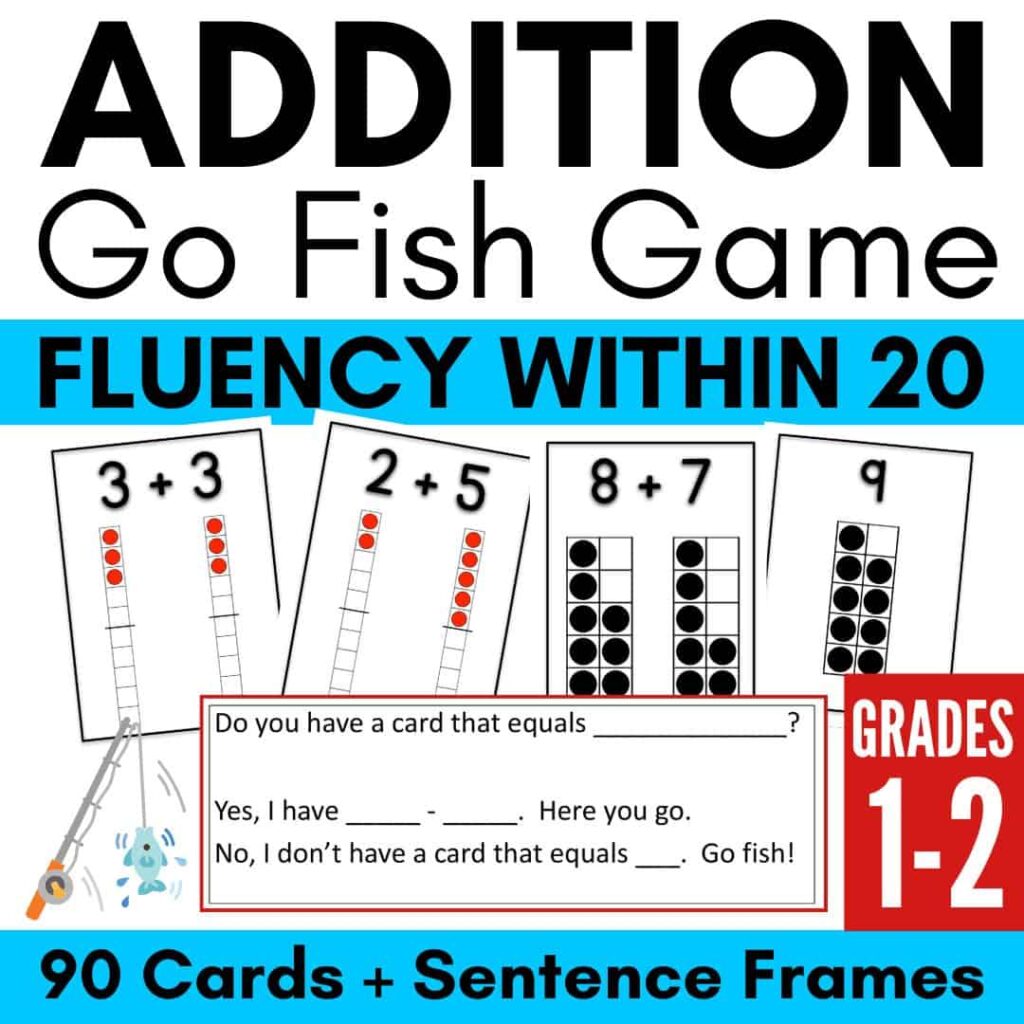
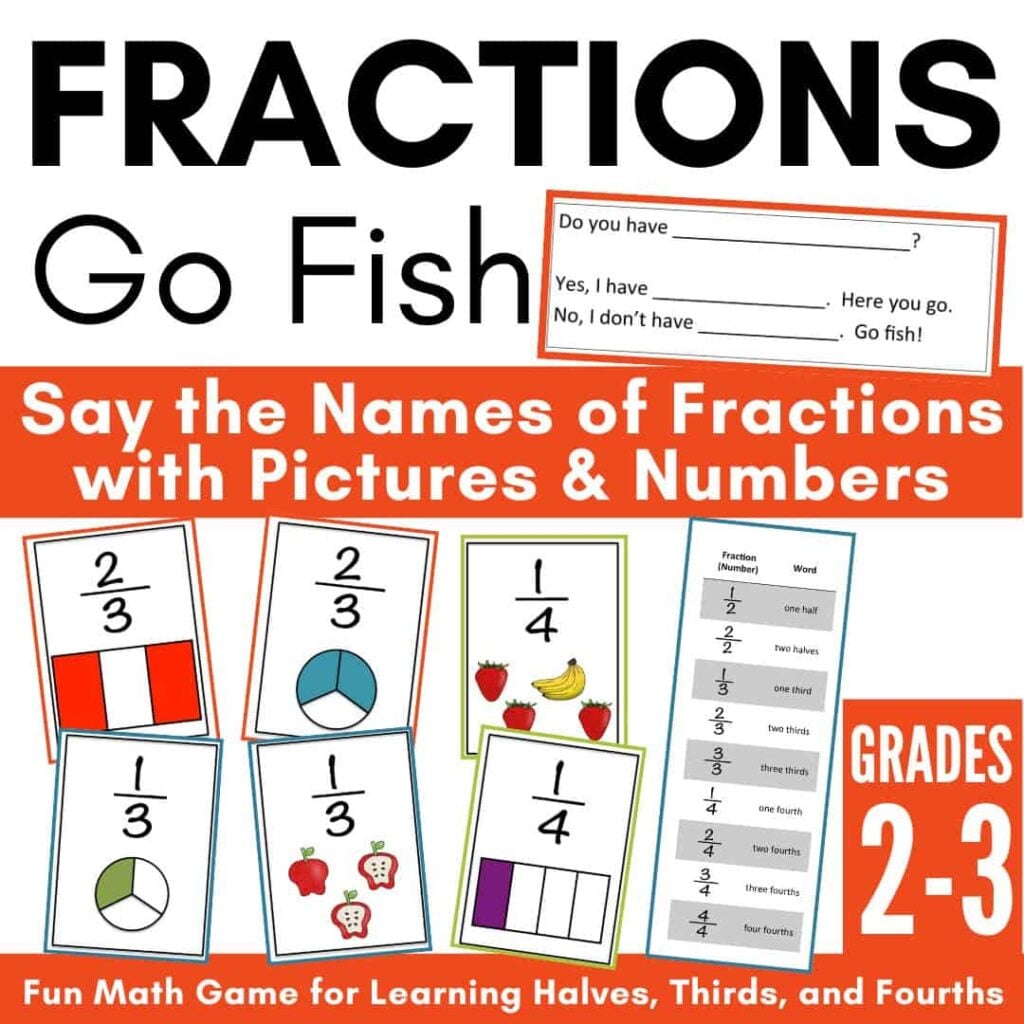
If you want to take students’ gameplay up a level, consider using these Addition Go Fish, Subtraction Go Fish or Fraction Go Fish resources. Students can use the included sentence stems to help them articulate the mathematical language embedded within the game.
Go Fish Games
Dice Games for Math Fact Practice
Dice games work for the same reasons card games do: low prep, easy to store, and students can play them independently once they know the rules. A pair of standard six-sided dice is enough for most games — students roll, add or subtract the numbers, and record the result. Rolling gives every round a built-in element of chance that keeps students engaged even after they’ve played the same game several times.
Race to 100 is one of the simplest to introduce. Each player rolls two dice, adds the numbers, and keeps a running total. The first to reach 100 wins. Knockout adds suspense: players pick a “knockout number” before the game, and if they roll it, their score resets to zero. Both games take less than a minute to explain and can be played in whatever time is left at the end of a math block.
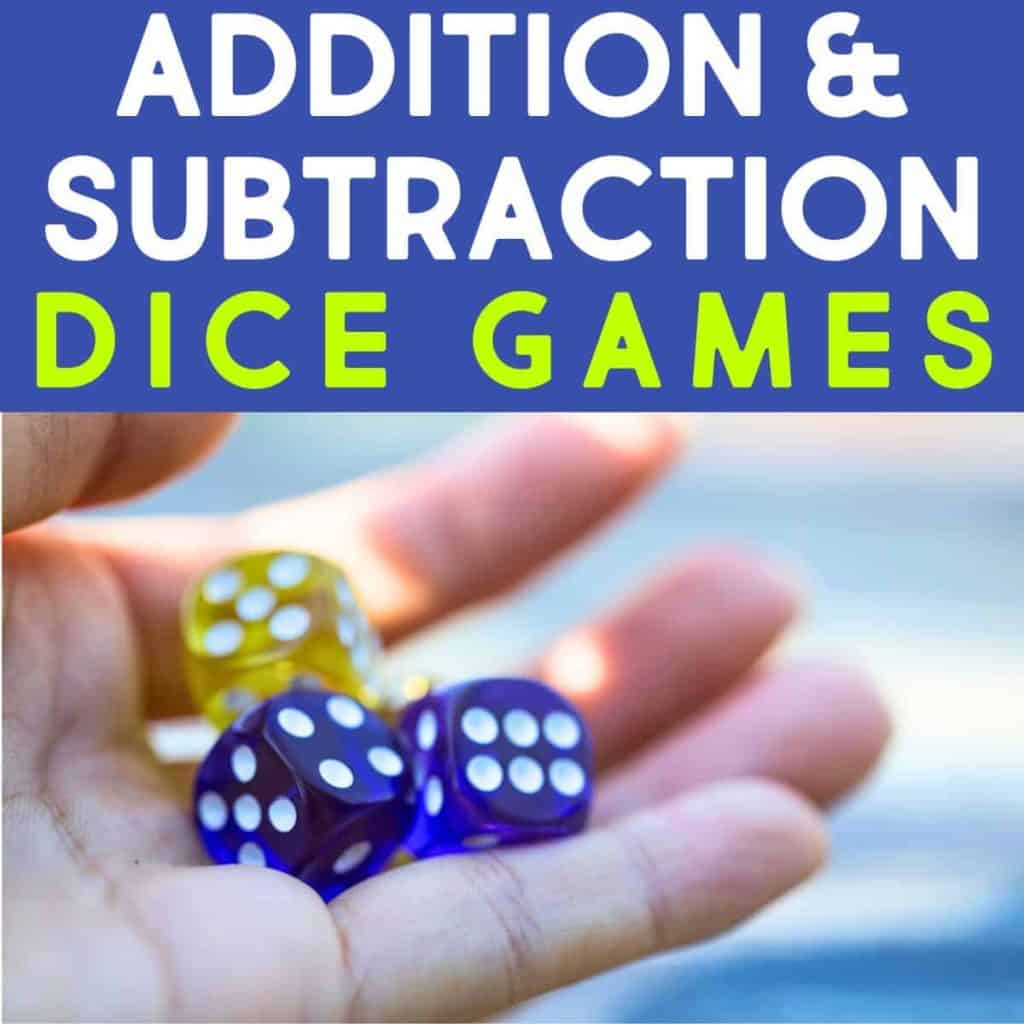
For a full list of addition and subtraction dice games that work well in K-2 classrooms, including variations and game boards, see Addition and Subtraction Games with Dice.
Math Fluency Practice with Movement
Incorporating movement into a lesson benefits students. One way to practice fluency and give students time to move around is through a game called Scoot. I learned about this game from a colleague and loved how well it went over with my class. Scoot can be used to practice a variety of skills. Recently, we played this game to practice area and use our multiplication facts.
With this game, students use a graphic organizer to record their work. Most of the time, it’s a basic grid that matches the problem number on each desk. Task cards are placed at different seats or areas around the room. Students start at one seat and begin the problem practice there. Students complete the task card, record their answers, and flip over their paper so we know when everyone is ready. I did not use a timer so that students never felt rushed. Once everyone is finished, I would say “Scoot!” and students would move to the next seat to practice the next area problem.
My students really enjoyed the pace of this game and the movement around the room. By the end of the game, they had completed a lot of area practice. We went through the answers to each practice to ensure the students could see where they did well or where they might have made a mistake. This game is definitely a class favorite and can be played with different types of skills to practice fluency.
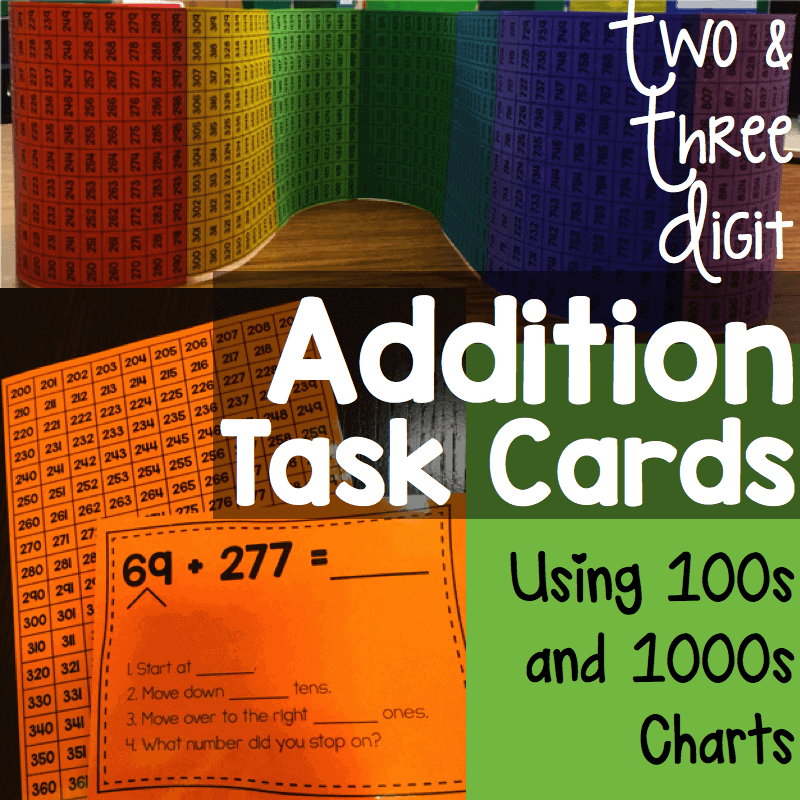
I have played Scoot with our Decompose a Ten math activity as well as our Addition Task Cards with 100s charts. In fact, you can use any of our two-digit and three-digit task cards for a Scoot activity.
Hands-on Math Centers for Two-Digit Addition


These are just a few suggestions, resources, and games to help increase students’ math fluency practice. You can even build math fluency into daily routines, such as lining up for lunch or at the end of the day. Young learners enjoy practicing in a fun way. The more small practices we can fit into an already jam-packed school day, the more they can help students retain what they learn and, over time, develop fluency.
Jessica BOschen
Jessica is a teacher, homeschool parent, and entrepreneur. She shares her passion for teaching and education on What I Have Learned. Jessica has 16 years of experience teaching elementary school and currently homeschools her two middle and high school boys. She enjoys scaffolding learning for students, focusing on helping our most challenging learners achieve success in all academic areas.