
February is a strange mix of excitement and exhaustion. The calendar is packed, students are energetic, and lessons still need to move forward. Many teachers want seasonal content that keeps students engaged without sacrificing reading comprehension goals.
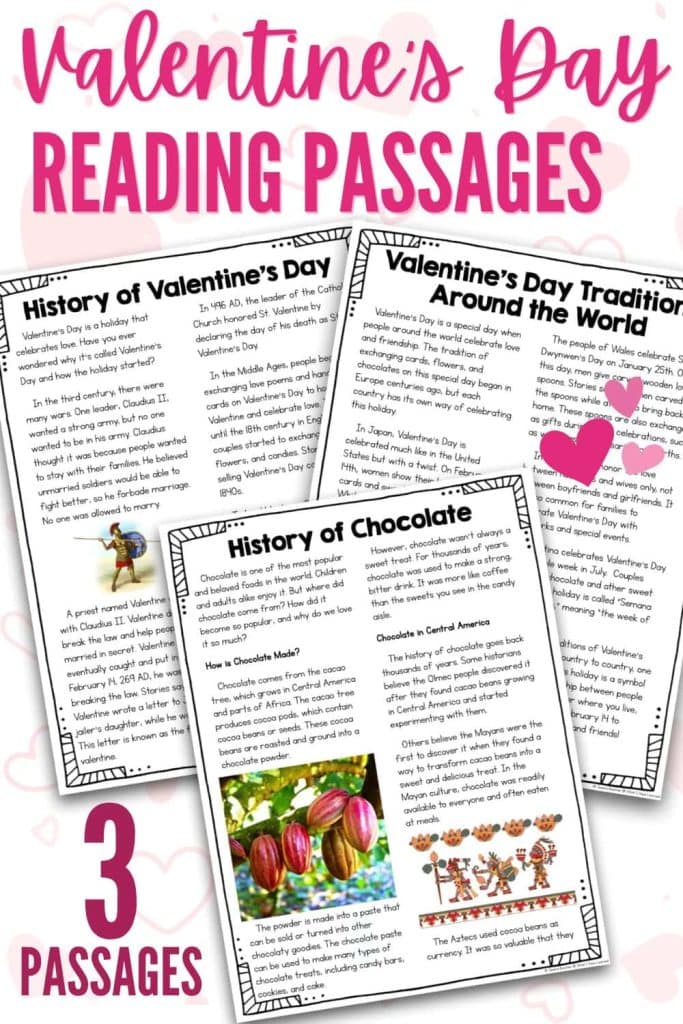
These Valentine’s Day reading passages are designed for upper elementary classrooms that need meaningful February literacy activities. The resource combines informational text, vocabulary instruction, note-taking, and written responses around topics students already find interesting: the history of Valentine’s Day, global traditions, and the history of chocolate.
If you’re looking for Valentine’s Day activities that go beyond crafts and party time, these nonfiction reading passages keep learning at the center of your ELA block.
Here’s an overview of the Valentine’s-themed reading passages and how they can be used effectively in the classroom.
This Valentine’s Day informational text resource includes three nonfiction articles, each supported by structured reading comprehension activities that work well for grades 3–5.
What’s Included in These Valentine’s Day Reading Passages
This Valentine’s Day informational text resource includes three nonfiction articles, each supported by structured reading comprehension activities that work well for grades 3–5.
History of Valentine’s Day Reading Passage
Students learn how Valentine’s Day began, starting in the Roman Empire and moving through the Middle Ages to modern celebrations. The article introduces historical figures like Claudius II and St. Valentine and explains how traditions such as cards, flowers, and chocolate developed over time.
This passage works well for teaching:
- Sequencing events
- Cause and effect
- Main idea and details
- Historical context in informational text
Valentine’s Day Traditions Around the World
This reading passage explores how Valentine’s Day is celebrated in countries like Japan, South Korea, Wales, India, China, and Argentina. Students compare cultural traditions and see how the same holiday looks different across the world.
Teachers often use this article to support:
- Compare and contrast skills
- Geography connections
- Cultural awareness
- Discussion and written responses
History of Chocolate Informational Text
The third article traces chocolate from its early use in Central America to modern production. Students learn how cacao beans were used by the Mayans and Aztecs, how chocolate reached Europe, and why it became widely available.
This passage pairs well with:
- Social studies connections
- Science extensions
- Vocabulary development
- Explanatory writing


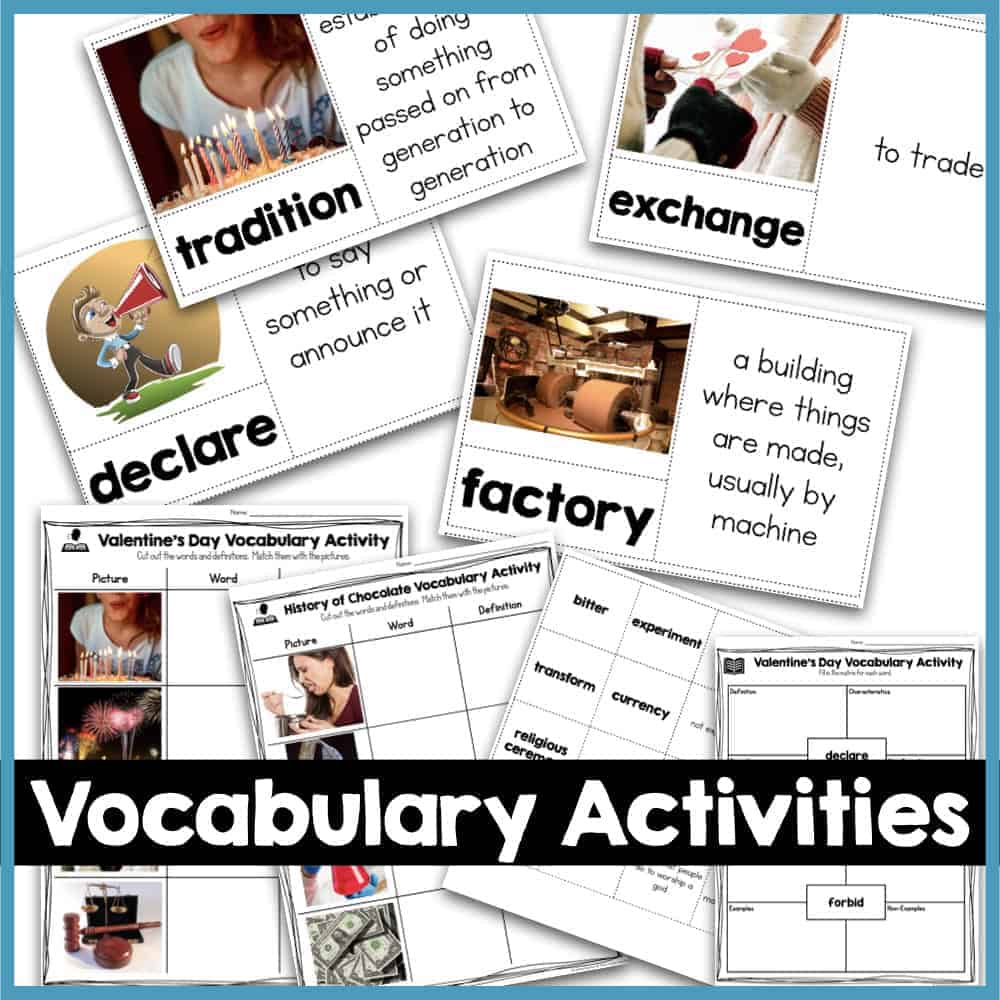
Reading Comprehension Activities Included
Each Valentine’s Day reading passage includes a consistent set of activities, which helps students focus on content rather than new directions.
Included activities:
- Student-friendly nonfiction reading passages
- Vocabulary cards and vocabulary practice pages
- Note-taking sheets and graphic organizers
- Comprehension questions and written response prompts
- Sequencing activities
- Main idea and summary practice
- Discussion cards for partner or group talk
- QR codes linking to kid-friendly videos and websites
- Complete answer keys for easy planning
The consistent structure makes this resource easy to use over several days or across multiple weeks in February.

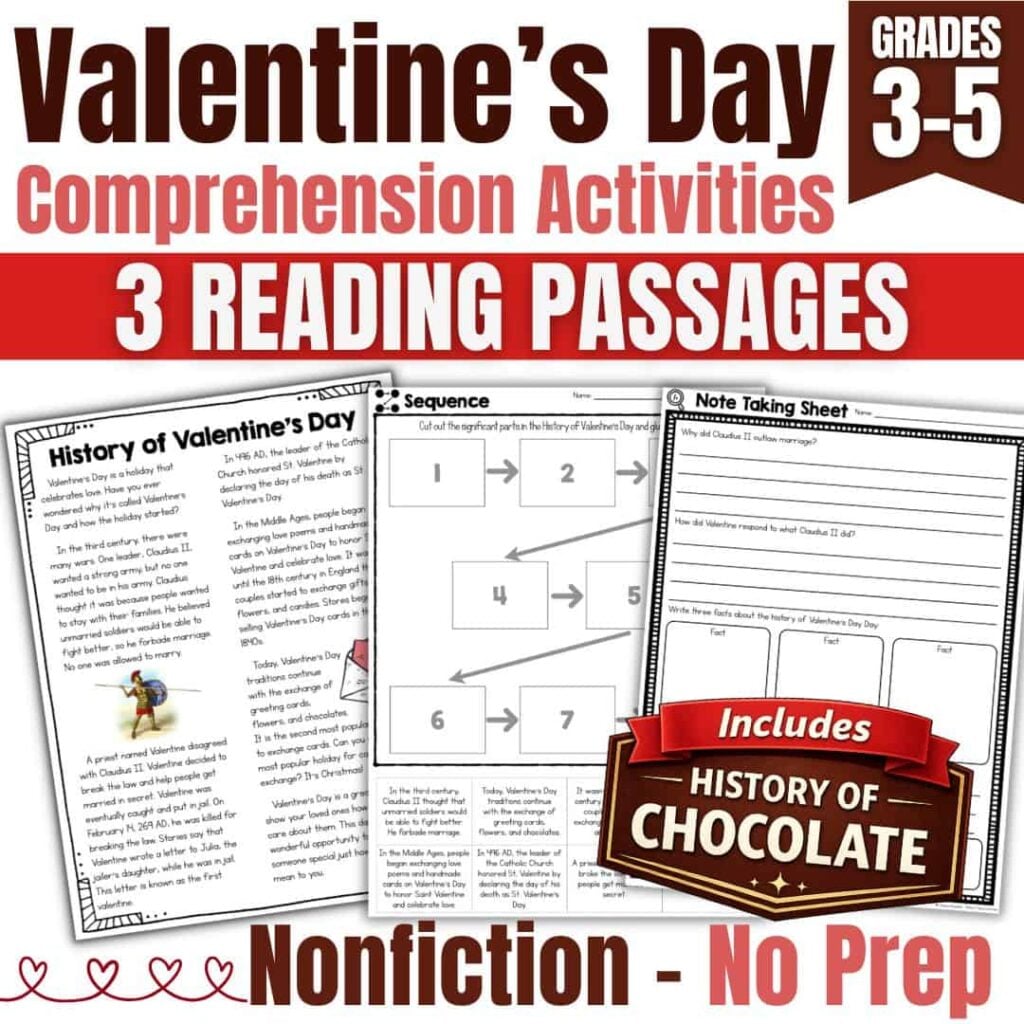
Valentine’s Day Reading Passages
Discover the history of chocolate, the origins of Valentine’s Day, and how the holiday is celebrated around the world. These fun and engaging close-reading resources are perfect for sparking interest in reading and learning about Valentine’s Day.
How to Use These Valentine’s Day Reading Passages in the Classroom
Teachers use this resource in flexible ways, depending on their schedule and student needs.
Common classroom uses include:
- Whole-group nonfiction reading lessons
- Small-group guided reading or intervention
- Literacy centers or independent work
- Sub plans with minimal prep
- Cross-curricular lessons connecting ELA, social studies, and geography
Many teachers teach one article per day or spread each passage over two days to allow time for discussion and writing.
Teaching Tips for February Reading Comprehension
1. Start With Vocabulary Support
Each article includes vocabulary words that appear directly in the text. Pre-teaching these words helps students access the content more easily and improves comprehension.
Teachers often:
- Reinforce words during reading and discussion
- Introduce vocabulary using the included cards
- Use matching or sorting activities
2. Guide Active Reading
Students use marking strategies to interact with the text while reading. Highlighting key ideas, identifying unfamiliar words, and marking important information encourage close reading without overwhelming students.
3. Use Discussion to Build Understanding
The discussion cards give students structured opportunities to talk about what they’ve read. Prompts ask students to explain ideas, justify opinions, and connect information across texts.
4. Strengthen Writing With Structured Responses
Post-reading activities help students turn information into writing. Note-taking pages, summaries, and sequencing tasks support students who need clear scaffolds for written responses.

Why Teachers Choose These Valentine’s Day Reading Passages
Teachers appreciate that this resource:
- Keeps February learning focused
- Works with informational text standards
- Requires minimal prep
- Supports a range of learners
- Balances engagement with academic rigor
Students stay interested because the topics feel relevant and fun, while the reading and writing expectations remain clear and purposeful.
A Practical February Literacy Resource
If you need Valentine’s Day reading passages that support nonfiction comprehension, vocabulary development, and discussion skills, this resource fits easily into upper elementary classrooms. It keeps students engaged, protects instructional time, and makes February planning simpler.
Seasonal reading activities don’t have to feel fluffy. With the right structure, they can be some of the most productive lessons of the month.
Valentine’s Day Reading Passages
Discover the history of chocolate, the origins of Valentine’s Day, and how the holiday is celebrated around the world. These fun and engaging close-reading resources are perfect for sparking interest in reading and learning about Valentine’s Day.
Jessica BOschen
Jessica is a teacher, homeschool parent, and entrepreneur. She shares her passion for teaching and education on What I Have Learned. Jessica has 16 years of experience teaching elementary school and currently homeschools her two middle and high school boys. She enjoys scaffolding learning for students, focusing on helping our most challenging learners achieve success in all academic areas.