
Types of Waves Sort for 4th Grade: Transverse and Longitudinal
A types of waves sort gives 4th graders a hands-on way to learn the difference between transverse and longitudinal waves — one of the more abstract concepts in the 4th grade NGSS physical science standards. In this science station, students read a short passage about wave types, then sort picture cards based on the type of wave each image represents.

This sort addresses the 4th grade waves standards. My physical science guide for elementary students shows how waves and energy fit together in 4th grade, and how both connect to the physical science standards students worked on in 3rd grade and will build on in 5th.
What Students Learn: Transverse vs. Longitudinal Waves
In 4th grade, students are introduced to two types of mechanical waves. A transverse wave carries energy perpendicular to the direction the wave travels. This is the classic up-and-down wave shape. Light, microwaves, and a vibrating guitar string are all transverse waves.
A longitudinal wave (also called a compression wave) moves energy parallel to the direction of travel, compressing and spreading out particles as it goes. Sound is the most familiar example for 4th graders: sound from a phone, a speaker, or a voice all travels as a longitudinal wave.
The sort works because students analyze images rather than match definitions. By working with pictures of phones, microwaves, flashlights, and guitars, students develop a concrete sense of which objects produce which wave type, before the terminology fully sticks.
The reading passage in the station comes first. Students read about both wave types and study wave diagrams before they touch the sorting cards, so this works well as an independent station. By the time students reach the cards, they’re making scientific decisions based on something they’ve just read.
This sort fits best mid-unit, after direct instruction on wave types and before students move into wave properties (amplitude, wavelength, frequency). If you’re building out the full unit, the physical science guide for elementary students shows how waves, energy, and the 4th grade NGSS standards connect.
What is Included in the Types of Waves Sort Station
Included in the Types of Waves Sort are:
- Larger table-group color sorting cards
- Smaller cut-and-paste sort for individual students
- Differentiated questions in short-answer, fill-in-the-blank, and multiple-choice formats. Worksheets and task cards are included for some options.
- Answer key
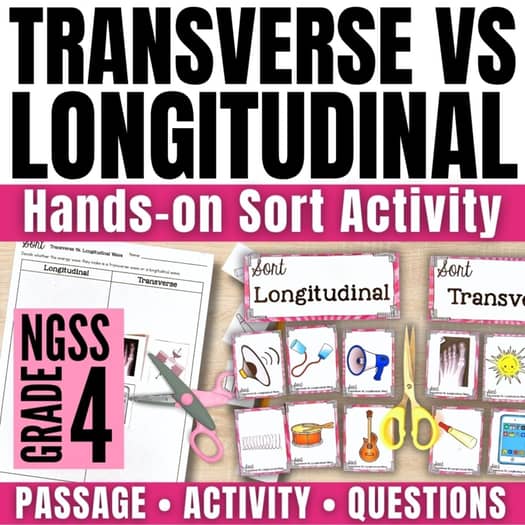
In this SORT science station, students read a passage about transverse vs. longitudinal waves and sort pictures demonstrating each wave type.
Types of Waves Sort for Table Groups
There are two ways to do this sort. One way is in table groups where students collaboratively look at the images on the cards and determine which type of wave each image represents: transverse or longitudinal.
There are different types of waves that students will learn about in this sort: longitudinal or transverse. Students will learn about the wave properties of objects like phones, microwaves, flashlights, and guitars.
This sort has colorful images that students analyze before deciding the type of wave properties that each object has: transverse or longitudinal.
Cut and Paste Sort Option
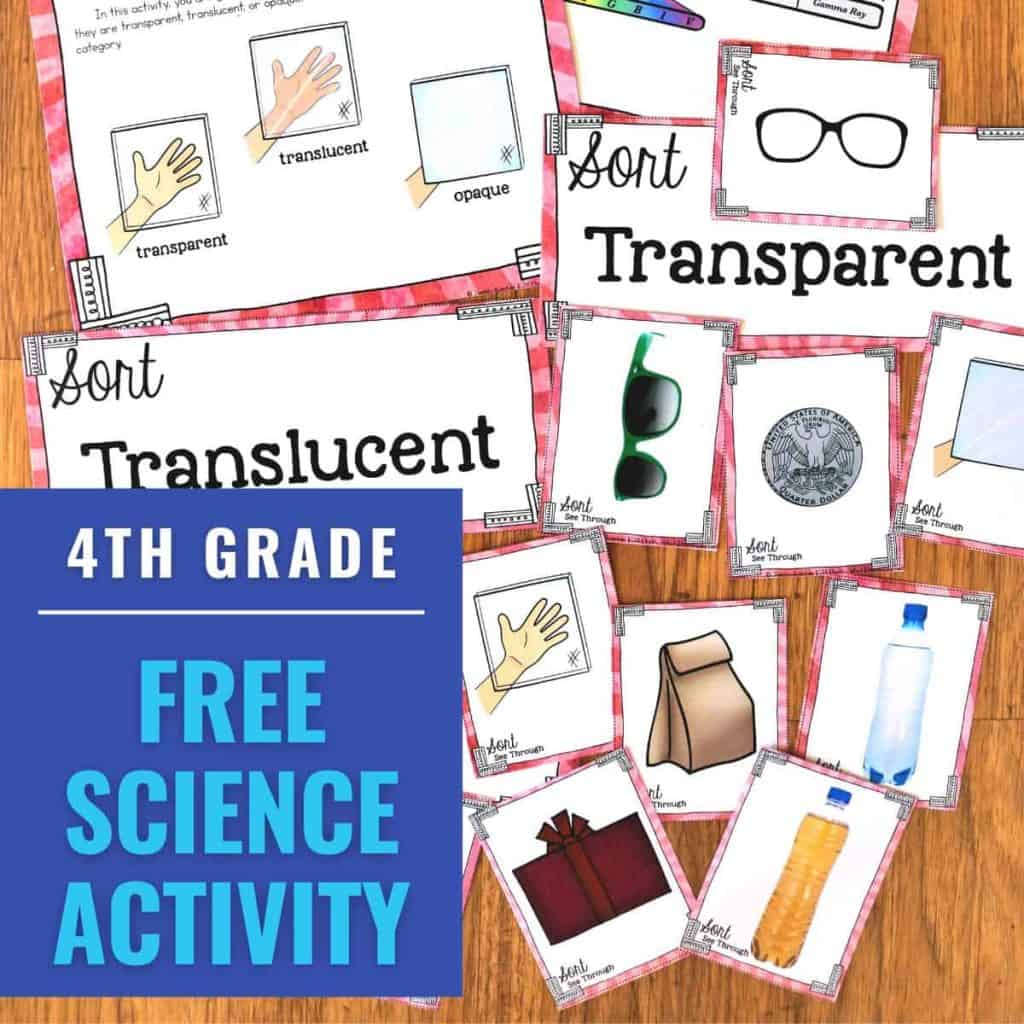
The second way to do the sort is a cut-and-paste option. Students can do both options: sort color option as a whole group and the cut and paste option individually. Or you can choose to have students do only one option.
The cut-and-paste option is all in black and white and in a worksheet format. After reading the informational passage, students look at the images and then sort them into the correct type of wave: longitudinal or transverse waves.
Differentiated Responses
Like all of the science stations in this series, differentiated responses are available for students to demonstrate their understanding. Below is an example of the Short Answer worksheet. Fill-in-the-blanks and multiple-choice task cards are also available.

For more 4th grade science station resources, see the full 4th grade science stations.
How to Purchase the Types of Waves Science Station
This Types of Waves Sort Science Station can be purchased on Teachers Pay Teachers. It is sold individually and as part of a whole Sorts for Fourth Grade Science Stations.
In this SORT science station, students read a passage about transverse vs. longitudinal waves and sort pictures demonstrating each wave type.
Jessica BOschen
Jessica is a teacher, homeschool parent, and entrepreneur. She shares her passion for teaching and education on What I Have Learned. Jessica has 16 years of experience teaching elementary school and currently homeschools her two middle and high school boys. She enjoys scaffolding learning for students, focusing on helping our most challenging learners achieve success in all academic areas.