

The Science of Reading is the body of research that explains how children become proficient readers. It draws on decades of work from cognitive science, linguistics, and education research, and gives teachers a clear, evidence-based framework for what to teach and why.
This post explains where the Science of Reading came from and covers its five components: phonemic awareness, phonics, vocabulary development, fluency, and comprehension.
Research on How to Teach Reading to Children
Countless studies have examined how best to teach reading. The Science of Reading is based on these studies and uses them as a foundation for further research.
National Reading Panel Report from 2000
Research on how children learn to read is not new. In the late 1990s, researchers gathered together and created the National Reading Panel Report. This report focused on many of the components of the Science of Reading (SoR).
The National Reading Panel Report from 2000 outlined five key components that are essential for successful reading instruction: phonemic awareness, phonics, vocabulary development, fluency, and comprehension.
All these components must be taught effectively to ensure students move beyond initial recognition and develop proficiency in understanding what they read. The report also recommended how best to apply these components when teaching reading skills.
These are the same core recommendations in the Science of Reading.
What Is the Science of Reading?
The Science of Reading (SoR) is the research conducted on how children become proficient readers. Cognitive scientists have studied it for the past two decades. Researchers from many disciplines have come together to expand our knowledge of how children learn to read.
The Science of Reading provides evidence-based guidance on how to teach reading effectively by focusing on the foundations of language, including phonics. It brings together converging evidence on what matters and what works in literacy instruction.
For more information about the research behind the science of reading, check out these resources:
- The Science of Reading: The Basics and Beyond
- Really Great Reading – What Is the Science of Reading?
- The Reading League – What is the Science of Reading?
The National Reading Panel Report highlighted above is a part of the Science of Reading. Keep in mind that the National Reading Panel Report is two decades old. In the past twenty years, research has expanded. We know more now about teaching reading than we did in 2000. The Science of Reading builds on the National Reading Panel Report and advances it with new research.
Our knowledge of how kids learn to read keeps growing as research in the field continues.

What the Science of Reading is Not
Before an in-depth discussion about the components of the science of reading, let’s take a look at what the science of reading is not.
The Science of Reading is not a singular method or strategy for teaching reading
It is a synthesis of evidence-based methods that draws on knowledge and research from different disciplines, such as cognitive science and linguistics. The science of reading does not rely on memorization; instead, it encourages a holistic approach to learning by emphasizing phonological awareness, phonics, vocabulary development, fluency, and comprehension.
It is not just phonics instruction or just orthographic mapping. Phonics is not the only component students need. Children need instruction in all five areas. Students must connect the words, phrases, and texts they read to understand their meanings.

What is orthographic mapping and how do you use it in the classroom? See this post to find out more.
The Science of Reading is not a one-size-fits-all approach to teaching reading
The Science of Reading recognizes that each student has unique needs and abilities. By understanding the five components of the Science of Reading (SoR), teachers can better equip their students to move from initial recognition to proficient comprehension.
Teachers can use research-based methods to assess where students are at in their reading journey and provide them with instruction in the next step in the process of learning to read.
As teachers, we need to respond effectively to the varied needs of English learners, students with disabilities, and students with dyslexia. Every student requires an individualized approach to make real progress.
The science of reading is not a new fad, idea, or swing in the reading wars
It is based on decades of research and evidence from numerous disciplines such as cognitive science and linguistics. The science of reading has been developed over the past two decades to better understand how children learn to read. It builds on a solid research foundation from 2000.
The science of reading is not a reading program or set of instructional materials
Rather, it is an evidence-based approach to teaching reading that helps teachers better understand how their students learn and make more informed decisions about how to effectively teach them.
Teachers can use any set of instructional materials that meets their students’ needs. For this reason, teachers need to understand each component of the Science of Reading to determine how teaching resources can meet their students’ needs.
This Language Magazine article goes deeper on some of these ideas
What are the Five Components of the Science of Reading?
The Science of Reading identifies five components of effective instruction that should form the basis of all reading programs: phonemic awareness, phonics, vocabulary development, fluency, and comprehension. These are the same components in the National Reading Panel Report from 2000. So, what are the five components of the science of reading?
Phonemic Awareness
One of these components, phonemic awareness, is the idea that words are made up of individual sounds called phonemes. Readers blend these phonemes together while reading.
Phonemic Awareness is an understanding of how spoken language is divided into smaller sections to make sounds in words. It requires teachers to help students recognize and produce individual sounds within a word.
Phonics
Phonics is the understanding of letter-sound relationships. Knowing how to read phonetically is an important part of learning to read. Phonics is one of five components in the science of reading. This fundamental aspect of literacy involves decoding printed words by their individual sounds, then blending those sounds to form a word.
Recognizing letters quickly and linking them to sounds is essential for readers as they sound out unknown words or decode unfamiliar language.
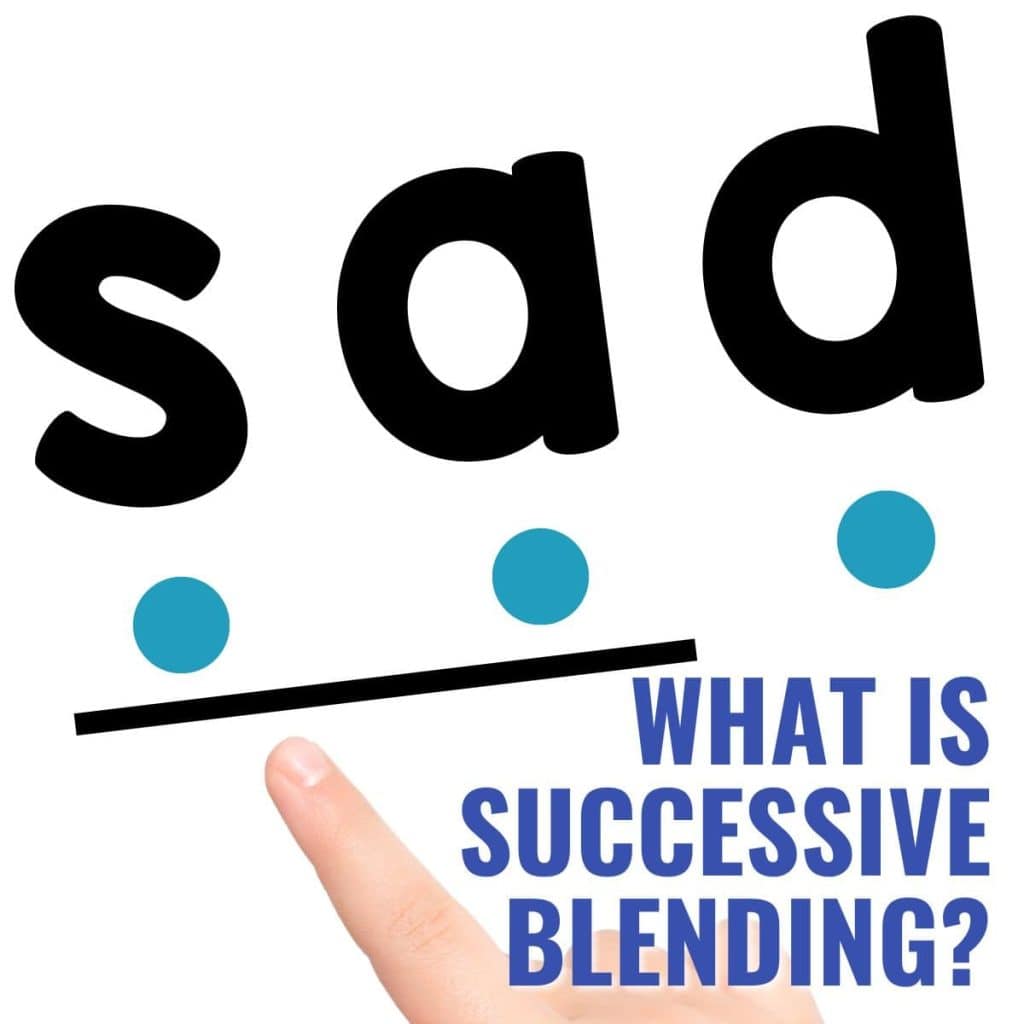
For students who struggle to blend CVC words even after explicit phonics instruction, successive blending is a research-aligned intervention strategy that reduces the cognitive load of blending by breaking the process into two steps instead of three.
Structural Analysis
Structural Analysis is an important component of phonics instruction that focuses on analyzing phonemes and graphemes, the smallest units of sound and writing, respectively. It examines how each word breaks down into individual parts, such as prefixes, suffixes, and root words, helping readers understand the connections between sounds, spelling, and meaning.
By understanding the meaning and function of these word parts, students can more easily recognize and read unfamiliar words.
This helps learners recognize patterns in words they have seen before and make informed decisions about unfamiliar words. Practices like multisyllabic decoding also help readers analyze longer words effectively. Structural Analysis helps students decode longer or more complex words, which builds both comprehension and confidence.
Fluency
Fluency is the ability to read words accurately and quickly. Fluency is an essential element of reading mastery, as it helps readers quickly recognize and comprehend written words. This critical task involves efficiently and accurately interpreting symbols on a page. In particular, fluency reflects a reader’s understanding of word processing skills, letter-sound connections, phonemic awareness, phonics principles, and structural analysis.
In other words, to become fluent readers, children must first understand how the symbols on a page connect to speech sounds.
Once they grasp this concept, they can begin developing skills to accurately identify those symbol/sound connections and apply them when interpreting written material quickly and efficiently. With strong fluency skills, readers can unlock new levels of knowledge from written material.
The components of fluency include automaticity, accuracy, and prosody (expression).
Vocabulary Development
Vocabulary Development involves learning words through direct, explicit instruction as well as extensive reading. Students must learn new words through conversation, listening, and meaningful reading experiences.
Vocabulary is an important component of reading fluency and comprehension. To help students build their vocabulary, provide purposeful activities that introduce new words and encourage students to practice using them in context.
Examples of vocabulary instruction include sentence completion and creating comic strips or stories to help students understand new words in context. Teaching students about synonyms and homophones also helps them build word knowledge as they learn how words connect in context.
Comprehension
Comprehension is the ability to understand what has been read. It requires teachers to guide students in making connections between text and prior knowledge, asking questions before, during, and after reading, using mental pictures to better understand the text, and making predictions.
Comprehension also involves thinking critically and making inferences. Critical thinking involves considering various angles of a text in order to fully understand it. Making inferences requires readers to go beyond the literal meaning of words by relating texts to prior knowledge, experiences, and evidence from the text.
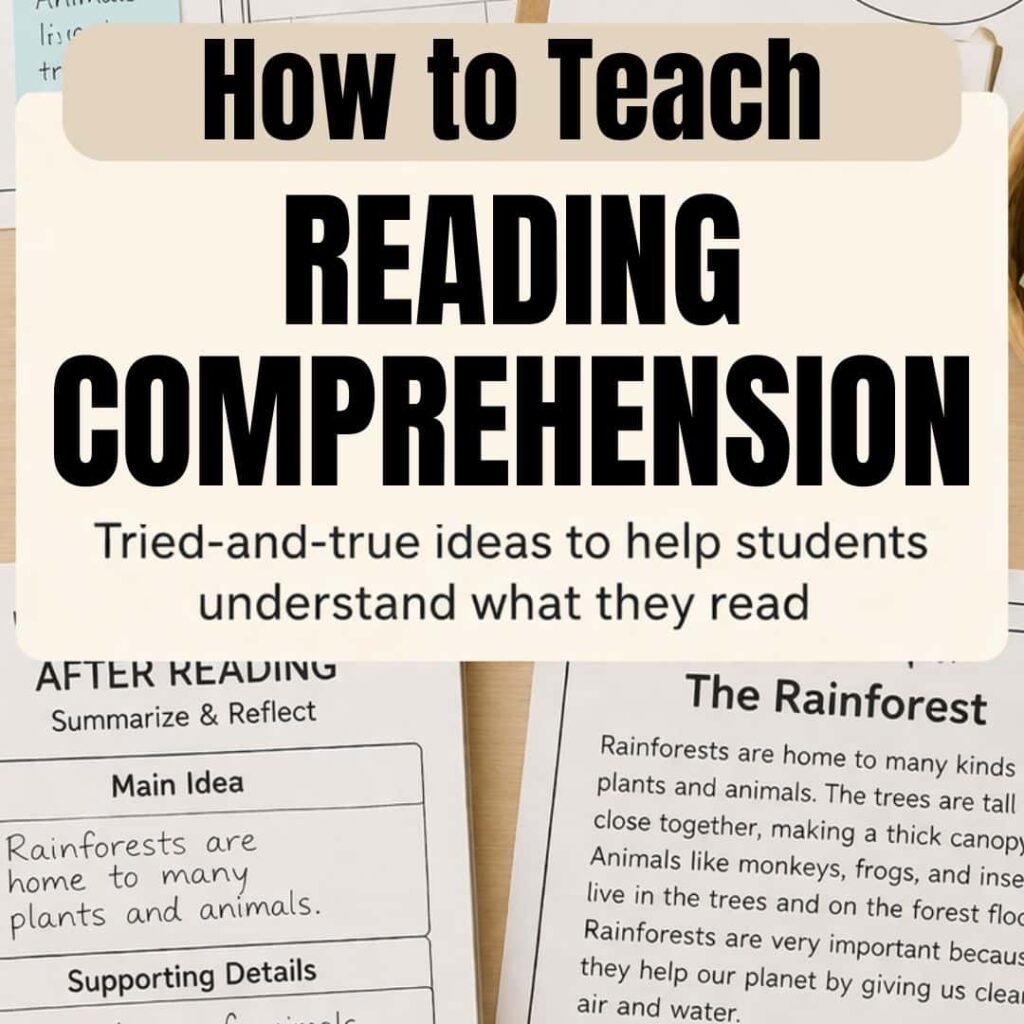
This post explains how to teach reading comprehension with before-reading, during-reading, and after-reading strategies.
Summary of the Five Components of the Science of Reading
The five components of reading are essential for students to develop strong literacy skills. By combining phonemic awareness, phonics instruction, fluency development, vocabulary development, and comprehension strategies, teachers can help students become confident readers who continue to strive for higher achievement.
Phonemic awareness refers to understanding how sounds correspond to written language. It helps us break words down into their component sounds. Phonics is the ability to recognize letter-sound combinations and blend them together quickly and accurately.
Fluency supports comprehension because it helps readers read more smoothly by recognizing more words instantly and accurately. Next, vocabulary helps readers understand new words they come across as they read. To be a successful reader, we must also comprehend what we read; we do this by making connections between prior knowledge and experiences and what is written in the text.
When combined effectively, these five components form the keys to successful reading for any learner!
Together, these areas create the foundation for truly understanding what you read. This pathway doesn’t just help us read words; it shows us how those words come together into complete strings that become sentences, then paragraphs, and so on.
Jessica BOschen
Jessica is a teacher, homeschool parent, and entrepreneur. She shares her passion for teaching and education on What I Have Learned. Jessica has 16 years of experience teaching elementary school and currently homeschools her two middle and high school boys. She enjoys scaffolding learning for students, focusing on helping our most challenging learners achieve success in all academic areas.