Life Cycles: Plants and Animals Third Grade Science Stations
$13.78The focus is on NGSS 3-LS1.B and include concepts such as animal life cycles, plant life cycles, and parts of a plant.

Showing 1–15 of 24 resultsSorted by popularity
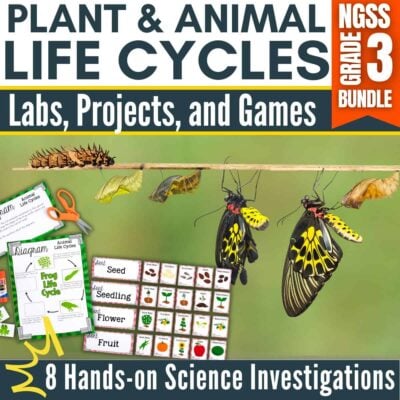
The focus is on NGSS 3-LS1.B and include concepts such as animal life cycles, plant life cycles, and parts of a plant.
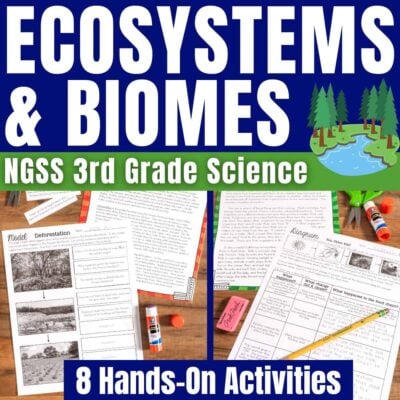
The focus is on NGSS 3-LS2.C and 3-LS4.D and includes concepts such as food chains, food webs, traits of organisms that change due to environmental changes, how animals affect their environment, invasive species, and biomes.
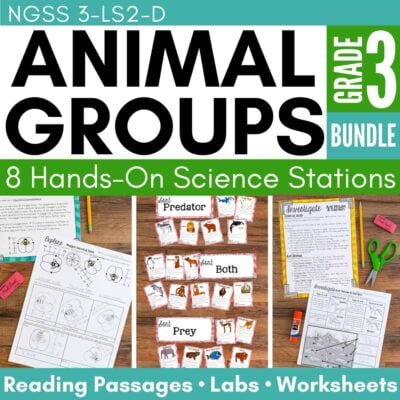
The focus is on NGSS 3-LS2.D and include concepts such as social groups, animal homes, and migration.
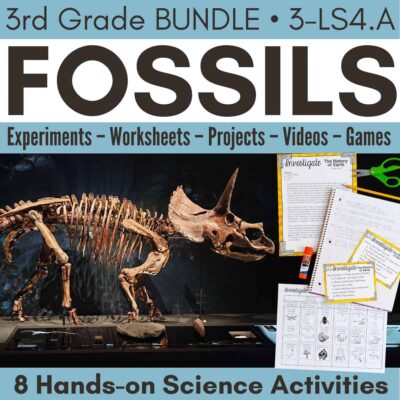
The focus is on NGSS 3-LS4.A and includes concepts such as fossils, the history of Earth, comparing the mammoth and elephants, paleontologists, and physical traits of dinosaurs.

The focus is on NGSS 3-LS3.A and 3-LS3.B and include concepts such as plant identification, seed dispersal, changing leaves, animal survival and growth, classification of organisms, and warm-blooded and cold-blooded animals.
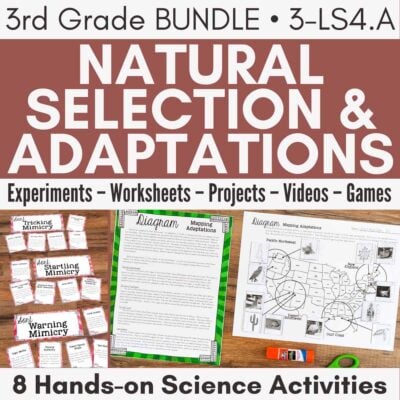
The focus is on NGSS 3-LS4.B & 3-LS4.C and includes concepts such plant adaptation, survival of the fittest, bird adaptations, natural selection, regional plant and animal adaptations in the United States, plant and animal adaptations in the Arctic, hare adaptations, bird beaks, and mimicry.
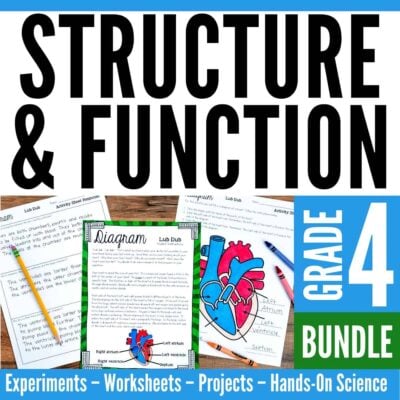
Structure & Function: How Organisms Live, Behave, Reproduce, Grow Science Stations for Fourth Grade Next Generation Science Standards include 8 different science stations where students deepen their understanding of internal and external structures and functions of plants and animals that support survival, growth, behavior, and reproduction.
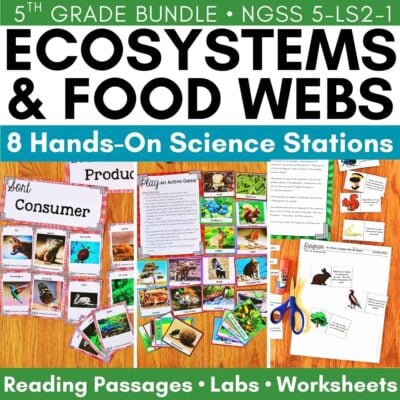
These Food Webs Next Generation Science Stations include eight different science stations where students deepen their understanding of food webs, ecosystems, consumers, producers and decomposers, and the movement of matter among plants, animals, decomposers, and the environment. The focus is on 5-LS2-1.
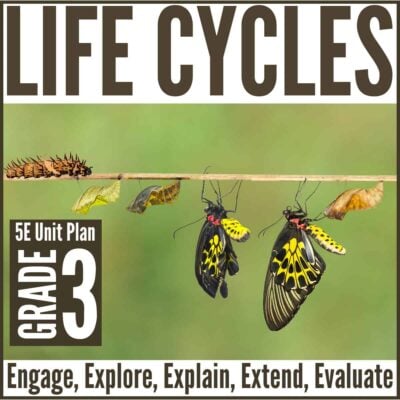
Teach plant and animal life cycles with this comprehensive 5E Life Cycles Unit Plan! Aligned to NGSS 3-LS1-1, this inquiry-based science resource includes engaging lessons, investigations, vocabulary activities, exit tickets, assessments, digital resources, and everything needed to guide students through the 5E instructional model.
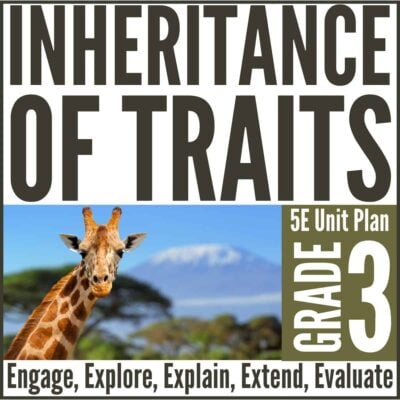
This Inheritance of Traits 5E Unit Plan is an inquiry-based unit that focuses on providing evidence that plants and animals have traits inherited from parents. Variation of traits is also explored within groups of similar organisms.
Information Processing: Making Sense of the World Science Stations for Fourth Grade Next Generation Science Standards include 8 different science stations where students deepen their understanding of sensory systems, including anatomy (structures and parts) and physiology (how the parts function).
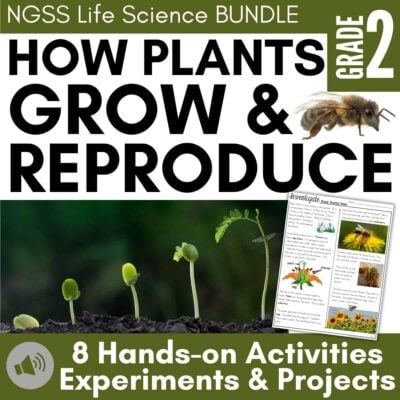
Engage your students with this hands-on plant science unit featuring 8 interactive science stations focused on plant growth, pollination, reproduction, and seed dispersal! Designed for 2nd-grade NGSS alignment, these stations help students explore what plants need to survive and how plants depend on animals in their life cycle. Includes differentiated response sheets, vocabulary cards, posters, and interactive activities, perfect for science centers or small-group instruction.

This Adaptations 5E Science Unit Plan is an inquiry-based unit where students study how in a particular habitat some organisms can survive well, some survive less well, and some cannot survive at all.
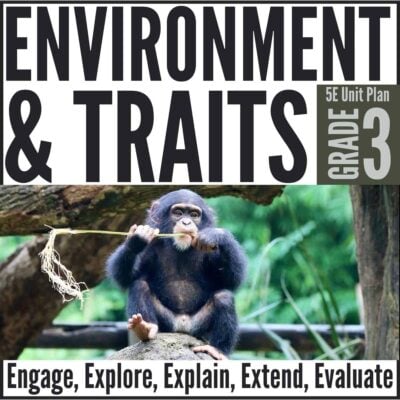
This Environment and Traits 5E Unit Plan is an inquiry-based unit that focuses on investigating acquired and learned traits from the environment.
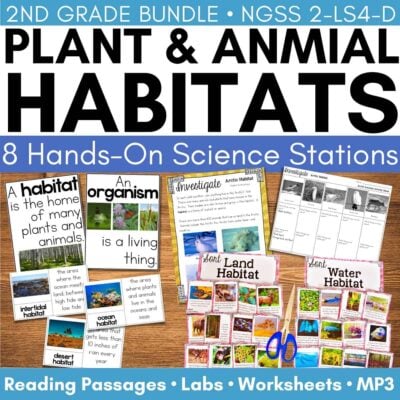
Help students explore habitats around the world with these engaging 2nd Grade Habitats Science Stations! Students learn how plants and animals live in arctic, temperate forest, intertidal, pond, desert, land, and water habitats through hands-on activities, reading passages, videos, games, models, sorting, diagrams, and differentiated response options. Aligned to NGSS 2-LS4-1 / DCI 2-LS4.D.
End of content
End of content