Showing 16–30 of 56 resultsSorted by popularity
-
Rated 5.00 out of 5
$3.30
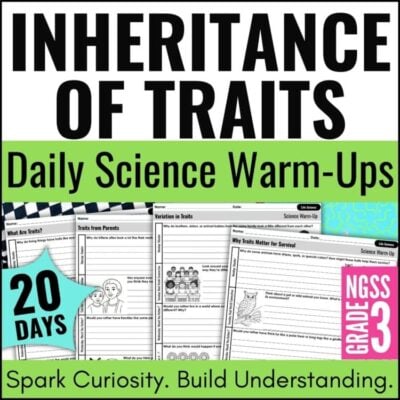
These inheritance of traits warm ups are short daily prompts for 3rd grade, aligned to NGSS 3-LS3-1. Students explore how traits are inherited and why variation matters for survival.
-

Rated 4.89 out of 5
$4.14
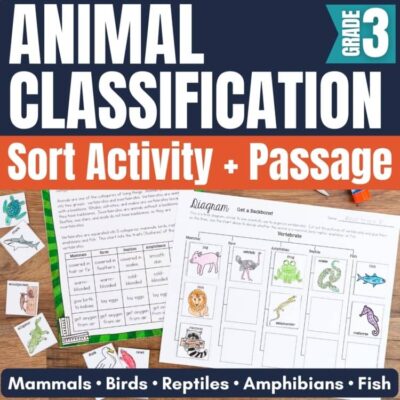
This animal classification activity helps 3rd grade students understand vertebrates, invertebrates, and the major vertebrate groups: mammals, birds, reptiles, amphibians, and fish. Students build a tree diagram, sort animals by traits, and answer comprehension questions.
-
Rated 4.83 out of 5
$3.66
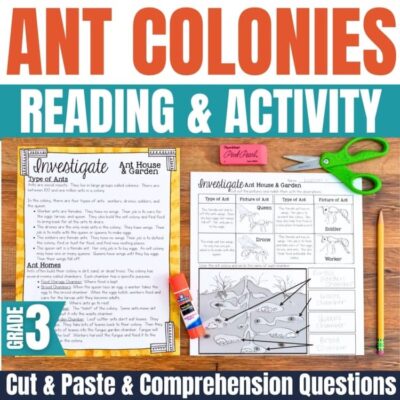
This ant colony activity helps 3rd grade students explore colony structure, types of ants, and how ants work together to survive. It is an NGSS 3-LS2.D station on social interactions and group behavior.
-
Rated 4.90 out of 5
$13.65
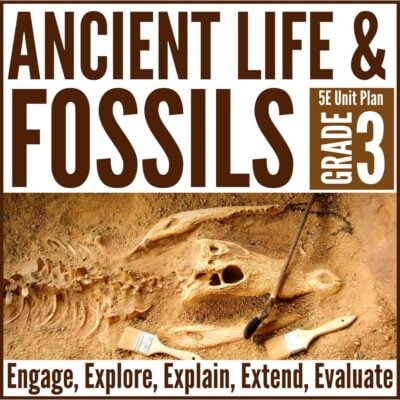
This Ancient Life 5E Science Unit Plan is an inquiry-based unit that focuses on investigating fossils of plants and animals. Throughout the unit, students analyze and interpret data from fossils to provide evidence of the organisms and the environments in which they lived long ago. Students explore types of fossils, paleontologists, and fossil excavation.
-
Rated 5.00 out of 5
$6.95
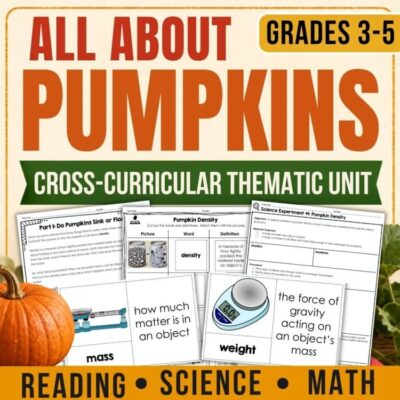
These pumpkin life cycle activities combine nonfiction reading with hands-on science, math, social studies, vocabulary, and graphing for grades 3 to 5. Five informational articles help students build content knowledge while they practice key reading skills.
-
Rated 4.94 out of 5
$22.42
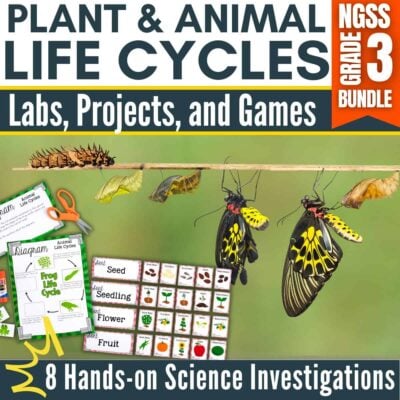
The focus is on NGSS 3-LS1.B and include concepts such as animal life cycles, plant life cycles, and parts of a plant.
-
Rated 4.70 out of 5
$3.15
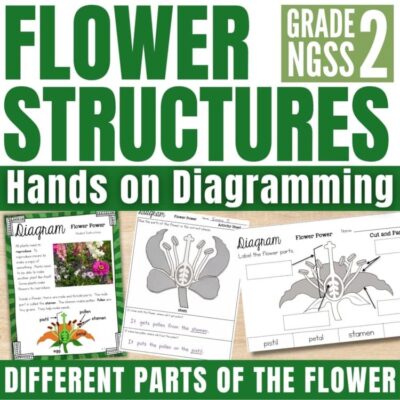
This parts of a flower worksheet helps 2nd grade students understand plant reproduction, pollination, and plant science vocabulary. Students read a short informational passage, identify the stamen, pistil, petal, pollen, and egg, and create a labeled flower diagram.
-
Rated 4.84 out of 5
$13.21
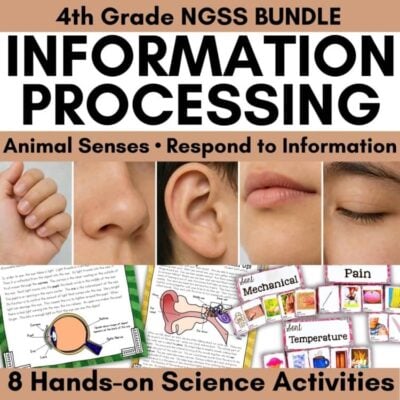
Information Processing: Making Sense of the World Science Stations for Fourth Grade Next Generation Science Standards include 8 different science stations where students deepen their understanding of sensory systems, including anatomy (structures and parts) and physiology (how the parts function).
-
Rated 4.85 out of 5
$3.95
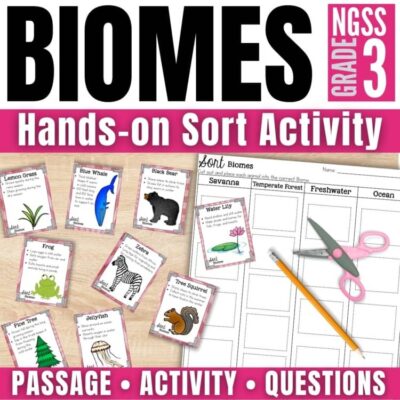
This biomes sort activity helps 3rd grade students understand how organisms fit into different ecosystems. It is a science station aligned to NGSS 3-LS2.C and 3-LS4.D, built around a sorting task and a short reading.
-
Rated 4.96 out of 5
$5.52
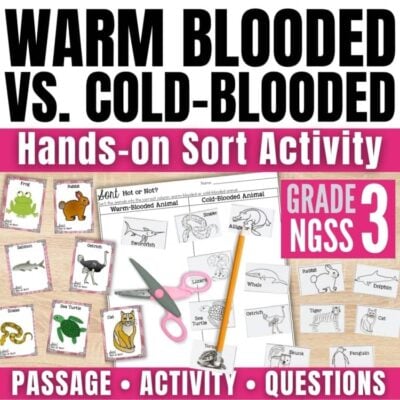
This warm blooded vs cold blooded animals sorting activity helps 3rd grade students compare mammals, birds, reptiles, amphibians, and fish while they learn how animals regulate body temperature. Students classify animals through sorting, reading comprehension, and differentiated response options.
-
Rated 4.94 out of 5
$11.18
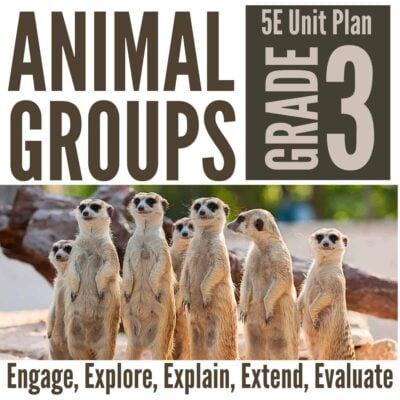
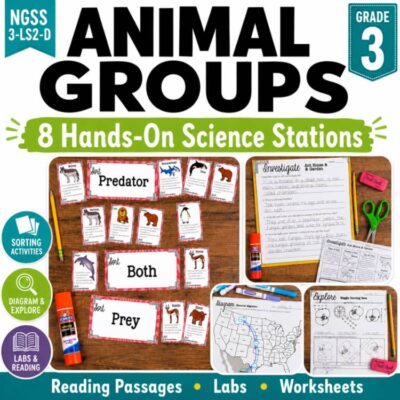
This Animal Groups 5E Unit Plan is an inquiry-based unit that focuses on investigating animal groups and the cause-and-effect relationships of predator and prey. Students explain why animals form groups for survival and investigate the social interaction and group behavior of animals.
-
Rated 4.88 out of 5
$19.95
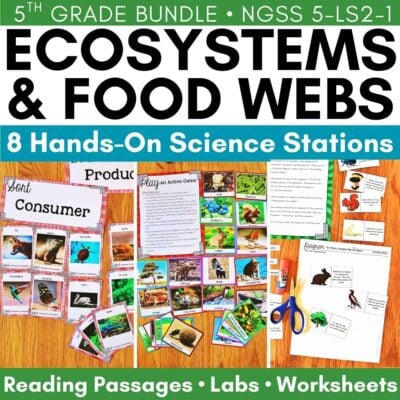
These Food Webs Next Generation Science Stations include eight different science stations where students deepen their understanding of food webs, ecosystems, consumers, producers and decomposers, and the movement of matter among plants, animals, decomposers, and the environment. The focus is on 5-LS2-1.
-
Rated 4.81 out of 5
$9.25
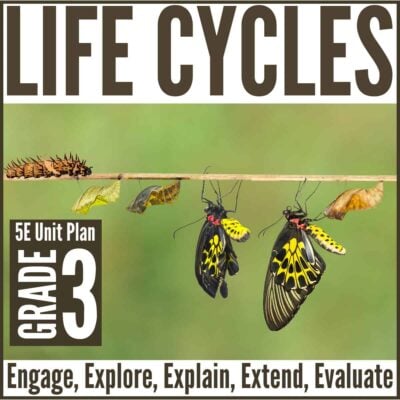
Teach plant and animal life cycles with this comprehensive 5E Life Cycles Unit Plan! Aligned to NGSS 3-LS1-1, this inquiry-based science resource includes engaging lessons, investigations, vocabulary activities, exit tickets, assessments, digital resources, and everything needed to guide students through the 5E instructional model.
-
Rated 4.97 out of 5
$12.48
The focus is on NGSS 3-LS2.D and include concepts such as social groups, animal homes, and migration.
-
Rated 4.82 out of 5
$9.83
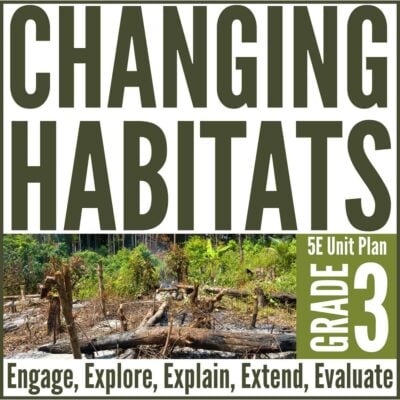
This Changing Habitats 5E Science Unit Plan is an inquiry-based unit where students study how when an environment changes the types of plants and animals may change too. Throughout the unit, students look at biodiversity and human impact on habitats.