Showing 31–45 of 56 resultsSorted by popularity
-
Rated 4.96 out of 5
$12.81
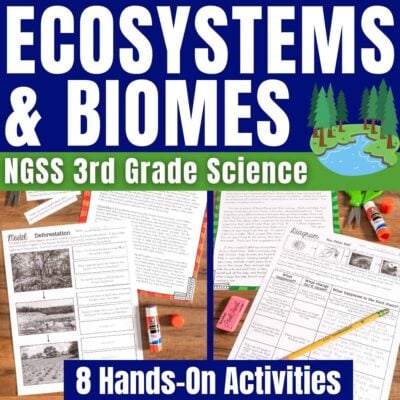
The focus is on NGSS 3-LS2.C and 3-LS4.D and includes concepts such as food chains, food webs, traits of organisms that change due to environmental changes, how animals affect their environment, invasive species, and biomes.
-

Rated 5.00 out of 5
$3.71
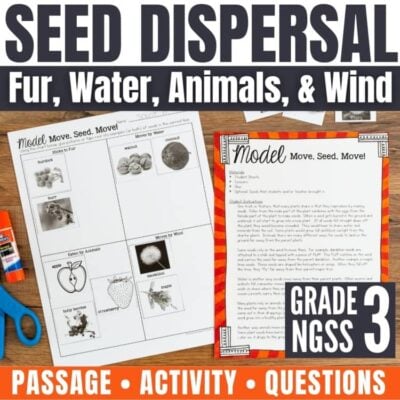
This 3rd grade seed dispersal activity introduces the ways seeds travel by wind, water, and animals. Students read, sort, and model seed movement while they investigate how plant traits help seeds survive and grow in new places.
-
Rated 4.91 out of 5
$16.25
The focus is on NGSS 3-LS3.A and 3-LS3.B and include concepts such as plant identification, seed dispersal, changing leaves, animal survival and growth, classification of organisms, and warm-blooded and cold-blooded animals.
-
$4.95
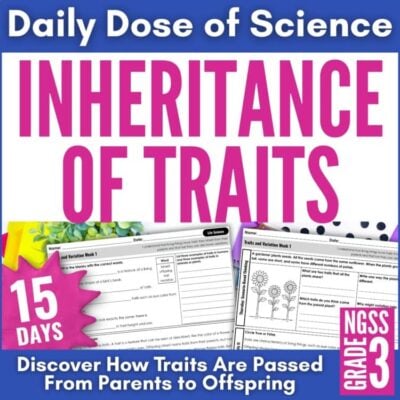
These inheritance of traits exit tickets help 3rd grade students master NGSS 3-LS3-1 through a three-week collection of daily science reviews. Students explore how traits are passed from parents to offspring and why offspring are not exact copies.
-
Rated 4.88 out of 5
$99.75
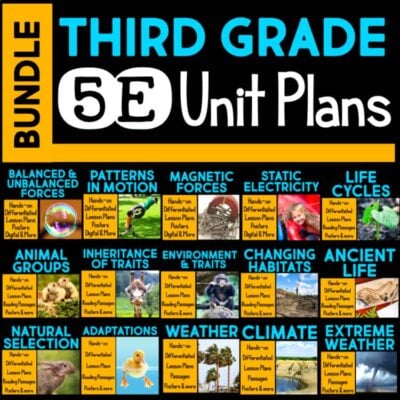
This is a BUNDLE of all the 5E Unit Plans for Third Grade. The 5E Instructional Model walks students through the five components of inquiry-based learning. Each unit includes multiple lessons for each of the 5Es and provides a structure for your science instruction.
-
Rated 4.59 out of 5
$3.56
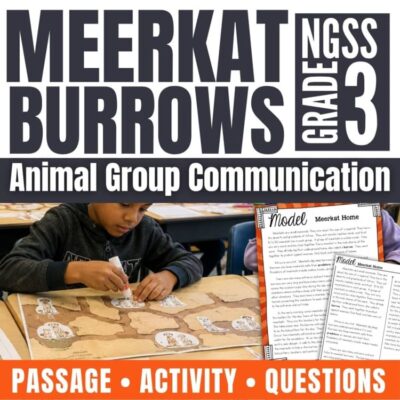
This meerkat burrow activity helps 3rd grade students learn how meerkats work together to survive, protect one another, care for their young, and communicate in underground burrows. It is a science station aligned to NGSS 3-LS2.D.
-
Rated 4.88 out of 5
$12.60
This Natural Selection 5E Science Unit Plan is an inquiry-based unit that focuses using evidence to construct an explanation for how variations in characteristics among individuals of the same species may provide advantages in survival.
-
Rated 5.00 out of 5
$13.53
Engage your students with this hands-on plant science unit featuring 8 interactive science stations focused on plant growth, pollination, reproduction, and seed dispersal! Designed for 2nd-grade NGSS alignment, these stations help students explore what plants need to survive and how plants depend on animals in their life cycle. Includes differentiated response sheets, vocabulary cards, posters, and interactive activities, perfect for science centers or small-group instruction.
-
Rated 4.97 out of 5
$3.64
These animal life cycle graphic organizers give students a clear visual format for sequencing, drawing, and describing how nine animals and insects grow and change. Each page pairs labeled drawing boxes with writing lines and arrows, so science, vocabulary, and informational writing all happen on one page.
-
Rated 4.87 out of 5
$10.74
This Adaptations 5E Science Unit Plan is an inquiry-based unit where students study how in a particular habitat some organisms can survive well, some survive less well, and some cannot survive at all.
-
Rated 4.81 out of 5
$3.56
This deforestation activity helps 3rd grade students understand how environmental changes affect ecosystems. It is a science station aligned to NGSS 3-LS2.C and 3-LS4.D on biodiversity, human impact, and rainforest conservation.
-
Rated 4.93 out of 5
$3.31
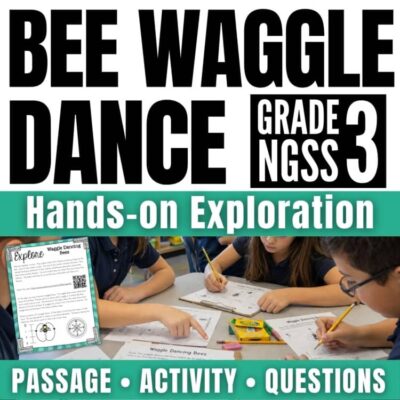
This bee waggle dance activity helps 3rd grade students explore how bees communicate to locate nectar and help the hive survive. It is a science station aligned to NGSS 3-LS2.D on social interactions and group behavior.
-
$4.50
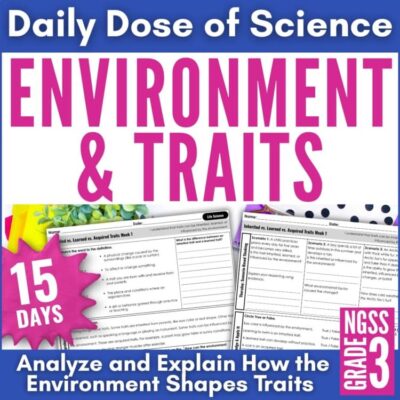
This inherited and acquired traits review helps 3rd grade students understand how environmental factors influence trait development. It is a 3-week spiral review aligned to NGSS 3-LS3-2.
-
Rated 4.94 out of 5
$4.47
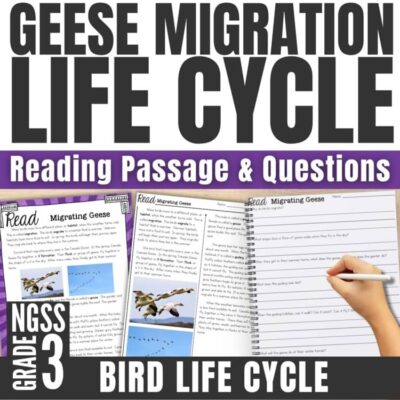
This migrating geese reading passage blends reading and science in a 3rd grade station about animal life cycles and seasonal behavior. It focuses on the migration of Canada geese and is part of a larger Growth and Cycles unit aligned to NGSS 3-LS1-1 and 3-LS2-1.
-
Rated 4.90 out of 5
$10.25
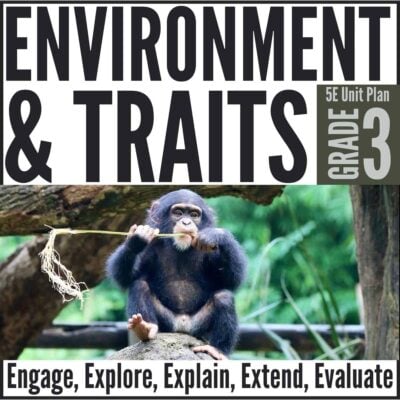
This Environment and Traits 5E Unit Plan is an inquiry-based unit that focuses on investigating acquired and learned traits from the environment.