
Phases of the Moon Projects for Elementary Students in the Classroom & At Home
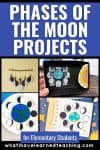
Hands-on learning is an integral part of the elementary school curriculum, and what better way to engage students in science than with fun and interactive moon phase projects? Teaching the phases of the moon to elementary students can be challenging, but with the right projects, teachers can make science both fun and educational!

This post contains links to affiliate websites, such as Amazon, and we receive an affiliate commission for any purchases made by you using these links. We appreciate your support!
This article will provide an overview of phases of the moon projects that elementary school teachers can implement in their classrooms. From creative art projects to hands-on outdoor activities, this article will offer a variety of projects to engage students in learning about the phases of the moon.
Moon Phase Experiments for Scientific Exploration
To deepen students’ understanding of the phases of the moon, conducting moon phase experiments is an engaging and effective approach. Providing hands-on experiences allows students to visualize and comprehend the lunar cycle better. Here are some educational moon projects:
Read about Rotations, Revolutions, and the Phases of the Moon
Our 5th Grade Science Stations have two activities that focus on the phases of the moon. The first is a reading passage in which students learn about the ways the rotations and revolutions of Earth and its Moon affect patterns on Earth. Students demonstrate their understanding by answering questions in their science journals, completing included worksheets, or utilizing the Google Form™️.

Investigating the Impact of Light on Moon Phases
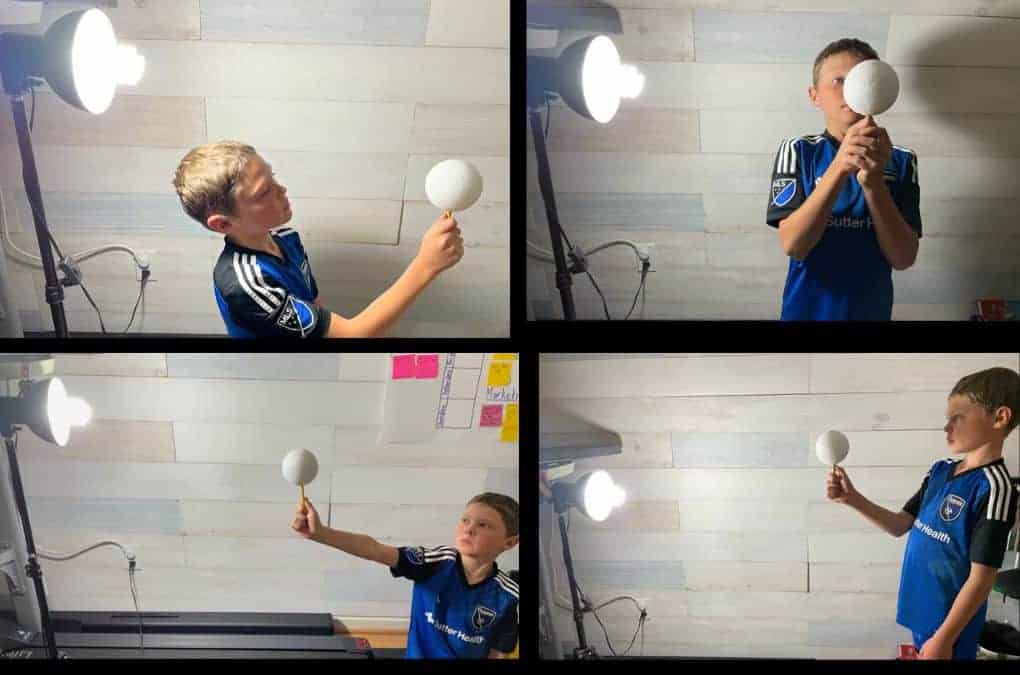
In this experiment, students learn how light affects the moon’s appearance. By using a ball to represent the moon and a flashlight or lamp to represent the sun, students can see how the moon’s position affects the appearance of the moon’s phases.
In this 5th-grade science activity, students read about the different phases of the moon and then participate in the above activity to show the moon’s phases. Students then create a diagram based on the activity.

Using Oreo Cookies to Model Moon Phases
This experiment is a delicious way to teach students about the moon’s phases. Students can use Oreo cookies to represent the moon and then scrape off the cream to show the different phases. Through this process, students can see how the moon appears differently depending on the sunlight’s angle and the moon’s position relative to the Earth.

Creating Moon Phase Calendars
This experiment involves observing the moon every night and recording its phase. Over the course of a month, students can create a moon phase calendar to track the changing phases. By creating the calendar, students can see the pattern of the moon’s cycle and learn to predict future moon phases.
FREE Prefilled Moon Calendar
One way to help students journal and track the moon’s phases is by providing them with a printable calendar. Students can write down what they observe, just like the first astronomers. This Moon Phase Calendar comes printed with the moon phases.

Exploring the Phases of the Moon Through Art
Engaging in creative activities is a fantastic way to explore the phases of the moon. By creating moon phase charts, moon phase mobiles, or designing lunar cycle dioramas, students can learn about the moon in a fun and interactive way.
Phases of the Moon Projects
One of the simplest ways to explore the lunar cycle is through drawing or painting the different phases of the moon. Students can also use play-dough to create three-dimensional models of each phase or make papier-mâché models of the moon. Another project idea is creating a moon phase chart using paper plates and markers with a hands-on approach.
Lunar Cycle Crafts
Students can also create fun lunar cycle crafts like Moon Phase Mobiles. These mobiles can be made with paper plates, strings, markers, or colored pencils.
Moon Phase Craft
This moon phase project makes a stunning wall display. It’s easy to make with everyday objects. It’s made with wooden buttons, beads, and a stick. These natural components make it unlike other paper crafts.

Moon Phase Diorama – No Mess Printable
Another project idea is creating a lunar cycle diorama with black construction paper, white chalk, and craft materials, such as sequins, glitter, and cotton balls.
If you want to avoid the mess, consider using this Phases of the Moon Diorama Printable. It’s a mess-free alternative to the glitter. It’s a free hands-on activity that demonstrates the moon cycle. You can easily print and do with your students in the afternoon!

Moon Slider
For a hands-on movable effect, consider creating a slider so students can see the motion of the moon’s transition between phases.

Moon Phases Craft
Learn about the different moon phases with this simple moon craft activity. It includes an Earth cut from felt and moon shapes cut from paper that students glue down to a paper plate. Students can rotate the plate to mimic the orbit of the moon. This makes a great alternative to the Oreo activity!

Building Moon Phase Models
Building moon phase models is a fun and engaging way for students to learn about the lunar cycle. Here are some hands-on activities you can try in your classroom:
- Clay or playdough: Have students shape the clay into a sphere and use a flashlight to represent the sun. Then, have your students move the moon around the sphere to demonstrate the different phases of the moon.
- Styrofoam Ball and LED lights: Have students paint the foam balls to represent the moon’s surface. Then, insert LED lights inside the foam balls to represent the sun. Have students move the foam balls around the lights to demonstrate each phase of the moon.
- Paper plates: Have students draw the different phases of the moon on the plates and then rotate the plates to show the changing phases.
These moon phase models are a great way to engage students in hands-on learning and help them understand the lunar cycle. Incorporating these activities into your classroom is an excellent way to make science fun!
Observing the Moon: Outdoor Activities
Observing the moon is a great way to engage students in hands-on learning. It allows them to explore the lunar terrain and observe the phases of the moon firsthand. While you might not be able to get outside with your students at night, you might be able to share these activity ideas with parents:
Moon Journaling
Encourage your students to keep a moon journal in which they can record their observations of the moon over time. This activity will allow them to track the moon’s phases and notice any changes in its appearance. You can also prompt them to write about how the moon affects their daily lives or to reflect on the cultural significance of the moon in different societies.
Moon Watching
Take your students outside to observe the moon with binoculars or a telescope. This will allow them to get a closer look at the lunar surface and notice any details they may have missed with the naked eye. You can prompt them to describe what they see and to compare their observations with those of their classmates.
Moonlit Nature Walks
Take advantage of the moon’s light to organize a nighttime nature walk. This activity will allow your students to explore their surroundings under the moon’s glow and to observe how the moon affects the environment. You can prompt them to look for nocturnal animals, identify different types of plants, or reflect on the different sounds and smells of the night.
Lunar Photography
Encourage your students to take pictures of the moon with a camera or a smartphone. This activity will allow them to capture the moon’s phases and practice their photography skills. You can prompt them to experiment with different angles and settings or to create a photo collage of their favorite moon pictures.
These moon observation activities will help your students develop a deeper understanding and appreciation of the moon. They will also allow them to connect with the natural world around them and to engage in scientific exploration.
Exploring Lunar Eclipses
Lunar eclipses are fascinating celestial events that occur when the Earth passes between the sun and the moon, casting a shadow on the moon. These events provide a great opportunity to teach students about the movement of celestial bodies and the effects of light and shadow.
Explore Solar and Lunar Eclipses
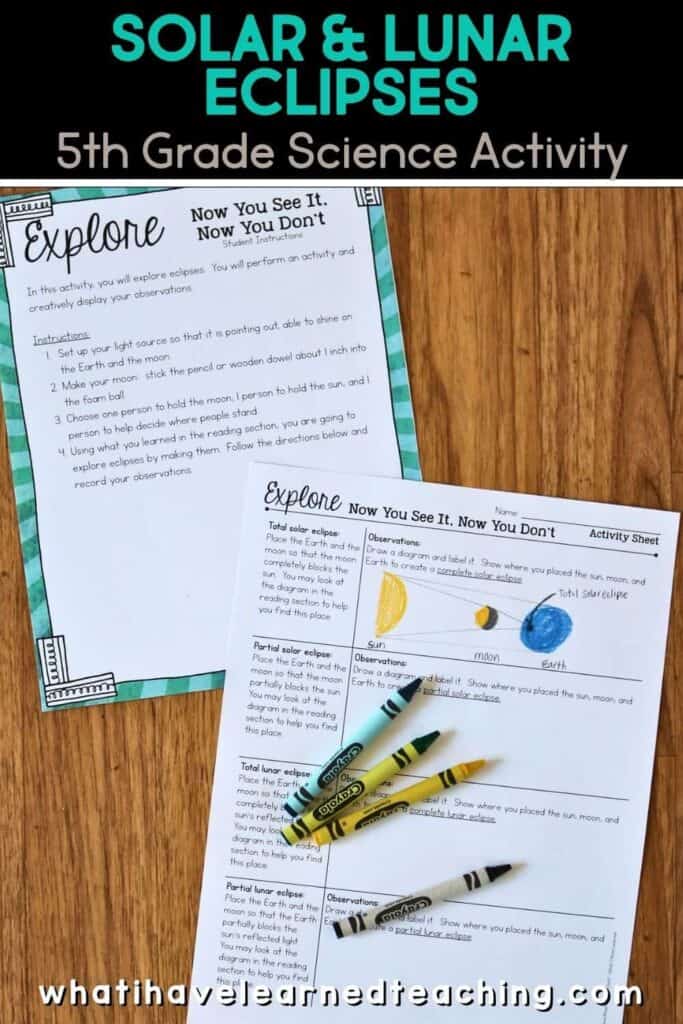
For a hands-on approach, teachers can conduct experiments to help students understand the science behind lunar eclipses. For example, students can use light sources and objects of different shapes and sizes to investigate the effects of shadows and simulate a lunar eclipse.
Our 5th-grade science station on solar and lunar eclipses has students read a passage about these phenomena, do the above activity, and then illustrate their observations.
Shadow Puppet Lunar Eclipse
Creating shadow puppets is a fun and engaging way to simulate a lunar eclipse in the classroom. You can use a flashlight to represent the sun and a small object, such as a ball or a toy, to represent the moon. Students can create their own shadow puppets and act out the lunar eclipse, explaining the science behind the phenomenon.
Paper Plate Lunar Eclipse Models
Another craft project that can help students understand lunar eclipses is creating paper plate models. Using paper plates, markers, and other craft supplies, students can create models of the Earth, moon, and sun and demonstrate how a lunar eclipse occurs.
By incorporating lunar eclipse activities into science lessons, teachers can provide students with a deeper understanding of celestial events and the movement of celestial bodies. These activities can help make science fun and engaging for students and are a great way to incorporate educational moon projects into the classroom.
Moon Phase Songs and Rhymes
Teaching the phases of the moon to elementary students can be challenging, but incorporating music and rhymes can make it fun and engaging. Singing songs and reciting rhymes can also help students remember the different phases of the moon and their corresponding names.
Here are two videos that are fun for older students:


Songs and rhymes can be incorporated into moon phase projects in a variety of ways. They can be used to introduce a lesson, reinforce learning, or even as a fun way to wrap up a unit on the moon. Adding music into the classroom can enhance student engagement and make learning about the phases of the moon even more enjoyable.
Don’t be afraid to get creative and come up with your own moon phase songs and rhymes. Your students will appreciate the effort and may even enjoy coming up with their own verses!
Moon Phase Technologies: Virtual and Digital Resources
Incorporating technology into classroom lessons is a great way to engage students and enhance learning. When it comes to moon phase projects, numerous virtual and digital resources can be used to supplement hands-on activities and experiments.
Interactive Websites
Several interactive websites provide real-time information about the phases of the moon. Kids can explore the lunar cycle by manipulating virtual models and observing how the moon changes in relation to the Earth and the sun. Some popular websites include:
- Time and Date
- NASA Moon Phase Plate
- American Museum of Natural History – Astronomy
Mobile and Online Apps
Several mobile and web apps can be used to teach students about the phases of the moon. Many of these apps include interactive simulations, games, and quizzes to make learning fun and engaging. Some popular apps include:
Online Simulations
Online simulations allow students to model the moon’s phases using virtual tools. These simulations can be accessed from any device with an internet connection and can be used to supplement hands-on experiments and activities. A popular online simulation is:
Cross-Curricular Connections Phases of the Moon Projects
Engaging elementary students in moon phase projects enhances their understanding of science and provides opportunities to connect with other subjects. Here are some ideas for cross-curricular connections:
Math
Students can create graphs and charts to track the moon’s phases over time, calculate the percentage of illuminated moon, and determine the frequency and duration of lunar eclipses. They can also use math to measure and compare the sizes of the moon and other celestial bodies.
Social Studies
Students can learn about the cultural significance of the moon in different societies, explore the history of lunar exploration, and investigate the moon’s impact on tides and weather. They can also use the moon’s phases to understand ancient timekeeping methods.
Language Arts
Reading and storytelling are powerful tools for engaging and educating young students. Incorporating literature into lessons about the moon’s phases can help children understand and remember complex scientific concepts. Moreover, it can help them develop their language and communication skills.
Book Recommendations
Several excellent books explore the phases of the moon in engaging and accessible ways. Some recommended titles include:


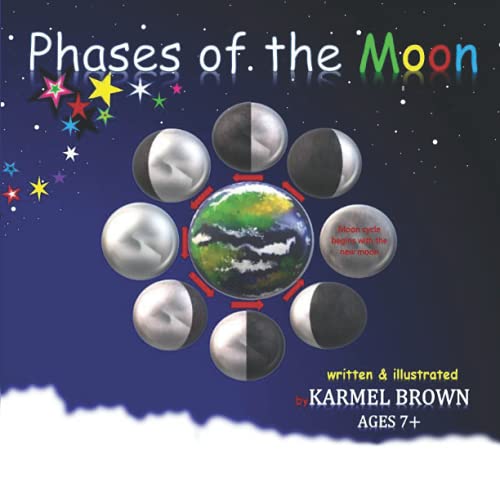
Incorporating Lunar-Themed Literature Storytelling into Language Arts Lessons
Storytelling is a great way to bring the phases of the moon to life. Children can act out the different phases using props and costumes, or they can create their own stories incorporating the moon. Teachers can also incorporate lunar-themed literature into language arts lessons to enhance students’ reading and writing skills. Here are a few storytelling and literature activities to try:
- Have students create their own moon-themed stories using prompts such as “Once upon a time, the moon…”
- Use shadow puppets to create stories about lunar eclipses.
- Have students work in pairs to retell the phases of the moon using their own words.
- Have students write their own moon-themed poems or short stories.
- Use the phases of the moon as inspiration for a creative writing assignment.
- Introduce new vocabulary related to the phases of the moon and have students practice using the words in sentences.
By using literature and storytelling to teach about the phases of the moon, teachers can create a fun and engaging learning experience for their students. These activities can also help students develop essential language and communication skills that will benefit them in all areas of their academic and personal lives.
Physical Education
Students can participate in moon-themed physical activities such as moonwalking, jumping like astronauts, or simulating zero gravity. They can also learn about the physical effects of gravity on the moon and the human body.
Integrating thematic moon phase projects into cross-curricular activities not only enriches students’ learning experiences but also fosters creativity, critical thinking, and interdisciplinary connections. Try incorporating some of these ideas into your lesson plans to engage your students in educational moon projects.
Engaging in phases-of-the-moon projects is an effective way to teach elementary students about the lunar cycle. Hands-on learning is crucial in science education, and these projects offer a fun and interactive way for students to learn about a complex subject. Implementing phases of the moon projects in the classroom results in a deeper understanding of science concepts and makes learning fun for students.
If this post was helpful, you’ll want to bookmark the complete Earth Science Guide for Elementary Students. It covers every NGSS earth science standard from 2nd through 5th grade in one place.
Jessica BOschen
Jessica is a teacher, homeschool parent, and entrepreneur. She shares her passion for teaching and education on What I Have Learned. Jessica has 16 years of experience teaching elementary school and currently homeschools her two middle and high school boys. She enjoys scaffolding learning for students, focusing on helping our most challenging learners achieve success in all academic areas.