
Cause and Effect Examples for Elementary Students
Students notice cause and effect all day long. When someone pushes a swing, it moves. When it rains, puddles appear. When a character in a story makes a choice, something happens next. Using clear cause and effect examples helps students see how one event leads to another in reading, science, and everyday life.
Teaching cause and effect helps students understand how events connect. It strengthens reading comprehension, supports science investigations, and improves student writing. Once students recognize that one action can lead to a result, they begin to analyze texts more deeply and explain their thinking more clearly.
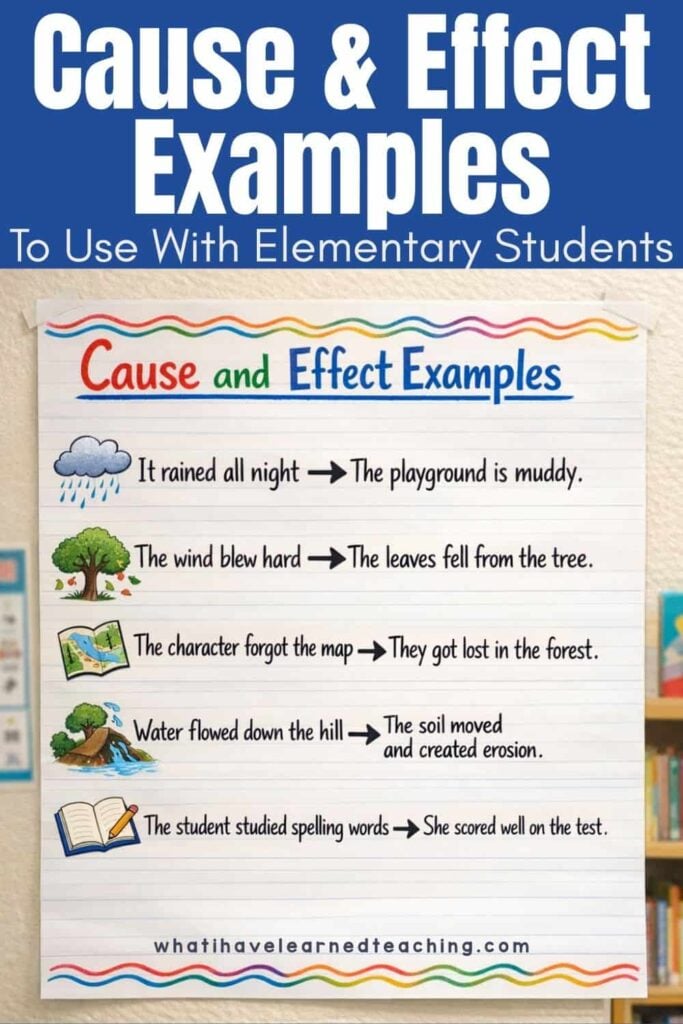
This guide shares classroom-friendly cause and effect examples you can use during reading lessons, science instruction, writing practice, and daily classroom discussions.
What Is Cause and Effect?
Cause and effect describes the relationship between two events.
- Cause: the reason something happens
- Effect: what happens as a result
A simple example:
Cause: It rained all night.
Effect: The playground was muddy in the morning.
Students often understand the idea quickly when the examples relate to their everyday experiences.
Simple Cause and Effect Examples for Kids
These examples work well for younger elementary students or when first introducing the concept.
| Cause | Effect |
|---|---|
| The sun melted the snow. | The snowman disappeared. |
| The alarm clock rang. | I woke up for school. |
| The dog barked loudly. | The baby started crying. |
| The wind blew hard. | The leaves fell off the tree. |
| I forgot my umbrella. | I got wet in the rain. |
Teachers often start by reading each pair aloud and asking students to identify which part is the cause and which part is the effect.
Cause and Effect Examples in Reading
Cause and effect frequently appear in stories and informational texts. Identifying these relationships helps students understand character actions and plot events.
Examples from literature:
Cause: The character lied to her friend.
Effect: Her friend stopped trusting her.
Cause: The boy studied every night.
Effect: He passed the difficult test.
Cause: The wolf blew down the house.
Effect: The pigs had to run away.
When students analyze stories this way, they begin to see how events connect across an entire text.
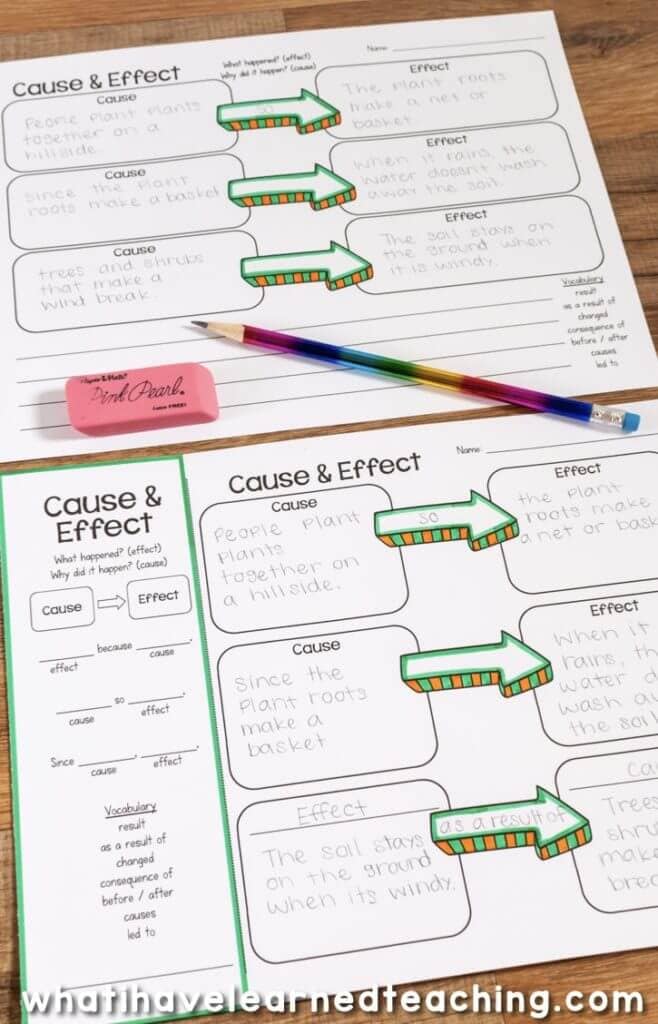
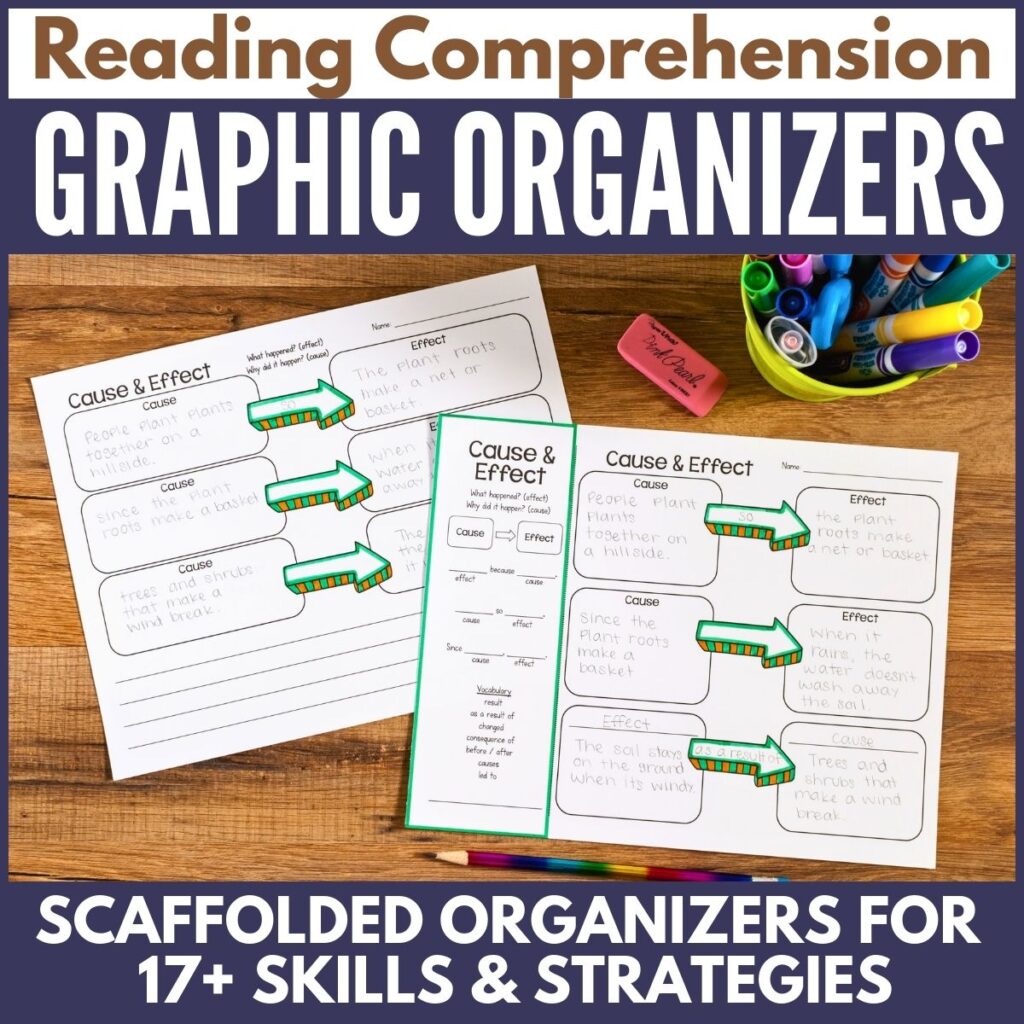
Reading Comprehension Graphic Organizers with Language Support & Bookmarks
Support deeper reading comprehension and academic language development with these Reading Comprehension Graphic Organizers. Featuring 40 comprehension-focused organizers in two formats for a total of 80 options, this resource helps students discuss, analyze, and write about any text using sentence frames, vocabulary support, and reading strategies.
Cause and Effect Examples in Science
Science is full of cause-and-effect relationships, which makes it a natural place to teach this skill.
Examples teachers might use during science lessons:
Cause: Water flowed down the hill.
Effect: The soil moved and created erosion.
Cause: The plant did not receive sunlight.
Effect: The leaves turned yellow.
Cause: The temperature dropped below freezing.
Effect: Ice formed on the pond.
These examples work well during science discussions, lab reflections, or written explanations. The following example is from my Pollution Passage & Activities.

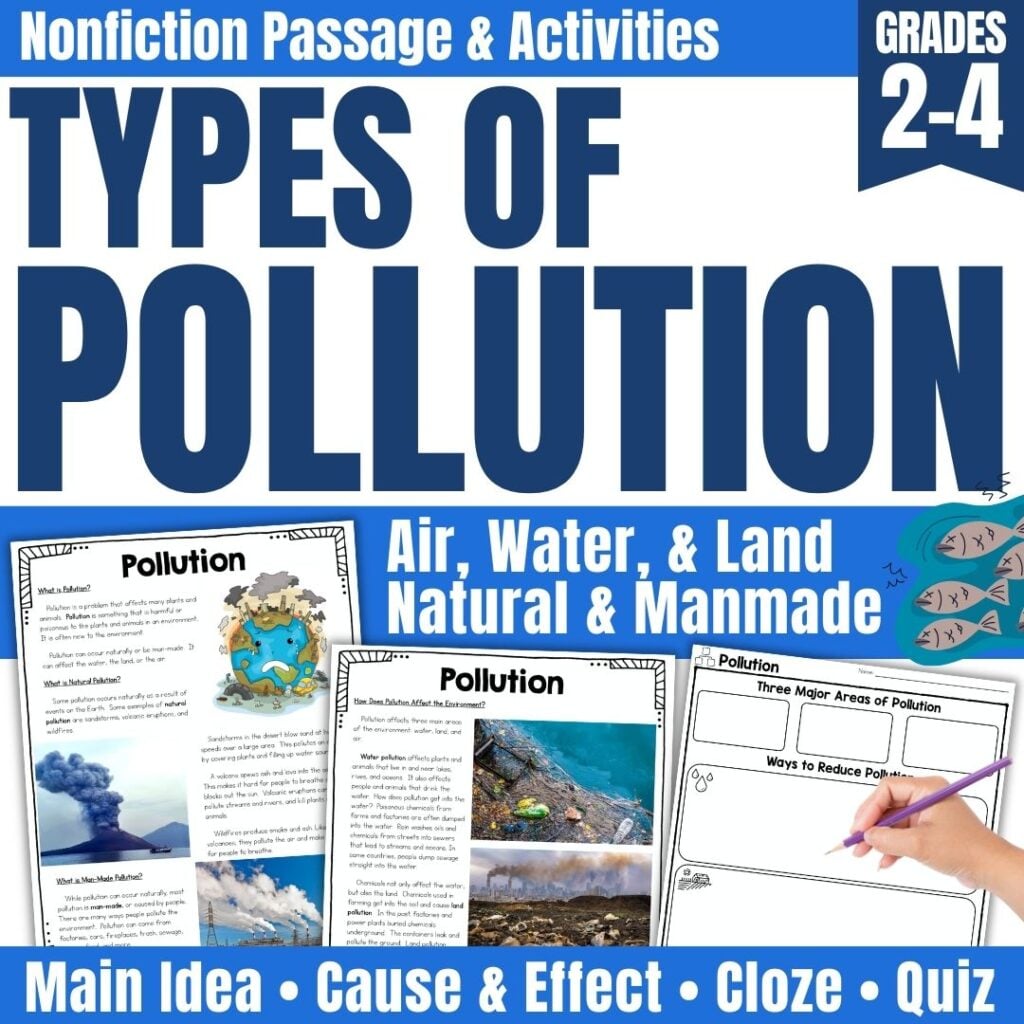
Pollution Reading Passage & Comprehension Activities | Earth Day Resource
Teach students about pollution and environmental responsibility with this engaging reading passage and comprehension resource! Perfect for Earth Day and environmental science lessons, students learn about water, land, and air pollution while practicing reading comprehension, main idea and details, cause and effect, writing, and critical thinking skills.
Cause and Effect Examples in Everyday Life
Students understand the concept even better when they connect it to their own experiences.
Examples students can relate to:
Cause: I practiced basketball every day.
Effect: I became a better shooter.
Cause: The class worked quietly.
Effect: We finished the project early.
Cause: The ice cream sat in the sun.
Effect: It melted.
Cause: The student studied spelling words.
Effect: She earned a high score on the test.
Class discussions about everyday cause and effect often lead to rich conversations and student-generated examples.
Multiple Causes and Multiple Effects
As students get older, they begin to see that events can have more than one cause or more than one effect.
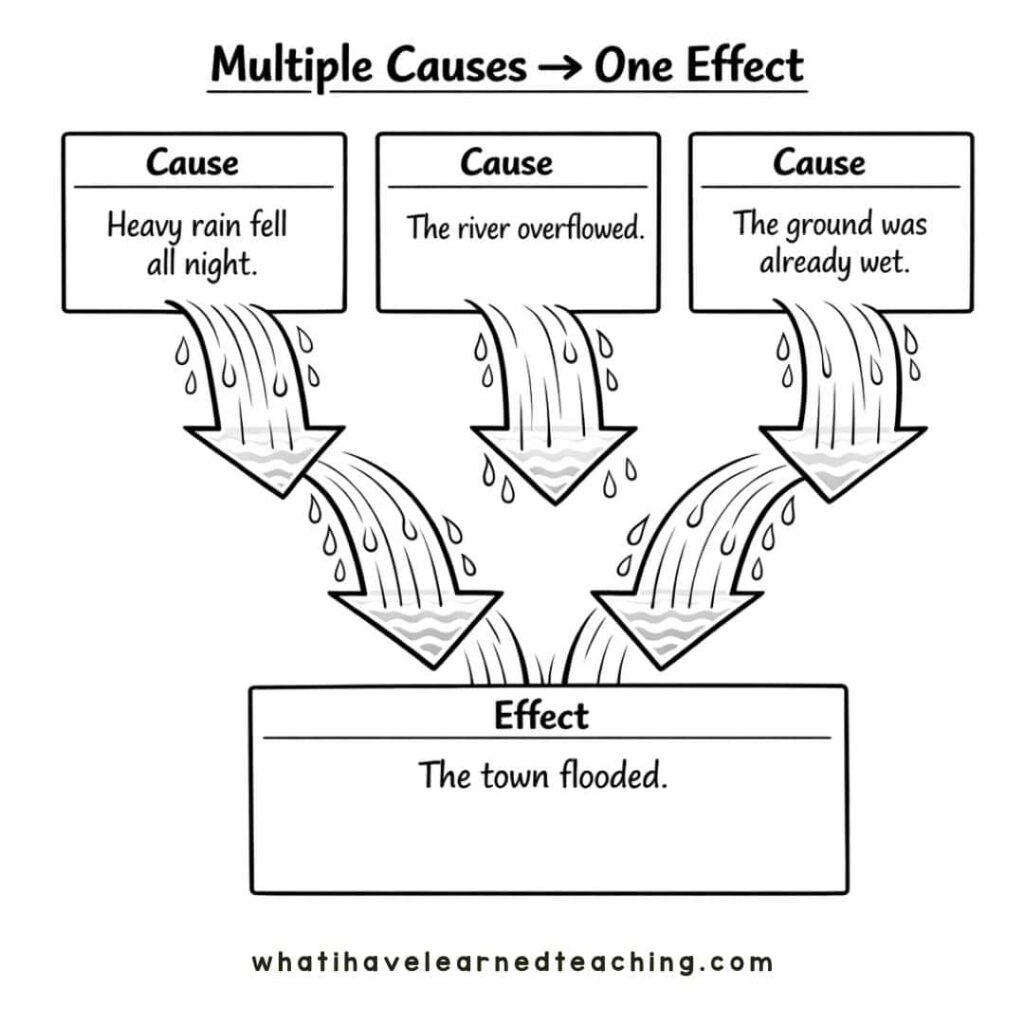
Example With Multiple Causes
Causes:
- It rained heavily
- The drains were blocked
Effect:
- The street flooded
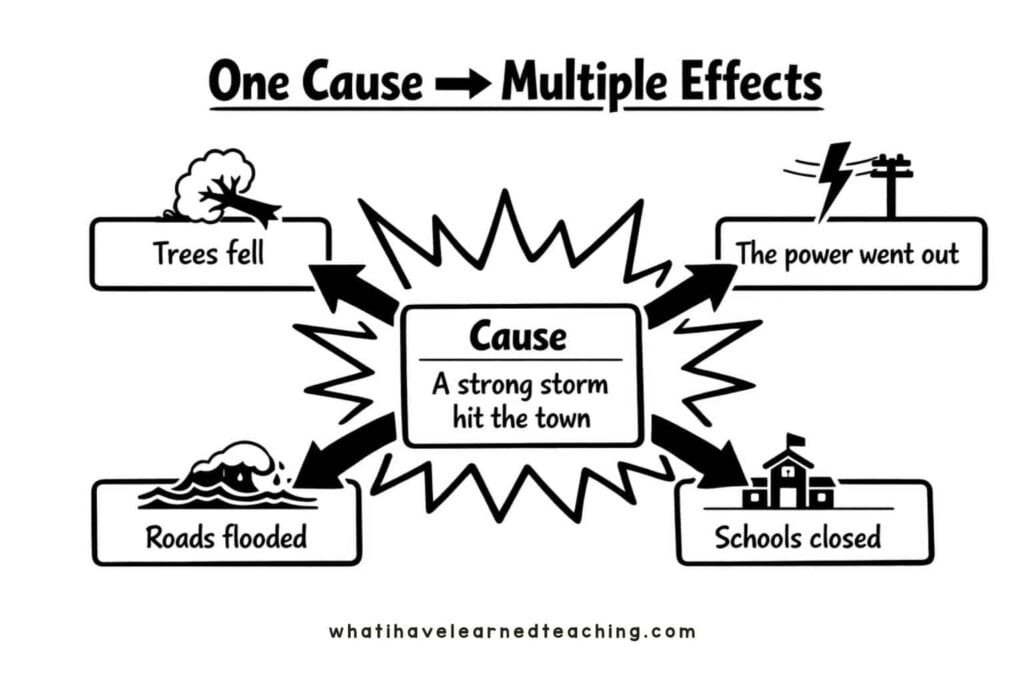
Example With Multiple Effects
Cause:
- The power went out during the storm
Effects:
- The lights turned off
- The refrigerator stopped running
- The students used flashlights
This type of thinking pushes students toward deeper comprehension.
Teaching Cause and Effect in the Classroom
Teachers often help students practice cause and effect using:
- cause and effect sentence frames
- reading response questions
- science explanations
- graphic organizers
- discussion prompts
For example, students might complete a sentence such as:
“Because the water flowed downhill, the soil moved.”
Structured responses like this help students clearly explain relationships between events.
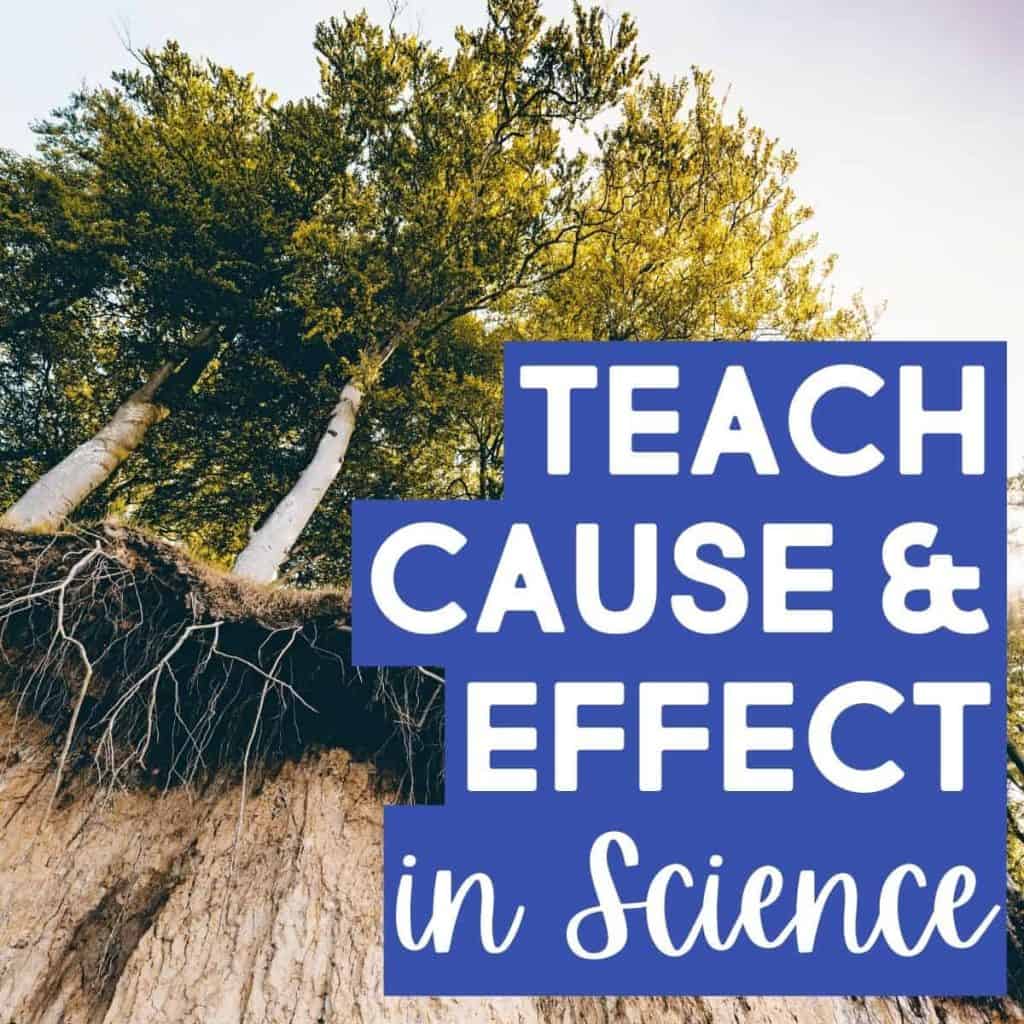
Here is a cause and effect lesson I did with my second graders about soil erosion.
The Connection Between Cause and Effect and Goal Setting
Cause and effect thinking is not only useful in reading and science. It is also a powerful way to help students understand SMART goal-setting.
When students set goals, they are really planning a chain of cause and effect. Their actions (the cause) lead to results (the effect). Helping students see this connection makes goals feel more realistic and achievable.
For example, instead of simply saying, “I want to get better at reading,” students can think about the actions that lead to improvement.
Cause: I read for 20 minutes every day.
Effect: My reading stamina improves.
Cause: I practice my multiplication facts each night.
Effect: I solve math problems faster.
Cause: I revise my writing after feedback.
Effect: My writing becomes clearer and more detailed.
Framing goals this way helps students see that progress does not happen by accident. It happens through specific choices and actions.
Helping Students Connect Actions and Results
Teachers can guide students to think about goals using cause and effect language. During goal-setting conferences or class discussions, students might complete prompts like:
- If I practice ___, then I will improve ___.
- When I do ___ regularly, I will be able to ___.
- Because I worked on ___, I can now do ___.
These types of reflections help students understand that their effort leads to growth.
Cause and Effect in Student Reflection
Cause and effect thinking is especially helpful when students reflect on their progress. Instead of only reporting whether they met a goal, students can analyze what helped them improve.
For example:
Cause: I checked my work before turning it in.
Effect: I made fewer mistakes.
Cause: I asked questions when I was confused.
Effect: I understood the lesson better.
This type of reflection builds stronger learning habits and helps students recognize the connection between effort and results.
You can explore more strategies for guiding students through this process in my goal setting resources and classroom goal-setting posts, which show how students track progress, reflect on their actions, and plan next steps.
Cause and Effects Spans Many Subjects
Cause and effect is one of the most useful thinking skills students learn in elementary school. It strengthens reading comprehension, supports science reasoning, and helps students explain their ideas in writing.
Using clear, relatable cause and effect examples helps students recognize how events connect. Once they understand that one action leads to another, they begin to analyze stories, explain scientific observations, and describe real-world situations with greater clarity.
Teaching cause and effect becomes much easier when students can see it happening everywhere around them.
Jessica BOschen
Jessica is a teacher, homeschool parent, and entrepreneur. She shares her passion for teaching and education on What I Have Learned. Jessica has 16 years of experience teaching elementary school and currently homeschools her two middle and high school boys. She enjoys scaffolding learning for students, focusing on helping our most challenging learners achieve success in all academic areas.