
Books About Properties of Matter & Changes in Matter for Elementary Students
Teaching with these states of matter books will enhance your science instruction and build students’ background knowledge about the properties of matter. Along with the states of matter, students can also learn about irreversible and irreversible changes.

For more classroom-ready examples to pair with these read-alouds, see this list of physical and chemical changes examples.
These books align with the second-grade NGSS standards for Physical Science. Understanding properties of matter and states of matter are in the second grade Next Generation Science Standards, as well as reversible and irreversible changes. In the standards, students are asked to describe properties of matter, understand the properties of solids, liquids, and gases, and that matter changes depending on temperature.
These books complement our Second Grade Science Stations about the Properties of Matter and States of Matter as well as our Science Stations about Reversible and Irreversible Changes.
If you’re building out a full properties of matter unit, my physical science guide for elementary students pulls together all the 2nd grade matter standards with activity ideas and resources alongside these read-alouds.
Books about Matter to Enhance Your Science Instruction
Matter: Physical Science for Kids – Andi Diehn
Age: 4-8 years
Grade: K-3
Everything you can touch and hold is made up of matter! This book explores the definition of matter and the different states of matter, plus the things in our world that are not matter. Children are introduced to physical science through detailed illustrations and fun language to convey familiar examples of real-world science connections.


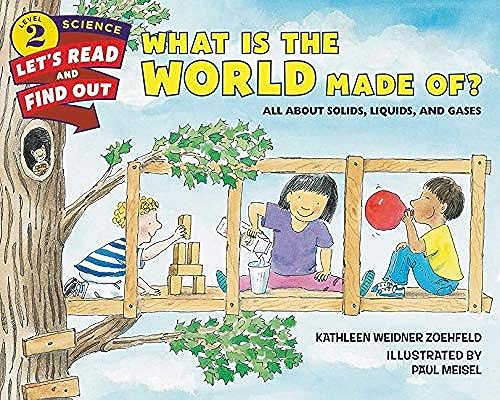
What is the world made of? All about solids, liquids, and gases. – Kathleen Weidner Zoehfeld
Age: 4-8 years
Grade: PreK-3
This book is a fascinating exploration of the three states of matter, featuring rich vocabulary and simple, fun diagrams to explain the differences between solids, liquids, and gas.
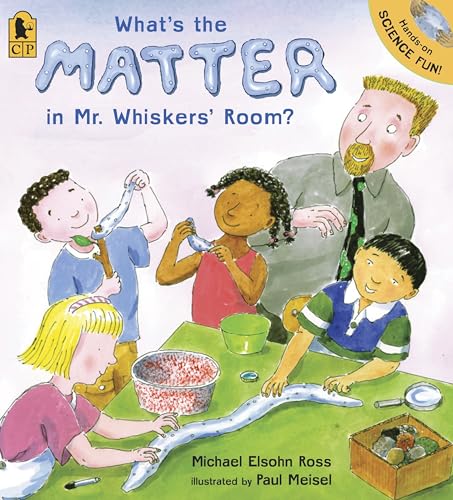
What’s the Matter in Mr. Whisker’s Room? – Michael Elsohn Ross
Age: 6-9 years
Grade: 1-4
Everyone is a scientist in Mr. Whisker’s class where hands-on mini-experiments lead to big ideas. This book even includes supplemental projects for young learners.
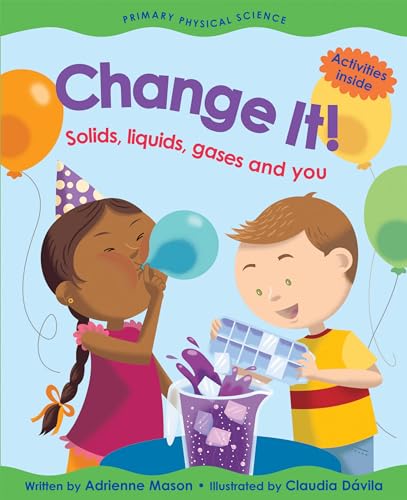
Change It! Solids, Liquids, Gases, and You – Adrienne Mason
Age: 4-7 years
Grade: PreK-2
This book is a tool to teach physical sciences to young children. It takes the physics of matter- solids, liquids, and gases, and transforms it to an easy-to-understand science book for little ones.
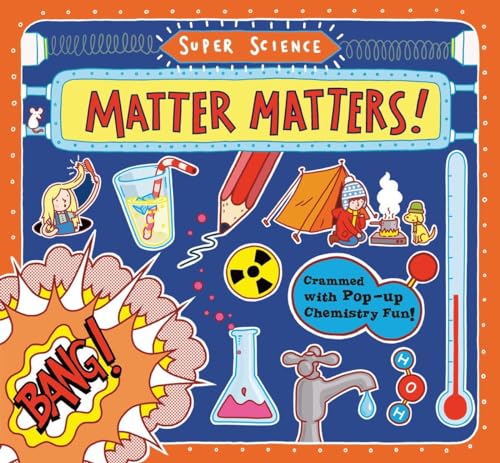
Super Science: Matter Matters! – Tom Adams
Age: 7-10 years
Grade: 2-5
This book explores the elements of the science of matter in a fun, straightforward way. It includes comic-book style illustrations and explores atoms, molecules, reactions, elements, radioactivity, and other aspects of chemistry.
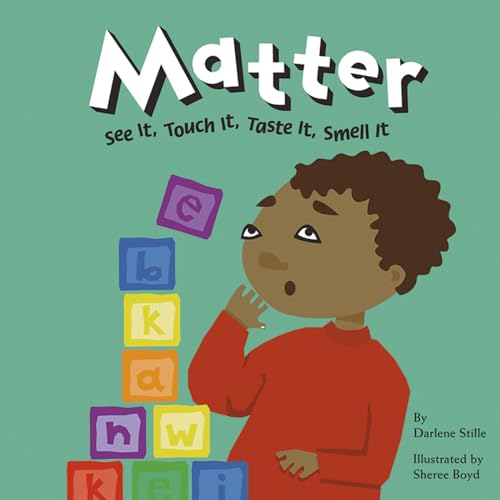
Matter: See It, Touch It, Taste It, Smell It – Darlene R. Stille
Age: 5-10 years
Grade: K-4
In this book, the states of matter are explained and demonstrated, and it even includes an experiment for you to try at home.
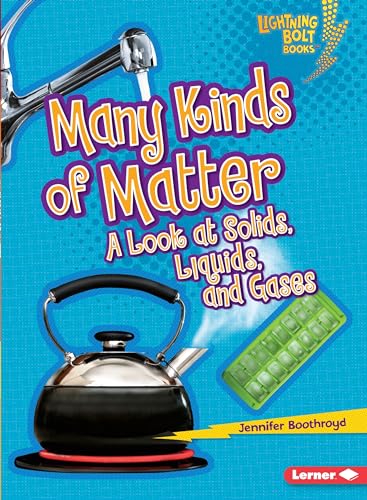
Many Kinds of Matter: A Look at Solids, Liquids, and Gases – Jennifer Boothroyd
Age: 6-9 years
Grade: 1-3
Solids, liquids, and gases are all around you. This book teaches all about the different states of matter and how to tell them apart!
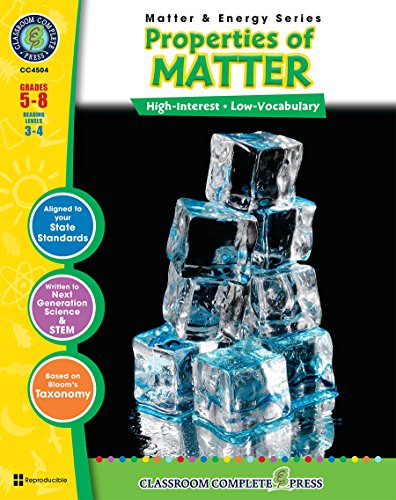
Properties of Matter – Classroom Complete Press
Age: 10-13
Grade: 4-8
What is matter, and what isn’t? This resource breaks down the physical and chemical properties of matter. Readers will start my identifying atoms, particles, and molecules. Then, explore the states of matter, and determine if something is transparent, opaque or translucent. They’ll learn about physical changes and chemical changes that could happen in our own homes. Plus, they’ll get to complete their own experiment, too.
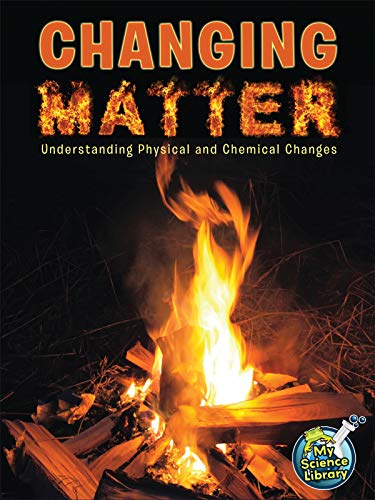
Changing Matter: Understanding Physical and Chemical Changes – Tracy Maurer
Age: 9-10 years
Grade: 4-5
This book explores how physical changes create different forms or states of matter and gives examples of the different states in an easy to read text. It also introduces students to the law of conservation of mass.
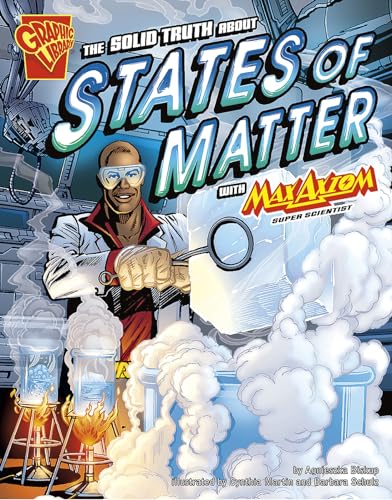
The Solid Truth About States of Matter with Max Axiom, Super Scientist – Agnieszka Biskup
Age: 8-14
Grade: 3-9
This book features a superhero scientist and covers matter, atoms and molecules, solids, liquids, and gases, melting, boiling and freezing, evaporation and condensation.
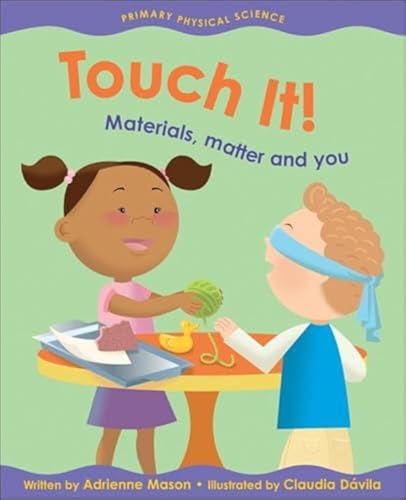
Touch It! Materials, matter, and you – Adrienne Mason
Age: 4-7
Grade: PreK-2
This book teaches physical sciences to young children and is loaded with surprising facts, hands-on activities. It explores materials and their color, shape, texture, size, mass, magnetism, and more.
The Nature of Matter – Deborah J. Housel
Age: 6-9 years
Grade: 2-3
Anything that takes up space is matter. Learn about matter with this science reader that is easy to read, and even includes a fun and engaging science experiment.
Matter Comes in All Shapes – Amy S. Hansen
Age: 6-7 years
Grade: 1-2
In this book, early readers will investigate various types of matter that they see and experience in everyday life. Not only does it outline the states of matter, but it also shows how matter changes shape based on the container within which it is held. There are also components of the book that focus on irreversible changes.

Physics. Why Matter Matters! – Dan Green
Age: 10-14 years
Grade: 4-5
This book features characters based on physics and the building blocks of the universe, and each has a unique personality. It covers everything from gravity to the theory of relativity. It has visual interpretations of complex concepts that make learning physics easy and fun.

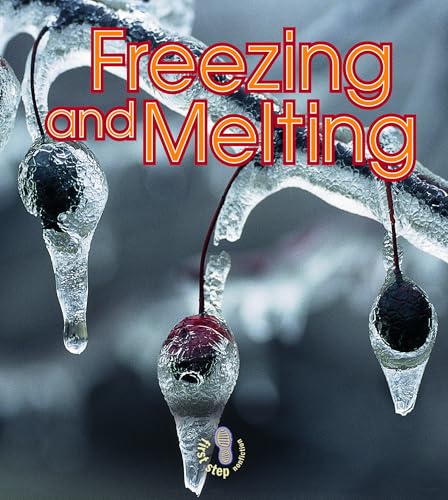
Freezing and Melting – Robin Nelson
Age: 5-8 years
Grade: K-2
This book explores how water changes from a liquid to a solid and back again, with lots of interesting facts about water and ice.
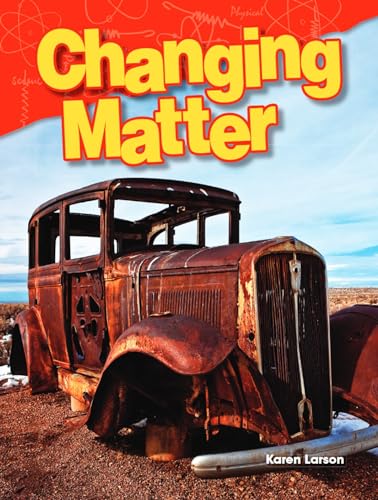
Changing Matter – Karen Larson
Age: 6-11 years
Grade: 3-4
This book allows students to not only study science but also build their literacy skills and do simple, hands-on science experiments. The book touches on the three states of matter, plasma, and prompts students to question whether matter is clearly a solid, liquid, or gas.
Melting Matter – Amy S. Hansen
Age: 7-8 years
Grade: 2-3
This book explores what happens to objects under different conditions, such as hot and cold, or wet and dry.

All 17 Books about Properties of Matter in One Place
- Matter: Physical Science for Kids – Andi Diehn
- What’s the Matter in Mr. Whisker’s Room? – Michael Elsohn Ross
- Change It! Solids, Liquids, Gases, and You – Adrienne Mason
- Super Science: Matter Matters! – Tom Adams
- Matter: See It, Touch It, Taste It, Smell It – Darlene R. Stille
- Many Kinds of Matter: A Look at Solids, Liquids, and Gases– Jennifer Boothroyd
- Properties of Matter – Classroom Complete Press
- Changing Matter: Understanding Physical and Chemical Changes – Tracy Maurer
- The Solid Truth About States of Matter with Max Axiom, Super Scientist – Agnieszka Biskup
- Touch It! Materials, matter, and you – Adrienne Mason
- The Nature of Matter — Deborah J. Housel
- Matter Comes in All Shapes – Amy S. Hansen
- Physics. Why Matter Matters! – Dan Green
- Freezing and Melting – Robin Nelson
- Changing Matter – Karen Larson
- Melting Matter – Amy S. Hansen
More Information for Teaching about Matter to Elementary Students
In addition to these books about the properties of matter, the Second Grade Science Stations have taken the guesswork out of how to plan what to teach for science.
The focus of the Properties of Matter Science Stations is on NGSS DCI 2-PS1.A. It includes concepts about how matter can exist in different states depending on the temperature, and that matter can be classified by its properties. In addition, students explore how objects can be built up from small sets of pieces.
You can see more in-depth information about the Second Grader Properties of Matter Science Stations in this blog post.

Jessica BOschen
Jessica is a teacher, homeschool parent, and entrepreneur. She shares her passion for teaching and education on What I Have Learned. Jessica has 16 years of experience teaching elementary school and currently homeschools her two middle and high school boys. She enjoys scaffolding learning for students, focusing on helping our most challenging learners achieve success in all academic areas.