
Back to School Night for Elementary Teachers: A Complete Agenda

Back to school night is one of those events that feels high-stakes because you’re meeting the people who trust you with their children, often for the first time. The teachers who handle it best come in with a clear agenda, stick to it, and leave parents feeling informed and welcomed rather than overwhelmed.
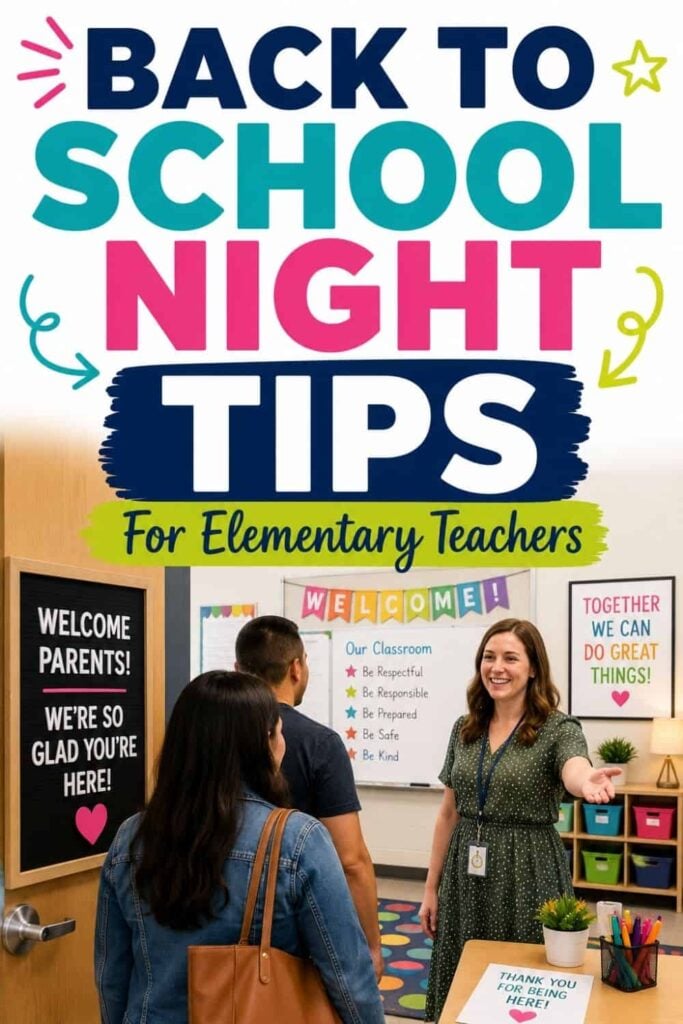
This post gives you a complete back-to-school night agenda for elementary teachers, section by section, with suggested timing, so you walk in prepared and walk out with parents on your side from the start.
Back to School Night vs. Meet the Teacher
These two events are often confused and serve different purposes. Meet the Teacher usually happens before school starts and includes students. It’s a chance for children to see their classroom, drop off supplies, and meet you in a low-pressure setting before day one. Back to School Night is typically held in the first few weeks of school and is usually for parents only. The focus is information: what students are learning, how the classroom runs, and how you’ll communicate throughout the year. This post covers back to school night specifically.
Before the Night: Set Up Your Classroom
How your classroom looks when parents walk in makes an impression before you say a word. A clean, organized room signals that you are prepared and that their child is in good hands. You don’t need elaborate decorations. You need the basics in place:
- Student work displayed, if possible, even just name tags or a first-week activity on each desk
- A clear daily schedule posted where parents can see it
- Classroom rules or expectations visible at the front
- A handout on each seat with the key information you’ll cover (curriculum, homework policy, your contact info)
- Sticky notes and a pen at each seat for the question system (more on this below)
Have your slides or presentation ready to go if you’re using one, and test any technology before parents arrive. A projector that won’t connect or a video that won’t play eats into your time and creates an awkward start.
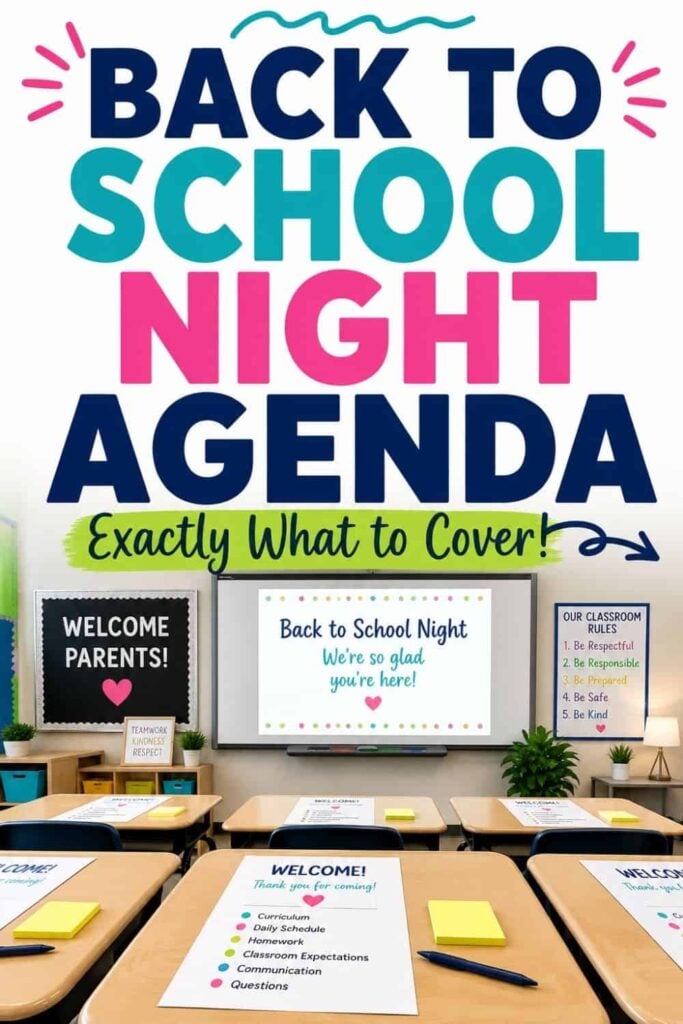
A Complete Back to School Night Agenda for Elementary Teachers
Most elementary back to school nights run 30 to 45 minutes per class. The agenda below is designed for a 40-minute session. Adjust the timing based on what your school allots.
1. Welcome and Introduction (5 minutes)
Start by introducing yourself: your name, how long you’ve been teaching, what grade levels you’ve taught, and one personal detail that helps parents see you as a person rather than just a title. Keep it brief. Parents didn’t come to hear your biography; they came to learn about their child’s year. Then orient them to how the evening will run so they know what to expect and aren’t wondering when they’ll get to ask questions.
If students are present at your school’s back to school night, this is also a good moment to invite them to introduce their parents to the classroom while you transition to your first section.
2. Classroom Tour (5 minutes)
Walk parents through the key areas of the room: where their child sits, where supplies are kept, where finished work goes, and where they can find posted information such as the schedule and classroom rules. Point out their child’s desk specifically if parents don’t already know where it is. This moment of “here is exactly where your child spends their day” is more meaningful to parents than any other part of the tour.
If you have student work already displayed, point it out. Parents love seeing their child’s name and work on the wall. It makes the classroom feel like it belongs to their child, not just to you.
3. Curriculum: What Students Will Learn This Year (7 minutes)
Give parents a genuine overview of what their child will be doing academically. What the major units, themes, or projects look like and what skills students will build. Be specific enough that parents leave with a real picture of the year. “We’ll spend the first month on place value and move into multi-digit addition and subtraction after that” is more useful than “we cover math.”
Highlight anything that might look unfamiliar to parents: a math strategy they haven’t seen before, a reading approach that differs from how they learned to read, or a science unit that involves hands-on investigation. Getting ahead of those potential questions saves time later.
4. Daily Schedule and Classroom Routines (5 minutes)
Walk parents through the daily schedule, such as when key subjects occur, when lunch and specials are held, and how the day is structured. Point to the posted schedule rather than just describing it. This helps parents understand what their child is doing throughout the day and gives them context when their child comes home and talks about what happened.
Mention a few key routines: how students start the morning, how they transition between subjects, and what independent work time looks like. This section reassures parents that the classroom is structured and predictable, which matters especially for families with students who need consistency.

5. Classroom Rules and Behavior Expectations (3 minutes)
Briefly explain your classroom expectations. What students are expected to do and what happens when expectations aren’t met. Keep this section matter-of-fact and positive. Frame it around what good behavior looks like rather than dwelling on consequences. Parents want to know their child will be in a safe, orderly environment. They don’t need a detailed disciplinary flowchart.
If you use a classroom management system, a reward system, a behavior chart, or classroom jobs, mention it here and explain briefly how it works. Most parents appreciate knowing the mechanics of the classroom culture.
6. Homework and Grading (3 minutes)
Clarify your homework policy specifically: how often homework goes home, when it’s due, what it typically looks like, and what parents should do if their child doesn’t understand an assignment. Parents of elementary students are particularly anxious about homework and will have questions if this isn’t clear. Getting it right now saves you many individual emails later.
If you use an online gradebook or progress reports that parents can access, show them how to log in and what they’ll see. A one-minute demonstration is more useful than a description.
7. How to Reach You (3 minutes)
Give parents your preferred contact method, your email address, and the timeframe for when they can expect a response. Be honest about response times. If you check your email once a day after school, say so. If you use a class communication app, walk parents through how to sign up or access it before they leave. Make sure every parent leaves knowing exactly how to reach you and what to expect when they do.
Also mention the best time not to reach you to set realistic expectations. “I don’t check email during the school day, but I respond to everything by 5 pm” is a reasonable boundary that most parents will respect if you state it clearly.
8. Volunteer Opportunities (2 minutes)
If you welcome parent volunteers, explain how it works, whether you need in-class helpers, at-home help with cutting or prep work, or parents who can help with events and field trips. Have a sign-up sheet ready if you want to collect names. Keep this brief; some families can’t volunteer and you don’t want this section to feel like pressure.
9. Questions: The Sticky Note System (5 minutes)
This is the part of back to school night that I’ve found most useful over the years. Rather than opening the floor to general questions, which tends to go long, surface individual concerns that aren’t relevant to the whole group, and eat into your time, use sticky notes.
Tell parents you’ve left sticky notes and pens at their seats specifically for this. Ask them to write down any questions they thought of during the presentation, one question per sticky note. Collect the notes as you wrap up. You can answer one or two questions before families leave if they are relevant to everyone, but the real value is what comes next.
After the night, sort the sticky notes by theme. You’ll quickly see which questions came up five times (these belong in your follow-up email to all families) and which are individual concerns that deserve a personal response. This system gives every parent a voice, keeps the group time manageable, and sets you up for a genuinely useful follow-up rather than a generic “thanks for coming” note.

If Students Attend Back to School Night
Some schools include students in back to school night; others keep it parents-only. If students are present, use that to your advantage. Have students show their parents around the room, point out their desk, and walk them through the daily schedule posted on the wall. Students love having a job during the event, and it gives parents a chance to see their child in the classroom environment. Just be sure your agenda accounts for the extra energy in the room. Things move more slowly when students are involved.
After the Night: Your Follow-Up
Within a day or two of back to school night, send a follow-up email to all families, including those who couldn’t attend. The email should include the key information from the night (a one-page summary or the handout you distributed works well) and, if you used the sticky note system, answers to the most common questions that came up.
This follow-up does three things: it ensures every family has the same information regardless of whether they attended, it shows parents you took their questions seriously, and it establishes a communication tone that sets up the rest of the year. A well-done follow-up email after back to school night is one of the best investments you can make in your parent relationships.
Final Thoughts on Back to School Night for Elementary Teachers
The teachers who make back to school night feel effortless are the ones who did the most preparation beforehand. Know your agenda, know your timing, and have your sticky notes and handouts ready before the first family walks in. The goal isn’t to impress parents with how much you know. It’s to send them home feeling confident that their child is in good hands and knowing exactly how to stay connected to what’s happening in the classroom. That confidence is built in 40 minutes, but it sustains the whole year.
Jessica BOschen
Jessica is a teacher, homeschool parent, and entrepreneur. She shares her passion for teaching and education on What I Have Learned. Jessica has 16 years of experience teaching elementary school and currently homeschools her two middle and high school boys. She enjoys scaffolding learning for students, focusing on helping our most challenging learners achieve success in all academic areas.