
Animal Senses: Super Senses and Sense Organs Explained
A dog can smell a snack from across the house, and a hawk can spot a mouse in a field from high in the sky. Those everyday wonders are a great way into animal senses, one of the most engaging topics in elementary science. Studying how animals take in information, process it, and respond helps students understand both the animal world and their own bodies.
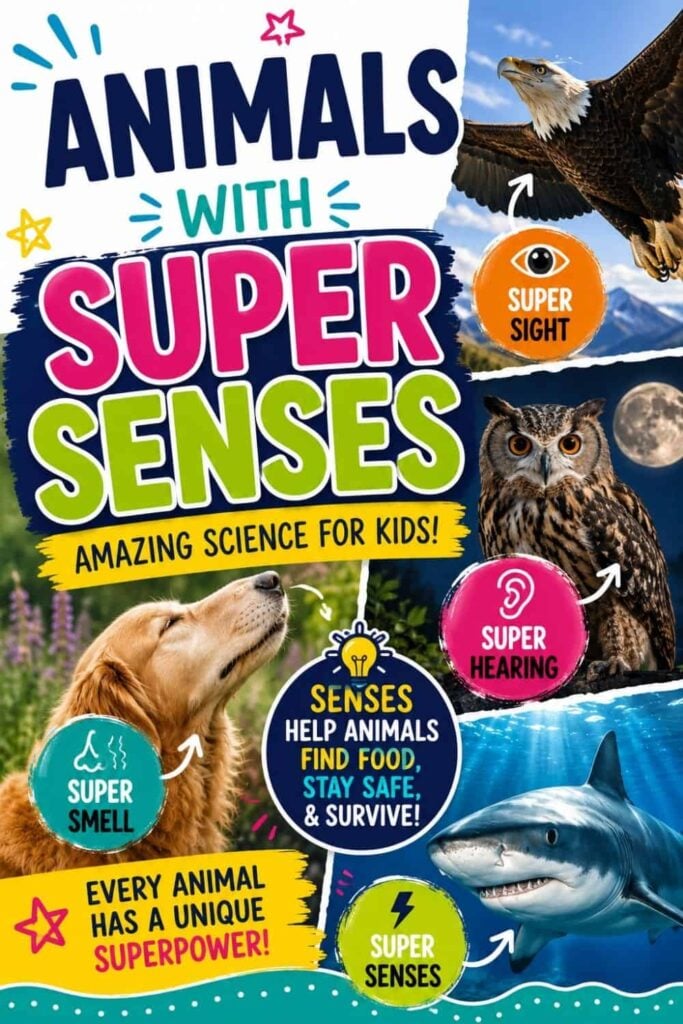
This post explains animal senses in kid-friendly terms, shows off the animals with the most amazing super senses, and shares ways to teach it that line up with the fourth grade science standards.
What Are Animal Senses?
Senses are how animals gather information about the world around them. Like people, most animals use five main senses: sight, hearing, smell, taste, and touch. Each sense works through a sense organ, the eyes for sight, the ears for hearing, the nose for smell, and so on. These sense organs constantly collect information and send it to the brain.
Animals depend on their senses to survive. Senses help them find food, avoid danger, locate a mate, and care for their young. The stronger or sharper an animal’s senses are, the better it can do those things in its habitat.
Animals With Super Senses
This is the part students love. Many animals have senses far more powerful than ours, and some have senses humans don’t have at all. Here are a few standouts by sense.
- Super smell: Dogs, bears, and sharks have an incredible sense of smell. A shark can detect a tiny amount of blood in the water from far away, and a bear can smell food from miles off.
- Super sight: Eagles and hawks have sharp vision that lets them spot small prey from high in the air, several times farther than a human could.
- Super hearing: Owls can pinpoint a mouse in the dark by sound alone. Bats take it further, using echolocation, sending out sounds and listening to the echoes to “see” in the dark.
- Super touch: Spiders feel the tiniest vibrations in their webs, and elephants sense vibrations through the ground with their feet.
- Extra senses: Some animals sense things we can’t. Snakes have heat-sensing pits to find warm prey, sharks detect the electric fields of other animals, and some birds sense Earth’s magnetic field to navigate when they migrate.
These super senses are a great hook, and they’re also adaptations that help each animal survive where it lives. That connection to structure and function is worth drawing out, and my post on structure and function in organisms goes deeper into it.
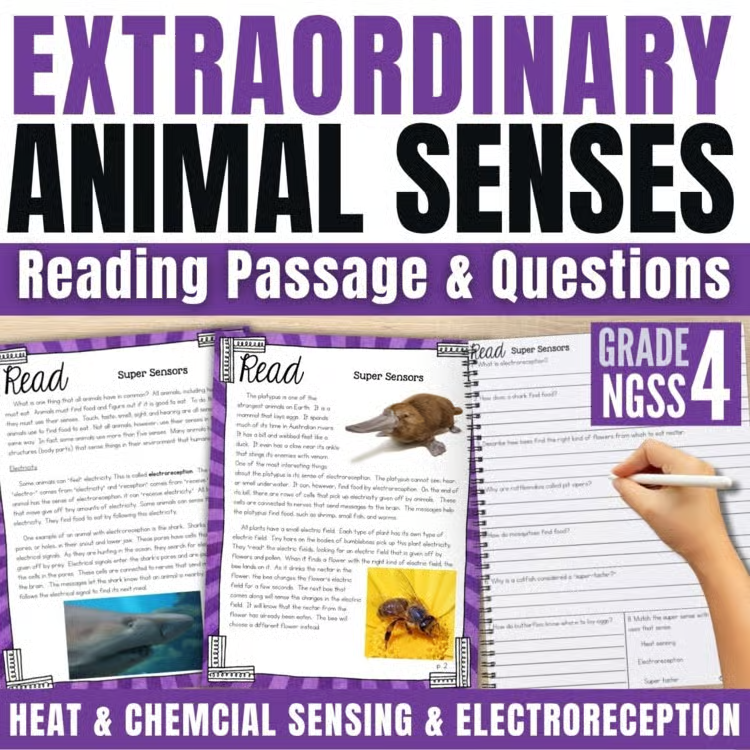
Through a high-interest reading passage, students will learn about animals with enhanced senses like electroreception, heat detection, and super-tasting, while practicing essential reading comprehension skills.
How Many Senses Do Animals Have?
Most animals have the same five senses people do, but the strength of each sense varies a lot from animal to animal. A dog’s sense of smell is thousands of times stronger than ours, while its color vision is weaker. Each animal’s senses are tuned to what it needs to survive.
The bigger surprise for students is that some animals have senses beyond the five we know. Detecting heat, electric fields, or magnetic fields are real senses that certain animals rely on and humans simply don’t have. Comparing animal senses to human senses is one of the best ways to get students thinking about why different animals are built the way they are.
From Senses to Brain to Response
Here is the heart of the fourth grade standard. Animals don’t just sense the world, they act on it. Information travels from the sense organs to the brain, the brain processes it, and the animal responds. A rabbit hears a twig snap, its brain recognizes danger, and it bolts. This sense, process, respond pathway is exactly what NGSS 4-LS1-2 asks fourth graders to model.
Walking students through that pathway with real examples, a deer smelling a predator, an owl hearing a mouse, a fish feeling a vibration, helps them see senses as part of a system rather than isolated facts. It also connects animal senses to how their own brains and bodies work.
How to Teach Animal Senses in 4th Grade
A few approaches make this topic come alive:
- Start with a reading passage. Reading about animals with extraordinary senses gives students the background knowledge and vocabulary before they investigate. My Animals with Extraordinary Senses reading passage and questions are built for this.
- Use science stations. Rotating through short, hands-on tasks lets students explore the senses and the sense-brain-response pathway. My Information Processing science stations cover the five senses and how animals process information, and my tips for running science stations will help you set them up.
- Build a class anchor chart. List each sense with an animal that has a super version of it, so students connect the sense to a real example.
- Teach the full unit. If you want everything mapped to the standard, my Animal Senses 5E unit walks students through senses, the brain, and responses from start to finish.
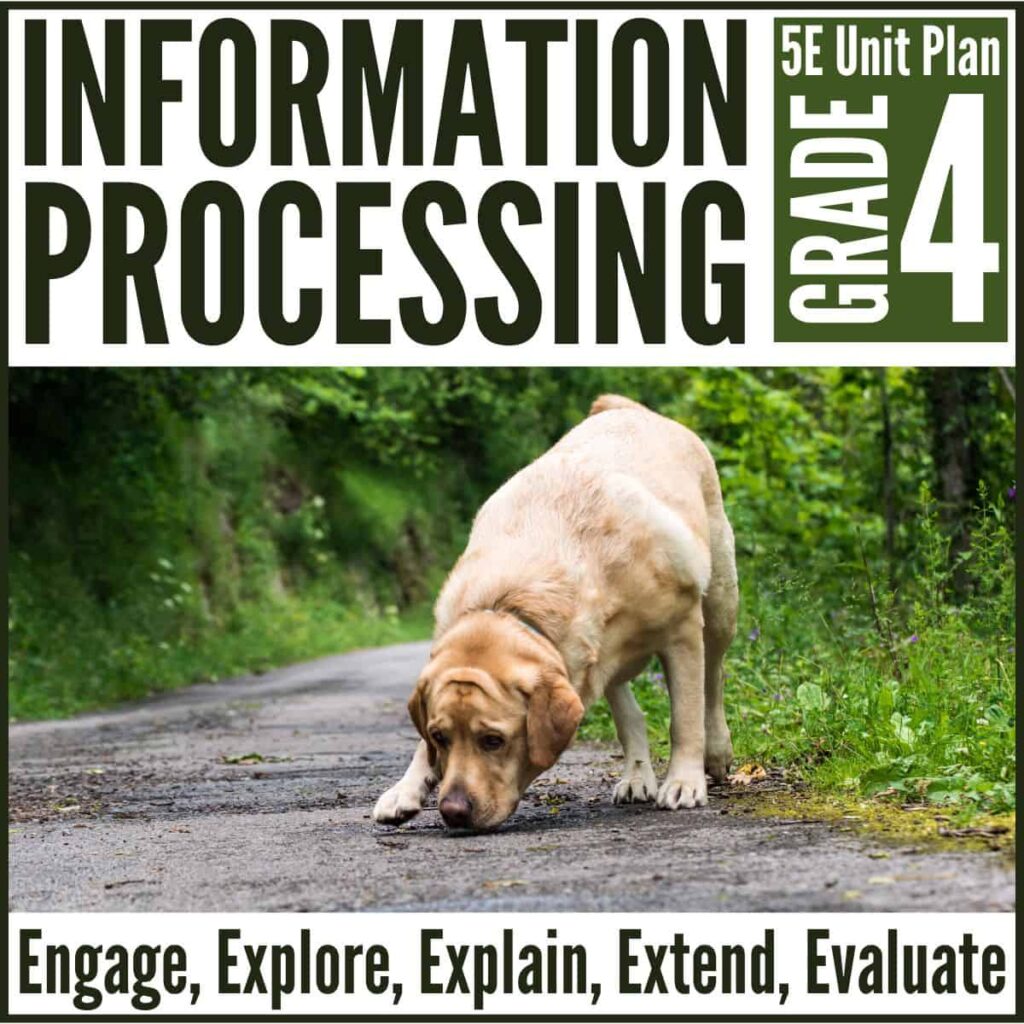
Information Processing 5E NGSS Science Unit Plan
This 5E science unit plan on Information Processing is an inquiry-based approach where students explore how animals receive sensory stimuli, interpret the information in their brains, and respond accordingly.
Frequently Asked Questions
Final Thoughts
Animal senses give students a window into how living things take in information and respond to their world, and the super-sense examples make it stick. Start with the animals that amaze them, then guide students to the bigger idea: senses, the brain, and response all work together as a system.
Want it ready to teach? My Animals with Extraordinary Senses reading passage is an easy way to introduce the topic, my Information Processing science stations give students hands-on practice, and my Animal Senses 5E unit ties it all together, aligned to NGSS 4-LS1-2.

Information Processing BUNDLE: Making Sense of the World Science Stations
Information Processing: Making Sense of the World Science Stations for Fourth Grade Next Generation Science Standards include 8 different science stations where students deepen their understanding of sensory systems, including anatomy (structures and parts) and physiology (how the parts function).
Jessica BOschen
Jessica is a teacher, homeschool parent, and entrepreneur. She shares her passion for teaching and education on What I Have Learned. Jessica has 16 years of experience teaching elementary school and currently homeschools her two middle and high school boys. She enjoys scaffolding learning for students, focusing on helping our most challenging learners achieve success in all academic areas.