
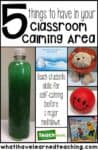
5 things to have in your classroom calming area
Do you have a few kiddos in your classroom that just need some time away from the class to regroup, refocus, and center themselves back on what you’re teaching and what they’re learning? Creating a calming area in your classroom will give them the space they need to settle down and provides you an opportunity o constructively remove the student before things get out of control.

Monica from TeachPeek is here to share with you five things that are great to have in your classroom calming area.
What every classroom teacher should know, but is never told! Just like teaching students academic skills for success, we must also teach them skills for self-calming before a major meltdown.
As educators our to-do list only gets lengthier by the minute so being proactive instead of reactive can make this process a whole lot smoother when confronted with obstacles. Here are five things to have in your calming area.
#1 Thing for a Calming Area: Chill out poster
So what you don’t know is that a calming area is needed in every classroom, and I don’t mean a desk facing a wall. It’s a designated area that’s open, but away from distraction. You can post the Chill out poster on the wall with several soothing remedies placed in a small container.

As teachers, I know we want everything to match so if you want to color coordinate your items or follow a winter theme that’s fine too. This chill-out poster, however, lets students know that this is the area to calm down and it’s alright to not feel okay.
#2 Thing for a Calming Area: A Calming bottle

The calming bottle is my favorite item. Students and adults love shaking up the bottle and watching the sparkling pieces of glitter go down slowly. A calming bottle is a helpful tool that’s recommended by counselors and therapists as a coping method to decrease anxiety, anger, or fear.
The students enjoy observing the glitter go from the top down in about 2-3 minutes. With a few simple materials making one can go a long way for a student. All you need is clear Elmer’s glue, a clear plastic bottle, a glitter color of your choice, and hot water.
#3 Thing for a Calming Area: Book
You can utilize just about any easy reader that teaches a certain skill you may want a student to review while in the calming area. Students with behavioral concerns sometimes have social stories that they can read as a reminder about certain expectations they are to have. You can check online for a social story on an expectation or check one out from the library

In most cases, the child will pick up the book in the calming area and picture read or read the story independently so be very purposeful about the book you place. Some topics to choose from can be a certain character quality, different emotions, or a book on conflict resolution. You may want to switch out the book every few weeks as you observe the students who go there and what skill they may need to grow in without stopping your lesson.
#4 Thing for a Calming Area: Squishy ball

Of course, we all know the benefits of a stress ball. The grip and release of the hand in motion help reduce tension, and stress, and promote concentration. Students benefit from the squishy ball as long as they review the rules of how to use it.
Most teachers feel nervous about a child throwing the stress ball across the room, however, if you teach the students how to use it and when to use it you will keep fidgety fingers busy versus fidgety bodies. I strongly recommend at least having one in the classroom calming area.
#5 Thing for a Calming Area: Stuffed Animals
Like the saying goes, “Even grown-ups need security blankets”. In a recent survey conducted by Travelodge 35 percent of adults stated that they slept with a stuffed animal. How big do you think that number is among children? I haven’t done a study yet, but it’s more than 35 percent.

With that in mind, there’s something about a sentimental attachment and a sense of security that calms children when they hug a stuffed animal. So, when a child is crying or feeling afraid, this is a useful item to have in your calming area. My stuffed animal is cute and practical but the fluffier it feels in my opinion, leads to a more positive outcome for them.

Monica is an educator with a passion for helping teachers and students create positive classroom climates! Check out her website for the free Chill out in Antarctica poster.
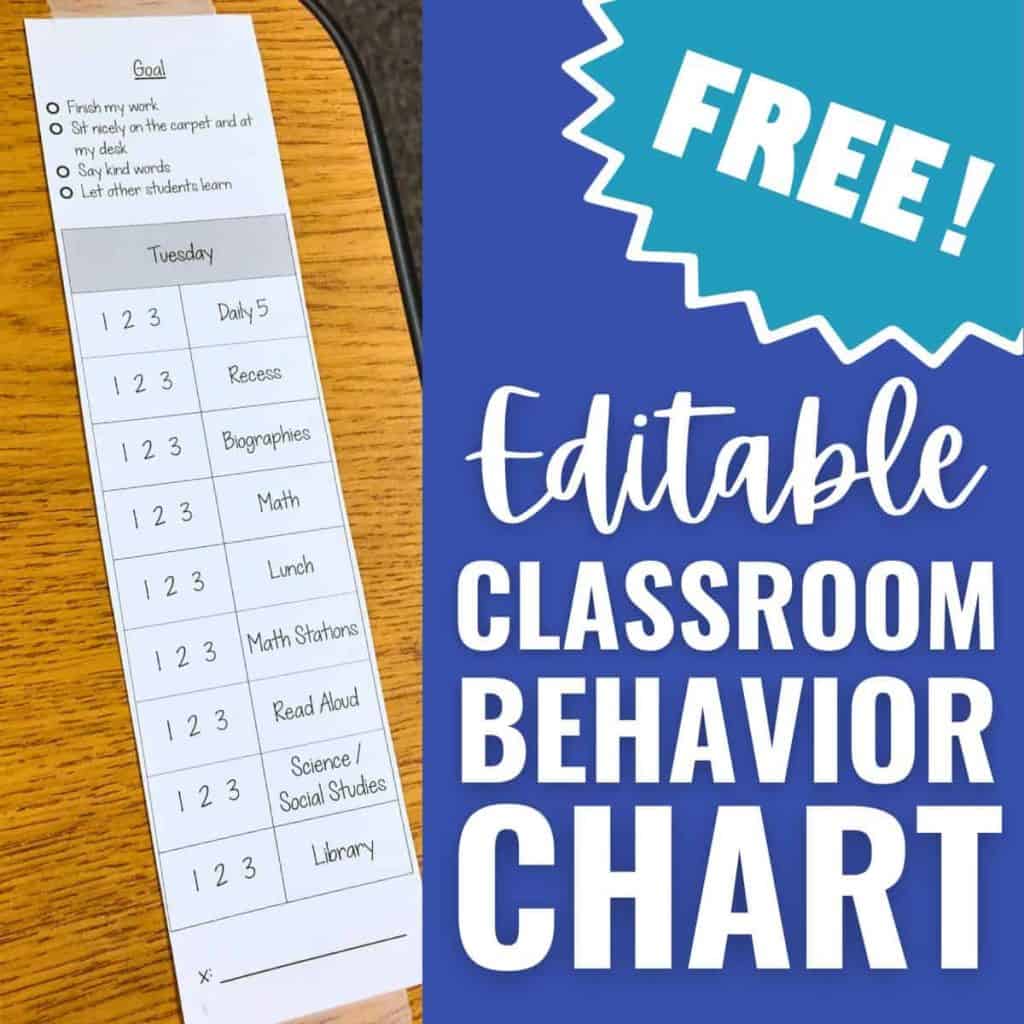
Are you interested in helping students manage their behavior in small chunks throughout the day? A behavior chart is the perfect tool and it’s great for parent communication, too!
Would you like a copy of the chart?
Guest Author