
4 Strategies for Your Behavior Toolkit
As you start the beginning of your school year, classroom management is a huge focus. It can also be one of the most challenging parts of your teaching career. Laura from Discovering Hidden Potential is here today to share with you 4 Strategies for Your Behavior Toolkit.

As an educator, I am always looking for different ways to improve student behavior. As we all know some students need an additional boost to motivate them towards positive behavior. These four tools are simple and easy strategies to add to your behavior toolbox to help with more challenging students or during difficult times of year (before or after breaks) when behaviors might start spiraling downward.
Quiet Corrections with Statement Cards
Inconspicuous corrections to student behavior are generally more effective than public displays for all students to see and hear. Public reprimands increase the chance of escalating the problem and can take away some of the student’s dignity. Statement cards are a great alternative strategy to use. The purpose of statement cards are to allow the teacher to redirect the student without stopping instruction and possibly becoming entangled in a power struggle. The teacher simply places the card on the student’s desk and continues with the lesson.
It is just as important to reinforce positive behavior, especially in students who typically have behavioral issues. Generally, in order to change negative behaviors, positive behavior must be reinforced at a more frequent rate than correcting negative behaviors, so you should also have cards with positive statements.

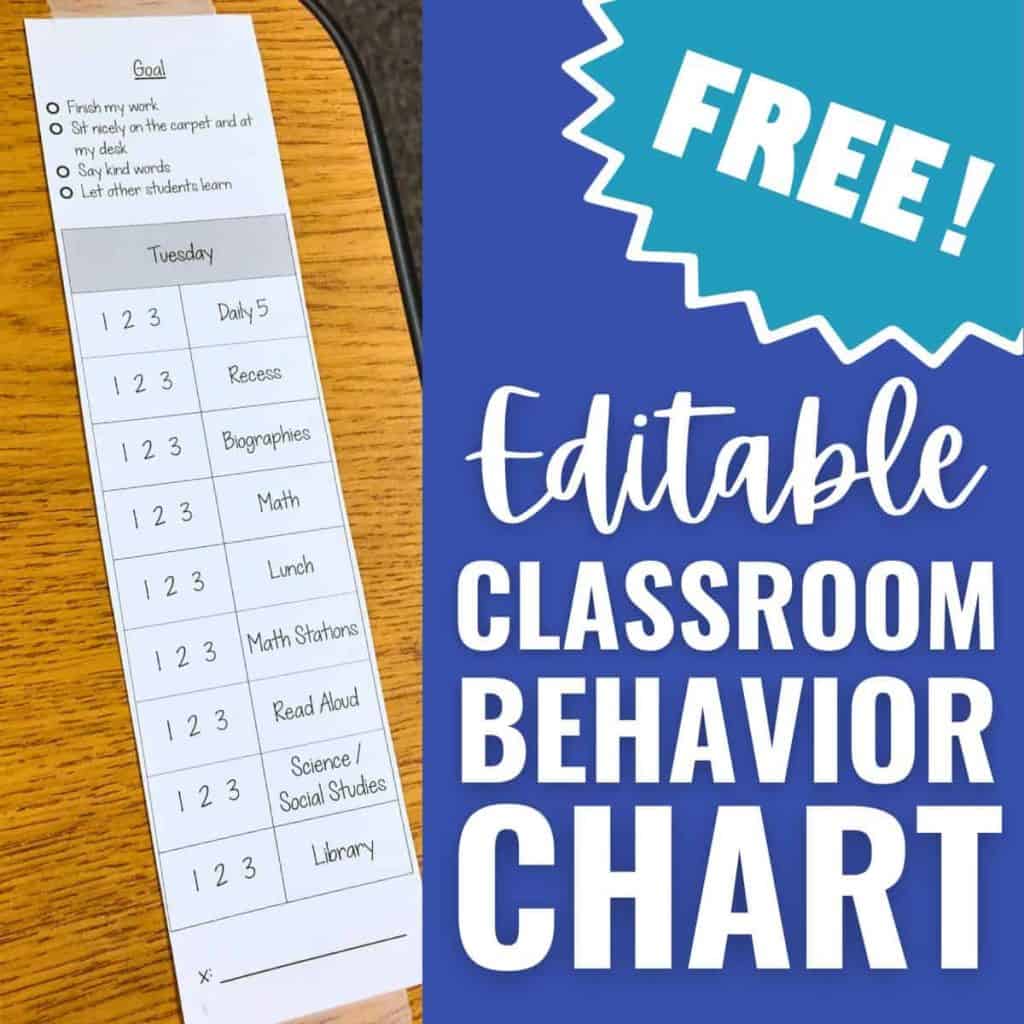
These cards can also be used in conjunction with an individual behavior plan that incorporates a point system. Teachers can give students chances to earn more points if they receive a positive card or use the corrective cards as warnings before points are taken away.
Quick Transitions with Transition Tickets
If you have trouble transitioning your class from one activity to another, this strategy will be invaluable. Prior to the transition time (lunch to recess, between subjects, end of the day), assign 2 to 3 behaviors that you will be looking for as you walk around the class or walk down the hall. As the class begins the transition, begin handing out “transition tickets” which could simply be raffle tickets, to students who are following the behavior expectations. The tickets can then be collected at the end of the week for an actual raffle. After consistently implementing this over the course of the week, a class can usually successfully transition in less than a minute.
Showing a Personal Interest in Interest Inventories
Students that have challenging behaviors are more difficult to bond with and often have fewer adult relationships. As a teacher, it is important to go out of your way to show your students that you like them and value them. It can be as simple as standing at the door and greeting each student and asking them questions about sports or hobbies they are interested which will help foster positive relationships.
One way to help learn about your students and their individual interests is an Interest Inventory. This can easily be incorporated into the first couple weeks of school when students are learning about classroom expectations. In addition to having students complete an inventory, you can also send home an inventory for parents to complete in order to give a complete picture of the child. The answers on the interest inventories can later be used in a reward menu for students who need an individual behavior plan.
Reinforcing Positive Behavior with Reward Menus
One of the most difficult parts of behavior plans is finding reinforcers that are effective and long-lasting. Many times I hear in meetings that the behavior plan worked for a couple of weeks, but now the student is is no longer interested or motivated by the rewards. Most any student will soon become tired of a reinforcer unless it is regularly changed.
Reward menus are a good strategy to use to prevent this problem. Instead of designing a behavior plan around having only one reward for accomplishing the goal, try letting students select among several possibilities. Depending on the needs of the students, the reward menu could be used at the end of a week, the end of a day, or for especially challenging students, it can be used several times throughout the day. I have typically used a “menu” that has four choices.
You can make a reward menu for students based on their individual interests and rotate the rewards every couple of weeks. Many schools have PBIS “dollars” or “bucks” which are a good option for one of choices since typically the students are working towards a bigger “prize”. Rewards choices do not need to be large or tangible…..just being the line leader is a choice that many children may want or making a positive phone call home to their parent. Here is a list of potential options.

Add these strategies to your behavior “toolkit” and give your students a behavior boost at the beginning of the school year! Click here for a FREEBIE of Statement Cards.

Is your list of rewards available as an editable doc?
Hi, Karen,
This was a guest post by someone else. I’m not sure the answer to your question. I’d contact the author via the link at the end of the post.