
Types of Energy for Kids: Forms of Energy Explained
Energy is one of those words students hear all the time, but ask them what it actually is, and you’ll get a lot of shrugs. Teaching the types of energy for kids starts with a simple idea: energy is what makes things move, change, heat up, light up, or make sound. From there, students can sort the world into a handful of forms they can see and feel every day.
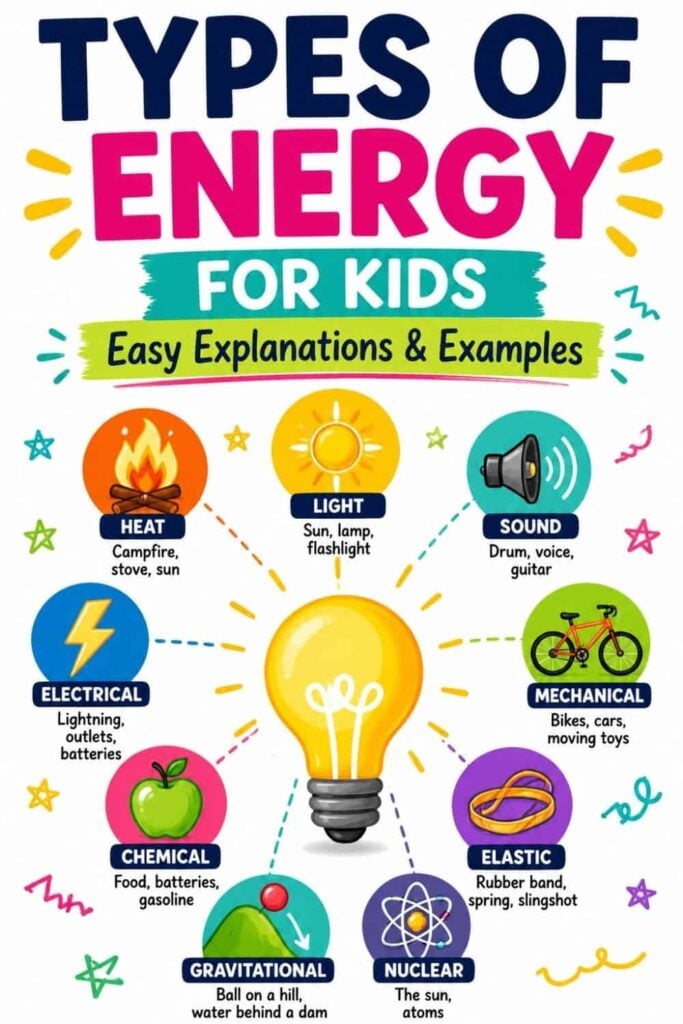
This post explains each type of energy in plain language, gives examples kids recognize, and shares ways to teach it, with a free-flowing anchor chart you can build together.
What Is Energy?
Energy is the ability to cause change or do work. When something moves, gets warmer, makes a sound, or lights up, energy is behind it.
Students don’t need a formal definition to start. They need to notice that energy is everywhere: in a kicked ball, a glowing lamp, a ringing bell, and the food they eat. Once they see that, the different types of energy become easier to name.
The Two Big Groups: Kinetic and Potential Energy
Before naming all the forms, it helps students to know that energy comes in two big groups:
- Kinetic energy is the energy of motion. Anything moving has it: a rolling ball, a running student, blowing wind.
- Potential energy is stored energy, waiting to be used. A stretched rubber band, a ball at the top of a ramp, and the food in your lunch all hold potential energy.
Every form of energy below is really kinetic, potential, or a mix of the two. Pointing that out keeps the longer list from feeling random.
Types of Energy Explained, With Examples
You’ll see different lists online. Some say there are 5 forms of energy, others say 10, because energy can be grouped in different ways.
Here are nine common forms students meet in elementary science, each with an example they already know. Remember, each of them is a form of kinetic or potential energy.
- Heat (thermal) energy comes from the motion of particles. The warmer something is, the faster its particles move. Examples: a stove, a campfire, the sun.
- Light (radiant) energy travels in waves and lets us see. Examples: the sun, a lamp, a flashlight.
- Sound energy is made by vibrations traveling through the air. Examples: a drum, a voice, a guitar string.
- Electrical energy comes from moving electric charges. Examples: lightning, a wall outlet, a battery powering a toy.
- Mechanical energy is the energy of moving objects and machines, a mix of motion and stored energy. Examples: a moving bike, a swinging pendulum, a wind-up toy.
- Chemical energy is stored in the bonds of substances and released during a reaction. Examples: food, batteries, gasoline, burning wood.
- Elastic energy is stored in objects that are stretched or squeezed, a kind of potential energy. Examples: a stretched rubber band, a pulled-back slingshot, a coiled spring.
- Gravitational energy is stored in objects held up high, ready to fall, another kind of potential energy. Examples: a ball at the top of a hill, water held behind a dam, a ski jumper at the top of the ramp.
- Nuclear energy is stored inside the tiny atoms that make up everything, and it’s released when atoms join together or split apart. The sun makes its light and heat this way. This one usually comes up in older grades, but students are often curious about it.
For more on where these forms come from, the U.S. Department of Energy’s energy resources are a kid-friendly reference you can trust.
Types of Energy Examples Around the Classroom
One of the best ways to make energy concrete is a quick hunt around the room. Have students point to an object and name the energy at work. A few they’ll find fast:
- The lights overhead: electrical energy becoming light energy.
- A pencil sharpener: electrical energy becomes mechanical and sound energy.
- A student’s lunch: chemical energy stored as food.
- A bouncing ball: potential energy at the top turning into kinetic energy on the way down.
Noticing that one form often turns into another is the bridge to energy transfer, which is the heart of the fourth grade energy standards. A few conversions students can name on their own: the chemical energy in food becomes thermal energy (body heat) and kinetic energy when they run, the radiant energy from the sun becomes chemical energy in plants through photosynthesis, and the electrical energy in a TV becomes light and sound. Spotting these changes is great practice before students study energy transfer in depth.
How to Teach the Types of Energy to Kids
A few approaches make this topic stick:
- Build an anchor chart together. List each type of energy with a student-generated example next to it, so the chart reflects their thinking.
- Sort real-world examples. Giving students pictures or scenarios to sort by energy type surfaces misconceptions quickly. My forms of energy sort is built for exactly this.
- Go hands-on with stations. Rotating through short investigations lets students see different forms of energy in action. My energy science stations for fourth grade cover the forms and how energy transfers.
- Connect to energy transfer. Once students know the forms, they’re ready to explore how energy moves and changes. My energy teaching ideas post has more lessons for that next step.
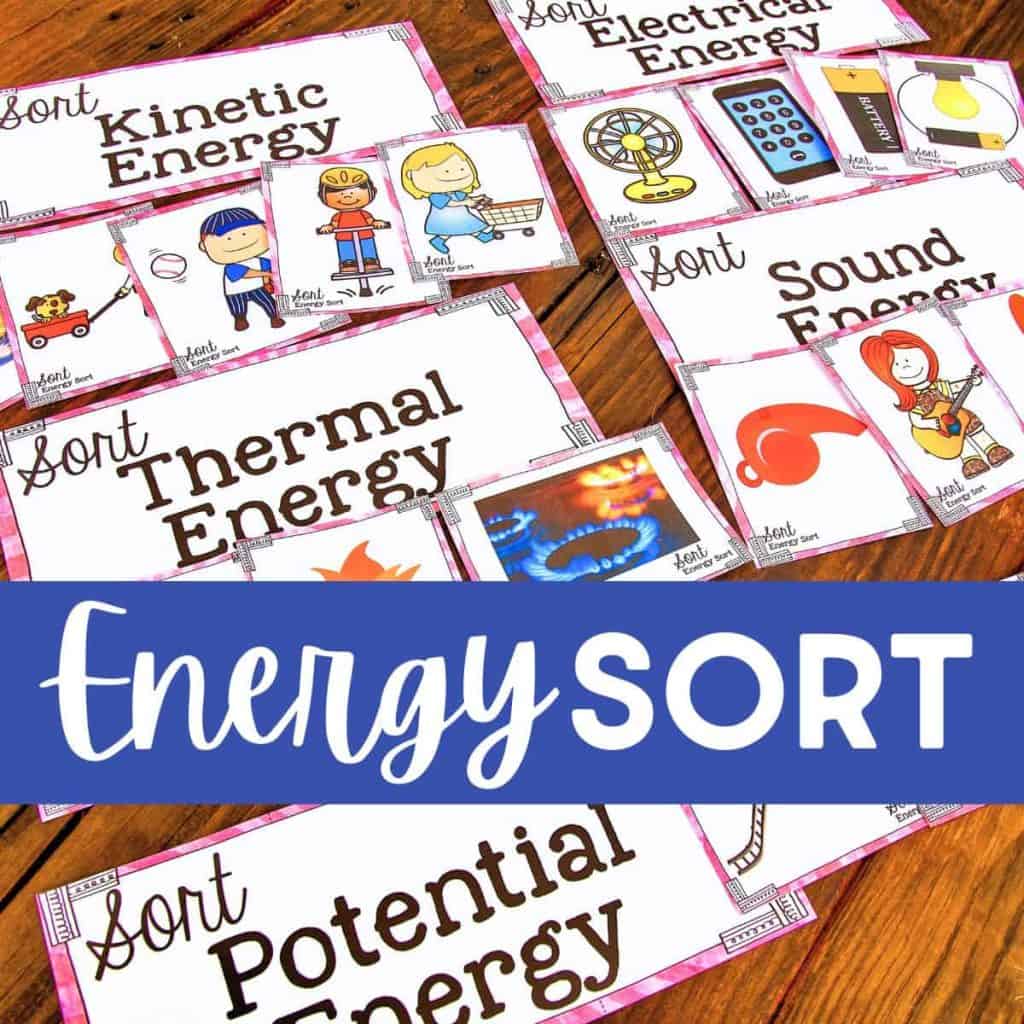
Interested in a hands-on activity where students identify types of energy? Take a look here:
Frequently Asked Questions
Final Thoughts
Once students can name the types of energy and point to an example of each, the bigger ideas of energy transfer and conservation have a solid foundation. Start with the two big groups, build an anchor chart full of their own examples, and let students hunt for energy all around them.
Want it ready to teach? My Forms of Energy Sort gives students hands-on practice classifying real examples, and my 4th Grade Energy Science Stations take them through the forms of energy and energy transfer, all aligned to the NGSS 4-PS3 standards.

Energy Science Stations BUNDLE – Transfer of Energy & Forces
Energy Science Stations for Fourth Grade Next Generation Science Standards include 10 different science stations where students can deepen their understanding of energy, transfer of energy and forces.
Jessica BOschen
Jessica is a teacher, homeschool parent, and entrepreneur. She shares her passion for teaching and education on What I Have Learned. Jessica has 16 years of experience teaching elementary school and currently homeschools her two middle and high school boys. She enjoys scaffolding learning for students, focusing on helping our most challenging learners achieve success in all academic areas.