
Heart Word Method: Mapping Sight Words Using the Science of Reading
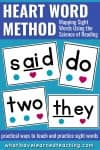
The heart word method is a research-backed approach to teaching sight words that asks students to analyze each word’s sounds rather than memorize the word as a whole. If you’ve seen the terms sight words, high-frequency words, and heart words used interchangeably and wondered what actually sets them apart, you’re not alone. This post explains what the heart word method is, how to choose which words to teach with it, and how to use a simple gradual release routine in your classroom.

Whether your students are just beginning to learn basic letter-sound interactions or have already mastered some of them, it’s important that they understand how to read sight words by mapping the sounds in the word.
By providing hands-on activities and practice focused on orthographic mapping, you can help give all your kindergarteners the foundation they need to read proficiently. Read on below as we show you exactly how you can use research-based methods to teach sight words!
What Is the Heart Word Method?
The Heart Word Method is an orthographic mapping strategy for teaching sight words. It teaches students to identify the decodable portions of a word — the sounds that follow phonics rules — and the irregular portion, so they understand why a word looks the way it does rather than memorizing it as a whole.
What is the difference between high-frequency words, sight words, irregular words, heart words, and all the other labels?
Before we get into how to map sight words using the Heart Word method, let’s define what we mean by sight words. Teachers hear many labels for groups of words, like sight words, high-frequency words, phonetically irregular words, flash words, snap words, and heart words. There are so many labels. What do they all mean?
There is a hierarchy in the way we talk about words that we want students to eventually memorize, and some of the terms are interchangeable, depending on your reading program and teaching method.
Below is a quick definition of each label and how they fit together. If you use different terms to label sight words, think about how that term may or may not fit into one of the categories below.
Sight Words
Sight words are words that can be recognized by sight or automatically recognized without sounding the word out. In the past, most sight words were learned through memorization routines. The Dolch and Fry lists are considered sight word lists.
High-Frequency Words
High-frequency words occur most frequently in texts; thus, they have a high frequency of occurrence. They are often referred to as sight words when taught through a memorization routine.
However, high-frequency words can be categorized into two groups: those that are spelled with regular phonics patterns (decodable) and those that have irregular phonics patterns (non-decodable). You can even divide the words with regular phonics patterns into two more specific groups: words a student can decode now and words a student cannot yet decode but will be able to in the future.
Flash Words / Snap Words
High-frequency words that are easily decodable are called flash words. Flash words are used so frequently in texts that students need to read them quickly. They are the first group of high-frequency words noted above. They have regular spelling patterns, and students can decode them given their current level of phonetic knowledge.
Irregular Words
Irregular words are words that have features that do not follow common spelling patterns at all. The word cannot be decoded, even at the advanced reading and spelling levels.
Heart Words
Heart words are words that students need to learn by heart because they contain either non-decodable components or students have not yet learned the phonetic pattern to sound out the word.
One key to remember about Heart Words: Not all heart words are irregular words and not all heart words continue to be heart words.
How is that?
Words on any high-frequency word list can be categorized as flash words or heart words, but their categories change as students’ phonics skills progress. In early phonics instruction, some words are considered heart words until the child learns the phonics pattern in the words. The word is then categorized as a flash word and expected to be read quickly.
How do students learn sight words?
In the past, teachers relied solely on rote memorization to teach sight words. This entailed repeating a word until it was embedded in memory and could be recognized without conscious effort. The read-and-spell routine was common.
Teachers would go through a stack of sight word cards and have students repeatedly read and spell the words. Words were added to and taken away from the stack throughout the year.
While this method was effective for some students, it is not based on the Science of Reading research. Why?
Memorization routines don’t move the words into long-term memory. Many sight words don’t need to be memorized because they are decodable. I have a whole list of them in our Blending Cards for Decodable Sight Words.
Although the majority of students can learn high-frequency words without intervention, given enough time, students with phonological awareness problems, such as dyslexia, will not be able to make these connections automatically and will need specialized support. For students who do not need intervention, explicitly teaching sight words will speed up the learning-to-read process.
Instead of memorizing sight words, the new research suggests that early readers learn to map words.
Instead, use Orthographic Mapping to Teach Sight Words
Orthographic mapping helps young readers associate particular sounds of a word with specific letters of the alphabet, aiding them in transferring their oral language (phonemes) knowledge to text (graphemes).
This process stores words in long-term memory for faster, more effective retrieval during reading or writing, helping children access what they already know quickly and easily while remembering it better.

What words should be taught as Heart Words?
In reality, there are very few Heart Words. Of the 220 words on the Dolch List, only 82 are irregular words. In kindergarten, students generally learn about 10-15 Heart Words. The rest of the words can be decoded phonetically.
While that number expands in first grade, remember that not all words that start out as heart words remain heart words. Once a student has been taught all of the phonics patterns in a word, that word can become a Flash Word.
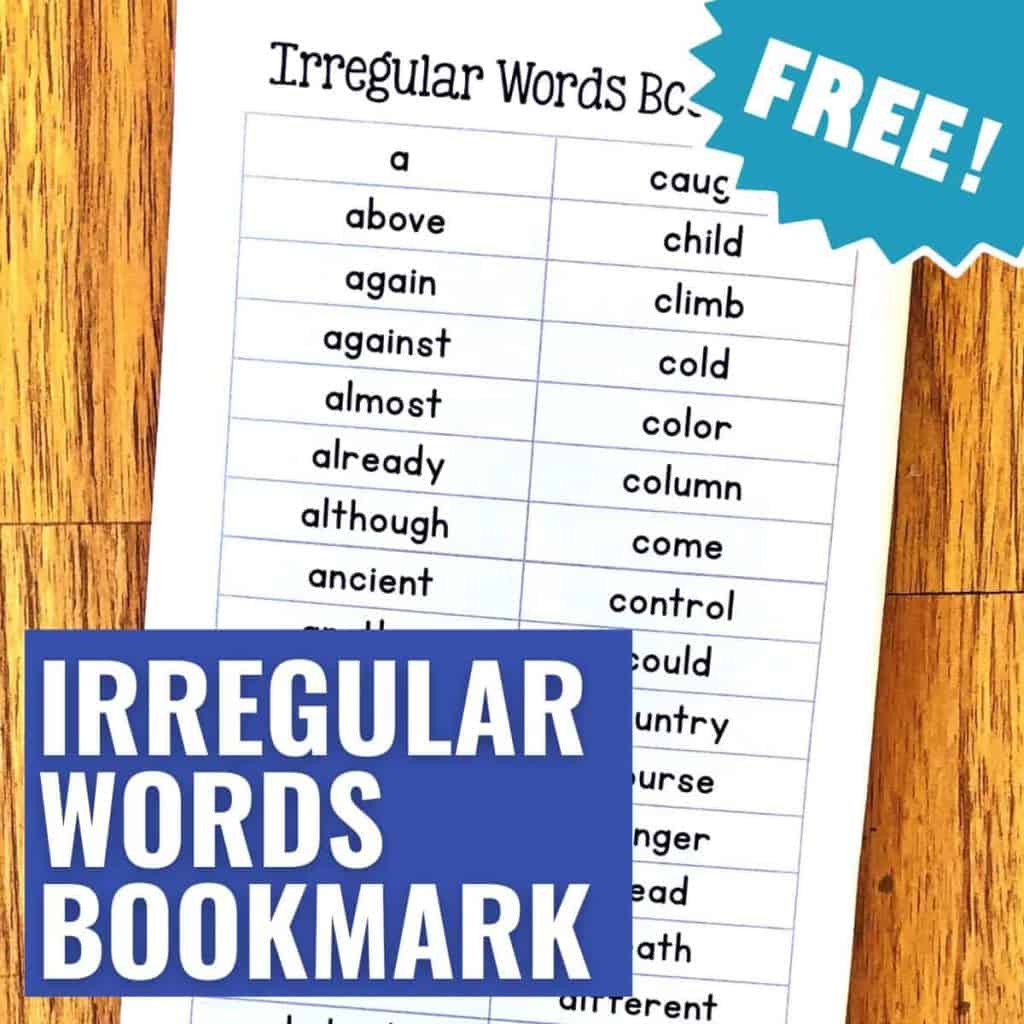
I have a list of irregular words taught in early elementary, including a free irregular words bookmark here. This bookmark is in two formats and can easily be used as a list of heart words for elementary students.
Reading Rockets also has a method for determining which words to teach as heart words.

When should Heart Words be taught?
Heart words are taught as part of the regular phonics curriculum. They can be taught when students have learned enough phonics to map the regular decodable parts of words and when students need to read new words in texts.
How to Teach Heart Words: A Gradual Release Routine
When using the Heart Word Method, teach students to decode what can be sounded out and use a heart to represent the irregular spelling pattern in the word or the part of the word that hasn’t been learned yet.
Below is a method that aligns with the Gradual Release of Responsibility and the Science of Reading. Students are explicitly taught the new word (I do), practice the new word with the class (We do), and write the new word on a word card (You do) that can later be used in sight word activities.
Here is the basic teaching sequence, step by step:
- I Do: Choose a heart word. Say each sound aloud while pointing to its letter(s). Circle or underline the part that is irregular — the “heart” of the word — and explain why it does not follow the expected phonics pattern.
- We Do: Give students a new heart word and work through it together. Students identify the decodable sounds, then find the irregular portion with your guidance.
- You Do: Students practice independently with heart words, marking the decodable and irregular parts before reading or writing the word in a sentence.
Explicitly Teach the Heart Word (I do)
One of the core tenets of the Science of Reading is explicit instruction. This is the ‘I do’ portion of the gradual release of responsibility. Below is one possible sequence of instructions you can use when teaching a new heart word. In each part of this sequence, make sure you and the students are orally saying the word.
- Say the word, then have students repeat it. If necessary, use it in a sentence or define the word.
- Tap out the sounds in the word. Students can use their fingers to tap and count the sounds. Elkonian boxes are a helpful resource for this step of the process. Ask students how many sounds they hear. Students can hold up their fingers to indicate the number of sounds heard.
- Identify the decodable parts of the word by asking students to tell you what sounds they hear in specific positions of the word, like, “What’s the first sound you hear? What is the last sound in the word?” Before teaching the new word, be sure you know which parts of the word are decodable and tailor your questions to match those positions. Place a colored box under the decodable letters.
- Identify the non-decodable parts of the word. Ask students what sound that part makes and emphasize that it is an unfamiliar sound, given the letters used in the word. Place a heart under this part of the word. Explicitly teach the irregular sound of the letter or letter combination. Emphasize that students need to know this portion ‘by heart.’
Practice the Heart Word (We do)
After you have explicitly taught the heart word and identified the decodable and non-decodable parts, play with the word together as a group to give students practice saying the sounds and identifying the irregular parts. Here are a few practice activities that you can do as a whole group.
- Ask students to read the word and spell it aloud chorally.
- Write the word together as a group on a whiteboard.
- Encourage students to form a clear mental image of the word. Have them cover or erase the word. Ask students to write what they remember by saying each letter out loud as they trace it in the air.
- Ask students about specific letters in the word: What is the first letter? What is the last letter? What is before or after (name a letter)? What are the heart letters?
- Encourage students to physically write the word down on a writing surface, like paper or a whiteboard. Afterward, have them underscore the letters that form a heart shape and draw an actual heart above it. This will help solidify their understanding of the concept!
Create a Word Card (You do)
The last step is to create a phonics card. Have students write the word on a card. Have students draw a dot under each sound in the word and then underline the heart letters. Students can draw a heart over them.
Whether you use the above method or make some modifications to it, be sure that you use the same routine with each word you introduce to develop automaticity in the process of identifying the word parts. Students need to be able to quickly recognize heart words when decoding as they read a text. With repeated practice and exposure, this will become easier for both teachers and students.
Activities to Teach and Practice Heart Words in the Classroom After Introducing the Word to the Whole Group
Build on the Heart Word Method by integrating it into multisensory sight-word activities. Here are a few sight word practice ideas to get you started.
- Give your learners an opportunity to practice their skills by having them write the word multiple times. Encourage them to draw a heart around any non-decodable portions of the words, or even highlight and trace these challenging sections with a highlighter. Through this process, they can learn how to recognize difficult aspects of spelling more effectively!
- Give students an Elkonin boxes diagram, a few objects to represent the sounds in words, and one heart-shaped item. Let them insert the pieces into their templates to accurately show each sound of the word—including placing that special heart symbol in the right spot!
- Instead of using manipulatives and sounds, have students spell the heart word by writing the letters into Elkonin boxes and drawing a heart over the non-decodable part.
- Modify traditional sight word worksheets to fit the Heart Word method by having students draw a heart around the heart letters in the word everywhere on the page. Do this before students do any of the sight word work on the worksheet.
- Really Great Reading has some well-done Heart Word Animations teachers can use with students.
More Sight Word Activities
Get your kindergarteners excited to learn sight words! Here are more than seven interactive activities perfect for any learning style. Give magnetic letters a try, create puzzles, and play memory games – the possibilities are endless. Engage young learners using play dough spelling fun to scavenger hunts. This post is full of exciting ways to make sight word instruction memorable and enjoyable

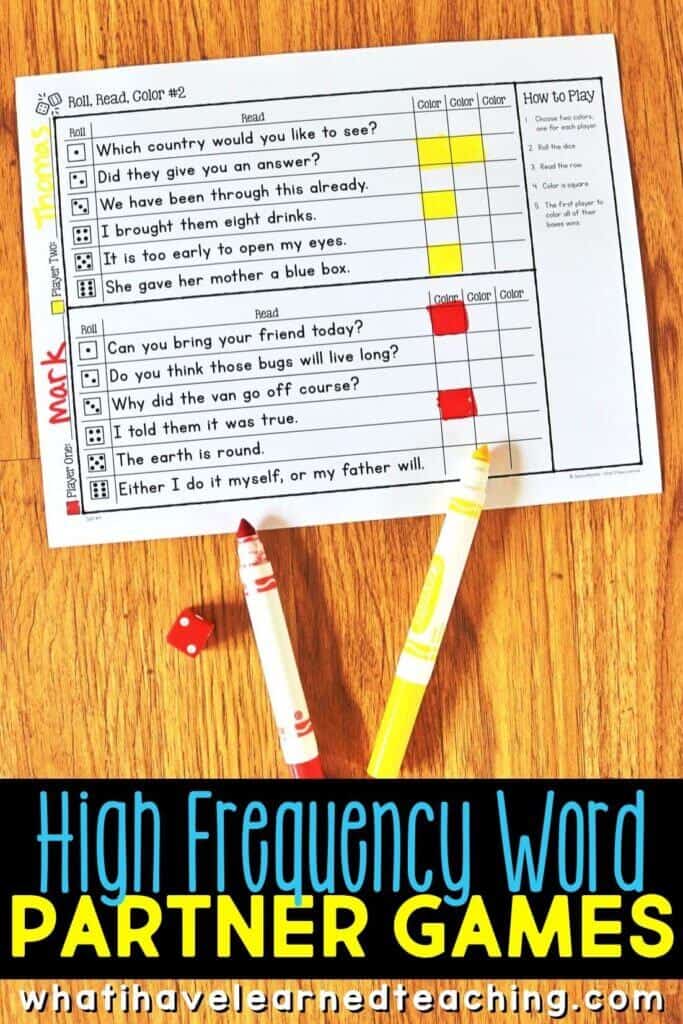
Use my Phonics Partner Games to help students learn high-frequency sight words. The games are designed to be fun and engaging, while also reinforcing word recognition skills. Each game is explained in detail, with clear instructions on how to play and the materials needed.
By using the science of reading and the Heart Word Method, teachers can help students learn sight words in an engaging and enjoyable way AND help students transfer the new learning from short-term memory into long-term memory. With these techniques at your disposal, you can successfully teach sight words to early elementary students.

Is there a product available to purchase for the cards shown in the picture at the top? The “Heart Word Mapping” blue box with the words (said, do, two, they).
Not at this time, but I’ll look into creating a set! Thanks for letting me know you’d be interested in one.