
Fable vs Folktale vs Fairy Tale vs Legend: Key Differences
Understanding the difference between a fable vs folktale — and where fairy tales and legends fit in — is one of those things that seems clear until you have to explain it to students. Most of these stories are familiar to your class, but the genre distinctions can get muddled quickly. Do you know the differences between a fable, folktale, fairy tale, and legend?
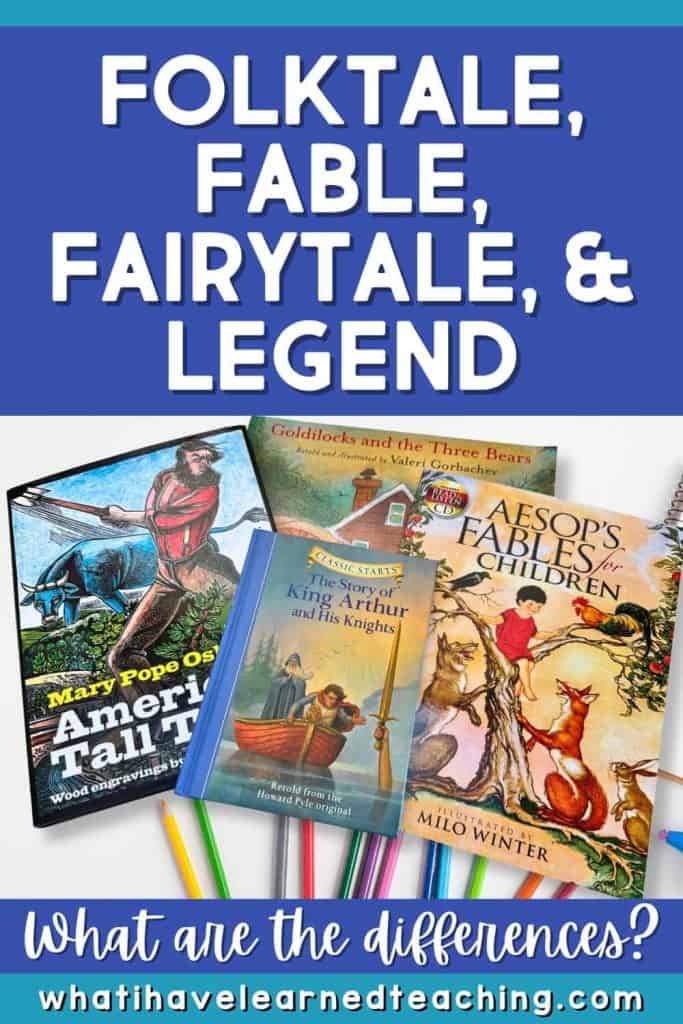
I thought I did, until I started teaching it and found myself mixing up terms in front of my students. That is what sent me to create anchor charts and literacy posters to help keep it straight. This post outlines the key characteristics and examples for all four genres, with a comparison chart for quick reference.
What Is the Difference Between a Fable and a Folktale?
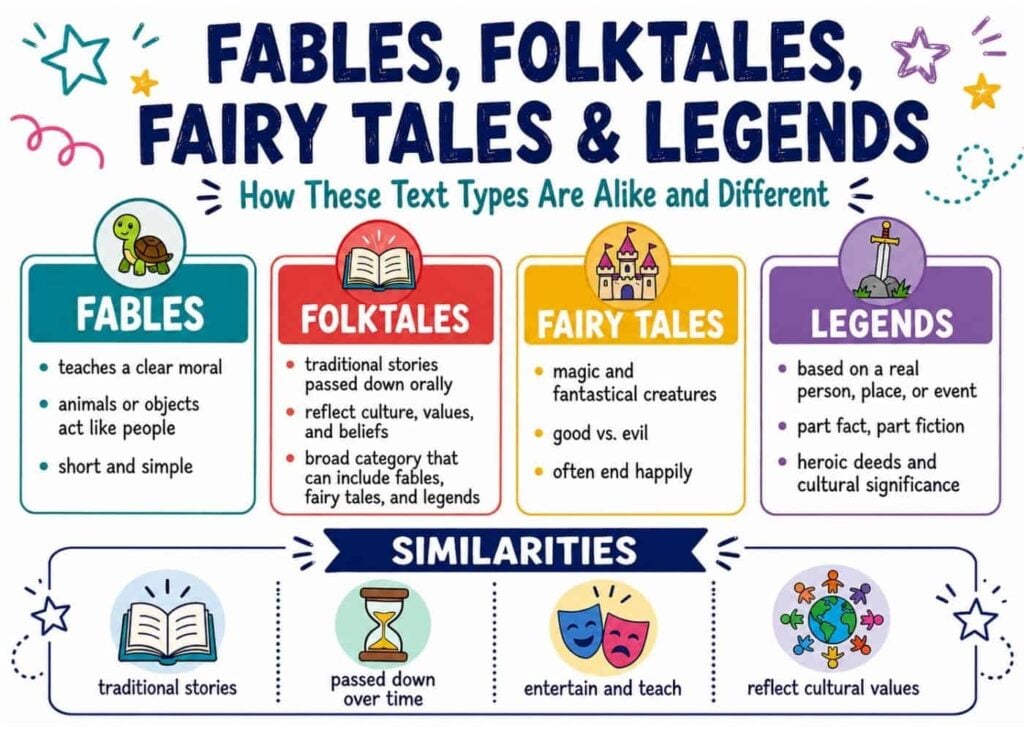
A fable is a short story that uses animals or objects with human qualities to teach a specific moral lesson. A folktale is a broader category — any story passed down orally within a culture, including fables, fairy tales, legends, and ghost stories. The key distinction: all fables are a type of folktale, but not all folktales are fables. Fables are defined by their moral lesson and animal characters; folktales are defined by their oral tradition and cultural origin.
Here is a quick overview of how the four genres compare — the sections below go into more detail on each one.
| Story Type | Purpose | Characters | Structure | Key Elements |
| Fables | To teach moral lessons through simple narratives. | Animals or objects with human traits. | Very short, ends with a clear moral or lesson. | Direct moral lessons, anthropomorphism. |
| Folktales | To entertain, teach, and convey cultural values. | Mainly to entertain, but also to impart subtle moral lessons. | Complex plots, may include magic and moral lessons. | Cultural storytelling, moral and educational components. |
| Fairy Tales | Mainly to entertain, but also impart subtle moral lessons. | Fantastical creatures (fairies, giants, witches), humans. | Magical elements, quests, and trials, often ends happily. | Magical enchantment, clear distinction between good and evil. |
| Legends | To narrate semi-historical deeds, explain events, or cultural ideals. | Heroes, historical figures, sometimes supernatural forces. | Historical context, embellished with fantastical details. | Semi-historical, revered characters, often more realistic than fairy tales. |
This chart provides a quick reference for understanding how these types of folklore compare and contrast in their typical content and purposes.
What is a Folktale?
A folktale is a type of traditional story that is passed down orally from generation to generation. These stories typically stem from a community’s shared culture, customs, and beliefs and often feature elements of magic, myth, and moral lessons.
Folktales serve multiple functions: they entertain, educate, preserve cultural identity, and instill moral values.
Here’s the key idea to help you organize your thinking around this genre:
Common folktales include fairy tales, legends, fables, and ghost stories. Each type has its own distinctive characteristics and purposes, such as teaching lessons about behavior through fables or exploring the supernatural through ghost stories.
What are Some Examples of Folktales?
Folktales come in many varieties from cultures all around the world, each carrying its own unique themes and characters. Here are some well-known examples:
- Cinderella – A widely known fairy tale in many cultures. It typically tells the story of a young woman living in unfortunate circumstances who suddenly gains remarkable fortune.
- Anansi the Spider – Originating from the Ashanti people in Ghana, these tales feature Anansi, a trickster spider who often outsmarts others with his cleverness.
- The Tortoise and the Hare – A famous fable from Aesop’s collection. It teaches the moral “slow and steady wins the race” through the story of a race between an overconfident hare and a slow-moving tortoise.
- Baba Yaga – A Slavic folktale about a fearsome witch who lives in a hut that stands on chicken legs and flies around in a mortar, wielding a pestle.
- The Bunyip – An Australian Aboriginal tale about a mythical creature said to lurk in swamps, billabongs, creeks, riverbeds, and waterholes.
- Paul Bunyan – A North American folktale about a giant lumberjack named Paul Bunyan and his exploits, often accompanied by his giant blue ox, Babe.
- The Legend of the Pineapple – A popular Philippine folktale about a little girl who turns into a pineapple due to her laziness and disobedience, teaching a lesson about diligence and respect.
- Aladdin – Part of the Middle Eastern collection of tales, “The Thousand and One Nights,” this story involves a poor young man who uses the magical powers of a genie released from a lamp to win the heart of a princess.
These stories reflect the values, morals, and humor of the cultures they come from and continue to be loved and retold across the world.
Have you ever had one of those times when you’re teaching your reading program and realized that students need more exposure to a type of text or a specific skill?
And then you decide to read a whole bunch of texts in the same genre?
Kinda at the last minute? Yeah, that was this fable “unit.”
Our class read One Grain of Rice in our reading program. Then, I had this bright idea to read various fables, including Stone Soup and The Empty Pot, to emphasize the lesson or moral in the story, which is a trademark of fables.
But what exactly is a fable?
What are Fables?
A fable is a short story that typically features animals, mythical creatures, plants, inanimate objects, or forces of nature that are anthropomorphized (given human qualities, such as the ability to speak human language) and that illustrates or leads to a particular moral lesson (a “moral”), which may, in the end, be added explicitly as a concise maxim or saying.
Fables differ from other folktales, such as fairy tales, in that they are designed to teach a specific lesson about how to behave or deal with a practical life situation.
Fables usually have flat, static characters whose actions lead directly to the moral lesson being taught.
Here are some key characteristics of fables:
- Moral lesson: This is the core of the fable and is often explicitly stated at the end.
- Anthropomorphism: Animals or inanimate objects behave like humans, speaking, solving problems, and sometimes wearing clothes.
- Simplicity: Fables are brief and straightforward, making the moral easy to understand.
- Timeless: The lessons apply to various cultures and times.
- Universal themes: Common themes include honesty, kindness, and justice.
Some of the most famous fables have been attributed to Aesop, a storyteller believed to have lived in ancient Greece between 620 and 564 BCE. His fables, such as “The Tortoise and the Hare,” “The Boy Who Cried Wolf,” and “The Fox and the Grapes,” remain popular teaching tools for moral and ethical education.

What is a fairy tale?
A fairy tale is a type of folktale or story typically featuring magical and fantastical elements, such as witches, giants, fairies, mermaids, and magical spells.
These stories often involve a plot that centers around a quest or a challenge to be overcome, usually leading to a happy ending. The characters can range from ordinary humans to mythical creatures, and the settings are often exotic or otherworldly places.
Here are some key characteristics of fairy tales:
- Magic and Enchantment: Fairy tales are known for their abundant use of magic. Characters might use magical objects, like enchanted shoes or invisible cloaks, or encounter magical beings who help or hinder their journeys.
- Good vs. Evil: Many fairy tales clearly distinguish between good and evil characters. The protagonist often faces off against an antagonist who poses significant threats, and good usually prevails.
- Moral Lessons: Similar to fables, fairy tales often convey morals or lessons, though these might be more subtly integrated into the storyline. Themes such as the value of kindness, bravery, and honesty are common.
- Archetypal Characters: These stories frequently employ character archetypes such as the noble hero, the wicked witch, the benevolent king, or the poor peasant rising to fortune.
- Narrative Elements: Fairy tales often begin with phrases like “Once upon a time” and end with “they lived happily ever after,” framing the story as occurring in a timeless, universal past.
- Cultural Variations: While many fairy tales share similar themes and structures, they can vary greatly across cultures. Each culture’s fairy tales reflect its own values, norms, and aesthetics.
Examples of well-known fairy tales include “Snow White,” “Cinderella,” “Beauty and the Beast,” and “Sleeping Beauty.” These stories have been told in various forms around the world and have been adapted into numerous books, films, and plays, demonstrating their enduring appeal and cultural significance.
What is a Legend?
A legend is a narrative, often historical, that is considered somewhere between fact and fiction. While legends are rooted in actual events or characters from the past, they are embellished with mythical or supernatural elements over time, which makes them more dramatic and significant than the purely factual account might be.
Here are some key characteristics of legends:
- Historical Basis: Legends often start with a kernel of truth—real events, people, or places—but are then elaborated upon with imaginative details that may not be verifiable.
- Cultural Significance: Legends explain historical roots, embody ideals, or reflect a culture’s values. They often contribute to a community’s identity by reinforcing or exemplifying important cultural norms.
- Supernatural Elements: Although less fantastical than fairy tales, legends can include supernatural or extraordinary elements. These might be miraculous events, appearances of mysterious figures, or unexplainable phenomena.
- Moral or Ethical Implications: Like other forms of traditional stories, legends often convey moral lessons or ethical dilemmas, typically through the triumphs and failures of their characters.
- Revered Characters: The protagonists of legends are frequently heroes or notable figures who possess qualities such as bravery, wisdom, or strength. These characters often become larger-than-life figures within their cultural context.
- Enduring Popularity: Legends are told and retold across generations, often gaining more elaborate details with each retelling. They remain relevant in various forms of modern media, including literature, cinema, and television.
Examples of legends include the tales of King Arthur and his Knights of the Round Table, which mix historical elements of early medieval Britain with mythical aspects like the sword Excalibur and the wizard Merlin.
Other examples include Robin Hood, a legendary figure portrayed as a hero stealing from the rich and giving to the poor, and national legends like Paul Bunyan in the United States, reflecting North America’s pioneering spirit.
Legends like these provide entertainment and a sense of shared history and values.
What Is a Myth? (And How Is It Different from a Fable?)
A myth is a traditional story that explains natural phenomena, the creation of the world, or the nature of humanity, often involving gods, goddesses, and supernatural forces. Where a fable uses animal characters to teach a practical moral lesson, a myth uses divine or heroic figures to explain something about the world itself.
Key distinction: myths are tied to a specific culture’s religious or cosmological beliefs, while fables are more universally applicable moral stories. “The Tortoise and the Hare” is a fable. It teaches a lesson about persistence. A creation myth from Greek or Native American culture explains why the world exists or how humans came to be.
Myths are technically distinct from folktales, though they overlap. Some scholars categorize myths as a subset of folklore; others treat them separately.
Understanding the distinct characteristics and educational values of fables, folktales, fairy tales, and legends can greatly enhance your teaching toolkit. It will allow you to deliver rich, culturally diverse content that helps you meet your teaching standards.
Whether you aim to teach moral lessons through succinct fables, explore complex plots within folktales, dive into the magical worlds of fairy tales, or discuss the historical significance of legends, each genre offers unique opportunities for engagement and learning.
If you are looking for resources to go along with this unit, my anchor chart and literacy poster set for fables, folktales, fairy tales, and legends includes all four genres and serves as a classroom reference throughout the unit.

This week we had the Milkmaid and her Pail. After we read it I pulled out good old Aesop to read. There is a website with his stuff online, and I printed a bunch off. The kids illustrated them to show visualization and comprehension.