

Teachers frequently face the challenge of managing their finances on a modest salary. Understanding how to handle money effectively is not just beneficial. It is essential for teachers seeking financial stability and security.
The reality is that teachers’ salaries, while rewarding in many non-monetary ways, often lag behind other professions. This financial disparity can make it difficult for educators to save for emergencies, plan their retirement, or invest in their future. Financial literacy empowers teachers to make informed decisions about their money, helping them live comfortably, reduce debt, and build a secure financial foundation.

In this blog post, I’ll share the top 10 books about finance that are especially beneficial for teachers. These books offer practical advice, timeless wisdom, and actionable strategies tailored to help educators take control of their financial destinies.
The order of these books is loosely based on my journey with personal finance over the past 25 years. I read a few of these in my early teaching career, a few after about ten years of teaching, and others have been more recently informed of my financial journey.
They all have one thing in common: continually learning about how I manage money that informs my future.
10 Best Personal Finance Books for Teachers
Here are the ten books, in roughly the order I encountered them across 25 years of teaching:
- The Automatic Millionaire — David Bach
- Rich Dad Poor Dad — Robert T. Kiyosaki
- The Total Money Makeover — Dave Ramsey
- The Millionaire Next Door — Thomas J. Stanley and William D. Danko
- Millionaire Teacher — Andrew Hallam
- Choose FI — Chris Mamula, Brad Barrett, and Jonathan Mendonsa
- The Simple Path to Wealth — JL Collins
- The Richest Man in Babylon — George S. Clason
- Your Money or Your Life — Vicki Robin and Joe Dominguez
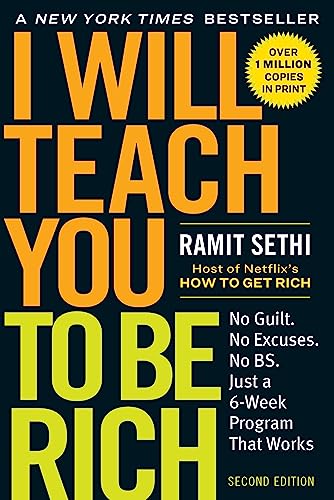
- I Will Teach You to Be Rich — Ramit Sethi
Each section below covers what the book is about and where it fits in a teacher’s financial journey.
The Automatic Millionaire by David Bach
The Automatic Millionaire was one of the first books that I read about finances. I was probably in my second year of teaching, and it entirely changed how I spent and saved my money.
David Bach’s book is based on the idea that you don’t need a budget to become wealthy. Instead, you can achieve financial success with minimal effort by setting up automatic contributions to savings and retirement accounts.
The book introduces the concept of the “Latte Factor,” showing how small, everyday expenses can add up and suggesting that those funds be redirected to savings. It’s a practical guide for anyone overwhelmed by traditional financial planning.
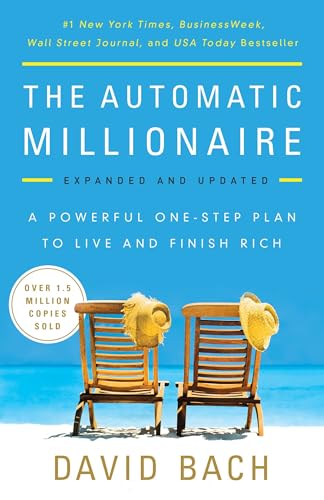
At this point in my journey, I disagree with the premise that you don’t need a budget. I have found that a budget helps our family tell our money where to go.
Rich Dad Poor Dad by Robert T. Kiyosaki
I read this book at some point in my early journey with money. As a teacher, I honestly didn’t get as much from it. While I understood the book’s premise, I had a job that required all of my time and attention, so I couldn’t devote the mental energy needed to make these changes in my mindset.
In this book, Robert Kiyosaki contrasts the financial advice of his “rich dad” (his best friend’s father) and his “poor dad” (his biological father). Through anecdotes and lessons, Kiyosaki explains the differences in mindset and approach to money that lead to financial success. He emphasizes the importance of financial education, investing in assets, and understanding how money works. The book challenges conventional wisdom and encourages readers to think differently about wealth building.
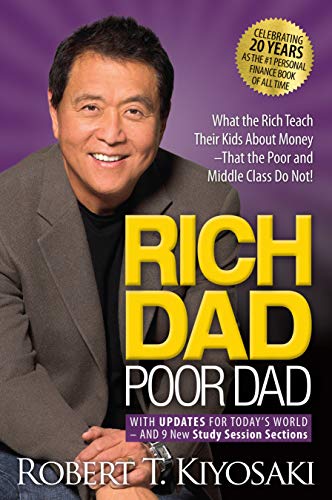
Looking back on the book now, I think it would be great for someone who enjoys unconventional thinking and is looking for a change from teaching.
The Total Money Makeover by Dave Ramsey
At some point in our financial journey, my husband and I became hooked on Dave Ramsey. We listened to the podcast, read the books, and took the course. It was a good way for us to learn to communicate about money and set goals together.
Dave Ramsey’s proven plan for financial fitness includes a step-by-step guide to getting out of debt, building an emergency fund, and investing for the future. The book contains motivational advice, practical tips, and real-life success stories from people who have followed Ramsey’s plan. It emphasizes the importance of discipline, sacrifice, and a long-term wealth-building perspective. It’s an inspiring read for teachers seeking a comprehensive strategy for financial success.

This book is a great place to start if you are in debt or just starting to learn about finances. It does a great job of setting the stage and focusing on motivating the reader to erase their debt. However, it falls very short on how to save and invest money.
The Millionaire Next Door by Thomas J. Stanley and William D. Danko
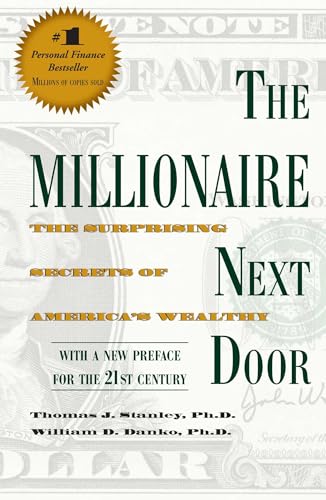
I love research and stories about real people doing normal and not-so-normal things. This book was a great way to merge all the current practices I was trying to implement with the future me who had been diligent with finances. It showed me what I could achieve.
Based on extensive research, this book reveals the surprising traits of America’s millionaires. Contrary to popular belief, most millionaires live modestly, save diligently, and invest wisely. The authors identify seven common traits among the wealthy, such as living below their means and valuing financial independence over social status. It’s an eye-opening read for teachers, offering practical insights into the behaviors and habits that lead to financial success.

Millionaire Teacher: The Nine Rules of Wealth You Should Have Learned in School by Andrew Hallam
The Millionaire Teacher was a book that I picked up between learning about Dave Ramsey and Choose FI. It echoed much of what I had previously learned and focused on ways teachers could earn and save money.
In “Millionaire Teacher,” Andrew Hallam, a high school teacher who built a million-dollar investment portfolio on a modest salary, shares his insights and strategies for achieving financial success.
The book outlines nine simple rules for building wealth, emphasizing the importance of living within one’s means, investing in low-cost index funds, and understanding the basics of personal finance.

Hallam’s approachable writing style and relatable examples make complex financial concepts accessible and actionable for teachers. This book is a must-read for educators looking to secure their financial future without sacrificing their passion for teaching.
Choose FI: Your Blueprint to Financial Independence by Chris Mamula, Brad Barrett, and Jonathan Mendonsa
About six or seven years ago, we found the concept of FIRE or FI, which stands for Financial Independence. We first found the Choose FI podcast and devoured it. This book came after we had a foundation in FI, so while I didn’t gain a ton of knowledge from it, it is one that I recommend because of its focus on looking at your values and goals with money.
This book offers a comprehensive plan for achieving financial independence, drawing on the authors’ experiences and the broader FI (Financial Independence) community. It covers strategies for reducing expenses, increasing income, and investing effectively.

The book also emphasizes the importance of building a life that aligns with your values and goals rather than just focusing on financial metrics. It’s an inspirational and practical guide for teachers who want to achieve a financially secure future.
The Simple Path to Wealth by JL Collins
The Simple Path to Wealth is my go-to book for learning how to invest without the stress of daily management. It is a very easy read that I revisit every once in a while to refresh myself on the basics of investing.
Originally written as a series of letters to the author’s daughter, this book simplifies complex financial concepts. JL Collins advocates for low-cost index fund investing and explains why it’s the most effective way to build wealth over time.

The book discusses the importance of avoiding debt, living below one’s means, and the power of compound interest. It’s the book I come back to when I need a reminder of the basics.
The Richest Man in Babylon by George S. Clason
Using parables set in ancient Babylon, George S. Clason imparts lessons on saving, investing, and financial wisdom. The stories are easy to understand and provide practical advice on how to manage money effectively.
Key lessons include paying yourself first, living below your means, and seeking wise counsel when investing. The book’s timeless principles make it a valuable resource for teachers looking to instill good financial habits.

Your Money or Your Life by Vicki Robin and Joe Dominguez
This book asks a fundamental question about financial independence: how much of your life energy are you trading for money? It encourages readers to rethink their relationship with money and time and introduces a nine-step program to help them track their spending, reduce expenses, and find greater satisfaction in life.
The authors emphasize the importance of aligning spending with values and achieving a balance between financial security and personal fulfillment. This book is a thought-provoking read for teachers looking to gain control over their finances and their lives.

I Will Teach You to Be Rich by Ramit Sethi
Ramit Sethi offers a six-week program for financial success. The program focuses on automating finances to save time and reduce stress. The book covers a wide range of topics, including budgeting, saving, investing, and optimizing credit cards.
Sethi’s approach is practical and flexible, allowing readers to tailor the advice to their circumstances. The book is filled with actionable tips and real-world examples, making it an excellent guide for teachers looking to improve their financial health.
If you are just starting out, begin with The Total Money Makeover for the foundation, then move to The Simple Path to Wealth once you are ready to invest. That path took me years to figure out on my own — these books shortcut it.
Jessica BOschen
Jessica is a teacher, homeschool parent, and entrepreneur. She shares her passion for teaching and education on What I Have Learned. Jessica has 16 years of experience teaching elementary school and currently homeschools her two middle and high school boys. She enjoys scaffolding learning for students, focusing on helping our most challenging learners achieve success in all academic areas.