
Telling Time Activities for 2nd Grade Classrooms
Teaching second graders to tell time is essential to their 2nd grade math curriculum. Analog clocks, though traditional, provide valuable practice for mastering time-telling skills, especially when it comes to the hour and half-hour.
In this post, we’ll explore fun telling-time activities, strategies for effectively teaching telling time and engaging telling-time games that make learning both interactive and enjoyable.

Telling time on analog and digital clocks is an educational standard in most states. For second graders, most students must learn to tell and write time from analog and digital clocks to the nearest five minutes, using a.m. and p.m.
Mastering analog clocks can also help second graders develop a sense of routine and structure. By understanding the concept of time and being able to read clocks, students can better plan their day and manage their time effectively.
How to Help Second Graders Master Analog Clocks
Here are some telling time activities for helping second graders learn analog clocks. Incorporate these creative strategies into your telling-time lesson plans.
1. Start with What Students Already Know
First-grade students should have learned to tell time to the quarter hour. Start with what students already know and build on their prior knowledge. Establish that the quarter past is 15, the half-hour is 30, and the quarter till is 45. Show students how to figure out the five-minute intervals between each quarter hour.
Also, routines for counting by fives should be used. While counting by five should have been established in first grade, reviewing the routine at the beginning of second grade is beneficial. Counting by fives not only helps students with telling time but also with multiplication facts, solving multi-digit addition and subtraction problems, and fluency in number lines.
2. Use Visual Aids when Teaching Time
Another tip is to use visual aids to reinforce the concept of analog clocks. These visual aids can help students practice telling time with analog clocks in a hands-on and interactive way.
To help teach telling time with analog clocks, I created a What Time is It? Powerpoint presentation that has time to 15-minute and 5-minute intervals in two separate sections.
We practice with the 15-minute intervals first and then the 5-minute intervals. The 15-minute intervals make it obvious how the hour hand travels around.

There are three slides per clock: the clock itself, in digital form, and in word form. The order of the slides is editable, but the actual slide is not. You could draw a filled box over the clock if you want students to read the digital clock and write the analog clock.

My students use their whiteboards with this PowerPoint presentation. While I display the clock, they write the digital time on their whiteboards. I do a visual check before displaying the digital time and word form.
3. Provide Opportunities for Hands-on Practice with Analog Clocks
Nothing compares to practical, hands-on experience when learning new skills, and this is especially true when teaching children to tell time.
Providing students with manipulative analog clocks offers them a tangible way to understand the movement of the clock’s hands and the passage of time.
They can physically move the hour and minute hands, aiding in their comprehension of how these two measures interact.

Additionally, a creative and engaging hands-on activity could be to have students construct their own analog clocks. Using simple materials like paper plates and brass fasteners, students can create a working clock model that they can color, label, and use for practice. This reinforces the different components of a clock and gives the students a sense of ownership and investment in their learning.
4. Use Games to Make Clock Learning Fun
One of the most effective methods of making learning how to tell time enjoyable is incorporating games into your classroom. Games break the monotony of traditional teaching and promote an interactive and engaging learning environment.
Here are a few telling time games you can use in your 2nd-grade classroom:
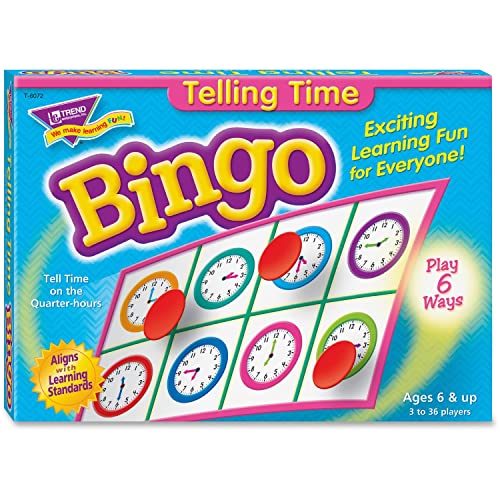
- Clock Bingo: Create bingo cards with different times displayed on analog clocks. Call out the time in words (like “half past two” or “quarter to five”) and have students cover the corresponding clock on their bingo card. The first student to get a row of clocks covered wins.
- What’s the Time, Mr. Wolf?: Have one student play the role of ‘Mr. Wolf’, who stands with their back to the other students. The other students ask, “What’s the time, Mr. Wolf?” and Mr. Wolf responds with a time. The students then take the corresponding number of steps forward. The game continues until Mr. Wolf decides to chase the students, promoting fun, exercise, and learning. Adjust the game and have Mr. Wolf hold up a picture of an analog clock. Students must take big steps for the hour hand and tiny steps for the minute hand.
- Time Matching Game: Make pairs of cards, one with an analog clock showing a certain time and the other with that time written out in words or with a digital clock image. Mix the cards and spread them on the table, face-down. Students then turn over two cards simultaneously, trying to find matching pairs.
- Time-Telling Relay Race: Divide the class into teams and give each team an analog clock that can be manipulated. Call out a specific time and have the first student from each team set the clock to that time. The first team to do it correctly gets a point. The team with the most points after a set number of rounds wins.
- Beat the Clock: Set a timer and display an analog clock on the board. Students must write down the time displayed on the clock before the timer runs out. To increase the challenge, have the clock show times to the minute or reduce the timer.
Commercial Clock Games and Telling Time Activities
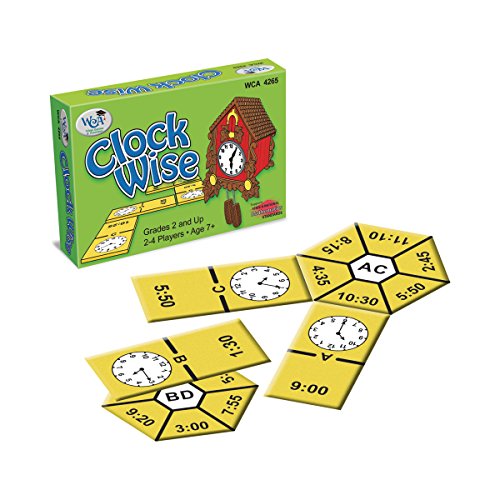
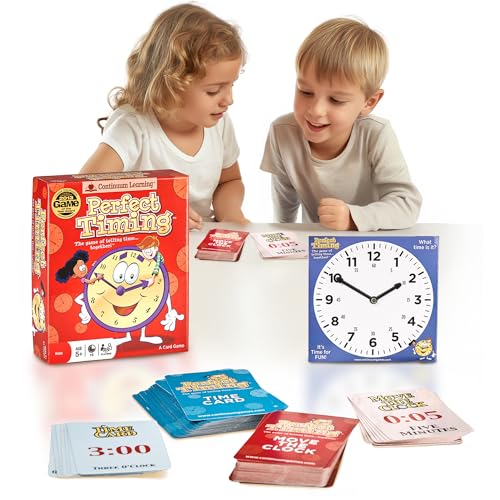
Students can play the following telling time games and activities to reinforce the concepts they have learned about telling time.



5. Use Telling Time Number Puzzles
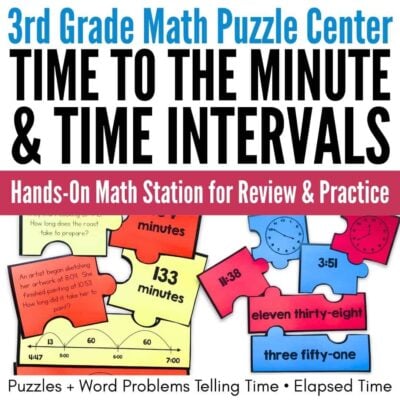
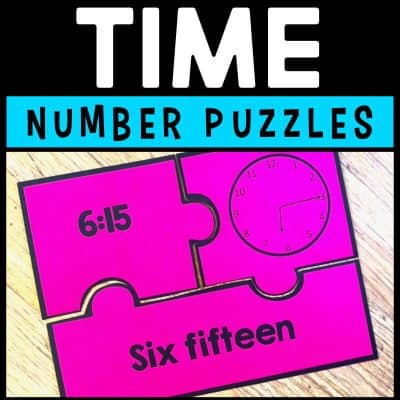
We have two sets of Number Puzzles for telling time. One set is designed for second-grade students and asks students to match a digital time, an analog clock, and the word form.
The second set is for third-grade students and focuses on time to one-minute intervals and interval time.
These Number Puzzles are great for math centers, too!
6. Use Online Interactive Math Games for Teaching Time
Many online resources and apps offer interactive games, quizzes, and lessons specifically designed to help students practice and master their time-telling skills. These tools can be used in the classroom and at home to supplement instruction, providing additional practice and reinforcement.
Here are a few suggestions for online math games:
- Time Travel Game: This game on ABCya allows students to practice digital and analog time. Students can manipulate an analog clock and check their answers.
- Toy Theater has an interactive analog clock that can be displayed on a screen for teachers and students to manipulate.
- Room Recess has a multiple-choice digital activity where students are presented with an analog clock and must select the digital time that matches.
- MathsFrame is another site where students match an analog clock to a digital time. It also has a game where students tell time in words.
- Clockworks is an interactive math activity for kids of all grades to practice telling time. Students set as many clocks as possible in two minutes in this customizable game.
- SplashLearn’s Time Games: These interactive games offer a variety of challenges that students can solve to learn more about telling time.
Online resources such as videos and tutorials can enhance learning by providing visual demonstrations and explanations, particularly for students struggling with analog clocks.
7. Use Songs to Help Students Learn to Tell Time
Music is a powerful tool for memory and learning, and it can be helpful when teaching concepts such as telling time. Incorporating songs into your lesson plans makes learning fun and engaging but also assists students in remembering and understanding the intricacies of time-telling.
Here are a few catchy and educational songs that can aid second graders in mastering the art of reading analog clocks.
The Minute and Hour Hand Song
(Verse 1)
🎵Minute hand, minute hand, long and slim,
You’re the one who takes a longer swim.
Around the clock, you swiftly glide,
Sixty minutes in your stride.🎵
(Chorus)
🎵Minute hand, hour hand, on the clock face.
Each has its own unique pace.
Minute is long, hour is short,
Round and round is their sport.🎵
(Verse 2)
🎵Hour hand, hour hand, stout and slow,
Twelve hours for you to follow the flow.
From 1 to 12, you steadily creep,
While the students are asleep.🎵
(Chorus)
🎵Minute hand, hour hand, on the clock face.
Each has its own unique grace.
Minute is fast, hour is slow,
That’s the way the clock hands go.🎵
(Ending)
🎵So remember, kids, when you look at the time,
The minute hand is always in its prime.
The hour hand may be a bit slow,
But it tells the hour, as we all know.🎵
Song About the Minute Hand and Counting by Fives
(Verse 1)
🎵Five, ten, fifteen, twenty, on the clock we go,
Learning how to tell the time, slow and steady, slow.
Counting in fives, around the clock we spin,
Minute hand moving, a knowledge race we’re in.🎵
(Chorus)
🎵Five minutes past, ten minutes to,
Analog clock, we are watching you.
Quarters, halves, and full hours too,
We’re learning all the things you do.🎵
(Verse 2)
🎵Twenty-five, thirty, thirty-five, forty, now we’re halfway round,
With each small step, new knowledge is found.
Counting by fives, it’s a trick that’s neat,
Hour hand, minute hand, time’s steady beat.🎵
(Chorus)
🎵Forty-five past, fifteen minutes to,
Analog clock, we’re following you.
Quarters, halves, and full hours too,
We’re mastering the things you do.🎵
(Bridge)
🎵From sunrise to sunset, from dusk till dawn,
With each tick-tock, a new minute is born.
By fives we’re counting, and we’re learning fast,
Understanding time, a skill that will last.🎵
(Ending)
🎵So here we are, at fifty-five, sixty – a whole hour we’ve done,
With each tick-tock, a knowledge race we’ve won.
Counting by fives, around the clock we go,
Telling time is easy, now we know.🎵
Strategies for Reinforcing Analog Clock Learning at Home – Suggestions for Parents
Reinforcing analog clock learning at home is beneficial for students as it solidifies their understanding of telling time.
Parents can incorporate time-telling into daily routines by asking their children to read the clock before bedtime or when it’s time to leave for school. They can also encourage their child to set their alarm clock or use a timer when completing tasks or chores.
Here are a few more activities that parents can do at home with their children:
- Cooking Together: Cooking is a fun way to teach time. Ask your child to read the time when you start and how much time has passed when you finish. This way, you can discuss hours and minutes and how they’re represented on an analog clock, and it’s a great way to touch on elapsed time!
- Create a Daily Schedule: Encourage your child to make a daily schedule and use an analog clock to track activities. This will help them to understand time durations and transitions.
- Clock Scavenger Hunt: Hide several analog clocks around the house set to different times (or use pictures of analog clocks), and have your child find them and report the time on each clock.
- Create a Cardboard Sundial: A great outdoor activity could be to create a sundial using cardboard and a stick. This provides a great way to explain the relationship between time and the sun’s position.
- Analog Clock Puzzle: Cut out an image of an analog clock into puzzle pieces. Have your child assemble it and discuss the different parts of the clock as they put it together.
- Craft a Paper Plate Clock: Use a paper plate, some coloring materials, and a pair of scissors to make a simple, functional clock. This hands-on activity makes learning to tell time fun and creative.
- Play ‘What’s the Time, Mr. Wolf?’: This classic game can be played using an analog clock, where the child has to move the hands of the clock to match the time “Mr. Wolf” states.
- Analog Alarm Clock: Use an analog alarm clock to wake up or for reminders, helping children get used to reading the clock hands.
- Estimate and Check: Ask your child to estimate how long an activity will take (e.g. cleaning their room), then use an analog clock to check their estimation. This helps develop a sense of how long time intervals are.
- Time-Themed Story Time: Read time-themed children’s books together. Discuss the time elements in the story and have your child show the times on their own clock.
Story Books about Time for Teachers and Parents
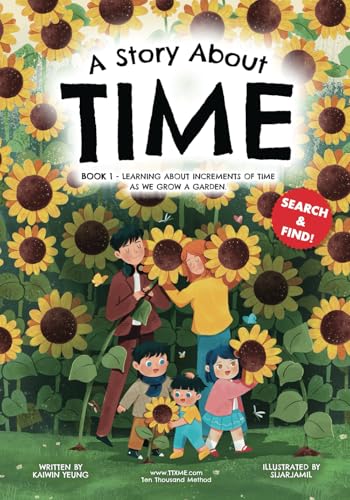
The following picture books about time can be used to connect literature and math. As you read them with students, point out how time is used in the book.


Teaching second graders to read analog clocks is a key part of their 2nd grade math curriculum, helping them master essential time-telling skills. With the right blend of telling time activities, hands-on practice, and engaging games, students can confidently tell time to the nearest five minutes, using both a.m. and p.m. formats.
Jessica BOschen
Jessica is a teacher, homeschool parent, and entrepreneur. She shares her passion for teaching and education on What I Have Learned. Jessica has 16 years of experience teaching elementary school and currently homeschools her two middle and high school boys. She enjoys scaffolding learning for students, focusing on helping our most challenging learners achieve success in all academic areas.