
Students can explore how their bodies interpret the world around them by exploring the nervous system and nerve cells. Specifically, by examining nerve cells related to mechanical senses, pain, temperature, and the sense of touch, we can offer our fourth graders a window into the complex yet fascinating biological processes that inform our daily experiences.

What are the Types of Nerve Cells Kids Should Learn About?
What are three types of nerve cells that students can learn about?
- Mechanical Neurons: These specialized nerve cells respond to mechanical stimuli such as pressure or stretch. They play a crucial role in our sense of touch and proprioception, allowing us to navigate our environment, feel the texture of objects, and understand the position of our body parts in space. Through activities that explore mechanosensation, students can learn how these neurons enable us to perform tasks ranging from writing with a pencil to playing a game of catch.
- Pain Neurons: Pain neurons are the guardians of our well-being, alerting us to potential harm. These neurons respond to stimuli that could cause damage, such as extreme pressure, chemicals, or temperature. They are essential for survival, teaching us to avoid dangers that could injure our bodies. By understanding how pain neurons work, students gain insight into the body’s protective mechanisms and the importance of responding to pain signals.
- Temperature Neurons: Our ability to detect temperature changes is vital for maintaining homeostasis and avoiding environmental hazards. Temperature Neurons are specialized nerve cells that sense temperature variations, enabling us to experience warmth and cold. This sensory information helps us decide what to wear, what to eat or drink, and how to seek comfort when environmental conditions change.
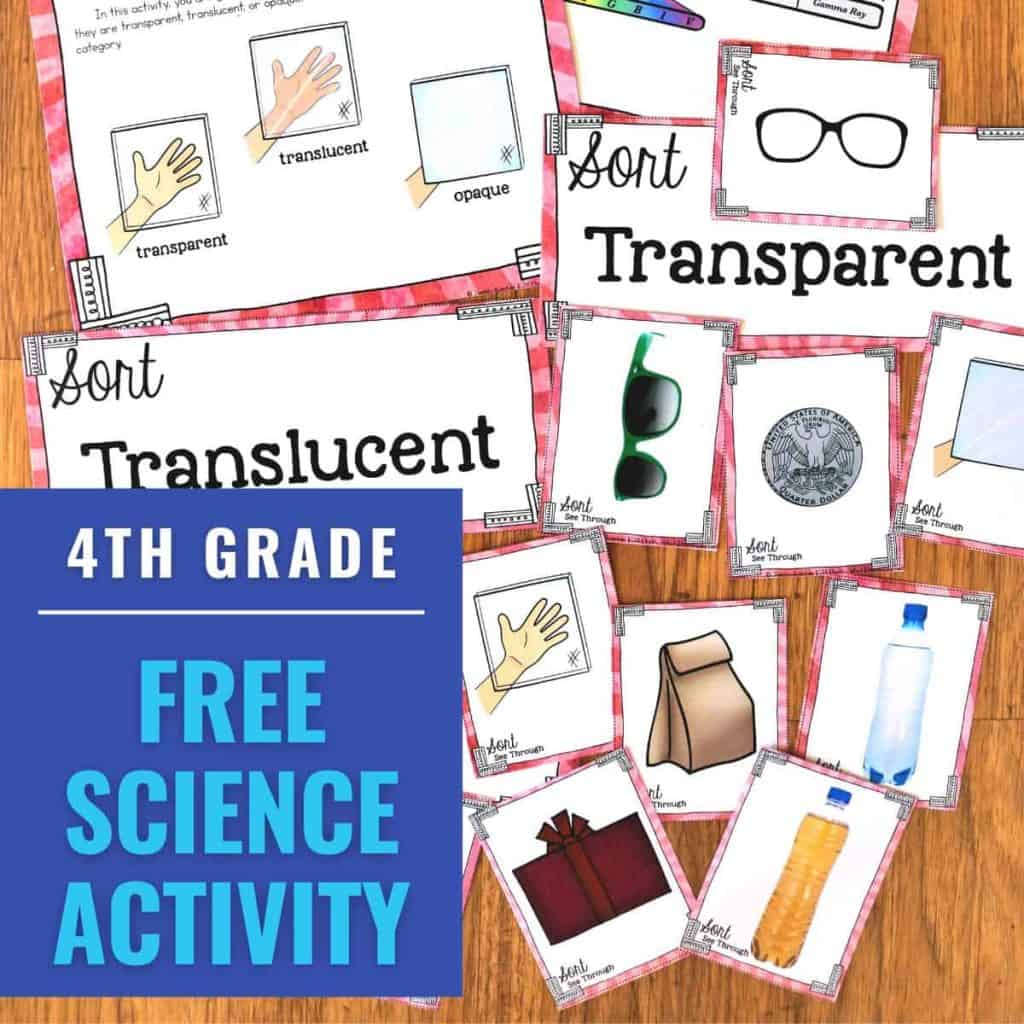
Teach students about types of touch with a SORT about Types of Nerve Cells aligned with the Next Generation Science Stations for Fourth Grade. In this station, the sort cards include images for students to look at and determine the different types of nerve cells each image represents.
The Value of a Sorting Activity
Imagine engaging your fourth graders in an activity that brings the functions of mechanical, pain, and temperature neurons into a tangible, interactive format. This activity is not just about memorization but exploration, discovery, and connection.
Here’s how it enriches the learning experience:
- Interactive Exploration: Students will have hands-on experience with models or cards representing different nerve cell types. They’ll physically move these around to match them with their specific functions, such as detecting pressure, pain, or temperature changes.
- Building Connections: By linking each type of neuron to its role in sensing the environment, students can relate abstract biological concepts to their everyday experiences, like feeling the warmth of the sun or the pain of a scraped knee.
- Encouraging Curiosity: This activity opens the door to questions about the human body and how we interact with the world, fostering a natural curiosity and a deeper interest in science.
What is Included in the Types of Nerve Cells Sort Station
Our neuron sorting activity, focused on the senses of touch, pain, and temperature, is designed to make complex scientific concepts accessible and engaging for fourth graders.
Included in the Sort about the Types of Nerve Cells are:
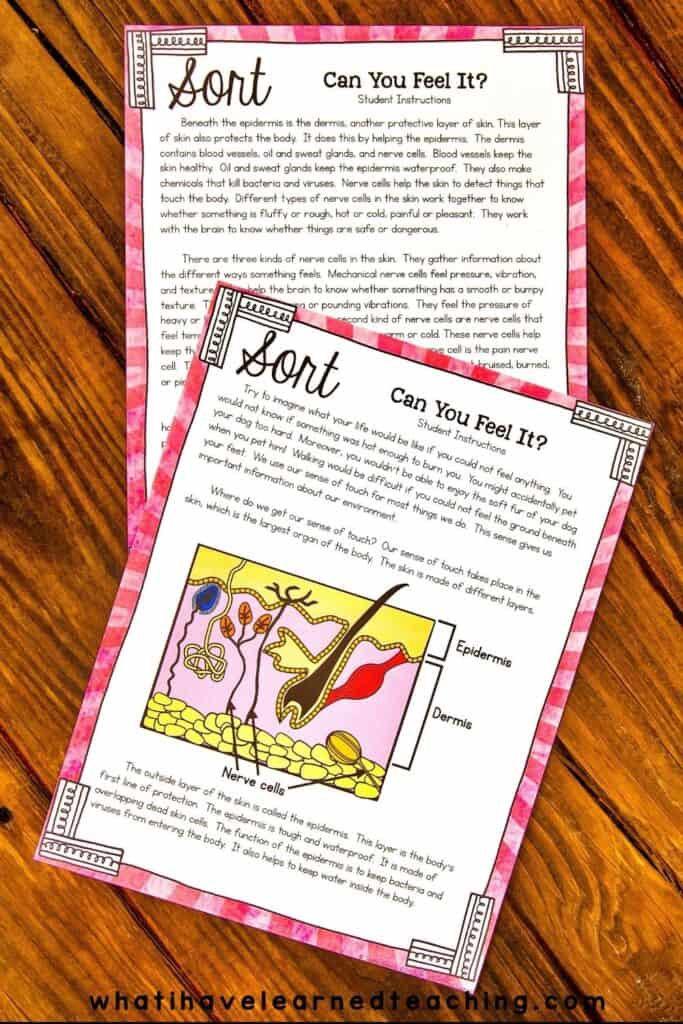
- Reading Passage that informs students about the nerve cells.
- Larger table-group color sorting cards
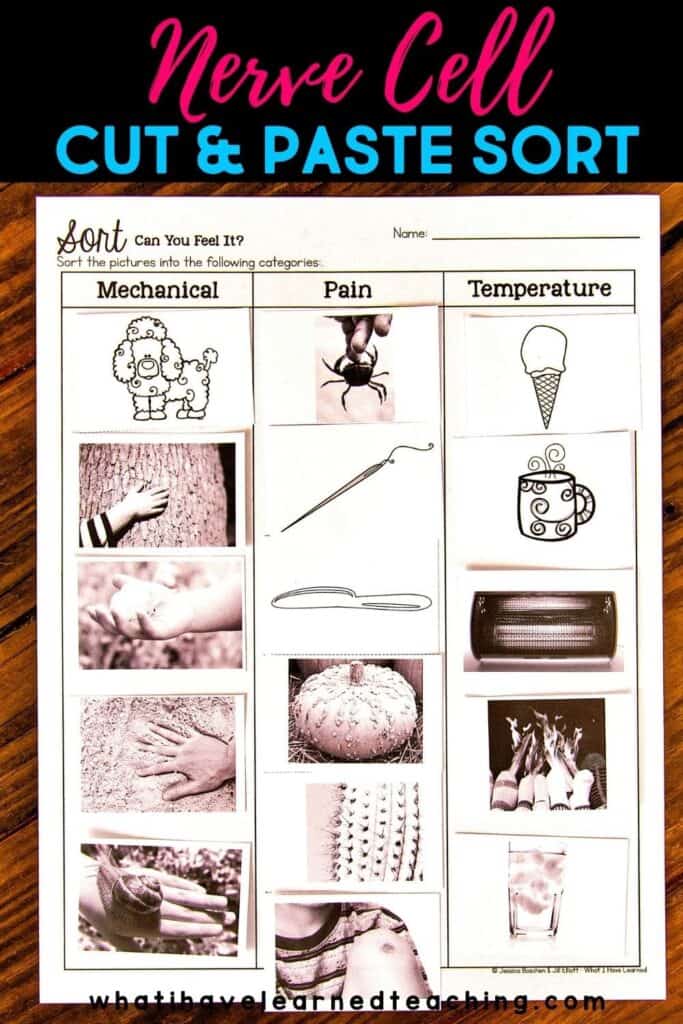
- Smaller cut-and-paste sort for individual students
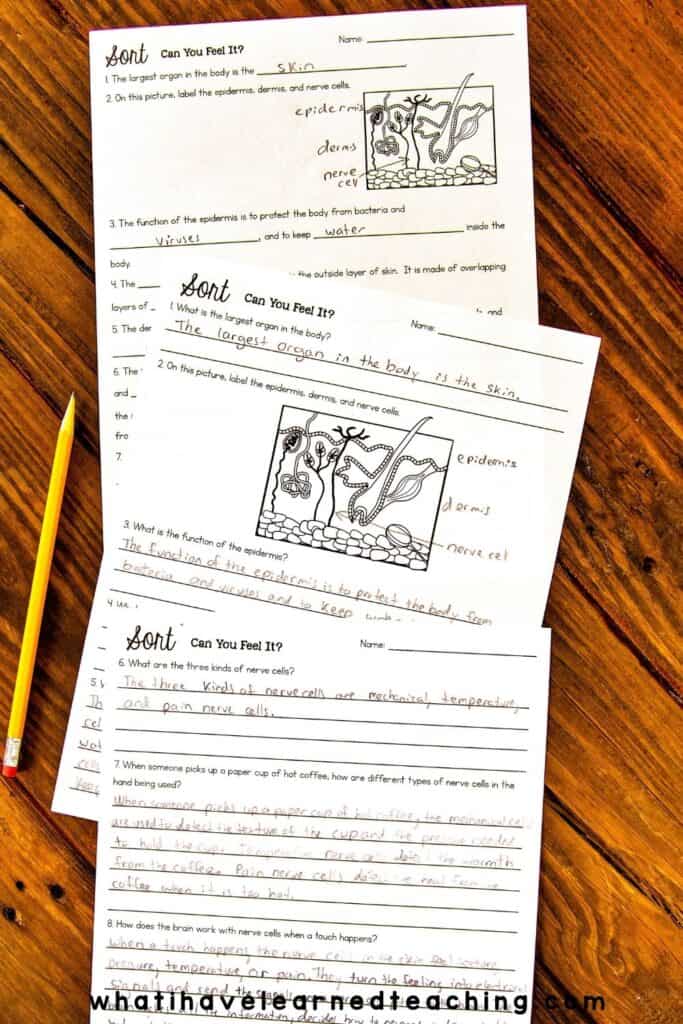
- Differentiated questions in short-answer, fill-in-the-blank, and multiple-choice formats. Worksheets and task cards are included for some options.
- Answer key
Types of Nerve Cells Sort for Table Groups
There are two ways to do this sort. One way is in table groups where students collaboratively look at the images on the cards and determine which type of nerve cell is represented: mechanical, pain, or temperature are the three categories for students to choose from.
Students will learn about different types of nerve cells: temperature, mechanical, and pain. Students will decide whether each image represents pain (spider bite, knife, cut), temperature (hot chocolate, ice cream), or mechanical nerve cells (a snail crawling on the skin, feeling sand by the ocean).
These are some examples of the types of touch found in the sort. This sort has colorful images that students analyze before deciding the type of nerve cell each card represents.
Cut and Paste Sort Option
The second way to do the sort is a cut-and-paste option. Students can do both options: the sort color option as a whole group and the cut and paste option individually. Or you can choose to have students do only one option.
The cut-and-paste option is all in black and white and in a worksheet format. After reading the informational passage, students look at the images and sort them into the correct type of nerve cell: pain, mechanical, or temperature.
Differentiated Responses
Like all of our science stations, differentiated responses are available for students to demonstrate their understanding. Below is an example of the Short Answer worksheet. Fill-in-the-blanks and multiple-choice task cards are also available.
How to Purchase the Types of Nerve Cells Science Station
This Types of Nerve Cells Sort Science Station can be purchased on Teachers Pay Teachers. It is sold individually and as part of a whole Sorts for Fourth Grade Science Stations. Also available is a Fourth Grade NGSS Science Station BUNDLE.
Jessica BOschen
Jessica is a teacher, homeschool parent, and entrepreneur. She shares her passion for teaching and education on What I Have Learned. Jessica has 16 years of experience teaching elementary school and currently homeschools her two middle and high school boys. She enjoys scaffolding learning for students, focusing on helping our most challenging learners achieve success in all academic areas.