Skip to content
Free printables and teaching tips Get them here
What I Have Learned Logo
  • AboutExpand
    • Frequently Asked Questions
    • Contact
    • Legal Policies
    • How to Teach Word Problems
  • Teaching StrategiesExpand
    • Classroom Management
    • English Learners
    • Differentiation
    • Goal Setting
    • Explore by GradeExpand
      • Kindergarten
      • First Grade
      • Second Grade
      • Third Grade
      • Fourth Grade
      • Fifth Grade
  • Teaching IdeasExpand
    • Math
    • Reading
    • Writing
    • Science
    • Seasonal
Shop on TPT
What I Have Learned Logo
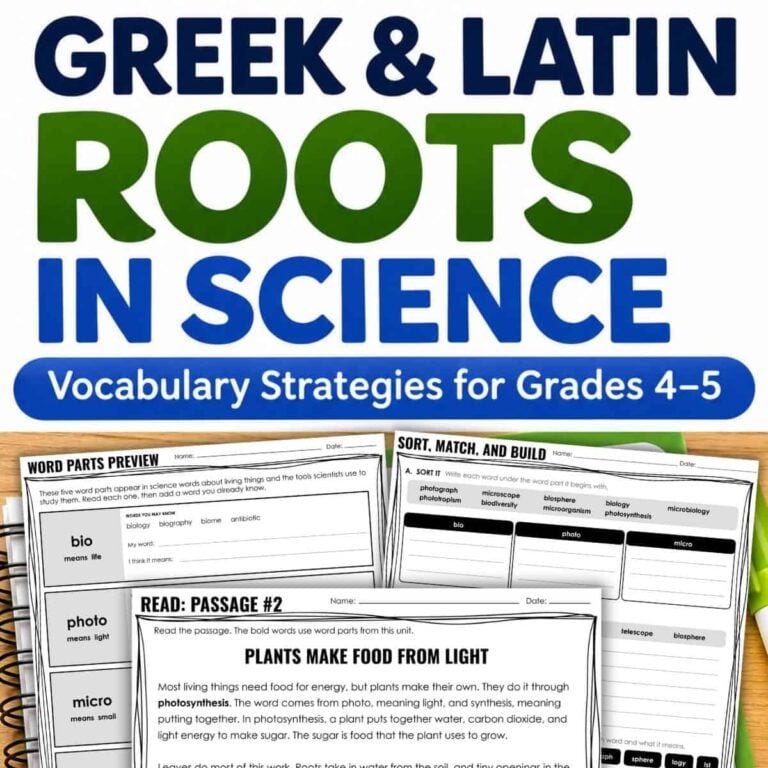
  • A stack of three Greek and Latin Roots in Science educational worksheets featuring word part previews, vocabulary sorting, and reading passages to help students master etymology.
    Reading | Science

    Greek and Latin Roots in Science: How Word Parts Build Science Vocabulary

    A fourth grader hits the word photosynthesis in a science text and stops cold. It looks like a wall of letters. But break it into photo (light) and synthesis (putting…

    Read More Greek and Latin Roots in Science: How Word Parts Build Science VocabularyContinue

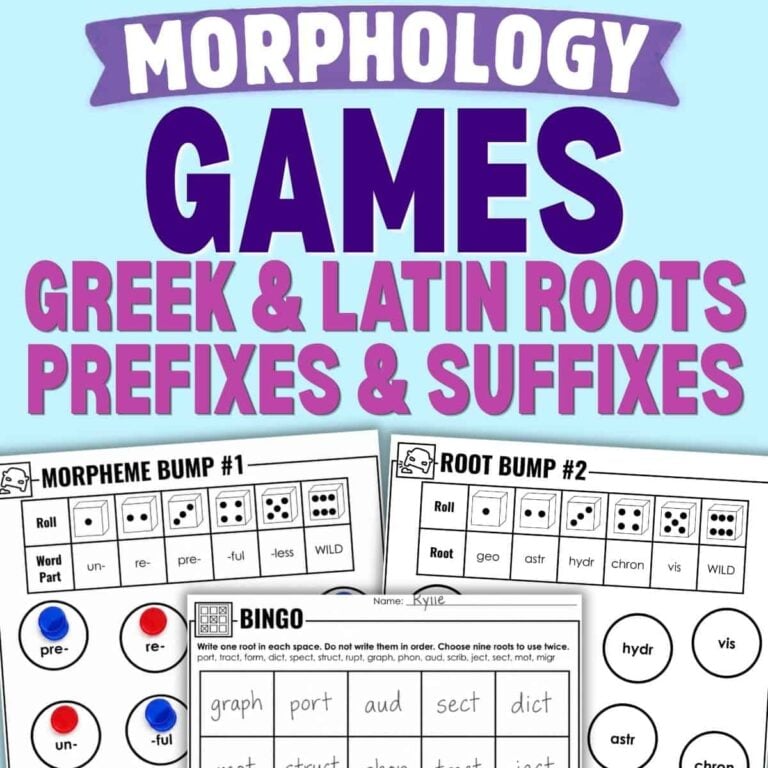
  • Morphology Games educational sheets for learning Greek and Latin roots, prefixes, and suffixes, featuring Morpheme Bump and Bingo boards for practicing root words.
    Reading

    Greek and Latin Root Words Games That Make Roots Stick

    Roots are one of the best vocabulary tools you can teach, but a worksheet of roots and meanings gets old fast. The fix is play. Greek and Latin root word…
    Read More Greek and Latin Root Words Games That Make Roots StickContinue

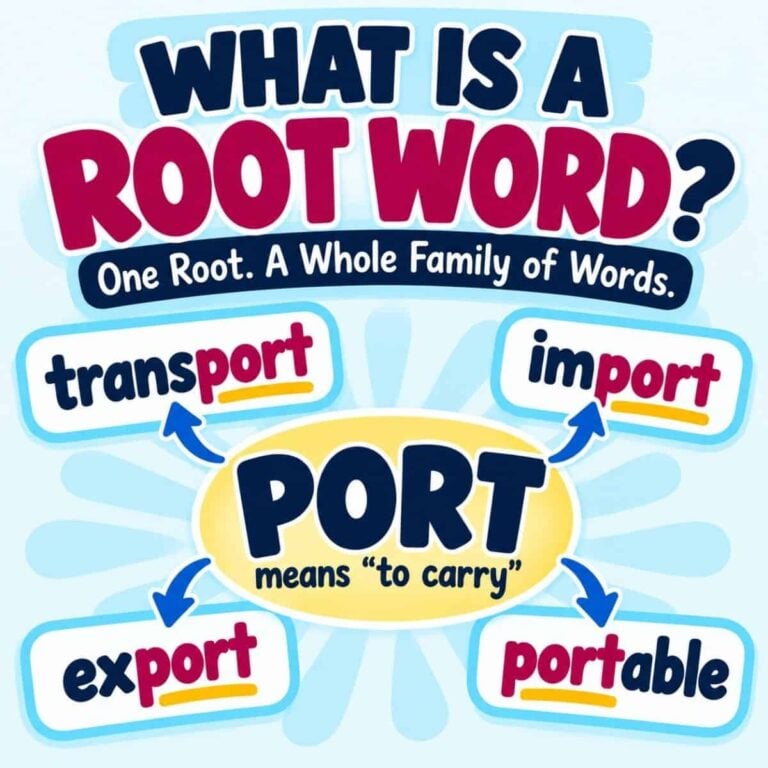
  • Colorful graphic explaining what is a root word, featuring port (meaning to carry) with examples: transport, import, export, portable—each highlights port in red within the word.
    Reading

    What Is a Root Word? Definition and Examples for Kids

    A student hits the word transportation and freezes, sure they have never seen it before. But hidden in the middle is a root they may already know: port, meaning to…
    Read More What Is a Root Word? Definition and Examples for KidsContinue

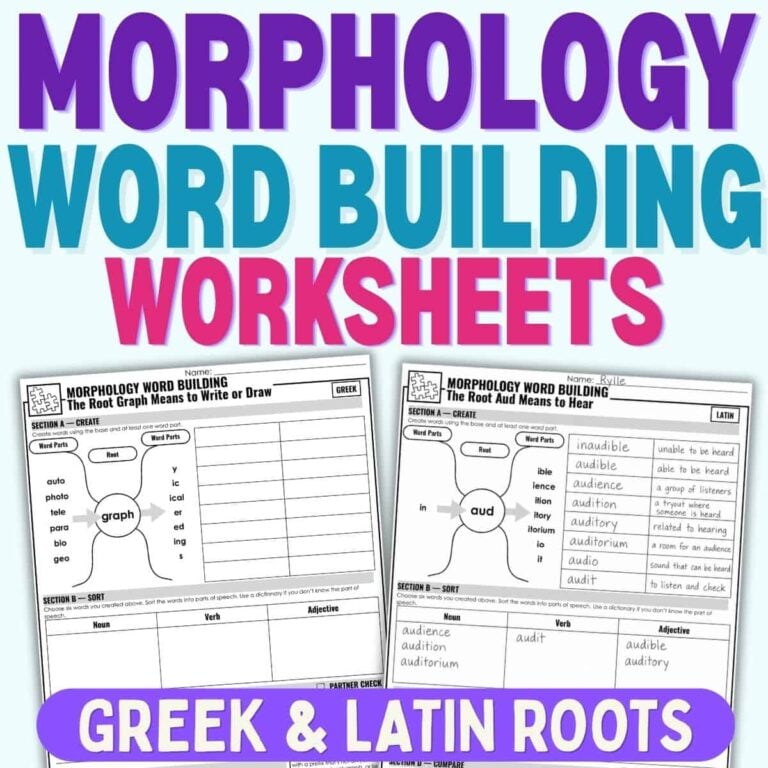
  • Introducing Morphology Word Building: This engaging set includes two worksheets centered on Greek and Latin roots. The vibrant, bold header—Morphology Word Building Worksheets Greek & Latin Roots—makes these morphology worksheets both educational and visually appealing.
    Reading | Writing

    Morphology Worksheets That Build Words

    Open most morphology worksheets, and you find the same task: match the root to its meaning, then draw a line. Students can pass that page without ever building a word…

    Read More Morphology Worksheets That Build WordsContinue

  • Colorful text reads: Teaching Prefixes and Suffixes – Meanings + Examples, making it a perfect visual for teaching language skills. Below, three cards display UN- in pink, HELP in blue, and -FUL in green, with part of a yellow notebook visible in the upper right corner.
    Reading

    Prefixes and Suffixes List: Meanings and Examples (K-5)

    A student who gets stuck on unhelpful is not really stuck. Show them that it is un plus help plus ful, and the meaning falls right out: not full of…
    Read More Prefixes and Suffixes List: Meanings and Examples (K-5)Continue

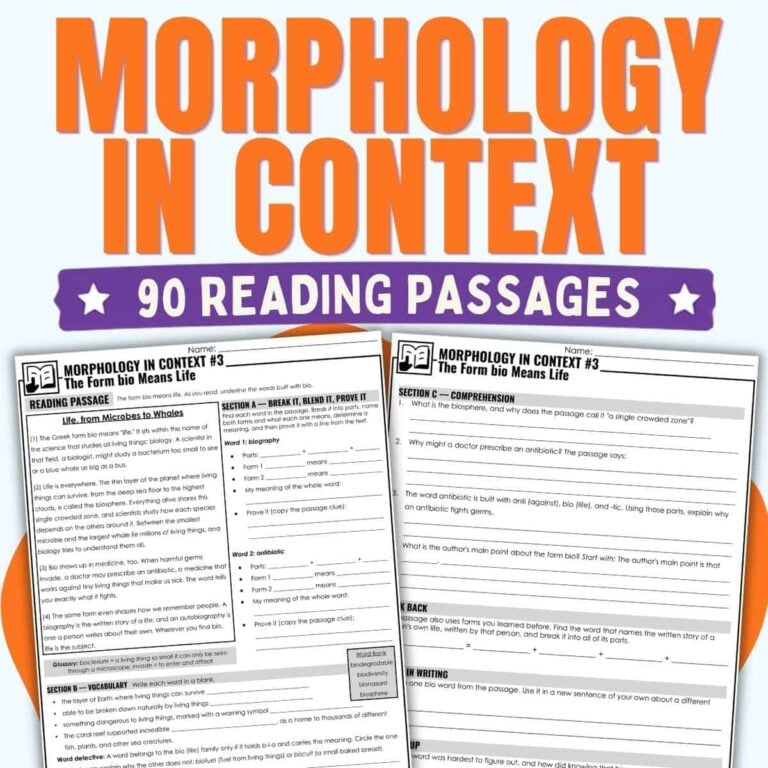
  • Cover features the title Morphology in Context POST. Below, two sample worksheet pages display a reading passage focusing on word parts such as “bio,” along with related comprehension and writing questions.
    Reading

    Morphology Reading Passages: Word Parts in Real Reading

    Your students can define a prefix on a worksheet, but the real test comes when they hit a long, unfamiliar word in the middle of a science article and have…
    Read More Morphology Reading Passages: Word Parts in Real ReadingContinue

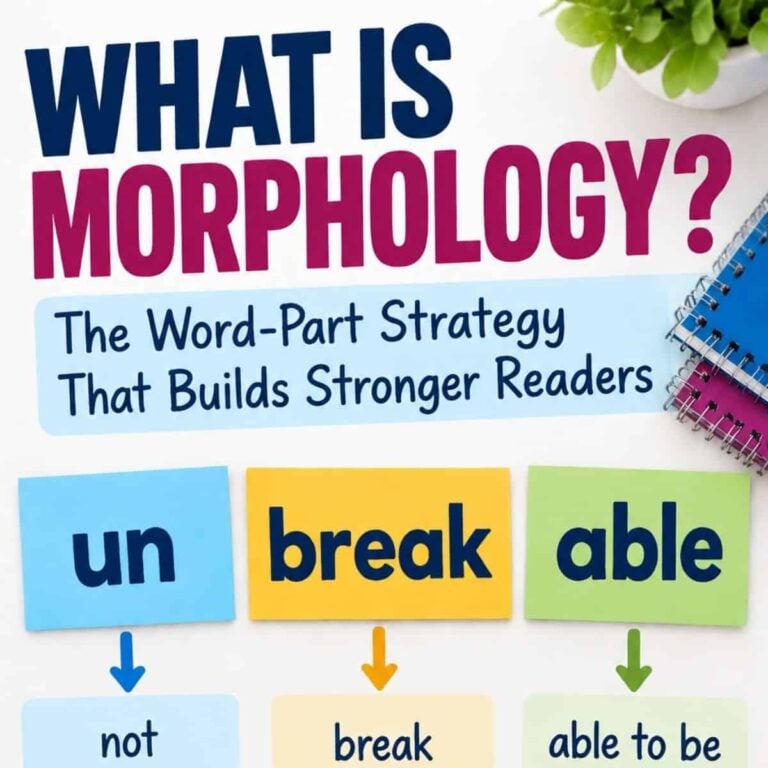
  • Text graphic titled What is Morphology (2): The Word-Part Strategy That Builds Stronger Readers, featuring examples like un (not), break (break), and able (able to be). Perfect for teaching word parts, this teacher’s guide illustration shows blue notebooks and a plant in the corner.
    Reading

    What Is Morphology? A Teacher’s Guide to Teaching Word Parts

    A student reads the word unbreakable and stops cold. But break it into un, break, and able, and the meaning falls right out: not able to be broken. That move,…
    Read More What Is Morphology? A Teacher’s Guide to Teaching Word PartsContinue

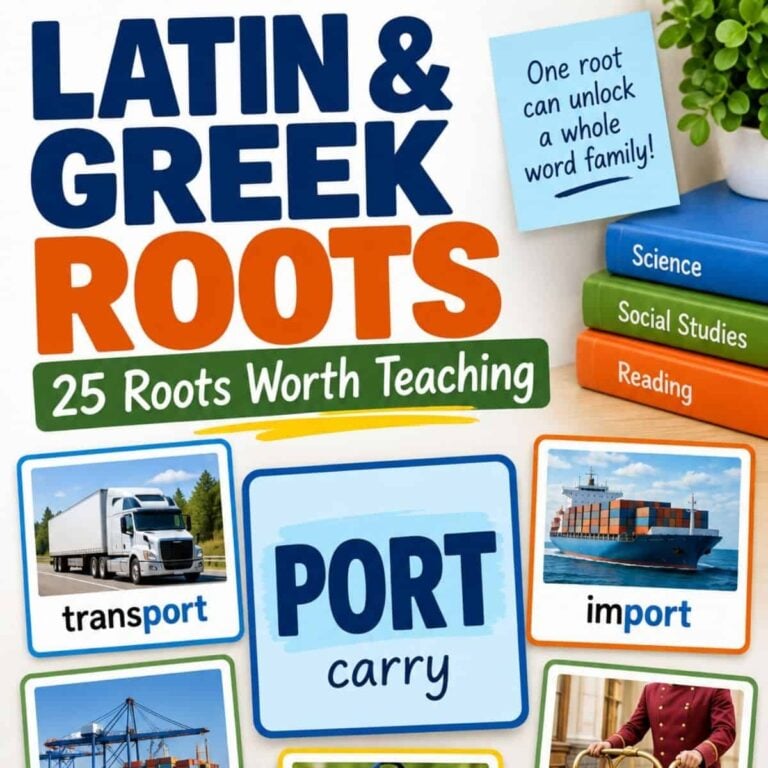
  • The “Greek and Latin Roots” educational poster highlights the root word PORT, meaning “carry,” with illustrations for words like transport and import, as well as images of people carrying bags. Designed to teach Latin and Greek root words, it also features books labeled Science, Social Studies, and Reading stacked on the side.
    Reading

    Common Latin and Greek Roots: A List and How to Teach Them

    Teach a student the root port, and you have not taught them one word. You have handed them a key to transport, import, export, portable, and porter. That is the…
    Read More Common Latin and Greek Roots: A List and How to Teach ThemContinue

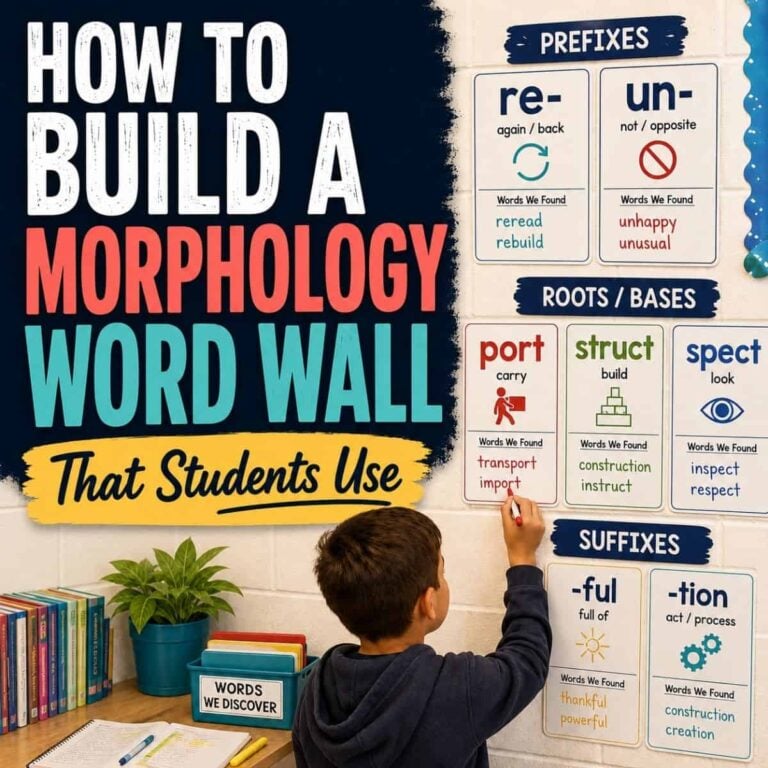
  • A student points to a ROOTS & BASES section on the Morphology Word Wall, which is colorful and also features clearly labeled PREFIXES and SUFFIXES sections displaying sample words and their meanings.
    Reading

    How to Build a Morphology Word Wall That Students Use

    When a 4th grader hits the word transportation in a science text and freezes, it is usually not because they have never seen it. It is because no one has…

    Read More How to Build a Morphology Word Wall That Students UseContinue

  • Morphology Morning Work Practice features two worksheet pages that focus on prefixes, suffixes, and base words. The image showcases the product’s year-long literacy routine, using bold and colorful text to promote daily morphology practice.
    Writing

    Morphology Morning Work: Daily Word-Part Practice

    When a student hits a word like “unbreakable” and freezes, the fix usually isn’t sounding it out one more time. It’s seeing that the word is built from parts: un,…

    Read More Morphology Morning Work: Daily Word-Part PracticeContinue

Become a part of the Email Community!

Sign up to get a free resource of your choice!

Click to Get a Free Resource
WIHL Footer Logo homepage.
  • Facebook
  • Pinterest
  • Instagram
  • Amazon
  • YouTube

Information

  • About
  • FAQ
  • Shop
  • Contact

Topics

  • Math
  • Science
  • Reading
  • Writing

Teaching Ideas

  • Seasonal
  • Differentiation
  • Management
  • English Learners
  • Privacy Policy
  • Refund Policy

© 2026 What I Have Learned

  • What I Have Learned
  • Learn
    • Math
    • Reading
      • Early Reading
    • Writing
    • Science
    • Instructional Strategies
      • Seasonal
      • Classroom Management
      • Goal Setting
  • Shop
    • Bundles
    • Animal Articles
    • Goal Setting
    • Craftivities
    • Math
    • Phonics
    • Social Studies
    • Science
  • About
    • Courses & Collections
    • FAQ
Search