
Examples of Physical and Chemical Changes for the Classroom
When students are learning about matter, nothing lands better than watching a change happen in front of them. But it helps to have a bank of clear examples of physical and chemical changes that actually work in a classroom, with no lab and no special equipment.
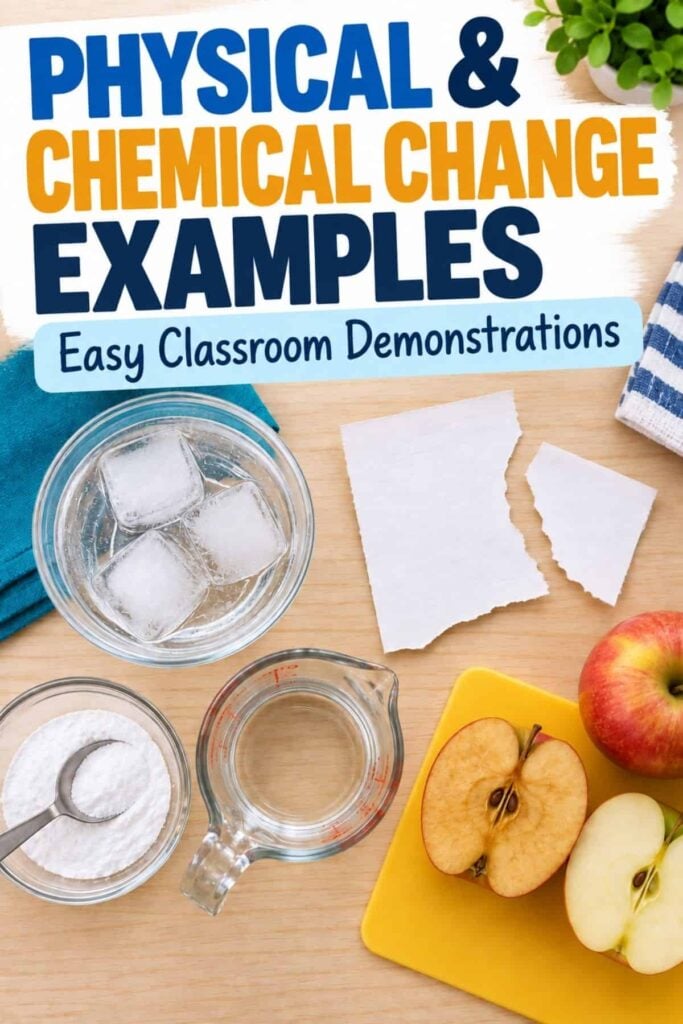
This post gives you two lists of changes you can do in grades 2 through 5, one for physical changes and one for chemical changes, plus a simple way to help students tell which is which. Every example uses materials you can find at a grocery store or already have in your room.
Physical vs Chemical Changes: The Quick Version
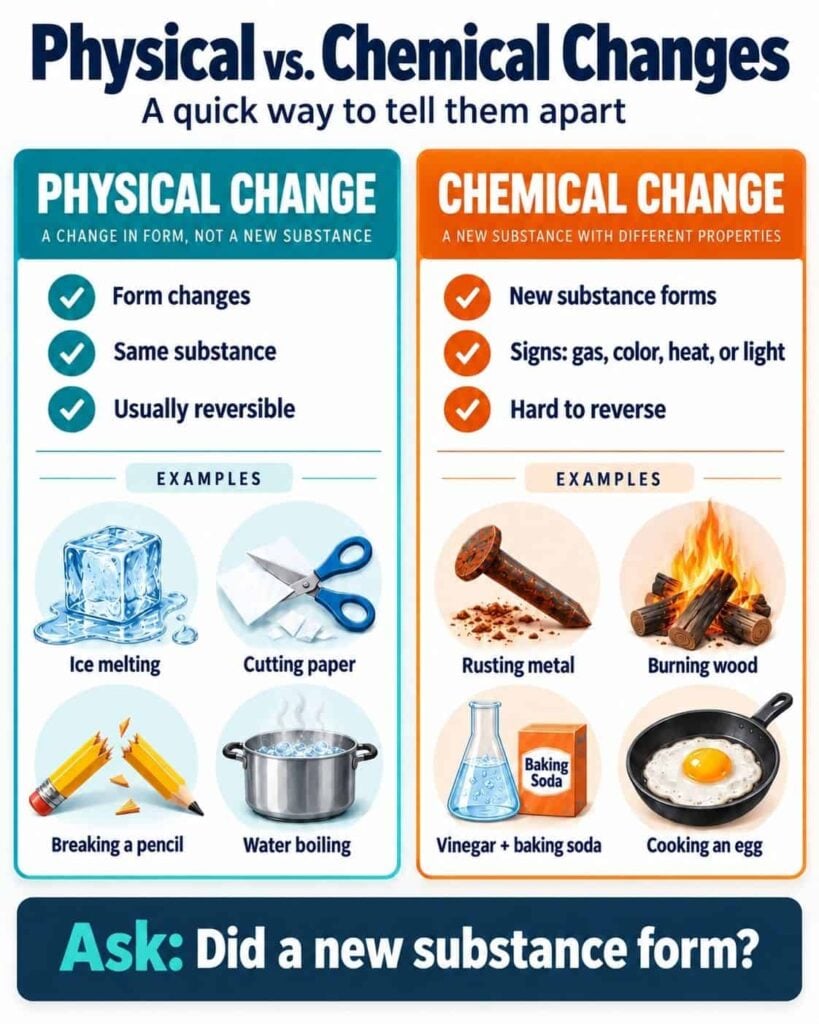
Before the examples, here is the distinction students need. In a physical change, the material changes form but stays the same substance. Ice melting into water is still water. You can usually reverse it. In a chemical change, a new substance forms, and it is usually hard or impossible to reverse. Burnt toast cannot go back to bread.
Students sometimes call these “physical reactions,” but the more accurate term is a physical change, since a reaction makes something new and a physical change does not. That one idea- does a new substance form or not- is the heart of the whole unit. For the full teaching background, see my guide on physical and chemical changes. The examples below make the idea concrete.
Examples of Physical Changes You Can Do in the Classroom
In each of these, the material changes shape, size, or state, but it is still the same stuff. That makes them easy to reverse or at least easy to see as “the same substance, different form.”
- Melting ice. Set an ice cube in a cup and watch it become water. Solid to liquid, same substance.
- Freezing water. Put water in the freezer, and it becomes ice. The reverse of melting, and proof that the change goes both ways.
- Dissolving sugar or salt in water. The sugar seems to disappear, but it is still there, just spread through the water. Taste or evaporation brings it back.
- Tearing or folding paper. Ripped paper is still paper. The shape changed, not the substance.
- Crushing a can or crumpling foil. A new shape, the same metal.
- Cutting or chopping. Cutting an apple into pieces changes its size, not what it is.
- Stretching a rubber band or bending a paperclip. The object bends and stretches but stays the same material.
- Mixing sand and water. Stir them together, and you can still separate them out. No new substance forms.
A quick way to check understanding: ask students whether the change could be undone. Most physical changes can be reversed, which is a great lead-in to my reversible and irreversible changes sort.
Examples of Chemical Changes You Can Do in the Classroom
In each of these, a new substance forms. Watch for the signs: bubbles or gas, a color change, heat or cold, a new smell, or a change that cannot be undone.
- Baking soda and vinegar. The classic. Mix them, and they fizz, producing a gas that was not there before. The bubbles are the clearest sign of a chemical change students will see all year.
- A rusting nail. Leave a steel nail in a little water for a few days. The reddish rust is a new substance, and it will not scrub back into shiny metal.
- A browning apple or banana. Cut fruit turns brown as it reacts with the air. Same idea as rust, fast enough to watch across a lesson.
- Milk and vinegar. Stir vinegar into warm milk, and it separates into rubbery curds, a new material you can scoop out.
- An effervescent tablet in water. Drop in an antacid tablet, and it fizzes and dissolves, giving off gas. A tidy, contained version of the baking soda demo.
- Baking, as a discussion. Batter becoming a muffin is a chemical change you cannot reverse. You may not bake in class, but it is a perfect example students already know.
- A burning candle, as a teacher demo. The wax and wick burn into new substances and give off light and heat. Keep this one as a teacher-led demonstration.
- A glow stick. Bending a glow stick starts a chemical reaction that gives off light with no heat. It is cheap, mess-free, and sealed, which makes it one of the cleanest chemical changes to show.
For a ready-made set of hands-on chemical change investigations, my chemical reactions science stations for 5th grade walk students through several of these with recording sheets.
Chemical Reactions Science Station BUNDLE
These Chemical Reactions Next Generation Science Stations include eight science stations where students deepen their understanding of chemical reactions, including how to tell whether a chemical reaction has taken place. The focus is on 5-PS1-4.
To push older students further, run one of these in a closed system and weigh it before and after. Seal a spoon of baking soda and a little vinegar in a zip bag, or stretch a balloon of baking soda over a bottle of vinegar, and the mass stays the same even as a gas forms. That is a hands-on way to show that matter is conserved during a chemical change, an idea my conservation of matter post digs into.
How to Tell a Physical Change From a Chemical Change
Give students a short checklist of the signs of a chemical change. If they see one or more of these, a new substance has probably formed:
- Bubbles or gas where there was no boiling.
- A color change that is not just mixing paint.
- Heat or cold given off by the change itself.
- A new smell.
- Light, as in burning.
- A change you cannot undo.
| Physical Change | Chemical Change | |
|---|---|---|
| What happens | Form, shape, size, or state changes | A new substance forms |
| The substance | Stays the same | Becomes something new |
| Can you undo it? | Usually yes | Usually no |
| Signs to look for | A change in shape, size, or state | Gas or bubbles, color change, heat or cold, a new smell, or light |
| Classroom examples | Melting ice, tearing paper, dissolving sugar, crushing a can | Baking soda and vinegar, rusting, browning fruit, a glow stick |
Physical changes, by contrast, usually just change the shape, size, or state of a material, and you can often reverse them. When students are unsure, the two best questions are “Did a new substance form?” and “Can we undo it?” Sorting a pile of examples into physical and chemical is one of the most effective ways to lock this in. You can read the matter standards behind this at the Next Generation Science Standards site.
Tricky Examples Students Get Wrong
Some changes fool students, and those are the best ones to talk through, because sorting out a hard case is where the real understanding shows. A few worth putting in front of your class:
- Mentos in soda. It erupts like the baking soda and vinegar reaction, so students assume it is chemical. It is actually a physical change: the candy’s rough surface just lets the dissolved gas escape quickly. No new substance forms.
- Dissolving. Sugar vanishing into water looks like something new was made, but it is physical. The sugar is still sugar, just spread out, and it comes back if the water evaporates.
- Melting versus burning. Melting a candle is physical, but burning it is chemical. Same object, two different kinds of change, which makes it a great compare-and-contrast.
These tricky cases make excellent claim, evidence, reasoning prompts. Show the change, then ask students to make a claim about whether it is physical or chemical and back it up with what they observed. My claim, evidence, reasoning post has a routine for exactly this kind of thinking.
Teaching Physical and Chemical Changes by Grade
The same examples work across the grades if you adjust what you expect students to notice.
- 2nd grade: Focus on observing and describing changes caused by heating and cooling, like ice melting and water freezing, and whether a change can be undone (NGSS 2-PS1). Keep the vocabulary simple: same or new.
- 3rd and 4th grade: Students sort clear examples into physical and chemical changes and start naming the signs of a chemical change. This is a strong sorting-and-discussion stage.
- 5th grade: Students investigate whether a new substance forms when materials are mixed, and connect it to the idea that matter is conserved even when it changes (NGSS 5-PS1). This is where hands-on chemical change stations fit best.
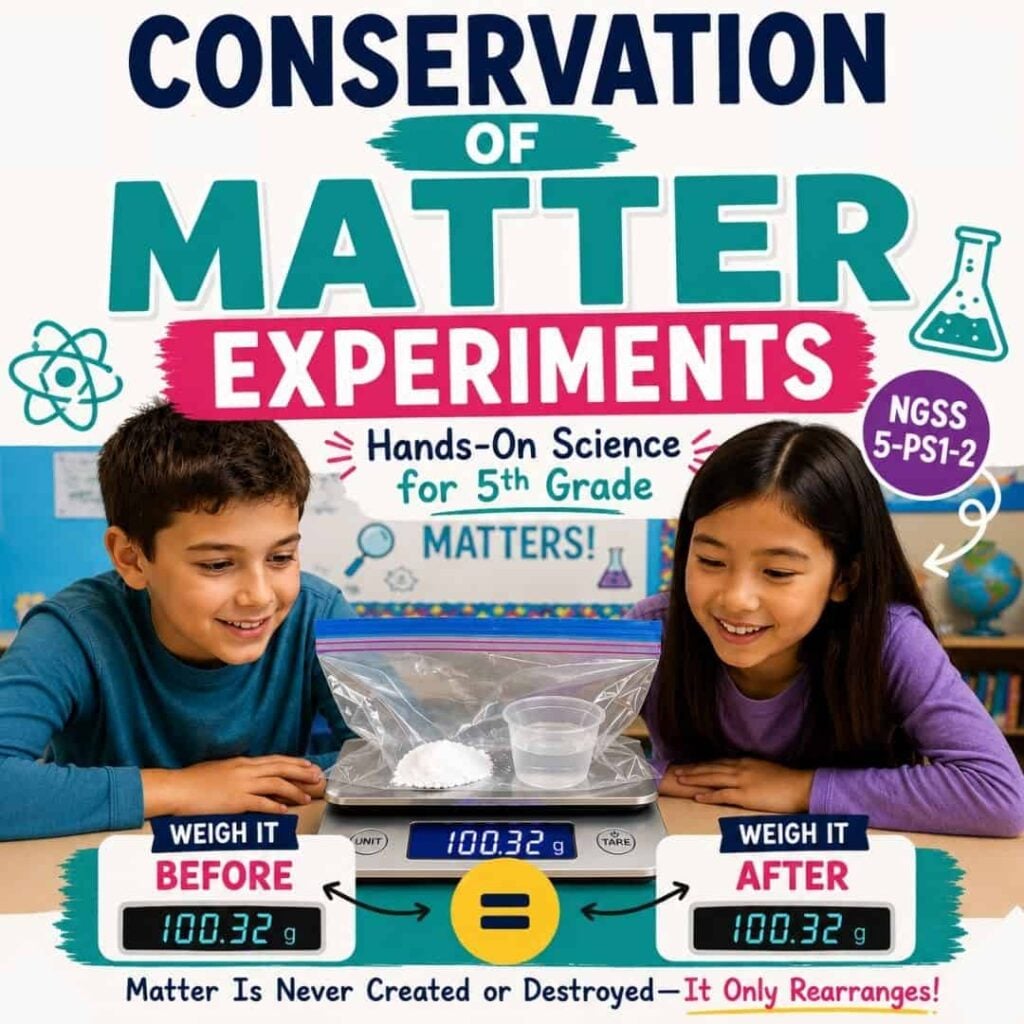
By 5th grade, students can explain that matter does not disappear during a change. My conservation of matter post builds on that idea.
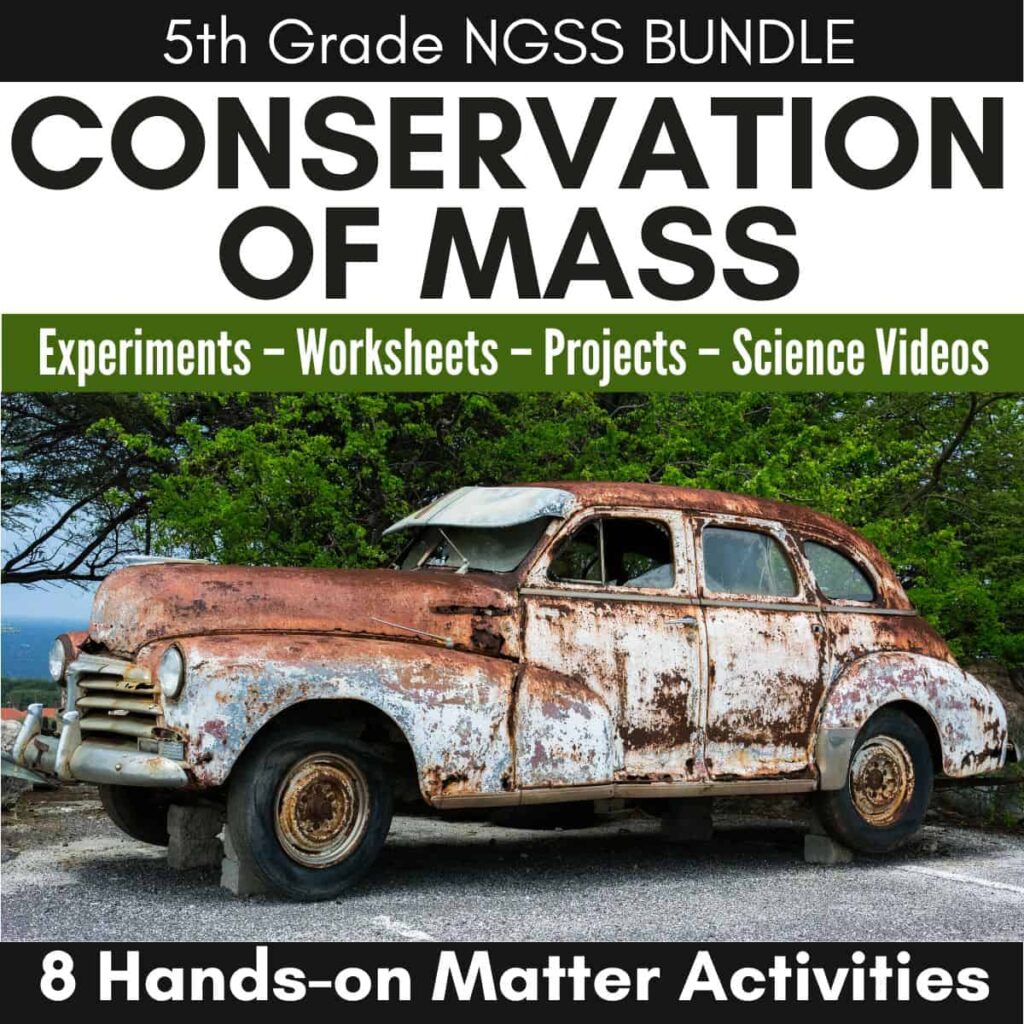
Conservation of Mass Science Station BUNDLE
These Conservation of Mass Next Generation Science Stations include eight different science stations where students deepen their understanding of conservation of mass, including the structure and properties of matter and chemical reactions. The focus is on 5-PS1-2.
Frequently Asked Questions
Bringing It All Together
The fastest way to make physical and chemical changes stick is to show students real examples and let them decide which is which. Start with a few physical changes they can reverse, move to chemical changes with clear signs like fizzing and rust, and keep coming back to the one question that matters: did a new substance form? Once students can answer that, they can classify almost any change they meet.
Want it ready to teach? My chemical reactions science stations give 5th graders hands-on chemical change investigations with recording sheets, and my reversible and irreversible changes sort is a quick way for 2nd and 3rd graders to practice classifying changes.
Jessica BOschen
Jessica is a teacher, homeschool parent, and entrepreneur. She shares her passion for teaching and education on What I Have Learned. Jessica has 16 years of experience teaching elementary school and currently homeschools her two middle and high school boys. She enjoys scaffolding learning for students, focusing on helping our most challenging learners achieve success in all academic areas.