Balanced and Unbalanced Forces 5E Unit for Force and Motion Third Grade
$9.90This Force and Motion for Balanced and Unbalanced Forces 5E Model Unit Plan is an inquiry-based unit using the 5E Model lesson plans.

Showing 1–15 of 32 resultsSorted by popularity
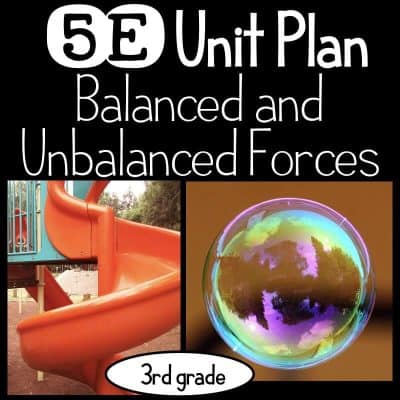
This Force and Motion for Balanced and Unbalanced Forces 5E Model Unit Plan is an inquiry-based unit using the 5E Model lesson plans.
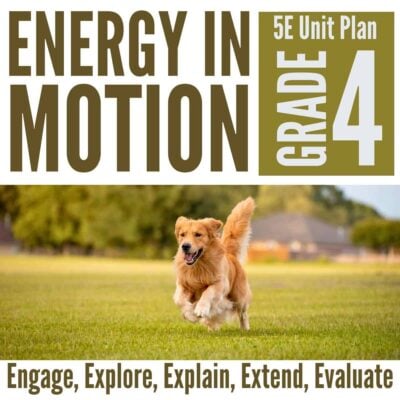
This Energy in Motion 5E Science Unit Plan is an inquiry-based unit where students learn about how energy affects motion. Students explore how energy and speed are related, observe the motion of different objects, analyze and interpret data to explore the relationship of energy and motion, and more. The unit includes three parts for each of the 5E’s (Engage, Explore, Explain, Extend, and Evaluate) and more.

This Force and Motion for Patterns in Motion 5E Model Unit Plan is an inquiry-based unit using the 5E Model lesson plans.
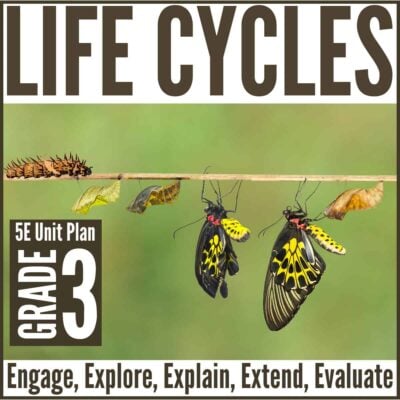
Teach plant and animal life cycles with this comprehensive 5E Life Cycles Unit Plan! Aligned to NGSS 3-LS1-1, this inquiry-based science resource includes engaging lessons, investigations, vocabulary activities, exit tickets, assessments, digital resources, and everything needed to guide students through the 5E instructional model.
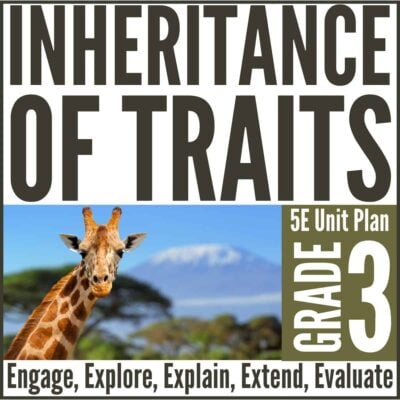
This Inheritance of Traits 5E Unit Plan is an inquiry-based unit that focuses on providing evidence that plants and animals have traits inherited from parents. Variation of traits is also explored within groups of similar organisms.

This Adaptations 5E Science Unit Plan is an inquiry-based unit where students study how in a particular habitat some organisms can survive well, some survive less well, and some cannot survive at all.
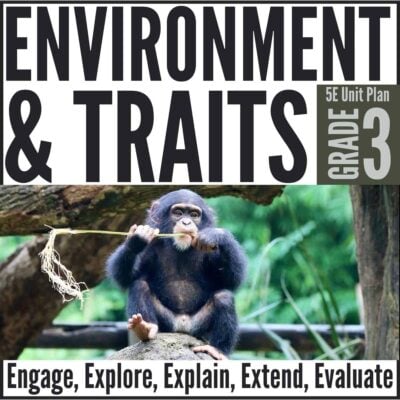
This Environment and Traits 5E Unit Plan is an inquiry-based unit that focuses on investigating acquired and learned traits from the environment.

These Third Grade Science Assessments are aligned to the Next Generation Science Standards for third grade and compliment our 5E Instructional Units. There are two assessments or tests per NGSS standard. There is also a third assessment that combines those two tests.
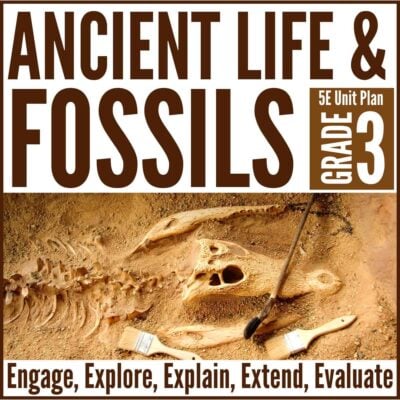
This Ancient Life 5E Science Unit Plan is an inquiry-based unit that focuses on investigating fossils of plants and animals. Throughout the unit, students analyze and interpret data from fossils to provide evidence of the organisms and the environments in which they lived long ago. Students explore types of fossils, paleontologists, and fossil excavation.
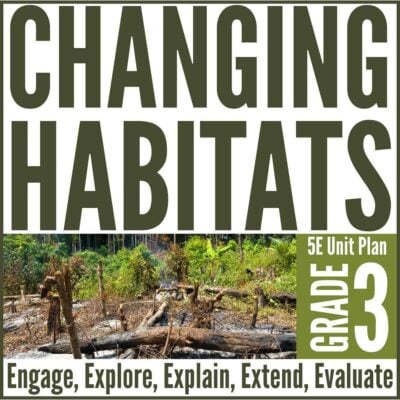
This Changing Habitats 5E Science Unit Plan is an inquiry-based unit where students study how when an environment changes the types of plants and animals may change too. Throughout the unit, students look at biodiversity and human impact on habitats.
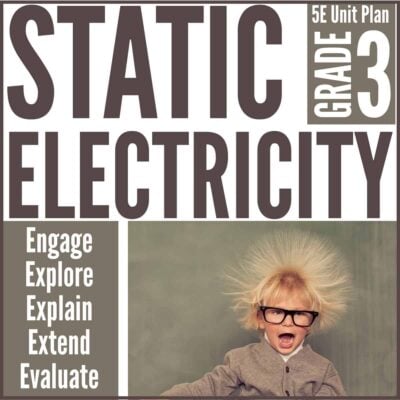
This Static Electricity 5E Model Unit Plan is an inquiry-based unit using the 5E Model lesson plans. It focuses on investigating static electricity, learning about what affects static electricity, and diagramming the flow of electrons in static electricity.

This Waves 5E Science Unit Plan is an inquiry-based unit where students learn about how wave patterns in terms of amplitude and wavelength and that waves can cause objects to move. Students learn how regular patterns of motion can be made by water and how waves differ in amplitude and wavelength. The unit includes three parts for each of the 5E’s (Engage, Explore, Explain, Extend, and Evaluate) and more.

This Animal Groups 5E Unit Plan is an inquiry-based unit that focuses on investigating animal groups and the cause-and-effect relationships of predator and prey. Students explain why animals form groups for survival and investigate the social interaction and group behavior of animals.
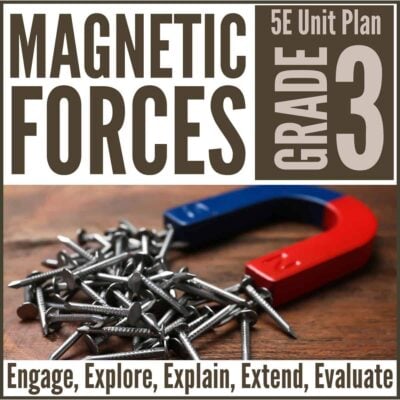
This Magnetic Forces 5E Model Unit Plan is an inquiry-based unit using the 5E Model lesson plans.
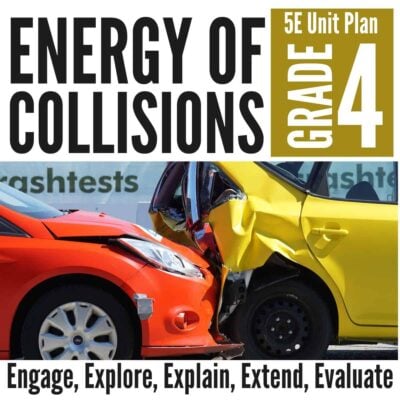
This Energy of Collisions 5E Science Unit Plan is an inquiry-based unit where students learn about the changes in energy that occur when objects collide. Students learn that energy can be moved from place to place by moving object, that when objects collide energy can be transferred and an object’s motion changes, and more. The unit includes three parts for each of the 5E’s (Engage, Explore, Explain, Extend, and Evaluate) and more.
End of content
End of content