
How to Teach Place Value to 2nd Graders: Step by Step
Second grade is the year place value grows up. Students who spent first grade bundling tens now stretch into the hundreds, learn to write a number three different ways, and start comparing three-digit numbers, all of which becomes the foundation for addition, subtraction, and everything after. When I taught second grade, I built place value through a short daily math routine, a few minutes of number practice every day that let the skills spiral all year.
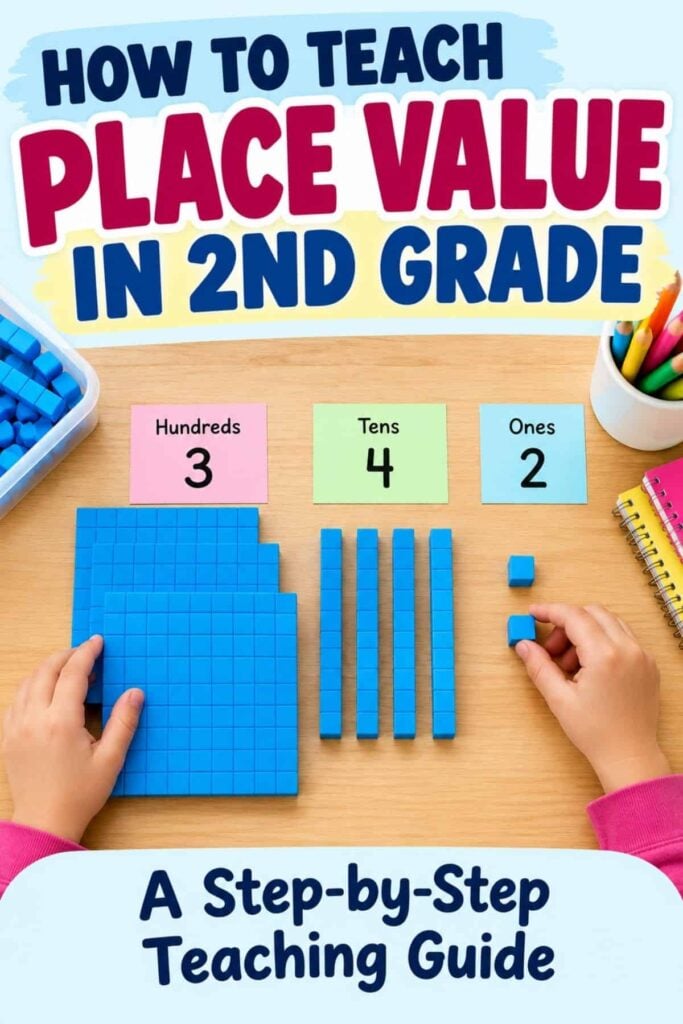
If you are planning a unit and want more than a pile of worksheets, this is a complete plan for teaching place value for 2nd graders: what it means, the standards behind it, a week-by-week sequence you can follow, simple ways to explain it, and hands-on activities that make it stick.
What Place Value Means in 2nd Grade
Place value is the idea that a digit’s position determines its value. In 2nd grade, that means working confidently with three-digit numbers and understanding that the same digit is worth different amounts depending on where it sits. The 3 in 342 is worth three hundred, not three, because it sits in the hundreds place.
Hundreds, Tens, and Ones Explained
The clearest way to show this is to take one number and write it three ways. Take 342:
- Standard form: 342
- Expanded form: 300 + 40 + 2
- Word form: three hundred forty-two
All three say the same thing: 3 hundreds, 4 tens, and 2 ones. When second graders can move fluidly among these three forms, they understand place value, not just the procedure for writing a number. Seeing 100 as ten tens is the other big leap this year, and it is what makes three-digit numbers click.
2nd Grade Place Value Standards
The 2nd grade place value standards live in the Number and Operations in Base Ten domain of the Common Core, standards 2.NBT.1 through 2.NBT.4. Here is each one in plain English with a classroom example. You can read the full wording at the Common Core standards site.
2.NBT.1 – Hundreds, Tens, and Ones
Students understand that a three-digit number is made of hundreds, tens, and ones, and that 100 is ten tens. For example, they can explain that 342 is 3 hundreds, 4 tens, and 2 ones.
2.NBT.2 – Counting and Skip-Counting to 1,000
Students count within 1,000 and skip-count by 5s, 10s, and 100s. For example, starting at 120 and counting by 10s: 120, 130, 140, and so on.
2.NBT.3 – Reading and Writing Numbers to 1,000
Students read and write numbers to 1,000 using standard form, expanded form, and word form. For example, writing 536 as 500 + 30 + 6 and as five hundred thirty-six.
2.NBT.4 – Comparing Three-Digit Numbers
Students compare two three-digit numbers using the symbols >, =, and <, based on the hundreds, tens, and ones. For example, comparing 452 and 425: both have 4 hundreds, but 452 has more tens, so 452 > 425.
A Step-by-Step Sequence for Teaching Place Value to Second Graders
Place value is not a one-week unit. Teaching place value to second graders works best as a sequence that builds over a quarter, moving from concrete materials to written numbers. Here is a sequence you can follow, with the tool that anchors each stage. A short daily warm-up runs underneath it all.
Weeks 1-2: Tens and Ones in Standard and Expanded Form
Open with a quick refresh that a ten is ten ones grouped together, but don’t linger. Most second graders should have learned this the year before. The real work of these weeks is writing two-digit numbers in word form, standard, and expanded form, using base ten blocks to connect the three. Students build 42, then write it as 40 + 2, until breaking a number into tens and ones is automatic.
Weeks 3-4: Extending to Three-Digit Numbers
Introduce the hundreds place by having students trade ten tens for one hundred, the central new idea of 2nd grade place value. Build, read, and write three-digit numbers in all three forms, so 342 becomes 300 + 40 + 2 and three hundred forty-two. Naming the numbers aloud as students build them keeps the blocks and the written forms connected.
Weeks 5-6: Skip-Counting and Flexible Ways to Show a Number
Strengthen number sense by counting and skip-counting within 1,000 by 5s, 10s, and 100s from any starting number. This is also the time to show that a number can be grouped more than one way, for example that 342 is 3 hundreds, 4 tens, and 2 ones, and also 34 tens and 2 ones. That flexibility pays off later when students regroup to add and subtract.
Weeks 7-8: Comparing and Ordering Numbers
Finish with comparing three-digit numbers using >, =, and <. A 100 chart or number line helps students reason about which number is larger by looking at the hundreds first, then the tens, then the ones. Ordering sets of numbers from least to greatest pulls the whole unit together.
Throughout: Form Practice and Daily Warm-Ups
Standard and expanded form are not a single week. They run through the entire unit, so keep students writing numbers both ways from the first week to the last.
A short daily routine is what makes that possible, and honestly, it is how I taught place value in 2nd grade. Short, daily practice does more than one long lesson, and it keeps earlier skills from fading as the numbers grow.
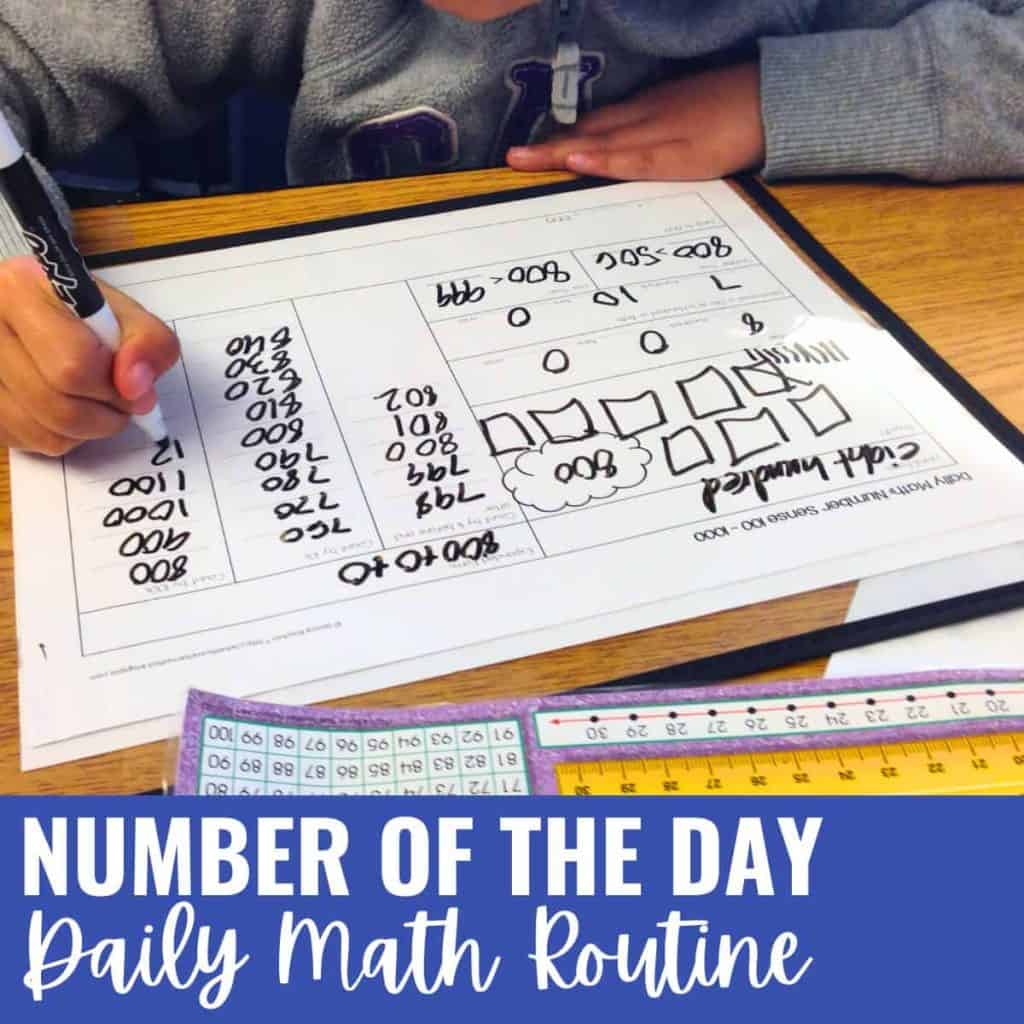
My daily math routine builds a few minutes of place value practice into every single day so the skills spiral all year instead of getting taught once and forgotten.
To see how this 2nd grade unit fits into the full year, my 2nd grade math curriculum map lays out the whole scope and sequence.
Simple Strategies to Teach Place Value
The materials are simple. What matters is what you have students do with them. These three teaching strategies carry most of the unit.
Build It, Then Write It
The most reliable place value strategy is moving students from concrete to written, every single time. Have students build a number with base ten blocks first, then record it on paper. When they physically trade ten ones for a rod and ten rods for a flat, the hundreds place and later regrouping become something they have done with their hands, not just a rule.
The key is to never let the blocks and the digits drift apart: build it, then write it.
Hunt for Patterns on the 100 Chart
Put a 100 chart in students’ hands and have them look for how the tens behave. Ask them to notice that moving down a column adds ten and moving across a row adds one, then use that to find ten more or ten less and to skip-count. Having students discover and explain the pattern, rather than just reading a chart you point to, is what turns it into real reasoning about numbers.
Show One Number Three Ways
Take a single number and have students represent it in standard form, expanded form, and word form side by side. Doing this over and over, and capturing it on a class anchor chart students help build, is what cements that 536, 500 + 30 + 6, and five hundred thirty-six are the same number. Add student examples to the chart as you go so it stays a working reference all unit.
How to Explain Place Value to Children
When you are explaining place value to 2nd graders, a concrete analogy does more than a definition. Two work especially well.
The first is bundling: ten loose straws wrapped with a rubber band become one bundle of ten, and ten bundles become one big bundle of a hundred. Students see that a ten and a hundred are just groups of ones.
The second is money. A penny is one, a dime is worth ten pennies, and a dollar is worth ten dimes or one hundred pennies. Because many students already know coins, the dimes-and-pennies comparison gives them a familiar way to understand that one thing can stand for ten of another.
Reach for whichever analogy fits your students, and keep connecting it back to the written number.
Hands-On Place Value Activities to Try
Once students have the concept, they need lots of low-stakes practice to make it automatic. These activities keep students reasoning about numbers without it feeling like a worksheet.
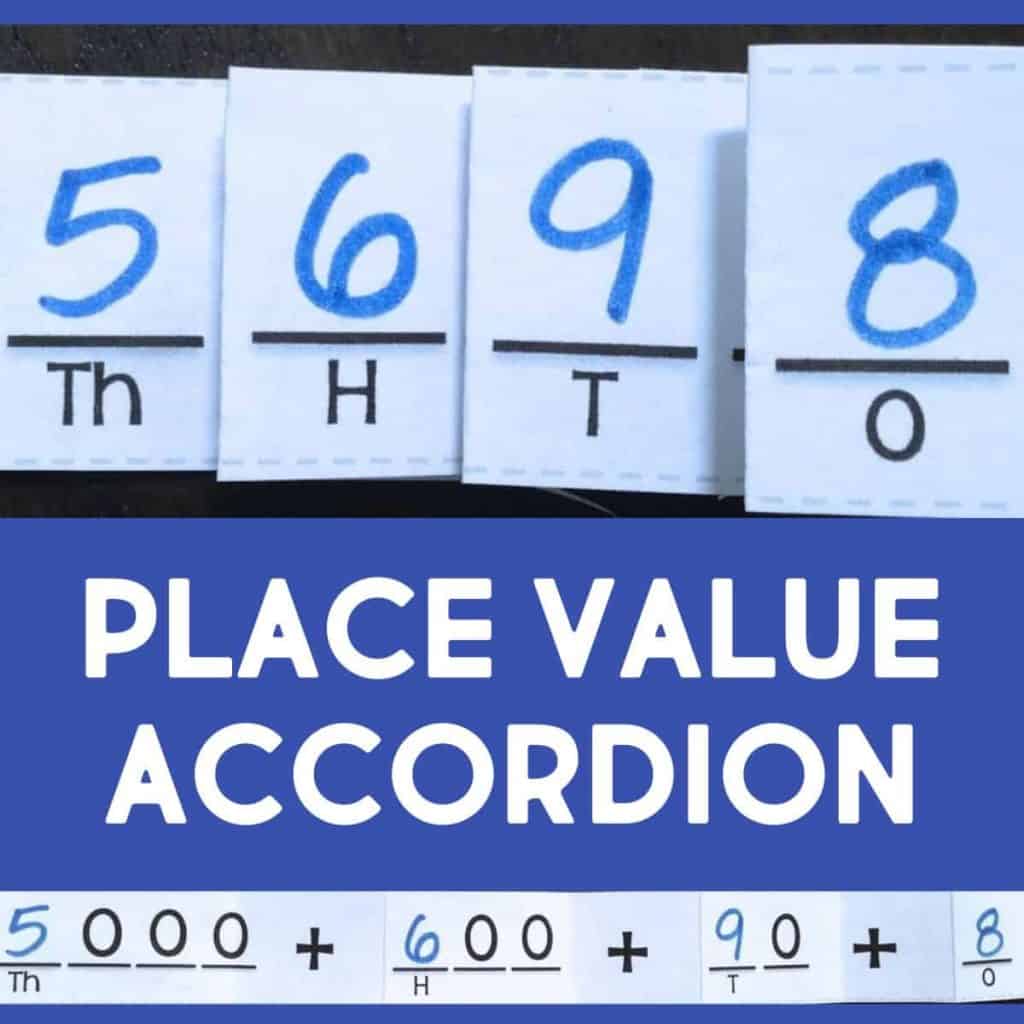
Place Value Accordion for Expanded and Standard Form
A place value accordion lets students physically fold a number between its standard and expanded forms, so they can see 536 open up into 500 + 30 + 6 and fold back again. It is one of the clearest ways to make the two forms feel connected.
Place Value Games for Daily Practice
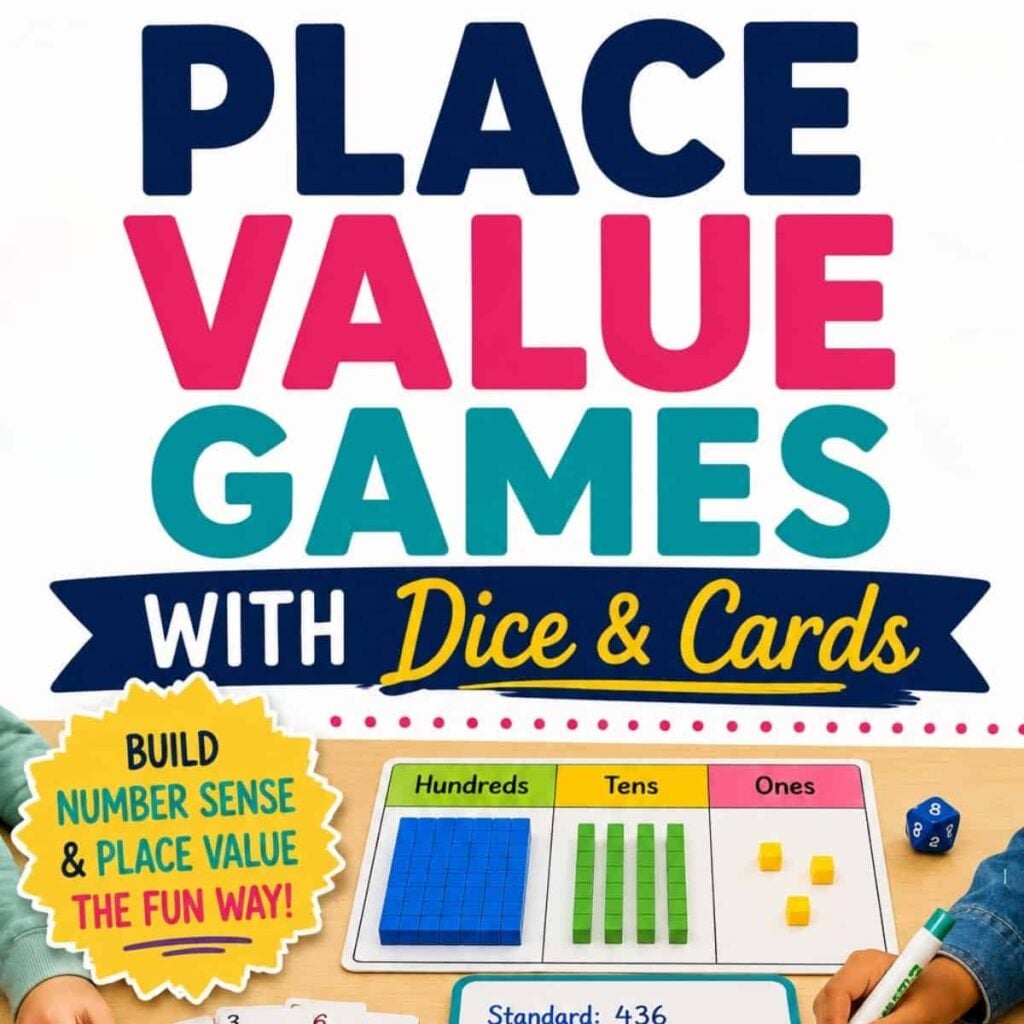
Dice and card games turn practice into something students want to do. Build-a-number games, where students roll digits and make the largest number they can, build place value reasoning fast.
Make 100 and Make 1,000 Strategies
Once students are solid with three-digit numbers, friendly-number strategies extend place value into addition. Finding what pairs with a number to make 100 or 1,000 builds flexible thinking they will lean on for mental math.
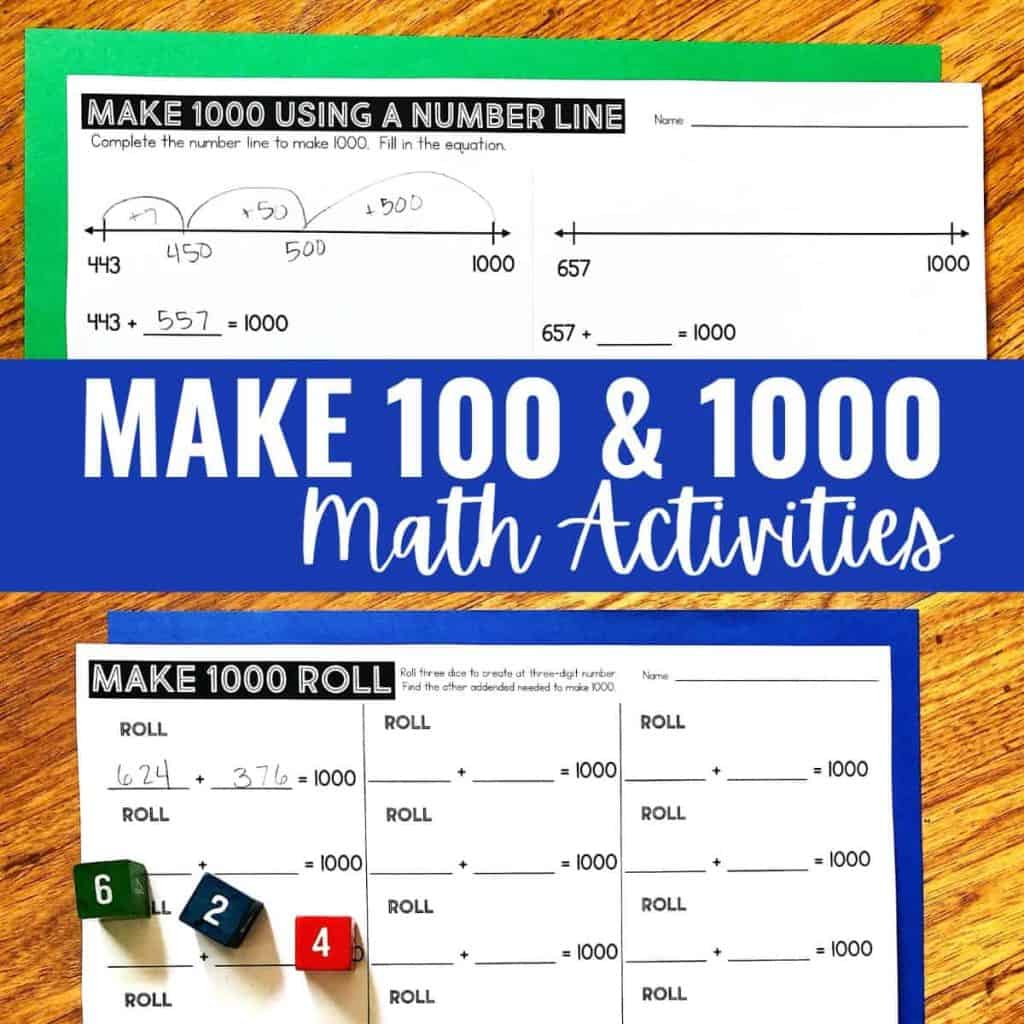
My make 100 and make 1,000 strategies post shows to develop place value strategies with three digit numbers.
Testing and Assessing Place Value Skills
You do not need a long test to know whether second graders have it. A few targeted questions work as an exit ticket or a quick quiz. Three quick checks that cover the main standards:
- Expanded form: Write 536 in expanded form. (Answer: 500 + 30 + 6.)
- Comparing: Circle the number with more hundreds: 482 or 428. (Answer: both have 4 hundreds, so students compare the tens; 482 is greater.)
- Value of a digit: In the number 736, what is the value of the underlined digit 3? (Answer: 30, or 3 tens.)
Questions like these quickly show who has the concept and who needs another round with base ten blocks before you move into addition and subtraction.
Place Value FAQs
Bringing It All Together
Teaching place value for 2nd graders comes down to a clear sequence: build tens and ones, extend to hundreds, practice standard and expanded form, then compare numbers, all anchored in hands-on materials and a short daily warm-up. Teach it in that order, give students plenty of time with the blocks before the digits, and the place value understanding they build this year will carry straight into addition, subtraction, and beyond.
For the bigger picture of how to teach place value across elementary grades, my K-5 guide shows where 2nd grade fits in the whole progression.
Jessica BOschen
Jessica is a teacher, homeschool parent, and entrepreneur. She shares her passion for teaching and education on What I Have Learned. Jessica has 16 years of experience teaching elementary school and currently homeschools her two middle and high school boys. She enjoys scaffolding learning for students, focusing on helping our most challenging learners achieve success in all academic areas.