
Emergent Reading Activities for Kindergarten and 1st Grade
In any kindergarten or first grade classroom, you’ll have readers all over the map, some naming letters, some blending their first words, and some not quite sure where a sentence starts. The right emergent reading activities meet all of them by building the foundational skills that reading stands on: phonological awareness, letter sounds, blending, sight words, and time with real text.
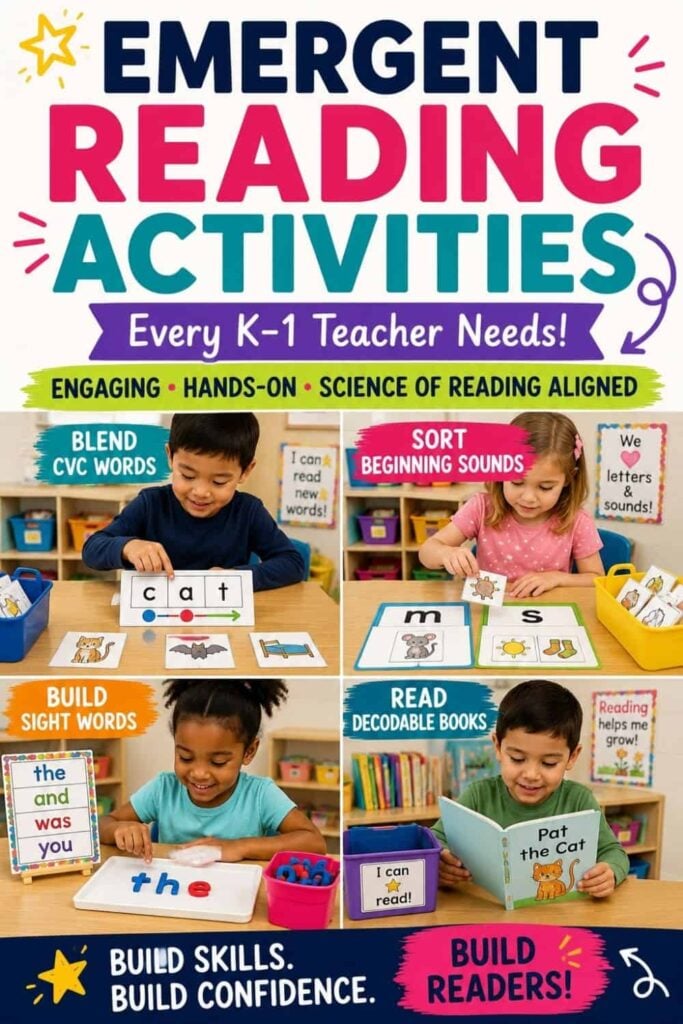
This post skips the vague advice and gives you actual classroom activities for each of those skills, so you can walk away with something to use tomorrow.
What Are Emergent Readers?
Emergent readers are students who are building the skills they need before they can read independently. They’re learning how print works, connecting letters to sounds, hearing and playing with the sounds in words, and beginning to blend those sounds into words. Most kindergartners and many first graders are somewhere in this stage.
Strong emergent reading instruction touches a handful of connected skills: phonological and phonemic awareness, letter-sound knowledge, blending and decoding, high-frequency words, and practice with text. The activities below are organized by those skills so you can aim your instruction where your students need it.
Emergent Reading Activities for Phonological and Phonemic Awareness
Before students can decode, they need to hear the sounds in words. Phonological awareness activities are oral, so they work anywhere, even lined up at the door. A few that build the skill:
- Rhyme sorting. Say two words and have students thumbs-up if they rhyme, thumbs-down if they don’t. Once they’ve got it, give a word and have them supply a rhyme.
- Syllable clapping. Clap the parts of students’ names and classroom words, then have students count the claps. This builds the sense that words break into parts.
- Onset and rime blending. Say the beginning sound and the rest of the word separately, like /c/ … /at/, and have students push them together to say “cat.” This is the bridge to blending whole words.
- Sound blending and segmenting. Say a word in its separate sounds, /m/ /a/ /p/, and have students blend it, then flip it and have them break a word into sounds. This is the single most important phonemic awareness skill for reading.
Phonemic awareness deserves daily time in K-1. If you want the why behind it, my post on the importance of phonemic awareness makes the case, and my blending and segmenting tips post has more on those two skills specifically.
Letter-Sound and Alphabet Activities
Emergent readers need to connect each letter to its sound quickly and automatically. Naming letters isn’t enough; they need the sounds. Try these:
- Letter-sound hunt. Give students a letter and have them find objects or pictures around the room that start with that sound. The physical search makes the sound memorable.
- Sound sorts. Have students sort picture cards by beginning sound. Start with two very different sounds, like /s/ and /m/, before moving to trickier pairs.
- Say it, don’t spell it. When you introduce a letter, emphasize the sound it makes, not just its name, and keep the sound crisp. My post on stop sounds versus continuous sounds explains why that matters for blending later.
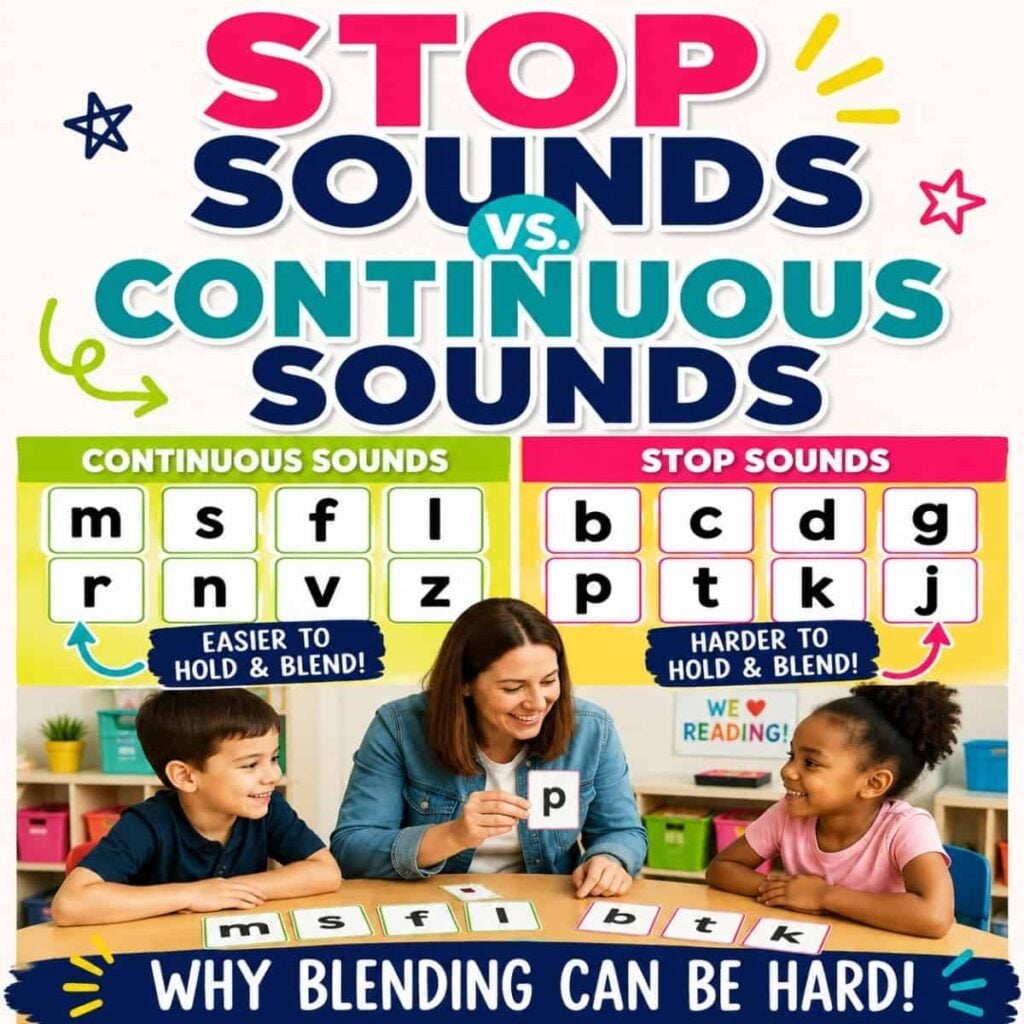
In this post, you’ll find a breakdown of continuous sounds, stop sounds, and tricky sounds, along with a reference chart and tips for teaching each type correctly.
Blending and Decoding CVC Words
This is the moment emergent readers become readers: putting sounds together to read a word. CVC words (consonant-vowel-consonant, like cat, pig, sun) are where most students start. Activities that help:
- Blending cards. Cards that show the letters of a word with a track to slide through help students blend sound by sound, then read the whole word. My blending cards for early readers are built for exactly this.
- Tap and blend. Students tap one finger for each sound in a CVC word, then sweep their finger under the word to blend it together. The physical motion supports the mental one.
- Picture-to-word match. Students read a CVC word and match it to the correct picture, which checks that they’re decoding rather than guessing.
- Nonsense word practice. Reading made-up words like “vit” or “zom” proves students are truly decoding, not relying on memory. My post on why we teach nonsense words explains how this fits in.
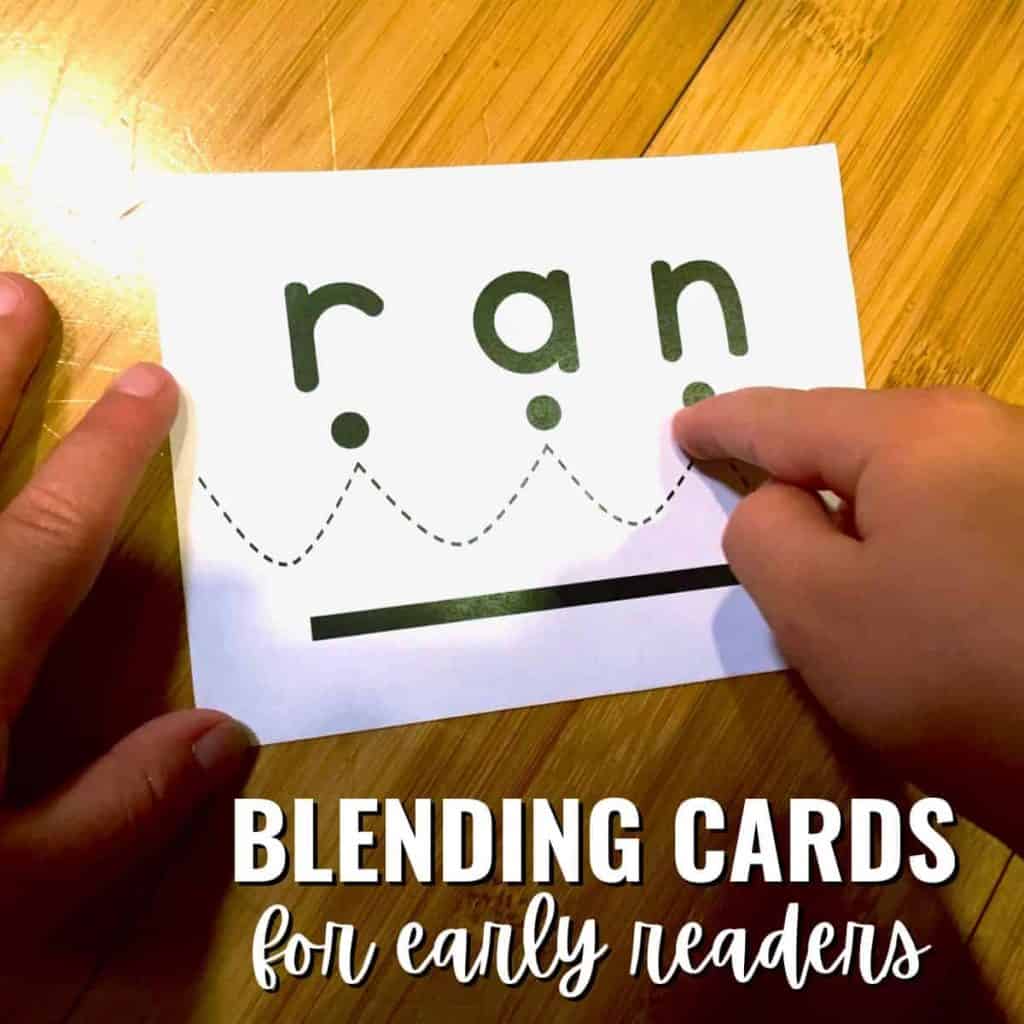
Take a look at the blending cards and how to use them in the classroom.
Sight Word Activities
Alongside decoding, emergent readers learn high-frequency words, many of which they’ll see constantly in text. The goal is fast, automatic recognition, and hands-on practice beats flashcard drills. Try building words with magnetic letters, writing them in sand or shaving cream, or playing quick recognition games. My roundup of hands-on sight word activities for kindergarten has a full set of ideas.

This post explains what the heart word method is, how to choose which words to teach with it, and how to use a simple gradual release routine in your classroom.
Reading Practice with Decodable Text
Emergent readers need to practice their skills in real text, but not just any text. Decodable readers use words students can sound out with the phonics they’ve learned, so they practice decoding instead of guessing from pictures. Have students read a short decodable passage, then reread it to build fluency and confidence. If you’re unsure what counts as decodable, my post on the difference between decodable and predictable text breaks it down.
For more on the research behind starting with sounds and decodable text, the literacy nonprofit Reading Rockets is a trustworthy reference.
Learn the differences between these texts and when to use them in the classroom.
How to Use These Emergent Reading Activities
You don’t need to do all of these at once. A few ways to fit them into a K-1 day:
- Whole group warm-up. Start with two or three minutes of oral phonemic awareness, since it needs no materials.
- Small groups. Use blending cards, sound sorts, and decodable passages with groups matched to where students are.
- Literacy centers. Picture-word matching, sight word building, and letter-sound sorts all work as independent or partner centers.
- Keep it short and daily. Emergent skills grow with frequent, brief practice more than with long lessons.
Frequently Asked Questions
Final Thoughts
Emergent readers need a lot of short, focused practice across sounds, letters, blending, and text, and the activities here give you a way to deliver it. Pick the skill your students need most, choose one activity, and build from there. Small daily wins are what turn emergent readers into confident ones.
Want a ready-made set for the blending and decoding piece? My Practice Blending CVC bundle pulls together picture cards, word lists, worksheets, games, and passages, so your emergent readers get everything they need to blend CVC words in one place.

CVC BUNDLE – Resources to Teach Reading by Phonics Patterns – 18 Resources
This is a BUNDLE of several of my CVC resources that are perfect for small group reading groups or independent word work centers.
Jessica BOschen
Jessica is a teacher, homeschool parent, and entrepreneur. She shares her passion for teaching and education on What I Have Learned. Jessica has 16 years of experience teaching elementary school and currently homeschools her two middle and high school boys. She enjoys scaffolding learning for students, focusing on helping our most challenging learners achieve success in all academic areas.