
Learned Behaviors: Definition, Types, and Examples
A puppy is not born knowing how to sit on command, and a child is not born knowing how to ride a bike. Both are learned behavior examples, actions that develop through practice, experience, or watching others rather than something the animal or person was born with. Understanding learned behaviors helps students see how living things adapt to the world around them.
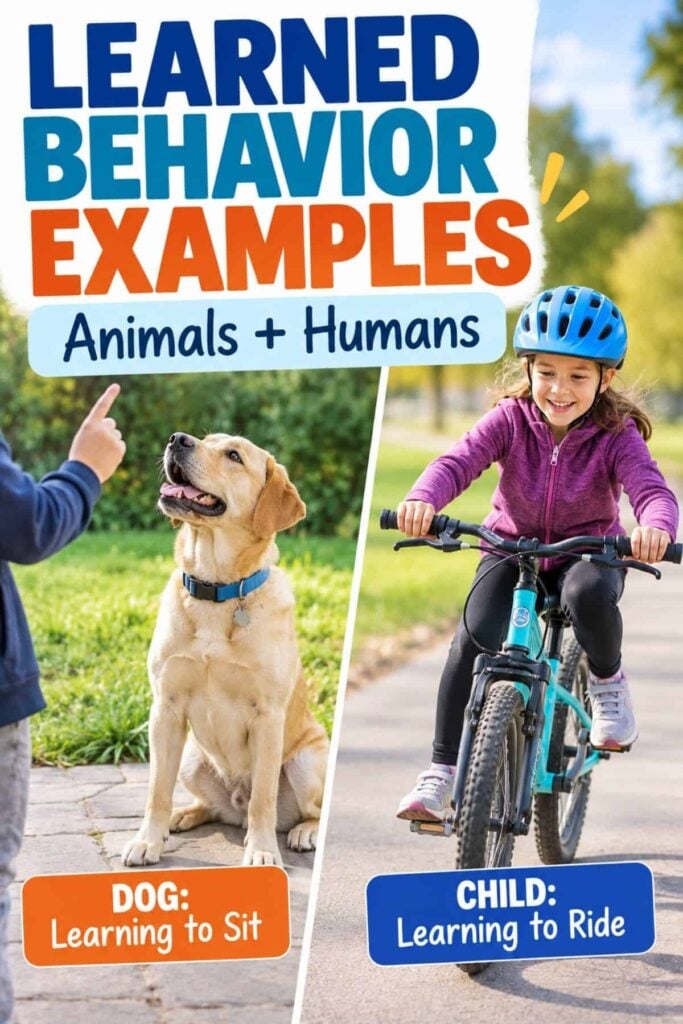
This post explains what a learned behavior is, walks through the main types, and gives clear examples in both animals and humans that you can use in the classroom.
What Is a Learned Behavior?
A learned behavior is an action or skill that a living thing develops after birth through experience, practice, or observation. It is not coded in an animal’s genes the way a physical trait is. Learned behavior develops over time, so it can change, improve, or be forgotten.
Learned behaviors are the opposite of instincts, which are behaviors an animal is born already knowing how to do, like a spider spinning a web. The line between the two is a core idea in 3rd grade life science under NGSS 3-LS3. For the full side-by-side treatment of how learned behaviors compare to the traits animals inherit, see my post on inherited traits vs. learned behaviors. You can also read the standard itself at the Next Generation Science Standards site.
Types of Learned Behaviors
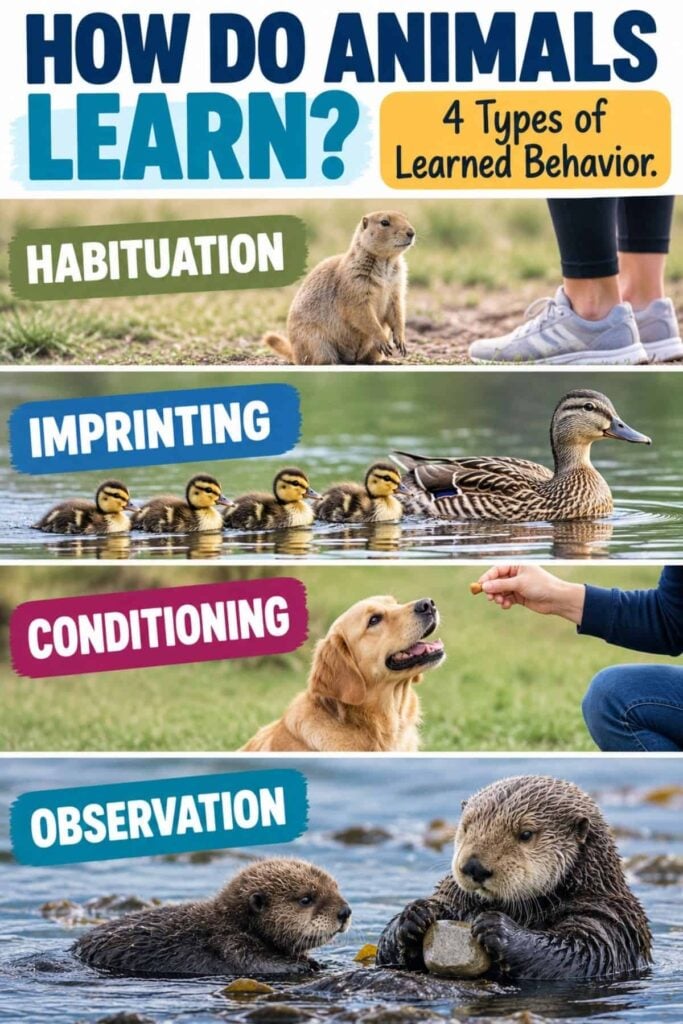
Not all learned behaviors are learned the same way. There are a few main types, and naming them helps students recognize learning in action:
- Habituation. An animal gets used to something and stops reacting. Prairie dogs that ignore people who walk by every day have habituated, learning that the people are not a threat.
- Imprinting. A young animal bonds to the first moving thing it sees, usually its parent. Ducklings following their mother in a line is the classic example.
- Conditioning, or trial and error. An animal learns to connect an action with a result. A dog that learns to sit because it gets a treat is being conditioned, and a mouse learning its way through a maze is learning by trial and error.
- Observational learning. An animal learns by watching another. A lion cub learns to hunt by watching the adults, and a young otter learns to open clams by copying its mother.
You do not need students to memorize all four terms, but showing that learning happens in different ways deepens their understanding beyond a simple list.
Examples of Learned Behaviors in Animals
Animals learn behaviors that help them survive and thrive in their specific environment. Some clear examples:
- A lion cub learning to hunt by watching the adults in its pride
- A dog learning to sit, stay, or roll over on command
- A parrot learning to mimic human words and sounds
- An otter learning to crack open clams from its mother
- A bear learning where people leave trash and returning to it
- Birds adjusting their migration route based on weather or food
- A dolphin learning tricks through training at an aquarium
Notice that each one had to be practiced, taught, or observed. None of these animals were born already able to do them, which is what makes each a learned behavior rather than an instinct.
Examples of Learned Behaviors in Humans
Students often connect fastest when they see themselves in the science. Almost everything people do beyond the basics is a learned behavior:
- Riding a bike
- Reading and writing
- Tying your shoes
- Speaking a particular language
- Playing an instrument or a sport
- Using good manners at the table
- Solving a math problem
A helpful contrast for students: a baby is born knowing how to cry and grip a finger, which are instincts, but has to learn to walk, talk, and read. Asking students to sort their own daily activities into “born knowing” and “had to learn” makes the concept personal and clear.
How to Tell a Learned Behavior From an Instinct
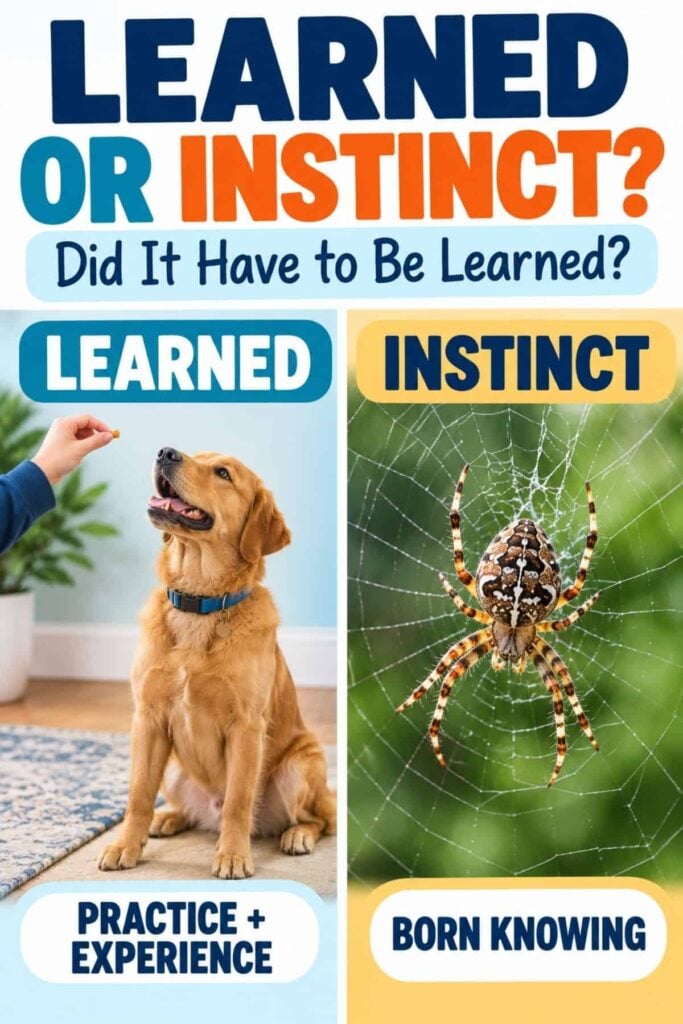
Give students one question to ask about any behavior: did the animal have to learn it, or was it born knowing how? If it took practice, teaching, or watching others, it is a learned behavior. If the animal could do it from birth with no experience, it is an instinct. A spider spinning a perfect web the first time is instinct. A dog learning a new trick is a learned behavior.
A sorting activity is the most effective way to practice this. My inherited and learned traits sorting activity gives students cards to classify, and my broader life science guide shows where this fits in the K-5 sequence.
Frequently Asked Questions
Bringing It All Together
Learned behaviors are all around students, from the tricks their pets know to the skills they practice every day. Start with a clear definition, show the different ways learning happens, and use examples from both animals and their own lives. Once students can ask “did they have to learn it?” they can classify almost any behavior with confidence.
Want it ready to teach? My Inherited and Acquired Traits Sort gives students hands-on practice classifying learned behaviors and inherited traits, with sorting cards, a cut-and-paste option, and differentiated response pages aligned to NGSS 3-LS3.
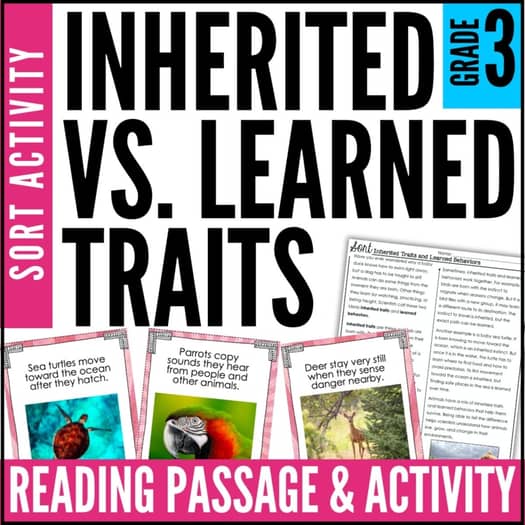
Help your students easily understand the difference between inherited traits and acquired behaviors with this engaging, hands-on sorting activity!
Jessica BOschen
Jessica is a teacher, homeschool parent, and entrepreneur. She shares her passion for teaching and education on What I Have Learned. Jessica has 16 years of experience teaching elementary school and currently homeschools her two middle and high school boys. She enjoys scaffolding learning for students, focusing on helping our most challenging learners achieve success in all academic areas.