

Second Grade Earth Science Interactive Notebook for NGSS Standards
$6.37
Teach second grade Earth Science NGSS standards with an interactive notebook full of cut, sort, match, glue, and writing activities. Covers how Earth changes, wind and water changes to land, physical maps, and where water is found on Earth.
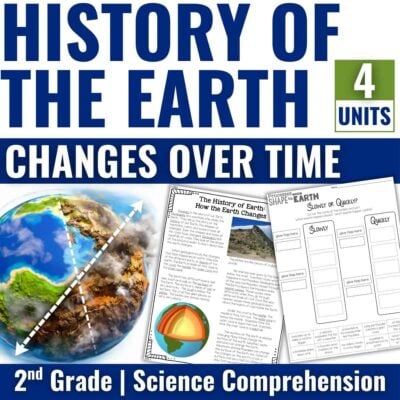
Help students explore second grade Earth Science concepts in a hands-on way with this Second Grade Earth Science Interactive Notebook. Through cutting, sorting, matching, gluing, and writing, students interact with key NGSS Earth Science standards while building vocabulary, organizing ideas, and showing what they understand.
This interactive notebook is designed to support lessons on Earth’s changes, wind and water, landforms and maps, and where water is found. It can be used alongside your existing science texts, videos, investigations, and lessons, or paired with related Processes that Shape the Earth resources.
What’s Included
This Earth Science interactive notebook includes vocabulary and concept activities for:
- ESS1.C: How the Earth Changes
- ESS2.A: Wind and Water Change the Land
- ESS2.B: Physical Maps
- ESS2.C: Where Is Water
Students complete interactive activities that may include:
- Cutting and sorting
- Matching vocabulary and concepts
- Gluing notebook pieces
- Writing about science ideas
- Organizing key Earth Science information
- Reviewing NGSS-aligned vocabulary and concepts
Skills Covered
This resource helps students practice and understand:
- Earth Science vocabulary
- How Earth changes over time
- Wind and water effects on land
- Erosion and land changes
- Physical map features
- Landforms and bodies of water
- Where water is found on Earth
- Sorting and classifying science information
- Matching concepts and definitions
- Writing about science ideas
- Using an interactive notebook as a learning tool
Ways to Use This Resource
Use this second grade Earth Science interactive notebook for:
- NGSS Earth Science lessons
- Science notebooks
- Whole-group instruction
- Small group science activities
- Science centers
- Review and reinforcement
- Vocabulary practice
- Hands-on concept practice
- End-of-unit review
- Cross-curricular science writing
The notebook format gives students a place to collect and revisit important Earth Science concepts throughout the unit.
Why Teachers Love It
Teachers love this resource because it gives students an active way to engage with Earth Science content. Instead of only reading or listening, students sort, match, glue, and write to build understanding.
The activities are flexible enough to use with your own curriculum, science texts, videos, and classroom discussions. This interactive notebook can stand alone or complement a broader unit on processes that shape the Earth.
Standards Connection
This resource supports second grade NGSS Earth Science standards, including concepts related to:
- Earth events and how Earth changes
- Wind and water changing the land
- Physical maps and landforms
- Where water is located on Earth
Related Resource Note
This interactive notebook complements the Processes that Shape the Earth resource, but it can also be used independently with other science texts, videos, lessons, and materials.
This Second Grade Earth Science Interactive Notebook is a hands-on NGSS-aligned resource for teaching how Earth changes, how wind and water shape the land, physical maps, and where water is found on Earth. With cut-and-paste activities, sorting, matching, vocabulary practice, and writing tasks, this printable science notebook resource is perfect for second grade Earth Science lessons, science centers, interactive notebooks, and NGSS review.
April K. –
I have this resource 5 stars because it has many activities and covers many topics, but not what I was looking for. I wanted more about fast and slow changes to earth's surface, but this resource goes beyond this concept. Good for maybe third or fourth grade.
Sarah D's Shop –
We loved it! This is exactly what I was looking for.
Maestra Villasenor –
Very useful resource. Thank you!
Sue R. –
Great companion to the unit
Cami E. –
We love using our interactive science journals!