
Parts of a Flower Dissection Plant Reproduction Anatomy 3rd Grade Science Lab
$3.42
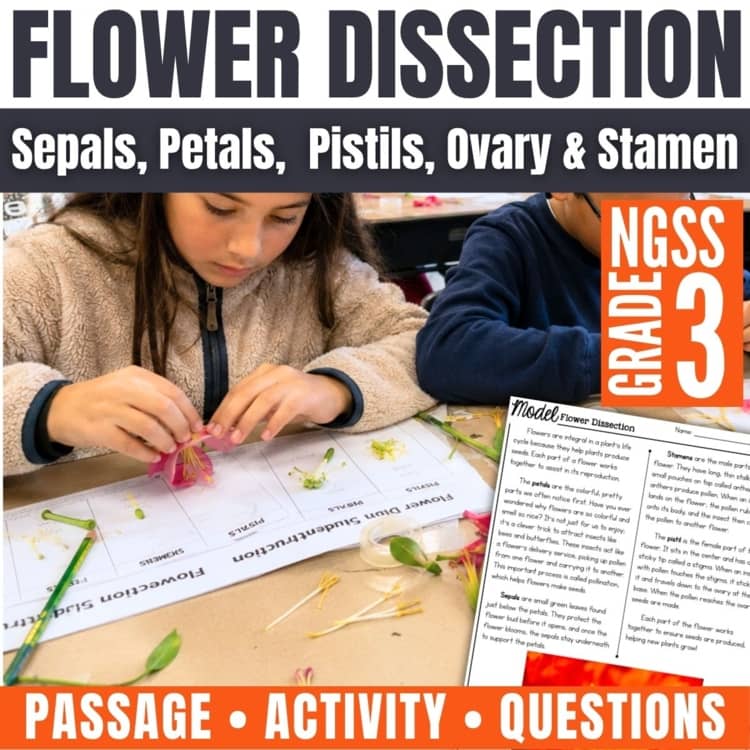
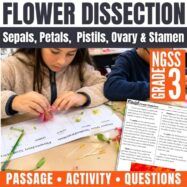
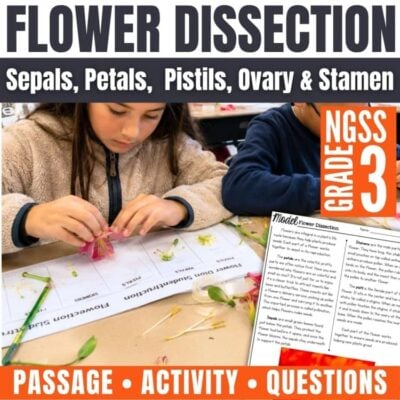
This flower dissection activity lets 3rd grade students explore the structure and function of flowers using real specimens. It is an NGSS-aligned science station on plant reproduction and anatomy.
Students apply observation skills and develop an inquiry-based understanding of how flowers contribute to the plant life cycle. The station includes everything needed for the lab, plus comprehension questions in several formats.
It is part of a broader set of science stations on growth and cycles.
What’s Included
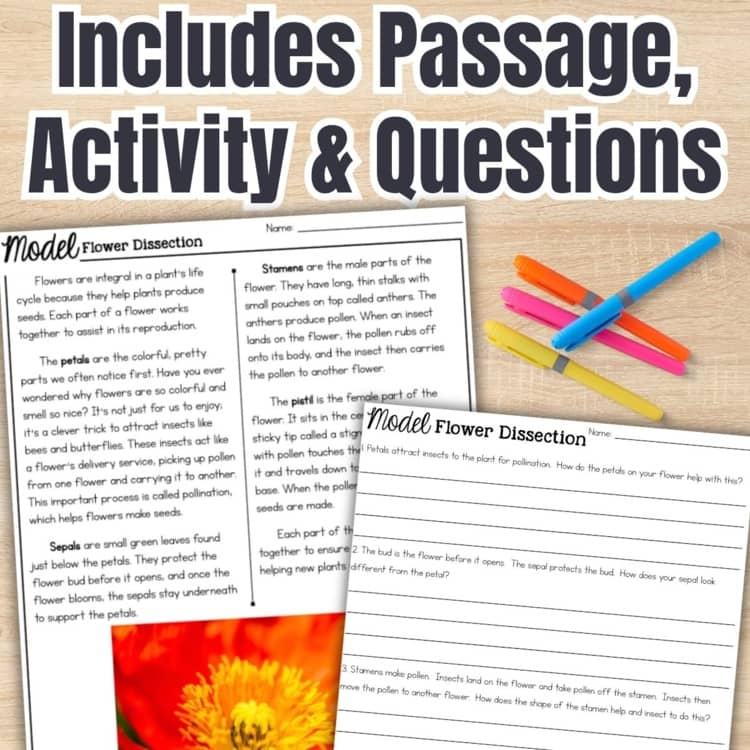
- Detailed printable worksheets and labeled diagrams
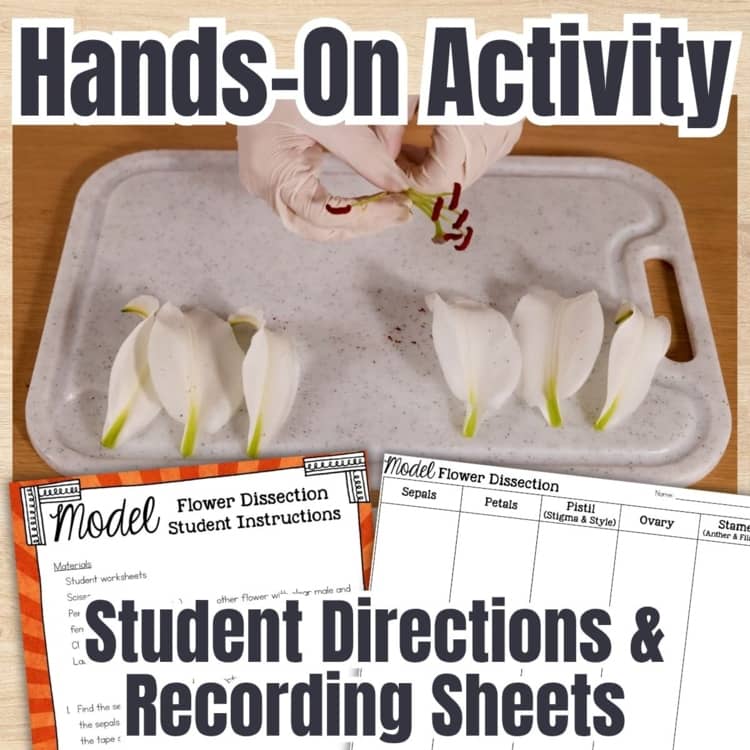
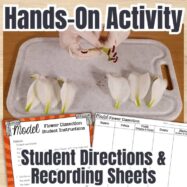
- Step-by-step student and teacher instructions
- Hands-on flower dissection activity using real flowers
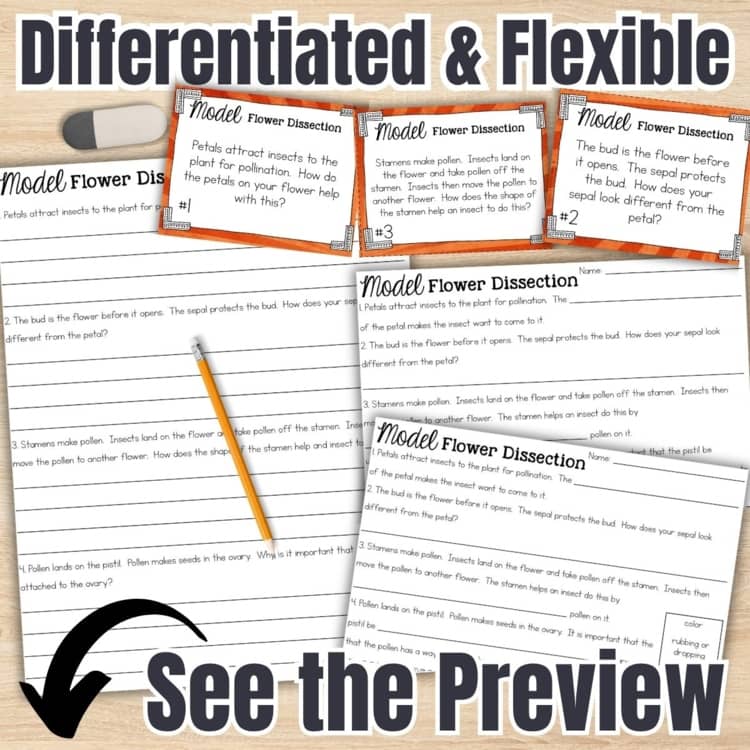
- Scaffolded comprehension questions: short answer, fill-in-the-blank, and multiple choice
- Google Slides and Google Forms versions compatible with Google Classroom
Skills Covered
- Identifying flower parts: sepals, petals, stamens, pistils, and ovaries
- Understanding the role of each structure in plant reproduction
- Strengthening observation skills and scientific documentation
- Labeling and diagramming plant anatomy
Ways to Use This Resource
- Use as a focused lab station
- Teach during a plant life cycle unit
- Assign digitally with Google Classroom
- Use for small group inquiry
- Pair with other growth and cycles stations
Why Teachers Love It
- Real specimens make the learning concrete
- Scaffolded questions in several formats
- Print and digital
- Clear instructions for students and teachers
- Aligned to NGSS
This flower dissection activity turns plant anatomy into something students can see and handle, and it gives them evidence for how flowers support reproduction.
Loading preview...
31 reviews for Parts of a Flower Dissection Plant Reproduction Anatomy 3rd Grade Science Lab
4.87 out of 5 stars
Only logged in customers who have purchased this product may write a review.

Chickadees and Bumblebees –
Easy to follow instructions and simple prep! Wonderful, thoughtful lab!
Hope M. –
This was a helpful resource for my garden lesson. It allowed for hands on learning, which the students really enjoy.
Magic and Sunshine –
A great activity I will be using for my new STEM classroom!
Kelly J. –
My students really enjoyed this lesson. They are young, but they had fun.
Mary T. –
I use this resource when I am teaching plants in the spring. I get flowers from the local grocery store and we start dissecting them so students can see the male and female reproduction structures. Well illustrated and easy to follow for students. I also use a stereoscope for them to really get up close and see the pollen produced by the flower. Lots of oohs and aaahs! Using magnifying glasses lets kids see the ovules in the flower but a stereoscope does an even better job. Our local middle school loans them to me.